
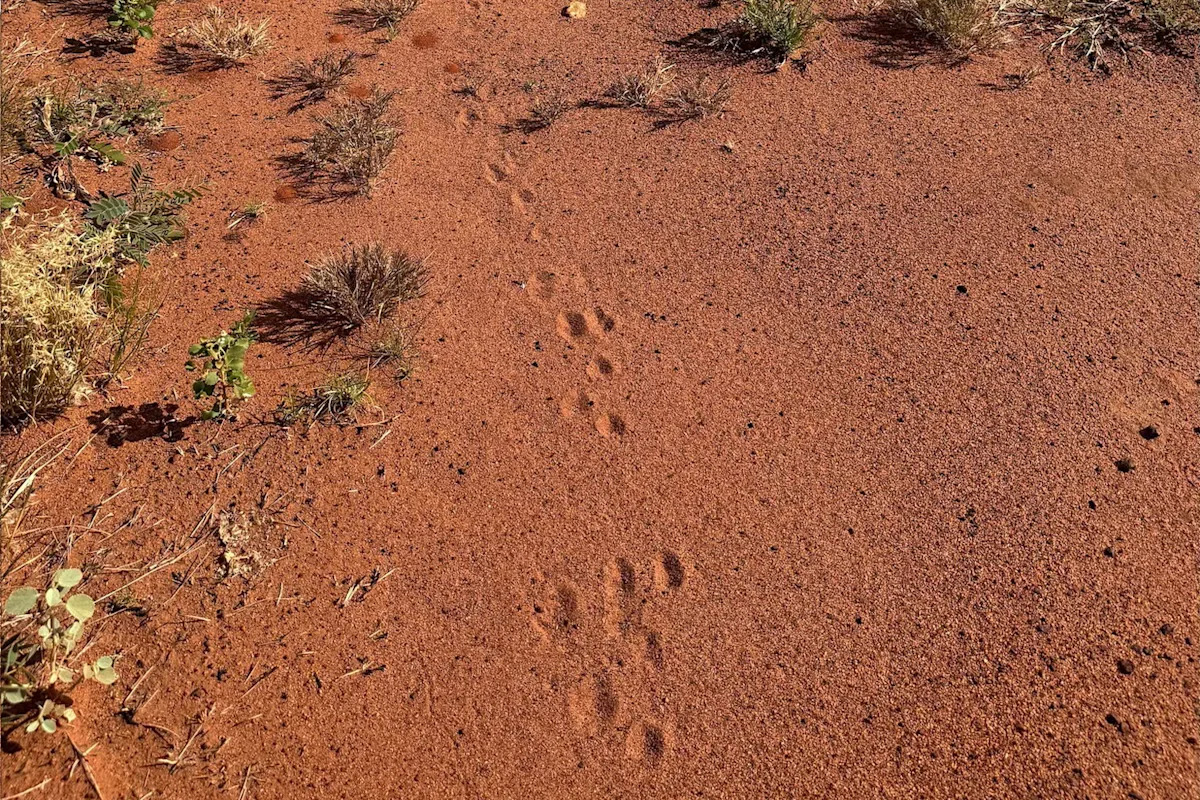
A search is underway for a rare desert animal that was pushed to the brink of extinction by two destructive predators, feral cats and foxes.
Bilbies once roamed 80 per cent of the Australian mainland, but today, the rabbit-sized hopping marsupials only survive in a few fragmented pockets of the outback, and behind the high fences of sanctuaries.
Over the last three years, Indigenous experts have been executing a plan to turn the odds in the bilby’s favour.
Feral cats and foxes are being managed in part of Kiwirrkurra, a small community in Western Australia’s Gibson Desert, 700km west of Alice Springs.
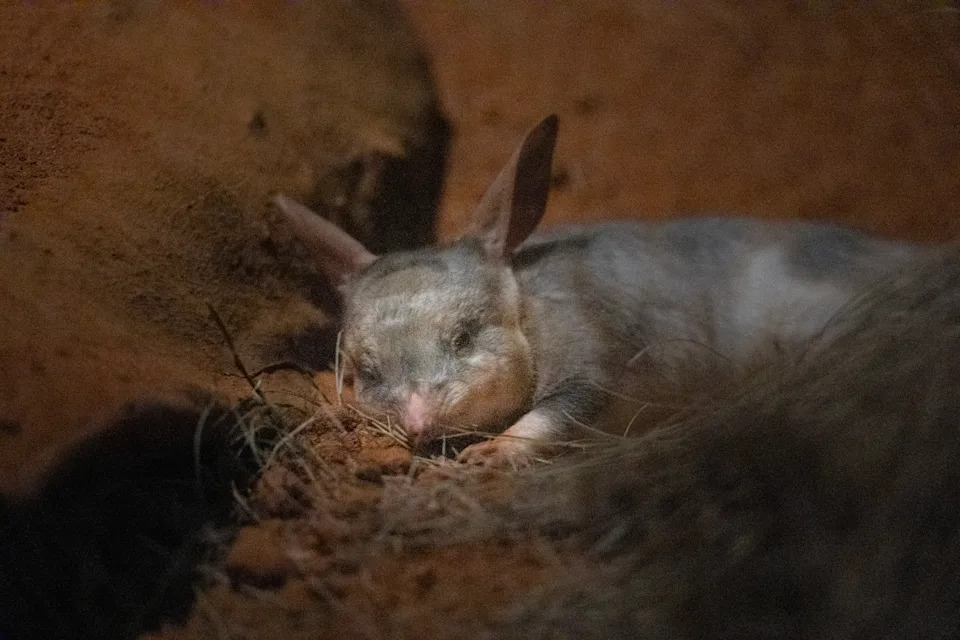
Bilbies survive in zoos and sanctuaries, but there are few truly wild members of the species left.
(Getty)
To understand the impact of the baiting program, the bilbies, known locally as ninu, are being tracked and counted.
This means tracking footprints in the sand, locating burrows, and then collecting their scats.
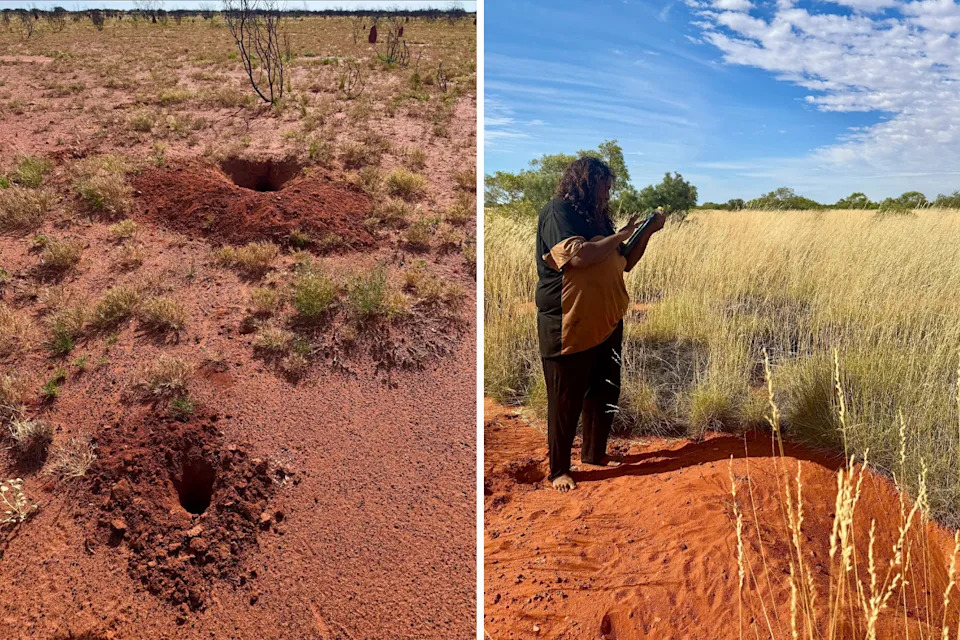
Rangers have used their tracking skills to locate and document bilby burrows in the outback.
(Indigenous Desert Alliance/Kiwirrkurra Rangers)
The project is a collaboration between the Indigenous Desert Alliance and the local Kiwirrkurra Rangers, who are comparing bilby numbers in areas where feral predators are managed to where they are not.
The cats, foxes and bilbies are most active at night, but during the day, ranger Yukultji Napangati can track their impact.
“Itakatji here,” she says in footage supplied to Yahoo News.
What she’s referring to are the seeds of what’s also referred to as Desert Flinders Grass.
“Too many itakatji. Ninu been eat, night time,” she says using multiple languages.
“Piti there,” she then says, pointing and using a western desert word for a bilby burrow.
Rangers remember region thriving in 1960s
Rachel Paltridge, a senior ecologist with the Alliance, said the project highlights the benefit of combining the generations-old tracking skills of the Kiwirrkurra Rangers with the latest genetic science.
“We’re lucky we still work with old people who walked through the desert, living a nomadic lifestyle in the 1950s and 1960s,” she said.
“They can remember all those wild animals that most of us have never seen, let alone in abundance.
“And the bilby is kind of the last one standing of those medium-sized animals, surviving in little pockets of the desert.”
RELATED
Once collected, the scats are sent to the Department of Biodiversity’s (DBCA) DNA testing lab, where they are analysed to determine how many bilbies are living in each landscape.
Importance of protecting ‘truly wild bilbies’
There are dreaming stories, sites, songs and ceremonies, all linked to bilbies.
While the species thrives in fenced-off sanctuaries, Paltridge said it’s important that they flourish again on Aboriginal lands to help people maintain their cultural connection with country.
“There are a lot of bilbies protected behind fences now,” she told Yahoo News.
“But out there on Aboriginal land, we’ve got populations of truly wild bilies that have shown some resilience to cats and foxes.
“So they’re survivors, but it’s pretty tough for them out there.”
Do you have a story on wildlife in the outback? Contact newsroomau@yahoonews.com
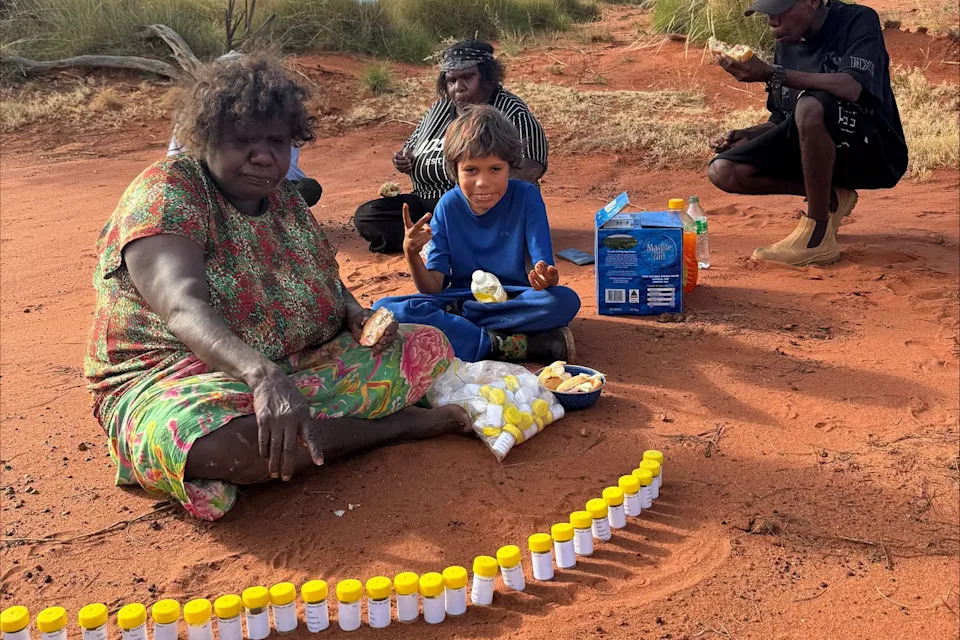
The scats were collected and then sent to the Department of Biodiversity (DBCA).
(Indigenous Desert Alliance/Kiwirrkurra Rangers)Bilby survivors face ‘crunch time’
This year, heavy rain has led to a boom in native hopping mouse numbers, and as a result, cat and fox numbers are growing.
But once the mice die off, then it will be the bilbies that are next on the menu.
“It will be crunch time when things dry off and the seed finishes, because then the hopping mice crash,” Paltridge said.
“Then you’ll have all these hungry predators, looking for the next thing to eat.”
While it’s too early to know how many bilbies survive in the Kiwirrkurra area, the small populations appear stable where cat management occurs.
The program is funded by the federal government’s National Environmental Science Program’s Resilient Landscapes Hub until 2027.
You can also follow us on Facebook, Instagram, TikTok, X and YouTube.