
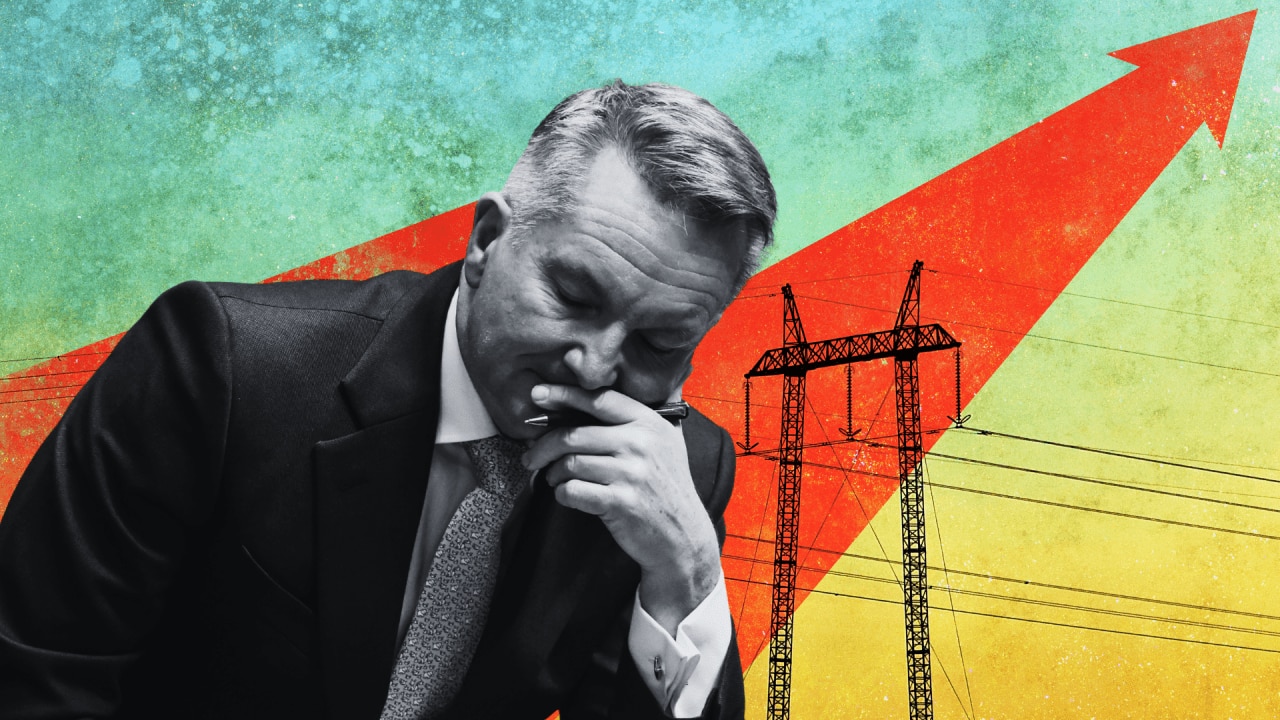
Energy Minister Chris Bowen has blamed the former Coalition government for high power prices after modelling showed bills have increased $22.7 billion more since Labor came to power.
His defence comes in response to modelling by the Coalition claiming households have paid almost $23 billion more for electricity since Labor came to office.
Mr Bowen acknowledged power bills remained too high but rejected suggestions the government had underestimated the cost of the transition.
“We are making very good progress on the renewables rollout,” he told Sky News Sunday Agenda.
“We’ve got many, many gigawatts in the pipeline. Many gigawatts have hit. We turned that situation around where four gigawatts left the grid and only one gigawatt came in.
“We are making good progress. Of course there’s always headwinds and challenges… but against all that we’re making really good progress, particularly around solar.”
The minister’s defence came after the Coalition released analysis of Australian Energy Regulator data claiming power bills have soared since Labor came to power.
The analysis found households across the National Electricity Market have paid an extra $22.7 billion in electricity costs over the past four years.
The analysis stands in stark contrast to Prime Minister Anthony Albanese’s 2022 election pledge that annual household electricity bills would be cut by $275.
Nationals leader Matt Canavan seized on the figures, accusing Labor of abandoning its promise.
“In all of their previous budgets, they had at least promised to lower your energy bills soon,” Nationals leader Matt Canavan told Sky News Sunday Agenda.
“They promised free beer tomorrow, but it’s always been tomorrow, and they’ve never delivered on that promise. And now they’ve dropped it completely in their budget.
“They didn’t even mention the idea, the promise, the expectation that energy prices would drop, that living costs would drop soon.
“Analysis released today shows that Australians under Chris Bowen’s leadership and under Prime Minister Anthony Albanese’s leadership are paying $23 billion more.”
The Coalition analysis compares current median household electricity bills with median prices in 2022, before Mr Albanese took office.
Queensland families were among the hardest hit, with the median household energy bill jumping as much as 54 per cent, from about $1,800 to $2,800.
New South Wales’ median household bill was up by as much as 50 per cent, from about $1,900 to $2,850, depending on network region.
South Australians were hit with a 40 per cent rise, with median bills climbing from $1,700 to $2,400, adding up to about $2 billion in higher costs.
Victorian households paid around $3.2 billion more, with the median bill up 26 per cent depending on the region, from $1,550 to $1,950.
In Tasmania, bills have risen 23 per cent, from $2,250 to $2,750, costing households an extra $470 million over four years.
Mr Bowen conceded households were under pressure but said the increase reflected global events rather than Labor’s policies.
“Firstly, energy bills are too high… That’s the result of an international energy crisis, particularly around Ukraine,” he said.
“It is a result of 10 years of denial and delay. We have a plan to make that better. The Coalition has a plan to make it worse.”
Mr Bowen accused Opposition Leader Angus Taylor, the former energy minister, of delaying the release of power price rises before the 2022 election to skew data.
“He knew that prices were going up 20 per cent. He didn’t want to tell the Australian people that before the 2022 election, so he changed the law to hide it,” Mr Bowen said.
Almost half of the nation has reported cost of living as the most important issue they face, according to recent Sky News Pulse polling.
The poll, which surveyed 1,471 voters between May 26 and June 2, revealed that 70 per cent of Australians expected energy prices to surge over the coming year.
Families were bearing the brunt of the energy crunch as at least 75 per cent of Generation X predicted higher power prices.
Parents were also more likely than non-parents to predict energy prices will lift while 80 per cent of One Nation voters forecasted a hike.