
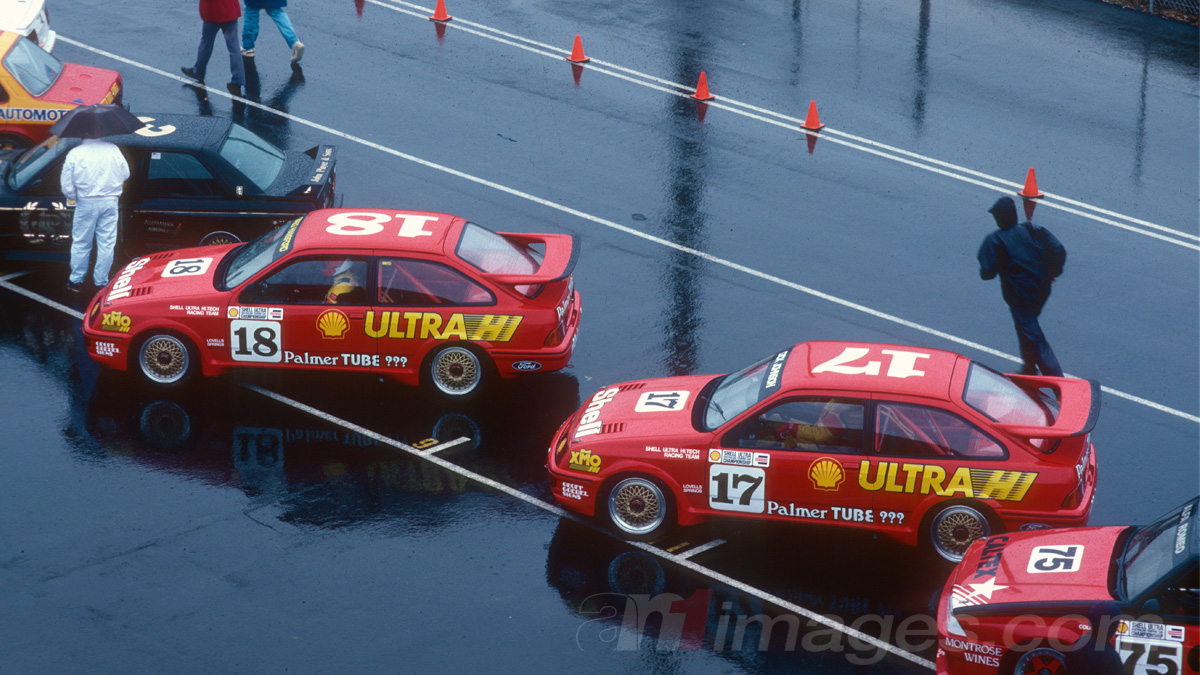
The first Ford Sierra ever built by Dick Johnson Racing has recently emerged for sale in the United Kingdom.
DJR Sierra Chassis 1 (DJR 1) is currently listed on the website of Iconic Auctioneers ahead of an auction at Silverstone Circuit on July 24.
It is one of the first two DJR Sierras that were built by the Queensland team in 1987 – both of which left Australian shores at the end of 1988 and have never returned since.
In the case of DJR 1, perhaps a keen collector or DJR fan down under could change that…
The other 1987-built Sierra, DJR 2, is now also based in the United Kingdom and has received a fresh lease of life from its current custodian, who has run the car in numerous historic events throughout Europe of late.
Seeing both Sierras pop up on the radar again has led us to open the AN1 Images archive and look back on the short but significant Australian histories of these two cars, which laid the foundation of an iconic and successful chapter in DJR’s illustrious history.
DJR 1
Debuted in the opening round of the 1987 Australian Touring Car Championship (ATCC), DJR 1 was Dick Johnson’s #17 car for the entirety of that year’s championship.
For DJR, 1987 was a season of promising pace amid frequent unreliability.
Johnson retired from four of the nine ATCC rounds as the team grappled a foreign new world of turbocharging and complex engine management systems, but the Queenslander was able to break a three-year ATCC win drought at Adelaide International Raceway.
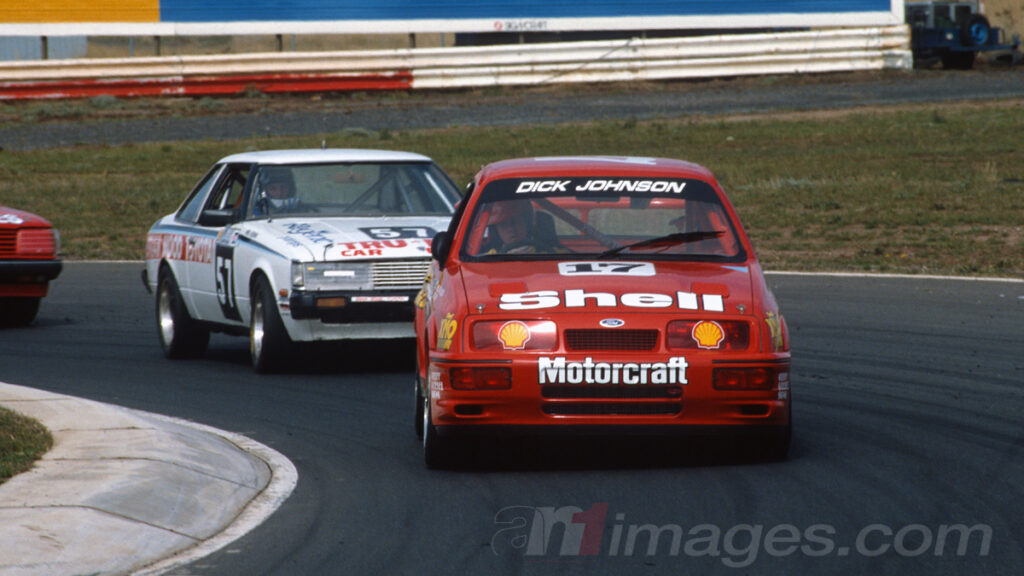 DJR 1’s race debut at Calder, 1987. Pic: AN1 Images / Graeme Neander
The Sierra’s clear potential reached another level with homologation of the RS500 update for the enduros, delivering refined bodywork, improved cooling and a larger, horsepower-boosting Garrett turbocharger.
In the Castrol 500 at Sandown, Johnson demonstrated the Sierra’s potent straight-line speed by qualifying on pole position. However, true to ’87 form, an engine failure in the Sunday warm-up led to #17 not starting the race.
Bathurst was equally demoralising, with driveline failure ending Johnson and the late Gregg Hansford’s race three laps in.
Redemption came when Johnson won the Australian Grand Prix support race at Adelaide, albeit in nerve-wracking fashion as the Sierra hobbled home with fuel starvation.
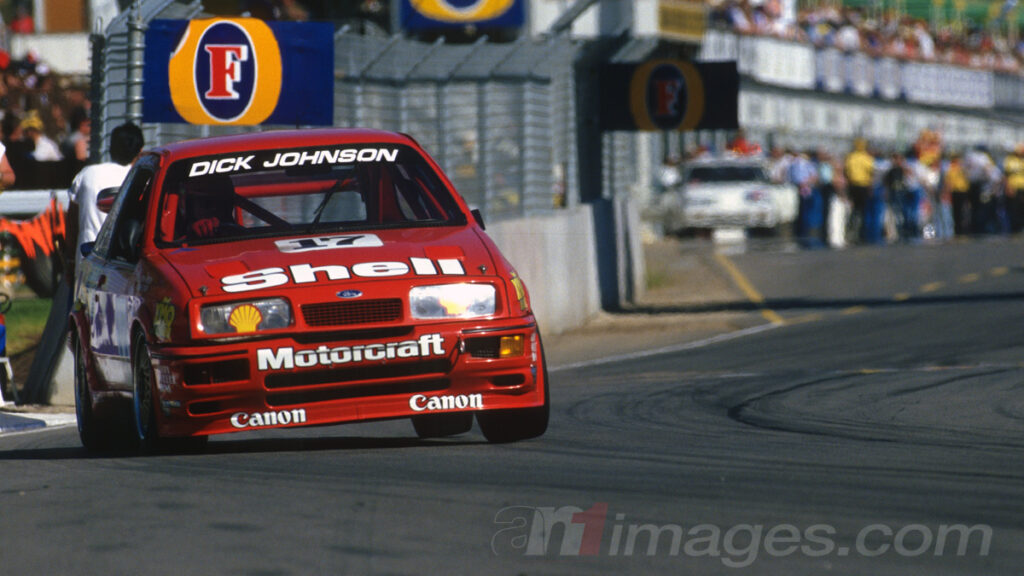 Johnson narrowly held on to win the 1987 AGP support race. Pic: AN1 Images / Graeme Neander
Johnson moved to a new car for 1988 with DJR 1 becoming #18 for new signing, John Bowe, who took his first two ATCC/Supercar Championship race wins at Winton and Amaroo.
This chassis was the #18 car for John Smith and Alfredo Costanzo in the Sandown/Bathurst endurance stretch.
After a tyre failure and driveline problem curtailed #17’s race at Bathurst, Johnson and Bowe cross-entered into #18 with Smith, finishing second despite losing eight minutes in the pits to replace an expired starter motor.
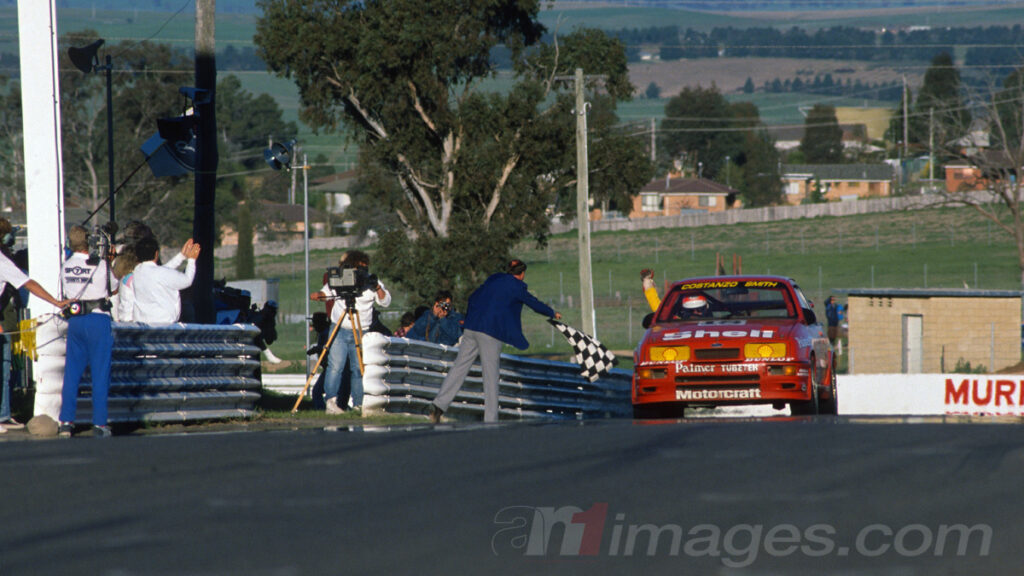 Johnson crosses the line in #18 at Bathurst, 1988. Pic: AN1 Images / Graeme Neander
DJR 1’s last Australian race came at the Grand Prix support race in Adelaide, with Bowe retiring (as did Johnson) due to fuel vaporisation.
Following the stunning performance of Johnson and Bowe in the RAC Tourist Trophy at Silverstone (driving DJR Sierra Chassis 3), DJR-built cars were sought after by numerous European teams.
Trakstar Motorsport subsequently acquired DJR 1 and DJR 2 to run in the 1989 British Touring Car Championship (BTCC), with Robb Gravett winning four races on board DJR 1.
After multiple changes of ownership in the United Kingdom over the ensuing decades, DJR 1 has been in the custodianship of Sierra enthusiast Paul Linfoot since 2017.
DJR 2
This chassis had the shortest Australian racing history of any of the six Sierras run by DJR between 1987 and 1992, competing in only one season in Shell colours.
Uniquely, it was the only left-hand-drive Sierra built by DJR, but has been in right-hand-drive configuration since the end of 1988.
DJR 2 was Gregg Hansford’s #18 chassis for the 1987 ATCC, debuting in Round 1 at Calder Park.
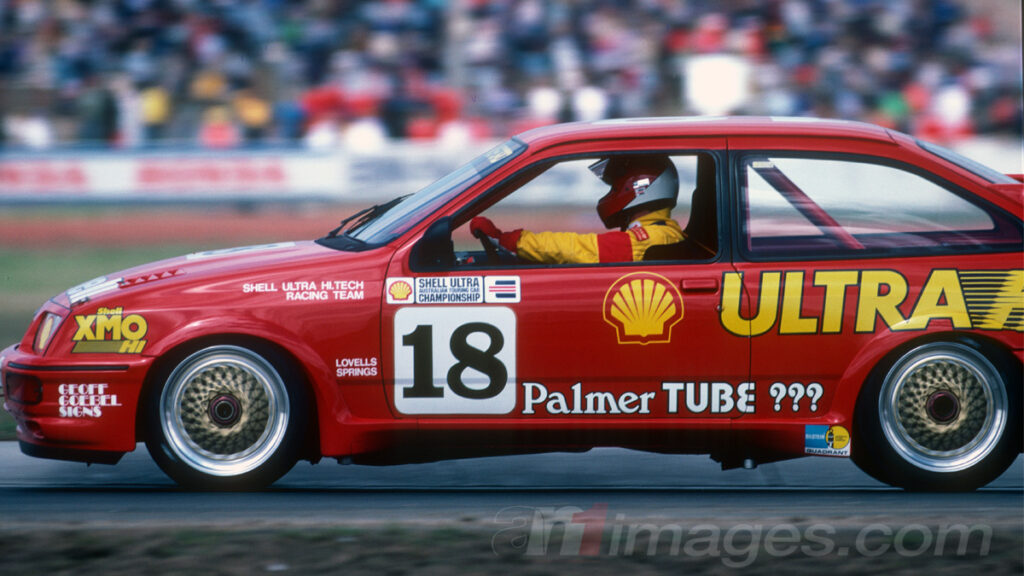 Gregg Hansford piloting DJR 2 in its race debut at Calder, 1987. Pic: AN1 Images / Dale Rodgers
The former motorcycle Grand Prix winner had an even tougher time in 1987 than Johnson, finishing just three of the nine ATCC races with a best finish of fifth at Wanneroo.
DJR 2 remained the #18 car for the endurance season, originally intended for Neville Crichton and Charlie O’Brien at Sandown however the pre-race withdrawal of #17 saw Johnson and Hansford cross-enter in #18 at the expense of O’Brien.
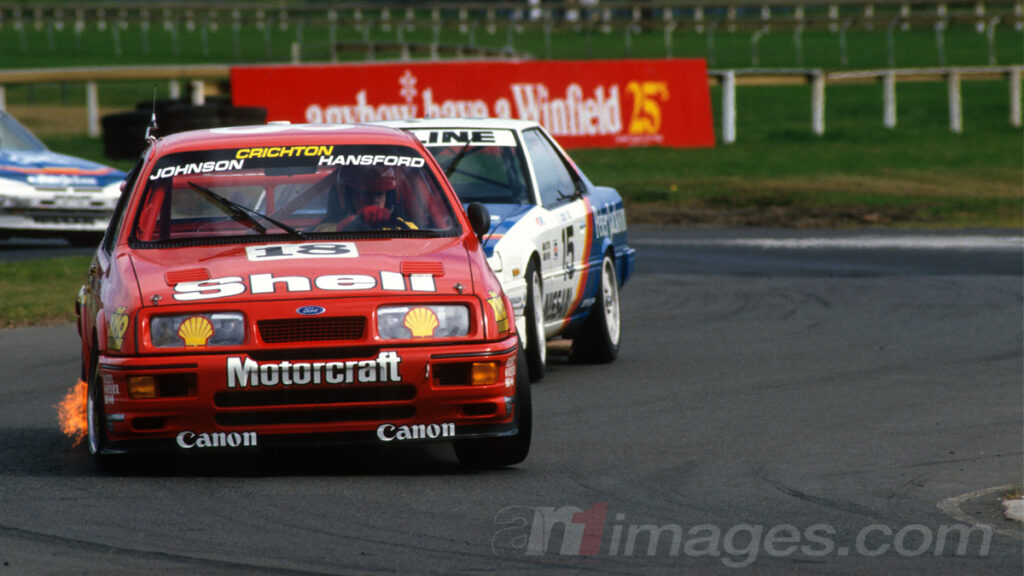 Johnson at the wheel of the #18 car he and Hansford cross-entered in for the 1987 Castrol 500. Pic: AN1 Images / Graeme Neander
Crichton and O’Brien drove at Bathurst (out after two laps when the former collided heavily with Larry Perkins) and the FIA World Touring Car Championship round at Calder.
The car’s last race for DJR was the end-of-season Wellington 500 in New Zealand, with Crichton and DJR team manager Neal Lowe forming an all-Kiwi line-up in DJR 2.
Moved to spare car status for 1988, DJR 2 was last publicly sighted in Australia as a display car during race week of the ’88 Bathurst 1000.
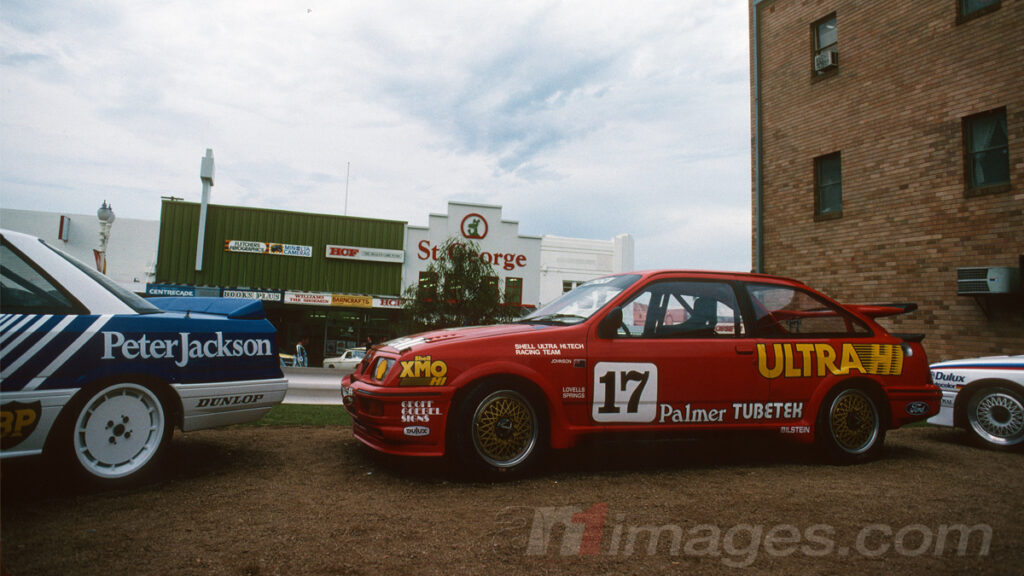 DJR 2 on display in the centre of Bathurst, 1988. Pic: AN1 Images / Dale Rodgers
It was converted to right-hand-drive at DJR’s Acacia Ridge facility before being sent to Trakstar Motorsport with DJR 1, who ran Mike Smith and Will Hoy in this chassis for the 1989 BTCC.
After being sold to a rally competitor in the UK, the whereabouts of DJR 2 was unknown for more than two decades.
In the early 2010s, current custodian Ian Goff was able to identify – thanks to the help of DJR 1 custodian Linfoot – that he owned DJR 2. The pair embarked on an eight-year restoration to return the car to late-1987 DJR specification.
The car has returned to the track in recent months, with Goff’s son Max driving DJR 2 in historic events on legendary circuits including Donington Park, former French Grand Prix venue Dijon-Prenois and Spa-Francorchamps in Belgium.
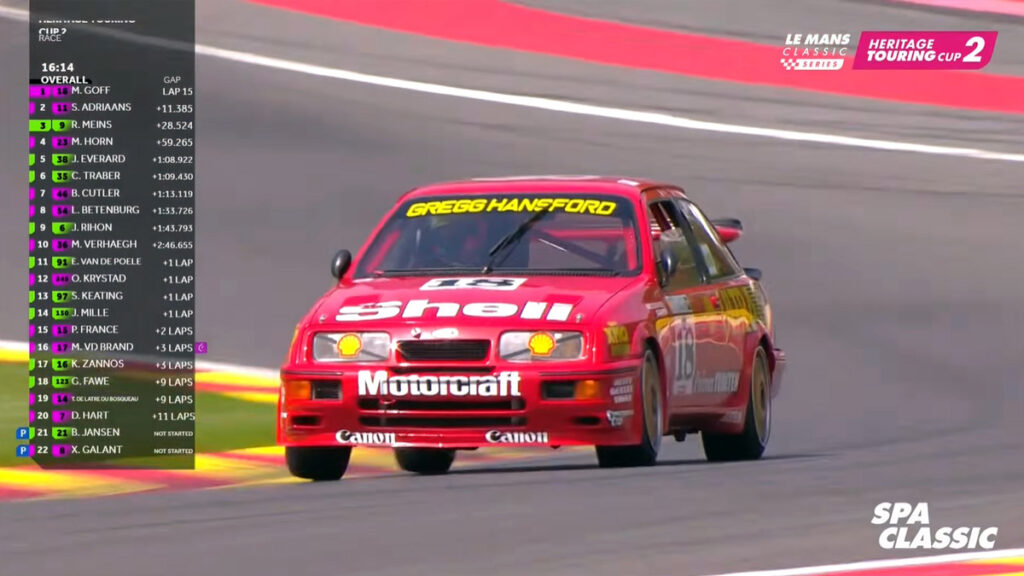 DJR 2 powers out of Eau Rouge at Spa-Francorchamps, May 2026. Pic: Le Mans Classic Series YouTube Vision