

Happy Monday, G&GRs. I don’t know about you GAGRs, but international test season is my favourite time of the year. And this Nations Championship thing is just fantastic. Six tests in a row. Just bloody great. I won’t be covering any of the multitude of other games played this week; I will concentrate on the big 6 and let the others cover the rest. Go and pour a cup of liquid gold☕ and get that into you while we pull apart the first round.

The Nations Championship – Round One
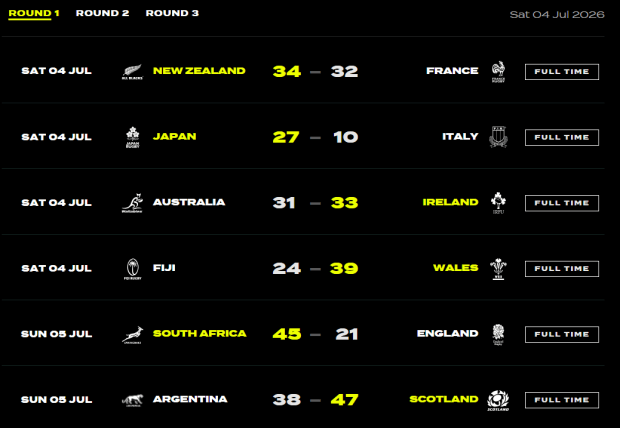
New Zealand 34 defeated France 32

All Blacks survive French fright as Jordan marches towards history – The Dave Rennie era is officially underway. Whether it was entirely convincing is another matter. The All Blacks opened the inaugural Nations Championship with a heart-stopping 34-32 victory over France in Christchurch, surviving a late French surge that had most New Zealand supporters nervously checking whether their cardiologist was still awake.
On paper, a win is a win. In reality, this was one of those performances that left everyone simultaneously impressed, relieved and slightly concerned. Things couldn’t have started much worse for the hosts. Before many fans had finished their first sip of beer, Damian Penaud had crossed for a French try after less than 90 seconds, helped by a high tackle from Ruben Love that earned the utility back ten minutes in the naughty chair.
The French arrived without superstar halfback Antoine Dupont and flying winger Louis Bielle-Biarrey, but if anyone expected Les Bleus to roll over and admire the scenery in Christchurch, they were sorely mistaken. Instead, they came to play, attacking from everywhere and asking plenty of uncomfortable questions of an All Blacks defence that occasionally looked like it had met for the first time during the warm-up. Fortunately for the home side, they still possess Will Jordan.
The Crusaders superstar opened New Zealand’s account in the seventh minute and was a constant menace whenever he touched the ball. Every time the French appeared to seize momentum, Jordan seemed to pop up somewhere dangerous and remind everyone why opposition coaches spend sleepless nights planning for him. Cam Roigard was equally influential. The halfback grabbed two tries of his own and continues to strengthen his claim as one of the most dangerous attacking nines in world rugby. Peter Lakai also crossed as the All Blacks built enough scoreboard pressure to stay just ahead of the visitors.
But the game never truly felt secure. France refused to go away. Theo Attissogbe and Antoine Hastoy both crossed, while Matthieu Jalibert’s late try reduced the margin to just two points with barely any time remaining. Hastoy’s conversion set up a grandstand finish and briefly raised the possibility of yet another French heist on New Zealand soil.
The decisive moment ultimately came in the 71st minute when Jordan struck for his second try of the evening. The score pushed New Zealand out to 34-25 and, as it turned out, provided just enough breathing room to survive the inevitable French comeback. The double took Jordan to 47 Test tries, leaving him just two shy of Doug Howlett’s long-standing All Blacks record of 49. Given his strike rate, the record may not survive much longer.
After the match, captain Ardie Savea was pleased with the result but realistic about the performance. The All Blacks were dangerous whenever they held possession, but France repeatedly exposed defensive frailties that will concern Rennie and his coaching staff. The attack looked sharp, the finishing clinical, but the defensive review session may require a strong coffee and several hours of uncomfortable honesty.
For France, the defeat will sting, but there was plenty to admire. Missing several frontline stars, they still pushed the All Blacks to the brink in Christchurch and showed once again why they remain one of the few sides capable of matching New Zealand punch for punch. As tournament openers go, it was an absolute beauty. As All Blacks tune-ups go, there is still plenty of tuning required.
Three Things We Learned
1. Will Jordan is coming for the record books – Forty-seven Test tries. That’s where Jordan now sits after another clinical double. Doug Howlett’s record of 49 suddenly looks very vulnerable. More importantly, Jordan continues to deliver in big moments. Every great All Blacks side has a player who turns half-chances into tries. Right now, that’s Jordan.
2. Dave Rennie has inherited an attack ready to fire – The All Blacks scored five tries against one of the world’s best defensive nations and looked threatening whenever they generated quick ball. Roigard was electric, Jordan was lethal, and the forward pack consistently created opportunities. Rennie won’t have many complaints about what happened with ball in hand.
3. The defence needs work — plenty of it – Conceding 32 points at home is rarely cause for celebration. France repeatedly found space through the middle and on the edges, and the All Blacks looked vulnerable whenever the visitors increased the tempo. The attack won this match, but defence nearly lost it. Rennie’s first week as head coach will feature far more defensive clips than attacking highlights.
Japan 27 defeated Italy 10

Brave Blossoms Bloom as Italy Wilts in Tokyo – For all the pre-match discussion about who wasn’t playing for Japan, it turned out the more important question was whether Italy had packed enough answers for what awaited them in Tokyo. Spoiler alert: they hadn’t.
The Brave Blossoms produced one of their most complete performances in recent memory, defeating Italy 27-10 at Prince Chichibu Memorial Stadium and claiming their first win over the Azzurri since 2018. More importantly, they did it the hard way – through defensive pressure, discipline, and a willingness to make every Italian attack feel like a trip through peak-hour Tokyo traffic. And they did it without Dr Evil, which makes it even better!
Italy arrived expecting to test a Japanese side missing star flyhalf Seungsin Lee, whose hand injury has temporarily parked one of the world’s most prolific point scorers. Instead, they found a side that looked remarkably comfortable without him. After Italy struck first through Juan Ignacio Brex following a neat Paolo Garbisi pass, it appeared the visitors might settle into the match. Japan, however, had other ideas.
With scrumhalf Naoto Saito firing crisp service from the base, the hosts began to crank up the tempo. Captain Warner Dearns crashed over to level proceedings before fullback Takuro Matsunaga announced himself as the star of the evening. Matsunaga first finished off a sparkling break from Yuya Hirose before adding the extras and a penalty goal to suddenly turn a 7-0 deficit into a 17-7 lead. The Italians managed to narrow the gap before halftime through a scrum penalty, but even then there were warning signs. Their attacking kicking game was being swallowed whole by a Japanese back three that seemed permanently stationed in the right place.
At 17-10 down, Italy still had a pulse. Japan made sure it didn’t last long. Straight after the restart, the Brave Blossoms put together a 16-phase sequence that would have made any attack coach purr with satisfaction. Eventually No.8 Ben Gunter decided enough was enough, barging through a collection of blue jerseys and planting the ball over the line for a try that felt decisive the moment it was scored.
From there Japan’s defence tightened the screws. Every Italian carry seemed to end with red-and-white shirts arriving in numbers. Dominant tackles repeatedly knocked the visitors backwards, while handling errors and turnovers mounted. By the time veteran Michael Leitch entered the fray alongside a wave of replacements, Japan had complete control of the contest.
Matsunaga added another penalty shortly after the hour mark to finish with 17 points and cap an outstanding individual display. More importantly, the Brave Blossoms held Italy scoreless throughout the second half, turning what had been expected to be a tight contest into a statement victory. Italian coach Gonzalo Quesada was left lamenting a mountain of mistakes afterwards, noting that losing 25 possessions made it virtually impossible to generate any meaningful pressure.
He’s not wrong. Against a defence this organised and this hungry, handing over that much ball is less a strategy and more a charitable donation.
Three Things We Learned
1. Japan’s defensive system is reaching another level – The Brave Blossoms have traditionally earned praise for their attack, speed and creativity. Against Italy, it was their defence that stole the show. Dominant collisions, excellent line speed and relentless work around the breakdown suffocated the visitors for large portions of the match. If this defensive edge becomes a permanent feature, Japan will be a difficult proposition for anyone in the Nations Championship.
2. Ryunosuke Ito looks ready for the big stage – Replacing Seungsin Lee was supposed to be one of Japan’s biggest concerns. Instead, debutant Ryunosuke Ito played with composure well beyond his years. The Meiji University product controlled territory sensibly, distributed effectively and helped create Matsunaga’s try. Japan may have discovered another genuine playmaker.
3. Italy still struggles when Plan A stops working – The Azzurri have made significant progress under Gonzalo Quesada, but this match highlighted a lingering issue. When quick ball disappears, and the opposition wins the collision battle, Italy can become predictable. The visitors created opportunities early but lacked the adaptability required once Japan adjusted and began winning the physical contest. Against stronger defensive sides, that remains a concern.
Ireland 33 defeated The Wallabies 31
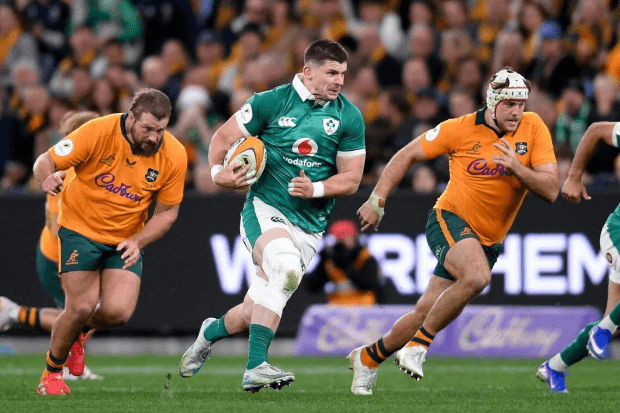
Wallabies snatch defeat from the jaws of victory as Ireland escape Sydney with thriller – Well, that hurt. The Wallabies have produced their most encouraging performance in quite some time and somehow still found a way to lose, falling 33-31 to Ireland in front of a record rugby crowd of 41,971 at Allianz Stadium.
If you’re looking for silver linings, there were plenty. If you’re looking for a result, unfortunately there wasn’t one. For large chunks of the evening, Joe Schmidt’s side looked like they might finally break Ireland’s stranglehold on this fixture. Instead, the visitors made it six straight wins over Australia and headed back to the hotel with another victory tucked under their arm.
The Wallabies exploded out of the blocks with the sort of intensity we’ve been begging to see. Carter Gordon looked composed, Rob Valetini looked like he was auditioning for a Marvel movie, and Ireland suddenly found themselves chasing the game. Jock Campbell opened the scoring after some excellent lead-up work, before immediately answering a Cian Pendergast try to restore Australia’s advantage. The game quickly developed into a shootout, with neither defence exactly covering itself in glory.
Ireland edged ahead through Josh van der Flier after some slick work close to the line from Dan Sheehan, but the Wallabies weren’t interested in playing supporting actor on their own stage. Valetini tore through the Irish defence to set up Josh Canham for his maiden Test try, while Ryan Lonergan crossed shortly after backing up a Max Jorgensen intercept. Suddenly Australia were sitting pretty with a 24-12 lead, and Allianz Stadium was making noises usually reserved for State of Origin.
The problem, as has often been the case with Australian rugby over the past few years, was that opportunities were left on the park. Several attacking chances went begging, including opportunities involving Jorgensen and Joseph-Aukuso Suaalii that could have put genuine scoreboard pressure on Ireland. Against most teams, you can survive that. Against Ireland, you generally can’t.
The visitors responded either side of halftime and gradually began squeezing the life out of the contest. Their ability to convert pressure into points remains one of the great strengths of world rugby, and every visit inside Australia’s 22 looked dangerous. Tate McDermott briefly swung momentum back Australia’s way with a crucial try after replacing Lonergan, while the Wallabies defended desperately to keep the lead intact.
When Dan Sheehan thought he’d scored a decisive try only for the TMO to spot an obstruction involving Valetini, it felt like fortune might finally be smiling on the men in gold. It wasn’t. The key moment came when Australia opted to kick for goal from a difficult sideline penalty rather than push for a potentially match-sealing try. Ben Donaldson’s effort drifted away, Ireland launched one final assault, and the Wallabies found themselves defending wave after wave of green jerseys.
A mounting penalty count eventually caught up with them. Debutant Lachlan Shaw became the unfortunate sacrificial lamb as referee patience expired, reducing Australia to 14 men. Ireland immediately capitalised. Tighthead prop Thomas Clarkson crashed over, Sam Prendergast converted, and just like that the visitors were back in front. To their credit, the Wallabies refused to fold. One final penalty after the siren handed Donaldson a second chance to become the hero.
Forty metres out. Near the touchline. Game on the line. The strike looked promising but faded right at the death, prompting simultaneous celebrations from the Irish and groans from every Australian rugby supporter in the country. Joe Schmidt was understandably disappointed afterwards but took positives from the performance.
The Wallabies showed ambition, physicality and resilience. Unfortunately, they also showed that against elite opposition, missed opportunities and discipline lapses remain brutally expensive. Close enough to encourage. Not quite close enough to win.
Three Things We Learned
1. Rob Valetini is still Australia’s most influential player – Every time the Wallabies generated momentum, Valetini seemed to be at the centre of it. His carries bent the Irish defensive line, his physicality created opportunities for teammates, and he once again looked every bit a world-class Test forward. Australia have quality players across the park, but nobody consistently changes games quite like Bobby V.
2. The Wallabies can score against anyone – For all the frustration surrounding the result, putting 31 points on Ireland is no small achievement. The attack looked sharper, Carter Gordon directed traffic effectively, and there was genuine variety in how Australia created opportunities. The challenge now is turning promising attack into ruthless attack.
3. The small moments still separate Australia from the best – Missed kicks. Unfinished chances. Penalties under pressure. Against Tier Two nations, those mistakes are survivable. Against Ireland they’re usually fatal. The Wallabies proved they can go toe-to-toe with one of the world’s best sides, but they also demonstrated exactly why Ireland remain among rugby’s elite. The gap isn’t huge anymore, but it’s still there.
Wales 39 defeated Fiji 24
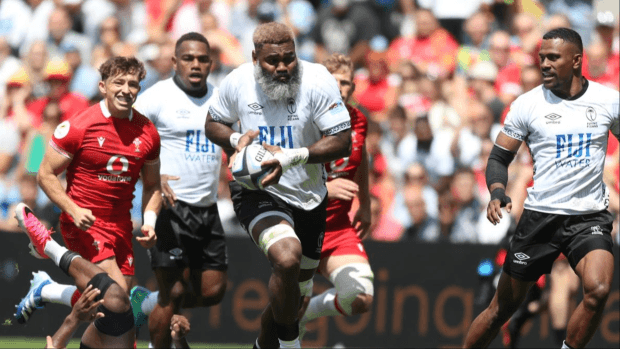
Wales survive the Fijian fireworks show to pinch another win in Cardiff – If rugby matches were decided by line breaks, offloads, metres gained and making opposition defenders question their career choices, Fiji would have won this one by about 40.
Unfortunately for the Flying Fijians, Test rugby still has the annoying habit of rewarding the team that scores more points. So despite spending much of the evening turning Welsh defenders into training cones, Fiji somehow walked away from Cardiff City Stadium with a 39-24 defeat as Wales claimed back-to-back Test wins for the first time since rugby was still pretending Warren Gatland’s second stint was going to work out.
The crowd of 16,456 were treated to two completely different interpretations of rugby. Fiji brought the jazz. Wales brought the spreadsheet. The Fijians piled up a ridiculous 469 running metres in the first half compared to Wales’ 66. They threw 25 offloads before the break while Wales managed the grand total of none. Zero. Zilch. Not one daring pass from contact.
And yet the teams somehow went to halftime locked at 10-all. It was one of those scorelines that would have left every Fijian supporter staring at the stats sheet wondering whether somebody had accidentally swapped the jerseys around.
Fiji exploded into the contest after just three minutes when Pita-Gus Sowakula crashed over. The visitors looked capable of scoring every time they touched the ball, but the final pass repeatedly let them down. Breaks became half-breaks, half-breaks became handling errors, and promising attacks somehow ended without points. The evening was also soured by a serious-looking injury to former NRL star Semi Radradra, who departed in worrying circumstances.
Meanwhile, Wales did what Wales have traditionally done best: roll up their sleeves and drive large men over the tryline from close range. Captain Jac Morgan marked his return from injury with two first-half tries from lineout mauls, both delivered with all the subtlety of a demolition crew arriving at a heritage-listed building. The game turned shortly after halftime.
From a deadlocked 10-10 scoreline, Wales struck twice in barely two minutes. First prop Rhys Carre rumbled over, then Josh Adams produced one of the more opportunistic tries you’ll see all year. Chasing a speculative kick into the in-goal, Adams pounced as Selestino Ravutaumada attempted to shepherd the rolling ball dead. The Welsh winger somehow reached through the Fijian’s legs to ground the ball. Adams later admitted there was a fair bit of luck involved. The rest of us call it being in the right place when something weird happens.
To Fiji’s credit, they refused to disappear. Ravutaumada responded soon after with a well-worked overlap that brought the margin back to a single point and briefly raised hopes that Fiji’s attacking brilliance would finally be rewarded. Instead, Wales reverted to the things they trust most. Another lineout drive produced a try for replacement hooker Ryan Elias, before centre Eddie James crashed over from a powerful attacking scrum. It wasn’t flashy, but it was brutally effective.
By full-time, Wales had crossed for six tries, with five of them coming directly from set-piece pressure, forward muscle or capitalising on Fijian mistakes. It wasn’t the most entertaining way to win a rugby match. But it was certainly the most Welsh. As Jac Morgan put it afterwards, it took the full 80 minutes to beat Fiji. He’s right. Fiji asked every question imaginable. Wales simply happened to know all the answers that mattered.
Three Things We Learned
1. Fiji still produce rugby’s best highlights reel – Nobody attacks quite like Fiji. The offloads, support lines and willingness to play from absolutely anywhere remain unmatched in world rugby. The problem remains converting moments of brilliance into sustained scoreboard pressure. Against Tier One nations, missed opportunities eventually become expensive.
2. Wales have rediscovered an identity – It might not be glamorous, but Wales finally look like they know what they are. Their lineout maul was dominant, their scrum generated rewards, and they repeatedly turned pressure into points. After several years of searching for answers, there are signs of a blueprint emerging.
3. Jac Morgan is absolutely vital – The Welsh skipper returned from injury and immediately looked like the most influential player on the field. Two tries, relentless work around the breakdown and leadership throughout. If Wales are going to climb out of the basement of world rugby, Morgan will be central to the rebuild.
South Africa 45 defeated England 21
Firstly, if you haven’t done so, go and read Butz’s great review of the game here.
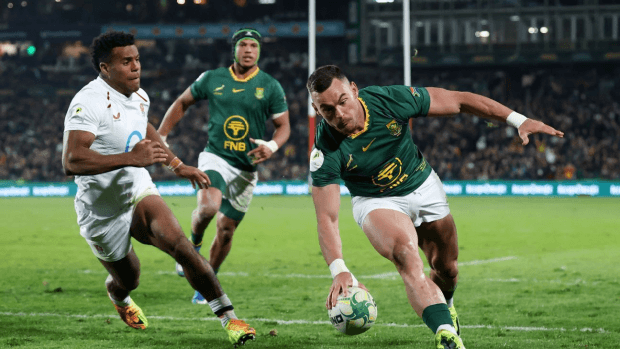
Boks do Bok things as England flattened in Johannesburg – Well, that escalated quickly. For about 15 minutes at Ellis Park it looked less like a Nations Championship opener and more like a public demonstration of South African agricultural machinery. England arrived in Johannesburg full of optimism and left looking like they’d spent two hours trapped inside a tumble dryer set to “Springbok.”
South Africa eventually ran away 45-21 winners, crossing for seven tries and reminding everyone that while rugby continues to evolve, having several tonnes of angry forwards remains a pretty effective strategy. The opening quarter was brutal. Not brutal in the old-school “everyone punches each other” sense, but brutal in the modern Springbok sense where giant men repeatedly carry the ball directly through your chest until your defensive system files a formal complaint.
Thomas du Toit got the party started after just two minutes, rumbling over from close range. Four minutes later Ox Nche burst into space — a terrifying phrase for opposition defences — before Cheslin Kolbe finished the movement. When Kurt-Lee Arendse crossed soon after, South Africa were 17-0 ahead, and England looked in serious danger of becoming a cautionary tale.
At that point most teams would have folded. To England’s credit, they didn’t. A disallowed try to captain Jamie George finally gave the tourists something to build on, and they gradually found a foothold in the contest. Ellis Genge crashed over from a quick tap penalty to get England on the board before Fin Smith produced a clever 50-22. From the resulting lineout, George Martin barged his way over, and suddenly a game that looked destined for an early mercy rule was back in business.
At halftime the margin was just three points, and England could legitimately believe they were in the fight. Then the Springboks remembered they are the Springboks. Grant Williams sniped over shortly after the restart, and Jesse Kriel finished off another sustained period of pressure as South Africa’s pack resumed its relentless assault on the gain line. Every scrum, maul and collision seemed to drain another little bit of English resistance.
Alex Coles kept England interested with a try that reduced the margin to ten points, but any hopes of a miracle comeback disappeared when Tommy Freeman and Guy Pepper were both shown the 🧀. Playing the Springboks with 15 men is difficult enough. Playing them with 13 is generally considered an unsafe workplace practice.
Malcolm Marx promptly crossed before Ben Jason-Dixon added the final flourish as the hosts piled on the points and closed out a convincing 45-21 victory. The scoreline ultimately reflected the difference between the two sides. England showed plenty of character after their horror start and competed strongly for long periods, but South Africa’s combination of forward dominance, physicality and finishing power eventually broke them.
The Nations Championship may be new, but the lesson remains familiar: if you allow the Springboks to dictate terms up front, you’re probably spending the afternoon chasing the scoreboard.
Three Things We Learned
1. The Springbok pack is already in mid-season form – The frightening part for the rest of the competition is how cohesive South Africa looked from the outset. Their scrum, maul and collision work generated almost everything good that happened. The backs collected the tries, but the forwards built the platform. As they say in South Africa: no forwards, no braai.
2. England have more resilience than recent results suggest – Many teams would have been blown away after trailing 17-0 inside 11 minutes at Ellis Park. England instead fought their way back to within three points by halftime and remained competitive for long stretches. The final margin hurts, but there were signs that this group possesses genuine character.
3. Yellow cards against the Boks remain a terrible life choice – England were still within striking distance when Freeman and Pepper headed to the bin. Against most sides, 13 men is survivable for a short period. Against South Africa, it is essentially an invitation for Malcolm Marx and friends to spend ten minutes trampling your defensive structure. The final two tries arrived quickly, and the contest was over.
Scotland 47 defeated Argentina 38
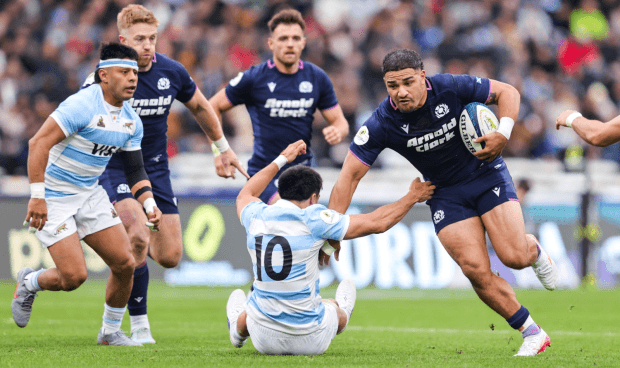
Scotland Go Full Scotland… Then Remember How to Win – Scotland have once again demonstrated rugby’s most confusing superpower: making life far harder than it needs to be before suddenly remembering they’re actually pretty good.
In a wildly entertaining Nations Championship clash in Argentina, the Scots outlasted Los Pumas 47-38 in a ten-try thriller that swung more often than a politician during election season. The visitors crossed for seven tries, survived a second-half surge, lost a man to the sin bin and still managed to post their highest-ever score against Argentina.
Not bad for a side that spent large chunks of the afternoon looking like they were trying to recreate every stressful Scottish rugby memory of the last decade. The win also served as a measure of revenge after Argentina pinched a 33-24 victory in Edinburgh last autumn.
Argentina Start Like a House on Fire – The home side came out breathing flames. Their opening possession lasted more than four minutes and featured 22 phases, immediately putting Scotland under pressure. After earning a penalty, Los Pumas kicked to the corner, mauled strongly and flanker Joaquin Oviedo crashed over for the opening try. At that point Scotland looked like they were in for a very long afternoon. Argentina dominated possession, territory and momentum through the opening quarter. But unlike previous Scottish teams who might have quietly folded into the scenery, this version fought back.
Tuipulotu Sparks the Response – The turnaround started in the 18th minute. After a lengthy spell of possession, Rory Hutchinson fired a lovely long pass to skipper Sione Tuipulotu, who strolled over untouched on the right wing. Suddenly Scotland looked alive. Six minutes later, Kyle Rowe sliced through the defence from fullback, and after quick ball Pierre Schoeman arrived at pace to bulldoze over.
With Argentina wobbling, Scotland landed another blow before halftime. A dominant scrum inside the Pumas’ 22 created the platform, Tuipulotu punched holes through midfield, and Hutchinson stepped through defenders to score. Just like that, Scotland had transformed a shaky start into a 19-10 halftime lead.
Los Pumas Swing Back – If there is one thing Argentina do well, it’s refusing to go away. Only two minutes into the second half, Santiago Carreras threaded a perfectly weighted grubber through the defensive line and Rodrigo Isgro won the chase to narrow the gap. The momentum had shifted again. Fortunately for Scotland, their answer was immediate.
Rather than taking the easy three points from a penalty, they followed the increasingly fashionable “corners not posts” strategy that has become a feature of this tournament. The lineout worked beautifully, and Gregor Brown crossed after Scotland stretched the defence. Not long after, Scotland produced arguably the try of the match.
Pinned against the sideline, Jamie Dobie somehow offloaded to Rowe, who kept the movement alive before Scott Cummings finished the move during his 50th Test appearance. At 33-17, Scotland looked comfortable. Which, naturally, meant they immediately made things uncomfortable again.
Tomas Rapetti’s try dragged Argentina back into the contest, and when Jamie Dobie was sent to the bin for repeated team infringements, the pressure ramped up considerably. Scotland’s lead had shrunk. Argentina sensed opportunity. The crowd found its voice. Enter Gregor Hiddleston.
The debutant hooker picked a pretty handy moment to score his first Test try, crossing from close range to restore breathing space and effectively kill off the comeback. Kyle Rowe then added another as Scotland finished with authority. Argentina managed a couple of late consolation scores to make the scoreboard look closer than Scotland would have liked, but the result was never seriously in doubt after Hiddleston’s intervention.
As captain Tuipulotu noted afterwards, Scotland expected a momentum battle and knew they’d need to wrestle control back at key moments. They did exactly that. The encouraging part for Scottish supporters wasn’t the attack—which has looked dangerous for some time—but the composure shown every time Argentina threatened to seize control. Each challenge was met with an immediate response.
For a team often accused of finding creative ways to lose, that might be the biggest positive of all.
Three Things We Learned
Scotland’s attack is becoming genuinely dangerous – Seven tries away from home against Argentina is no accident. Scotland moved the ball confidently, attacked from depth and consistently found ways to exploit space. With Tuipulotu directing traffic and players like Rowe providing genuine strike power, they’re becoming far more than a side that simply hangs around in contests.
Gregor Hiddleston couldn’t have scripted a better debut – Front-rowers usually celebrate a debut by surviving the scrums and hopefully not dropping the ball. Hiddleston decided to score the match-sealing try instead. More importantly, it came exactly when Scotland needed someone to calm the nerves. That’s the sort of debut coaches remember.
Argentina remain one of rugby’s most dangerous—and frustrating—teams. The Pumas produced long periods of outstanding rugby, dominated possession for stretches and looked capable of scoring every time they built momentum. Yet defensive lapses and an inability to shut down Scotland’s counter-punching cost them dearly. On their day, they can beat anyone. Consistency remains the challenge.
The Ladders
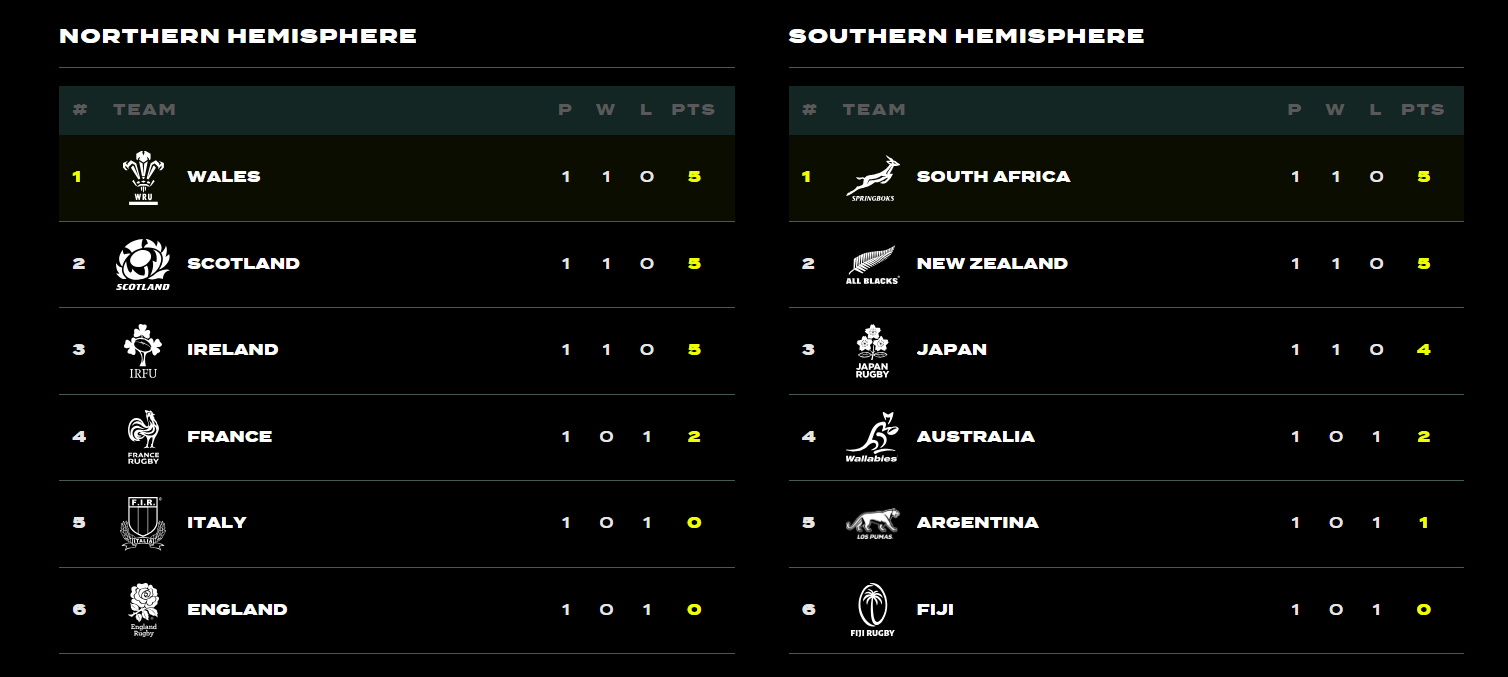
Well, if you had asked me on Friday who would be on top of the Northerners ladder, Wales wouldn’t have sprung to mind. But alas, here we are. I also didn’t think Japan would be above the Wobs or the Fijians on the ladder, but yet again here we are.
Well, that, my dear GAGR friends, was a lot of rugby to watch and write up. But it is the most magical time of the year, that’s for sure. Over to you, GAGRs, have at it.
Stay in the loop with G&GR