
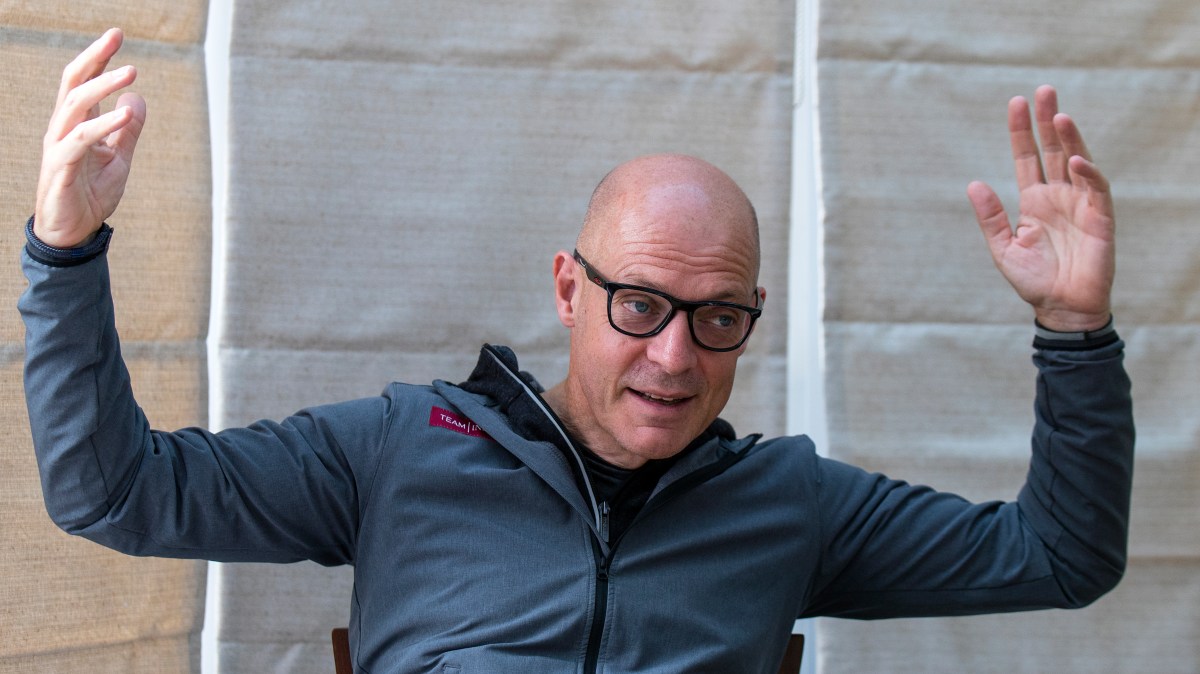
For journalists at the Tour de France, moseying about the team buses in the morning is a ritual. An opportunity for a catch-up with people you may see only at this time of year. There is also a chance to interview sports directors and staff members. Riders remain inside the buses, which is understandable. They’ve got a race to ride.
For the past two weeks I’ve avoided the Ineos Grenadiers bus. The one time I stopped and chatted, it was because he wasn’t anywhere to be seen. I am talking about Sir Dave Brailsford, who returned to the team two weeks ago after five years away. Journalists who have spoken to him sense that he has come back from his time in football a little chastened.
Cycling was the hometown girl he fell in love with as a teenager. They enjoyed a great life until his head was turned by a more glamorous woman from a very rich family. We are speaking, of course, of Manchester United. Alas, the rich lady grew tired of him. So here he is back with his first love, trying to start again, but she has changed, grown older and is not quite who she once was.
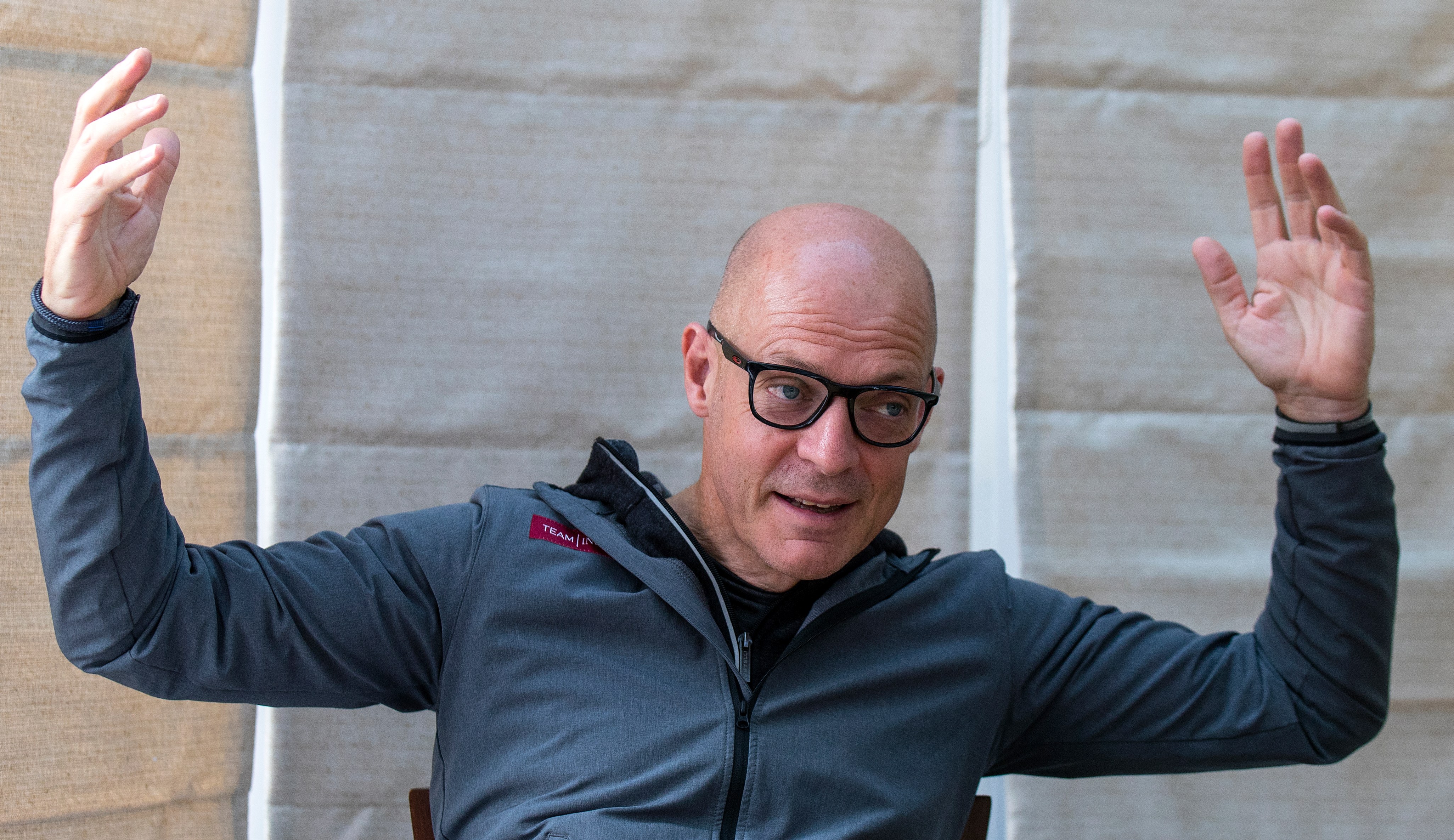
Brailsford was in no mood to answer questions, telling reporters: “F***ing hell, guys, come on”
TIMES PHOTOGRAPHER MARC ASPLAND
I avoid Brailsford because I know he is not going to answer questions that need to be answered. At the time he founded the professional cycling team Team Sky, he insisted that it would never cross the ethical line. In 2016 my colleague Matt Lawton discovered that in 2011 a secret package had been couriered by a staffer at British Cycling from Manchester to Team Sky, who were then racing in France.
When Lawton asked Brailsford about the package, the Team Sky boss said: “If you didn’t write the story, is there anything else that could be done?”
Decide for yourself what he meant by that. As you can about the 40mg injections of the corticosteroid triamcinolone, given to Bradley Wiggins days before the start of the Tour de France in 2011 and 2012. Team Sky claimed in an application to cycling’s governing body that the rider needed the medication for therapeutic reasons. Wiggins suffered from allergies. Medical experts question the appropriateness of the treatment, especially as triamcinolone is also a performance-enhancing drug.
A 2018 report by the digital, culture, media and sport select committee into Team Sky and British Cycling was damning. It said the use of the triamcinolone “was not to treat medical need, but to improve his [Wiggins’s] power-to-weight ratio ahead of the race”.
It added: “This does not constitute a violation of the World Anti-Doping Agency [Wada] code, but it does cross the ethical line that David Brailsford says he himself drew for Team Sky. In this case, and contrary to the testimony of David Brailsford in front of the committee, we believe that drugs were being used by Team Sky, within the Wada rules, to enhance the performance of riders, and not just to treat medical need.”
There are, of course, many other unresolved issues. Why did Dr Richard Freeman, then a senior doctor working with both Team Sky and British Cycling, order a consignment of 30 testosterone sachets in 2011 and have them delivered to the National Cycling Centre in Manchester? After the testosterone was discovered, Freeman lied that it had been sent to him in error and the head of medicine at Team Sky, Dr Steve Peters, asked Freeman to get the supplier to confirm this in writing.
Peters would later say that he didn’t tell Brailsford about the testosterone. That was remarkable. And, of course, the testosterone delivery had been ordered by Freeman. It was strange that Freeman should have been the one person who had to properly explain his part in all that went down at Team Sky and British Cycling. In a “fit to practice” case initiated by the General Medical Council and processed by the Medical Practitioners Tribunal Service, the tribunal concluded that the testosterone was ordered for the purpose to giving it to an athlete.
Freeman lost his licence to practice. Mary O’Rourke, the barrister in Freeman’s corner, believed Brailsford should have been a witness at the tribunal. “Dave Brailsford is the spectre missing at these proceedings,” she said in her summing-up. “He would have been able to answer an awful lot of questions about what was going on at British Cycling and Team Sky.”
Subsequent to losing his medical licence, Freeman received a four-year sport’s ban from UK Anti-Doping. Freeman loses his career, Brailsford gets a knighthood. The knight of the realm has never said a bad word about his team’s former doctor.
You may wonder why all this is recalled right now. Well, other journalists were beating a path to the Ineos Grenadiers bus last week. They were lining up to ask Brailsford about his head soigneur, David Rozman. An investigation by the German state broadcaster ARD had linked, but not named, a Team Sky soigneur with the doping doctor Mark Schmidt.
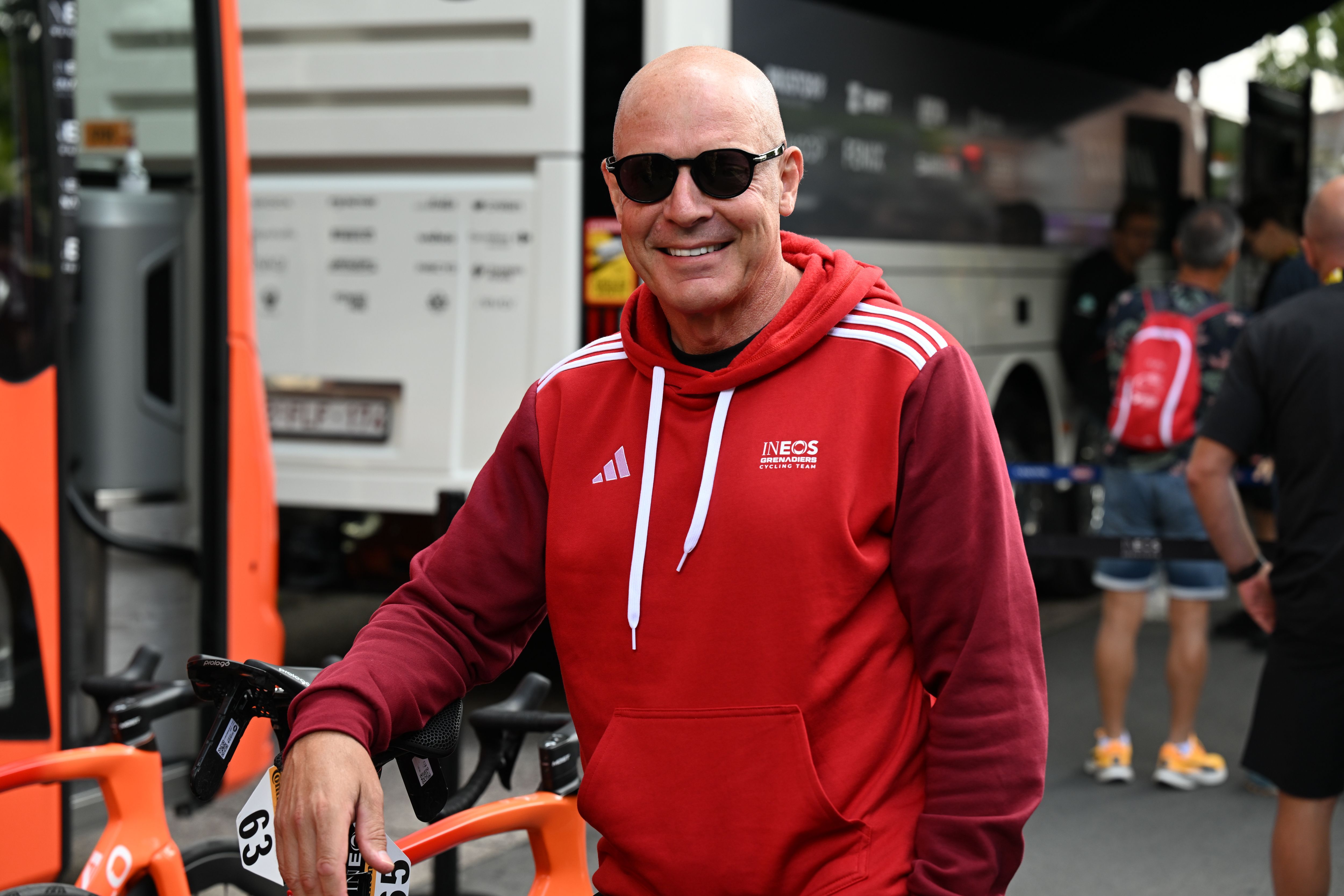
Brailsford at this year’s Tour de France with Ineos, before the latest controversy blew up
PETE GODING/SHUTTERSTOCK
At a Munich court in January 2021, Schmidt was found guilty of 24 counts of using doping products and given a prison sentence of four years and ten months. During the case there was evidence of 2012 mobile phone messages between Schmidt and a person involved in cycling. According to an ARD report, the person Schmidt was communicating with worked for Team Sky.
They said they knew the person, but because of a statute of limitation law in Germany, they could not name the Sky employee. Last weekend the Dublin-based Sunday Independent said the person involved was Rozman, then the Sky soigneur who is still with Ineos Grenadiers. The most concerning message was one from Rozman to Schmidt asking if he still had the “stuff that Milram [a team he had previously worked with] used” and if he could “bring it for the boys”.
Later in the week Ineos issued a statement saying it was aware of the allegations surrounding a team member: “These allegations have not to date been presented to the team by any appropriate authority, however the team has made a formal request to the International Testing Agency (ITA) to request any information it considers relevant. The team reiterates its policy of zero tolerance to any breach of the applicable Wada codes, historic or current.”
That wasn’t an untypical response from the team. Ineos could have said it had spoken to Rozman and asked if he had been party to the now much publicised conversation with Schmidt in 2012. Had he written those messages? If he had, what did he mean when asking Schmidt if he could bring stuff “for the boys”? Rozman, they say, remains part of their Tour de France team.
And so the journalists at the Tour tried to get some answers. The first question to Brailsford about the latest controversy drew a straightforward: “I am not commenting on that.” Another journalist wondered if it was fair to have the staff member (Rozman) taking so much heat? Brailsford replied: “Did you hear what I just said? I won’t be commenting.”
As he retreated to the sanctuary of the bus, Brailsford said, “F***ing hell, guys, come on.”
The questions, as always, remain unanswered.