
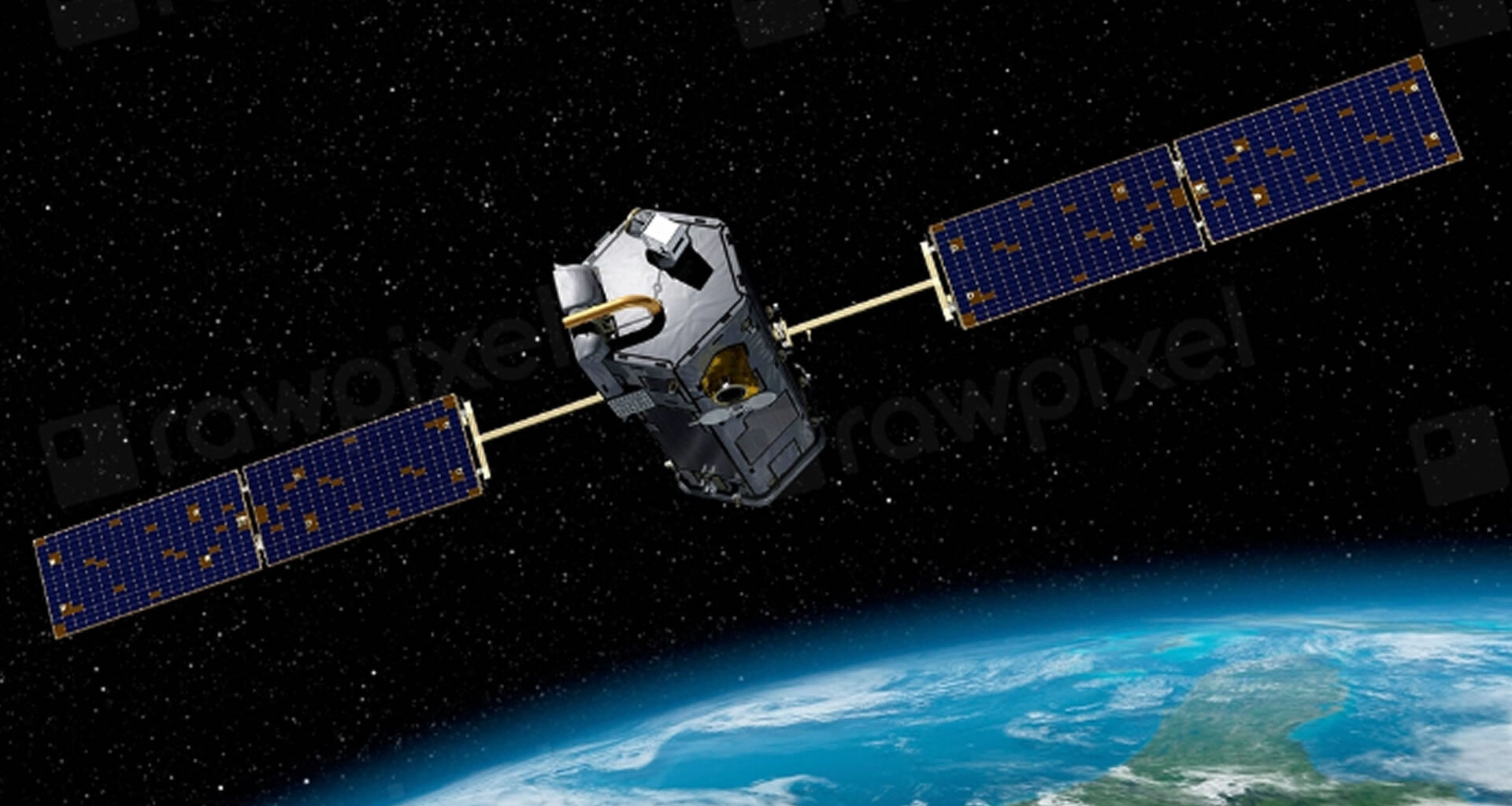
A Chinese satellite engine has reportedly broken a record for 14 hours of continuous thrust in orbit, Chinese media reports. The engine was able to produce 169 pounds-force (750 Newtons) of thrust, and fired for a total of 3.2 hours over 5 manoeuvres over a total of 14 hours.
For reference, the satellite was launched on June 23 on board a Long March-7A from Wenchang Spacecraft Launch Site, Hainan Province, China.
The satellite’s (Communications Technology Experiment Satellite 26A) test took place during the satellite’s maiden flight in June. This test has now safely put the satellite in a stable Earth orbit of around 22,000 miles (35,800 km) from its delivery elliptical transfer orbit.
Engines of this kind are used to perform the final leg of satellite deployment once it is delivered to space from Earth. This is a bit like you needing to take a taxi from an airport to your final destination.
From Earth to orbit
Such engines are also used to make small final corrections once in position. They can also be used to keep the satellite in orbit over the years, or potentially relocate the satellite later down the line.
The thrust of the engine doesn’t sound like much when compared to a rocket engine (typically in the kilonewton range), but once outside of Earth’s atmosphere, you don’t need that much to get around.
Once in space, there is no air resistance, and objects are already travelling at around 17,448 mph (7.8 km/s) thanks to Earth’s existing orbital velocity. This means that even small, continuous pushes in thrust can be enough to make changes in orbital position.
As for the recent test, the satellite engine’s test is significant, as such engines must work flawlessly in a vacuum without any possible need for repair or recovery. They must also operate at extremely high temperatures and restart multiple times without incident.
Chinese state media claims that the recent test has now left its US rivals “far behind” too. However, even a cursory glance at the claims shows this is a little overegged.
The claim is likely meant to refer to the engines’ designed total endurance of around 14 hours tops. For reference, most existing engines are designed for around 7 hours of total endurance.
Reducing reliance on imports
However, the recent test only ran the engine for a total of 3.2 hours, not 14. Total endurance of an engine is also not the only metric that matters anyway.
Engineers care much more about the fuel efficiency of an engine, its reliability, mass, cost, and thrust-to-weight ratio. So, in other words, one particular engine can be better in one area while worse in another.
But perhaps the most interesting aspect of this news is the potential military applications for this new engine. More capable engines of this kind could easily be militarized to allow military satellites to reach orbit much more quickly.
They could also enable them to carry more payload instead of fuel, and be able to manoeuvre in orbit much more easily for threat avoidance or repositioning purposes.
So, while certain claims about the recent test appear to be hyperbolic, this is genuinely an impressive technical achievement for the team behind it. What’s more, the technology appears to have been mostly domestically produced, meaning Chinese space research is making moves to reduce its reliance on imported technologies.