


Empty seats aren’t the only problem the sport faces. Photo: Jayzie Photography.
That’s the first question. Is Super Rugby on life support?
The second question: If so, what is needed to reinvigorate the competition?
Scenes of the Brumbies packing out Canberra Stadium, averaging crowds of almost 23,000 a game, are long gone.
The team reached that zenith in 2004, the year the Brumbies won their second title, and it appeared as though the juggernaut couldn’t be halted.
Two decades down the track, and that juggernaut’s run its course. The crowds this season at Canberra Stadium average just over 8000, with some critics suggesting that the current product is not sustainable.
Those questioning the future of Super Rugby include the Hurricanes co-owner, Wallabies great Matt Giteau, and former NZ Rugby CEO David Moffatt.
The New Zealand rugby union is undertaking a review into Super Rugby, fuelled by concerns about the lack of entertainment value and financial sustainability.
Another issue is the lack of tribalism in Super Rugby, which is more evident in club rugby with the Shute Shield in Sydney, the Hospital Cup in Brisbane and John I Dent in Canberra.
Go along to games where the Vikings play Royals or Queanbeyan in the Canberra competition, and you’ll see what I mean.
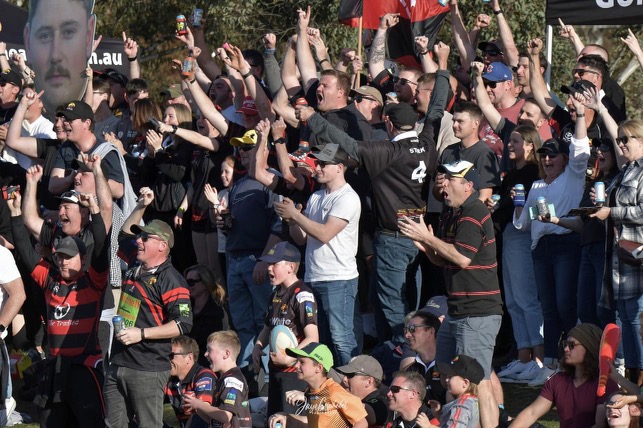
When two tribes go to war … The Gungahlin Eagles cheer squad at Viking Park for the 2023 John I Dent Cup grand final. Photo: Jayzie Photography.
To see tribalism at a higher level, you don’t have to go past the Raiders at home, or any NRL or AFL game for that matter.
Not only is there awareness of the opposition players, but there is a greater understanding of the history between the clubs involved.
That’s missing in Super Rugby at the moment. There is little in the way of promotion. Many supporters haven’t followed rugby in the move from Fox to Stan – and that was at the start of the 2021 season.
Nor is there awareness of the competition in the wider ACT community.
But it is not just Canberra feeling the impact of a drop-off in support for Super Rugby.
In recent years, we have witnessed the demise of the Rebels and, more recently, of Moana Pasifika.
This year, the Western Force had average home crowds of 5500, and the Waratahs, with the biggest supporter catchment in the entire competition, only averaged 13,795 a game.
The code received a sugar hit last year with the British and Irish Lions, and in 2027 there will be another financial boost with Australia staging the World Cup.
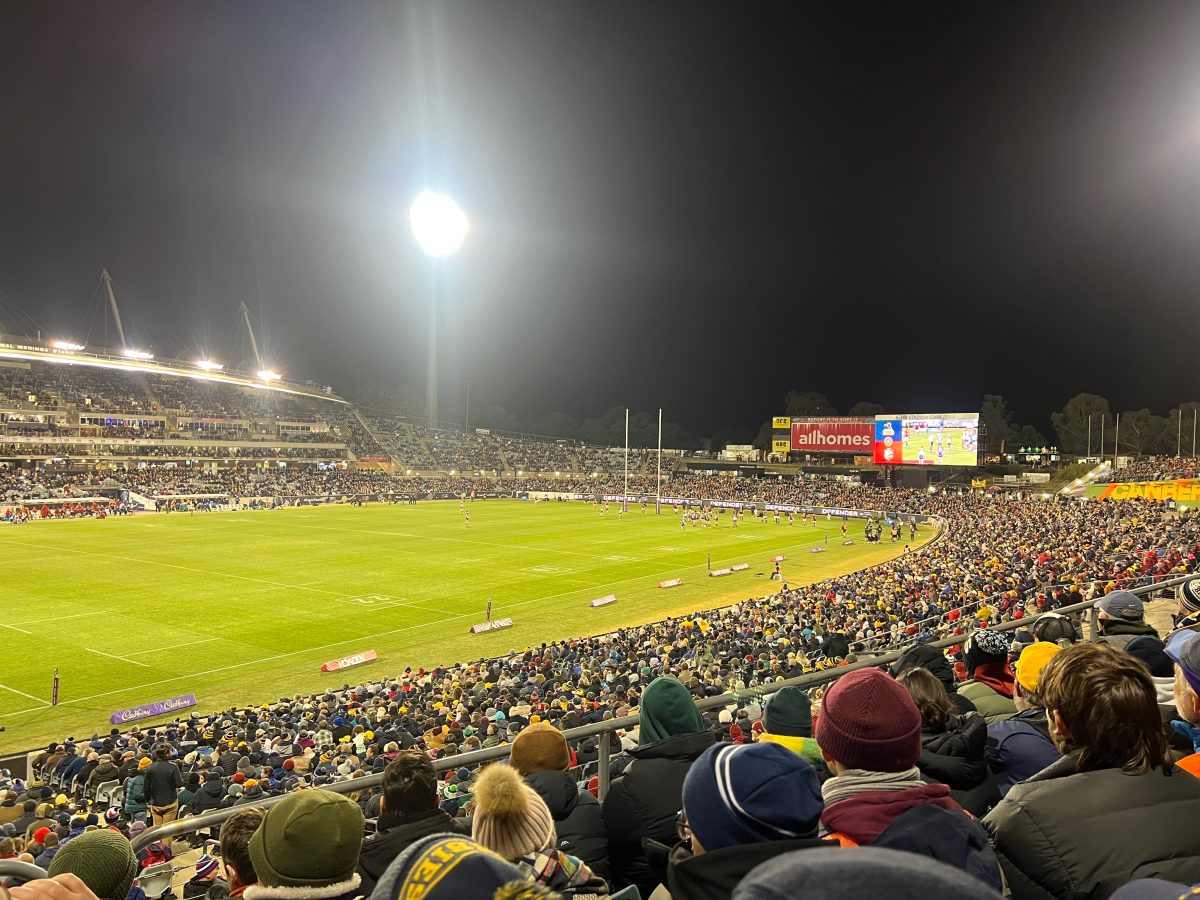
A large crowd watches on as the Brumbies play the British and Irish Lions at GIO Stadium in 2025. Photo: Tim Gavel.
The early release of tickets for the World Cup reveals there is global support for rugby, with 750,000 tickets already sold.
The Wallabies versus Ireland test in Sydney on Saturday night is also a sellout.
But many will argue that it simply covers up the inadequacies of domestic rugby in Australia.
There is little sense of excitement around Super Rugby. Occasionally, you see a good game, but more often than not, it is dominated by box kicks and refereeing interpretations.
Somewhat negative tactics have replaced the good old days of brilliant running rugby.
Solutions include allowing an ‘open borders policy’ and Super Rugby teams featuring more international players, which would go some way to improving the standard.
More importantly, though, we need a forensic analysis of how the game is played in Australia, given the NRL’s entertainment value.
There will be an argument from rugby aficionados that it misses the point, where rugby is at its peak in Europe, where the packing of multiple scrums and the box kick are celebrated.
There is a certain elitism in that mindset, solidified in the belief that only rugby people know what’s best and that people want to see more scrums, line-out interpretations and rolling mauls.
Contrary to that philosophy is the style of play adopted by the Hurricanes this season, with rapid ball movement and multiple attacking options.
When they kicked, they kicked with purpose.
If Super Rugby, which is back to 10 teams next season, resists change in the belief that critics don’t know what they are talking about, the competition will die.
Original Article published by Tim Gavel on Region Canberra.