
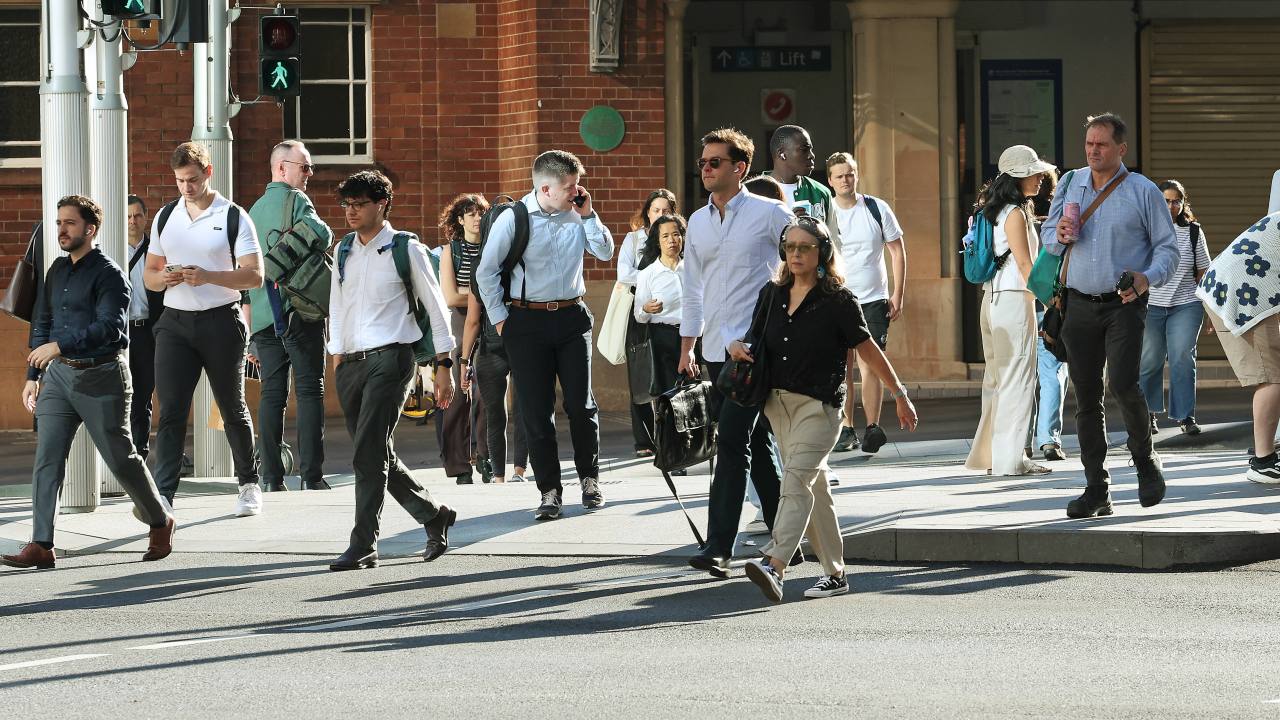
Australia faces its weakest growth since the 1990s recession as the nation’s economy is “structurally exposed in ways that have become hard to ignore”, a new report has warned.
Deloitte Access Economics was forced to downgrade its outlook for the Australian economy in its latest forecast amid higher inflation, interest rate rises and the oil shock.
It now expects the economy to grow 2.2 per cent in the 2026 financial year, 1.3 per cent in FY27 and 1.9 per cent in FY28.
This is down on previous forecasts of 2.4 per cent, 1.9 per cent and two per cent respectively.
Deloitte Access Economics partner Stephen Smith said the economy was expected to “limp along” at the longest stretch of sub-two per cent growth since the early-1990s recession.
“Australia’s growth outlook has deteriorated over the past six months,” Mr Smith said in a statement.
“The economy is still expanding, but growth has slowed and the outlook has become more fragile.
“Inflation has reaccelerated, interest rates have moved higher, and the oil price shock triggered by conflict in the Middle East is not yet fully resolved.”
He also blamed the recent rate rises as high inflation forced the central bank to lift the cash rate 75 basis points.
“The differences (driving the latest forecast are) three RBA rate increases, an ongoing cost of living challenge for households and another spurt of inflation caused by the Middle East,” Mr Smith told Sky News.
“Even though oil prices are now down, the whole real price level in Australia remains high.”
Deloitte’s dire assessment of Australia’s economy comes as trimmed mean inflation was 3.6 per cent in the year to May while productivity growth was just 0.3 per cent in the March quarter.
Trimmed mean inflation examines the middle 70 per cent of price changes and is central to the Reserve Bank of Australia’s cash rate decisions.
The RBA tries to bring this measure to between two and three per cent.
However, the lowest trimmed mean inflation has gone to since the pandemic was 2.8 per cent in June 2025.
Meanwhile, productivity examines the number of hours worked against GDP.
The latest 0.3 per cent reading is well below the 1.7 per cent average between 2004 and 2016.
Mr Smith said the turmoil of 2026 had exposed the vulnerabilities plaguing Australia’s economy.
“Australia is now structurally exposed in ways that have become hard to ignore,” he said.
“Deloitte Access Economics has rarely adopted such a downbeat assessment of the short-term outlook.”
He said that strong population growth had masked the weak productivity and lifted GDP while hurting living standards.
“Years of insufficient investment in housing, infrastructure, energy and the economy’s productive capacity have left the supply side of the economy struggling to keep pace with demand,” Mr Smith said.
Australia’s lacklustre productivity growth has left it vulnerable to inflation resurging in the economy.
Inflation began bouncing back in the second half of last year when the private sector picked up, boosting GDP but pushing the economy beyond its speed limit.
The price rises were exacerbated by the oil crisis in the Middle East, which not only forced transport costs higher but pushed up prices in other areas of the economy.
Mr Smith said Australia is not in a position where it can overlook its poor productivity, geopolitical exposure or stretched household balance sheets.
“They are harder to dismiss now that inflation is sticky, investment needs are rising and the global environment is more uncertain,” he said.
Deloitte’s dire outlook follows data platform Trading Economics showing Australia has the equal second-highest trimmed mean inflation rate among all advanced economies.
Australia’s trimmed mean inflation rate of 3.6 per cent is equal to the Netherlands’ rate, but remains below only Iceland’s rate of 6.5 per cent.
EQ Economics managing director Warren Hogan said the RBA’s fight against inflation after the pandemic was ineffective.
“This inflation is getting quite embedded now,” Mr Hogan told Business Now.
“The Reserve Bank has failed to hit their target all through these last few years.”
Pressed on whether the central bank’s decision to lower the cash rate 75 basis points throughout 2025 was a “mistake”, Mr Hogan vehemently agreed.
“It was,” he said.
“The RBA and others will argue that they did it on the base of the information they knew but they also had openly said they were running an experiment and never raised rates as much as other countries.
“I can’t see any argument for this not being anything but a disaster.”