
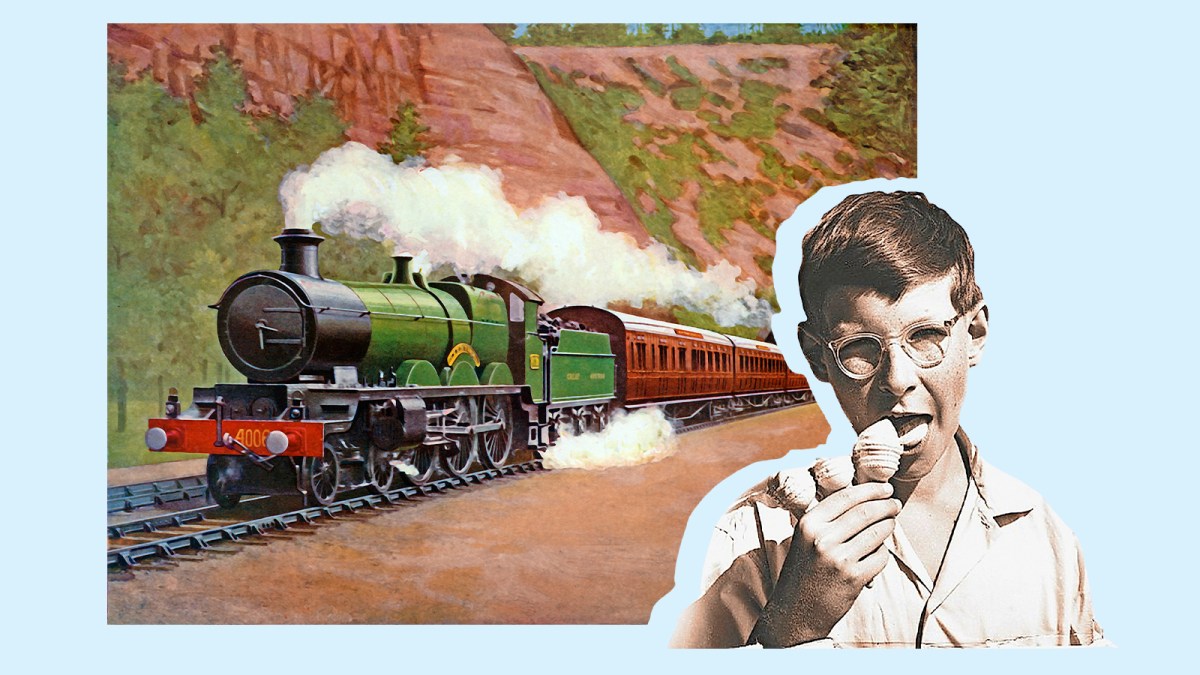
Andrew Martin, a novelist and self-confessed railway nut, once asked a clerk at Victoria station for a first-class ticket to Brighton, only to receive the memorable response: “Why?” The bloke behind the glass could not understand why a traveller would spend the extra money for exactly the same service and seat.
Martin explains the problem with first-class tickets: “In return for your antimacassar you have the stress, and guilt, of fretting that some of your neighbours do not appear to be first-class types. When it comes to class, a guard on the line once told me ‘all bets are off after East Croydon’.”
This is not a book about class, but is still full of social observation. It discusses the long history of the British travelling to the seaside on the railways, which was for a century an overwhelmingly working-class and lower-middle-class delight, unless you were Queen Victoria and had your own train.
Martin quotes John K Walton, a historian and expert on tourism, who writes with sublime pomposity: “The seaside puts the civilizing process temporarily into reverse … and conjures up the spirit of carnival, in the sense of upturning the social order and celebrating the rude, the excessive, the anarchic.”
Lest anybody suggest that I applaud such an orgy of condescension, I should explain that I enjoyed this book not least because my sister and I as children had innumerable seaside holidays at Blackpool, Frinton, Southend and — most shocking of all — Butlin’s holiday camps, escorted by Nanny while our parents decamped to foreign climes. We adored them all, especially the absence of Mummy and Daddy.
I have seen knobbly knees contests at Filey, eaten enough rock and candy floss to give a dentist heart failure, and savoured the stink of stale cigarettes that made every railway journey memorable until recent times.
Not everybody loved trains, however. In 1875 Henry James wrote that on his first visit to the Isle of Wight, he was unsure why he disliked it. “Then I found the reason in the influence of the detestable little railway … A railway in the Isle of Wight is a gross impertinence; it is in evident contravention to the natural style of the place … Never was there a better chance for not making a railway.”
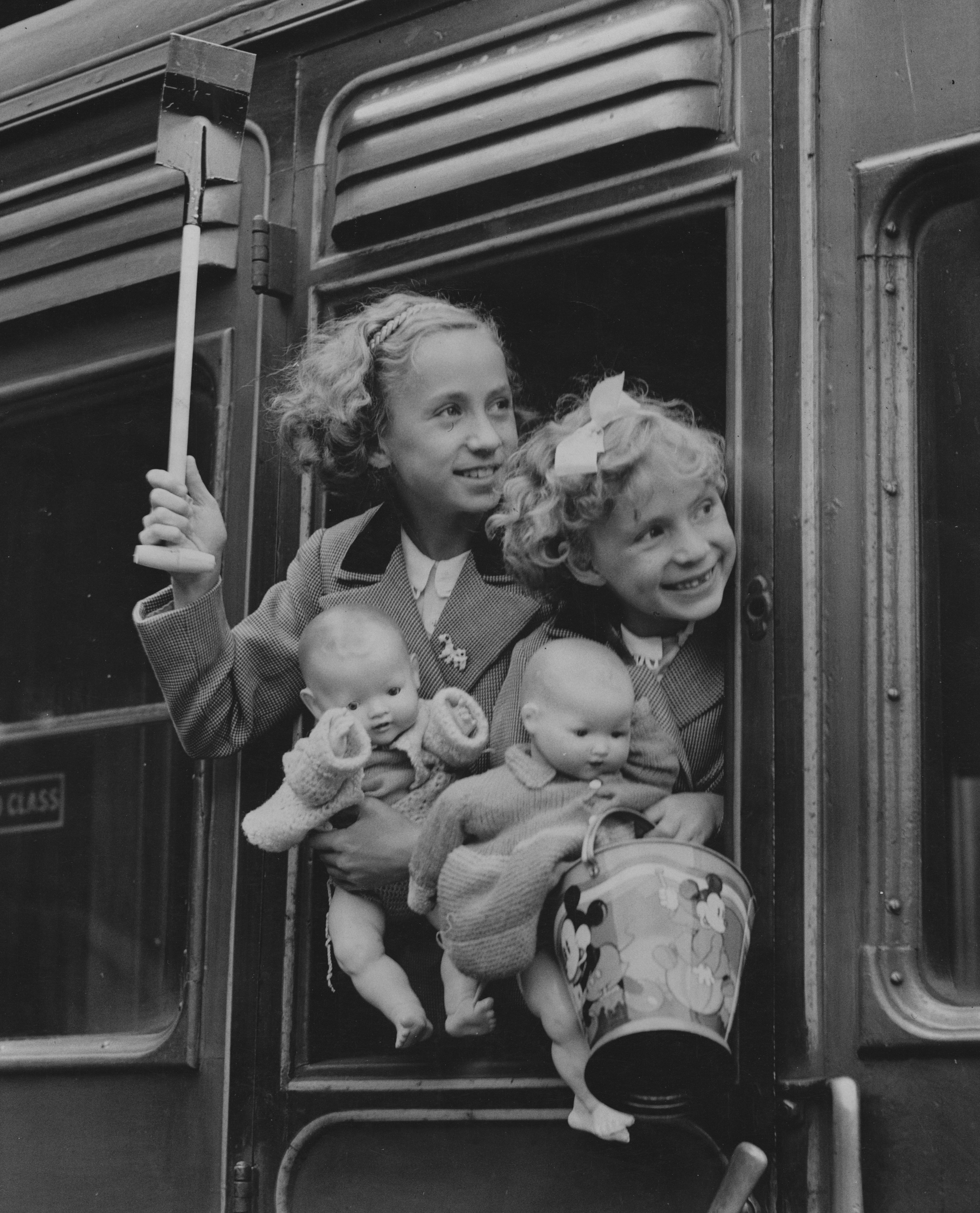
Young holidaymakers set off from Euston, 1937
© HULTON-DEUTSCH COLLECTION/CORBIS/GETTY IMAGES
Martin disagrees. He chronicles the dramatic Victorian expansion of the holiday excursion trade. In mid-June 1860 the Grimsby Gazette announced that more than 8,000 schoolchildren and teachers would arrive on a day excursion from Bradford. “Forty-four schools will march in procession by the sand to Cleethorpe [sic], preceded by two brass and two drum and fife bands.” By 1881 the Manchester, Sheffield and Lincolnshire Railway carried 283,022 passengers to the burgeoning resort.
• The 21 best history books of the past year to read next
A 1937 Mass Observation report was entitled Worktowners at Blackpool. Observers recorded the following items being carried through the ticket barrier at Bolton on a single summer evening: 83 heavy cases, 48 light cases, 39 paper shopping bags, 10 rucksacks, 9 fishing rods, 6 bunches of flowers, 2 dogs, 2 golf bags, 1 china bowl, 1 camera.
People who never read anywhere else read on the way to holidays. Station bookstalls were once notorious for selling downmarket fiction. As Gwendolen says in The Importance of Being Earnest: “One should always have something sensational to read in the train.” Indeed, Allen Lane conceived the idea of Penguin quality paperbacks in 1935 while returning from a visit to Agatha Christie’s seaside eyrie. At Exeter station he could find only rubbish to pass the journey, and set about changing that.
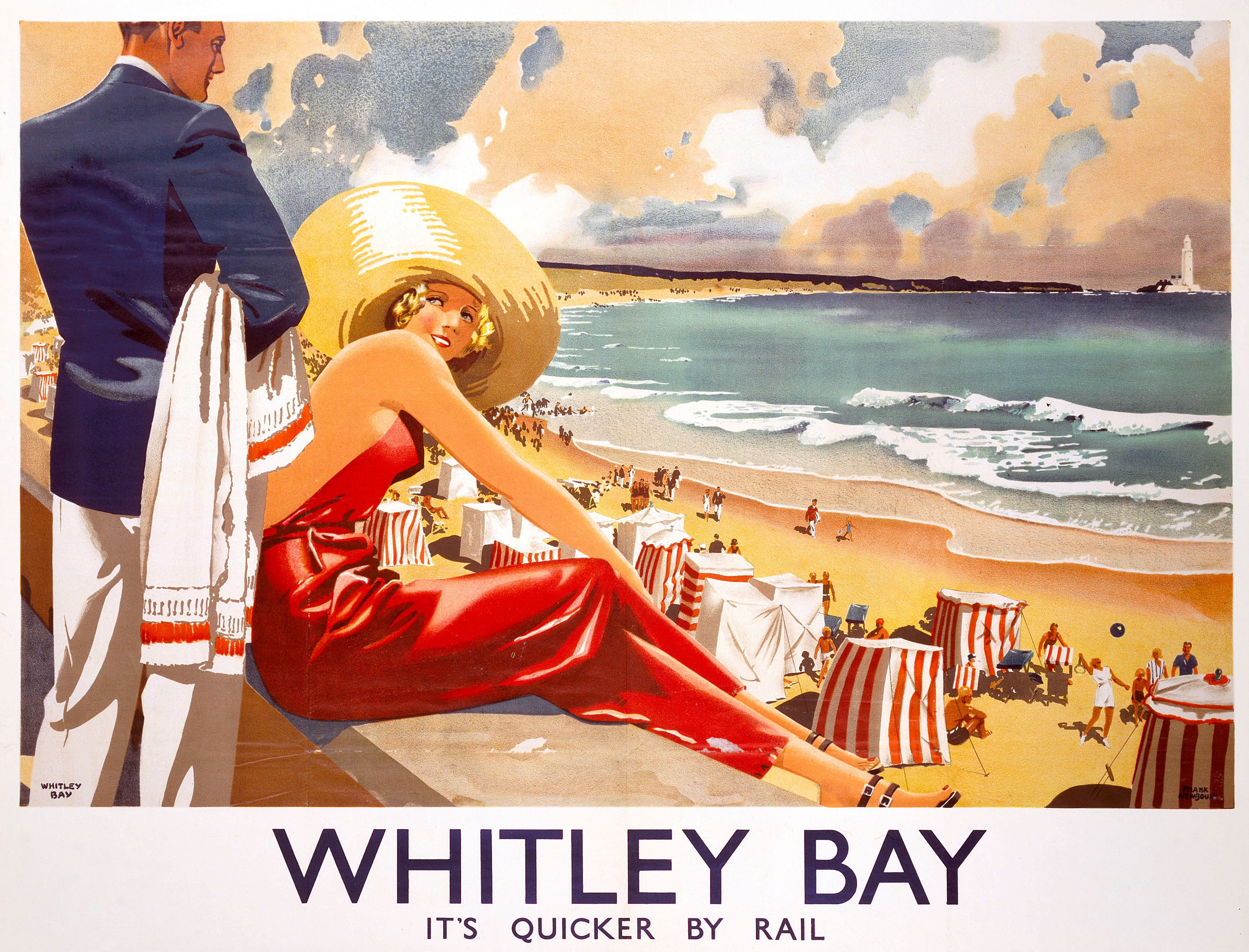
A London and North Eastern Railway advert, 1939
SSPL/GETTY IMAGES
Martin’s seaside tour covers all tastes, however. Having explored Morecambe, Blackpool, Ramsgate and Margate, he inspects the middle classes at Southwold in Suffolk, often characterised as Hampstead-on-Sea. “On Sunday mornings,” he writes, “the chiming of the church bells combines with the jangle of white burgundy bottles being dropped into the recycling bins. The Lord Nelson pub, which dates from c 1700, serves food but does not keep condiments on the tables because they look ugly.”
• 14 of the best heritage railways in the UK
The author admits that his own pulse races when he writes of the Deltic locomotives, in 1962 the most powerful diesels in the world, which hauled some holiday expresses up the East Coast mainline at 100mph. “Rail fans worshipped the roar and the throb of the engines, and were known to favour riding in the carriage nearest the loco with all the windows closed, the better to experience this.” Here Martin rhapsodises a trifle beyond the range of some of us.
He is good, though, on the melancholy that suffuses children returning from summer holidays. He quotes a woman writing of the last day of a childish visit to Eastbourne in the 1870s. She was walking back from the sea, dripping wet, when she came upon her sister Mabel “sitting by a strange elderly gentleman, who was making a pencil sketch of her in his notebook. He looked me gravely up and down, and then tore a corner of blotting paper from his notebook and said: ‘May I offer you this to blot yourself with?’” It was Lewis Carroll.
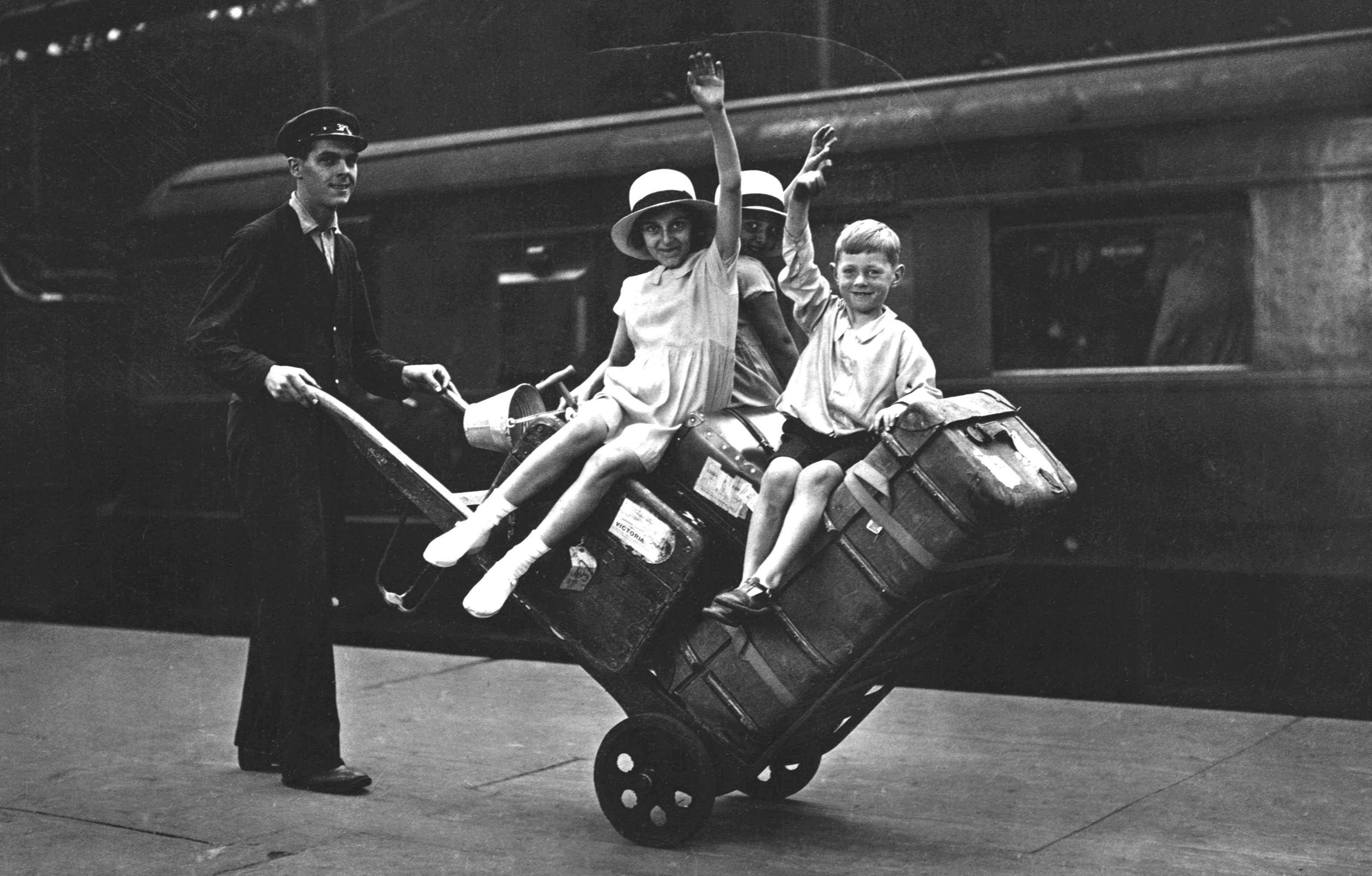
A porter at Euston station, 1937
© HULTON-DEUTSCH COLLECTION/CORBIS/GETTY IMAGES
Although the English seaside kept its allure for millions into the 1960s, even before the Second World War trains were losing favour as a means of getting there. In 1937, 40 million passenger journeys were being made by coach or charabanc, the latter being slower but cheaper than the railway — and classless.
Martin, assessing the decline of coastal railways, confers a withering verdict on the 1963 Beeching Report, which took an axe to the network, closing 2,363 stations and 6,000 route miles of track. “How many people did Beeching kill,” demands the author, “by encouraging them onto the roads when seat belts were still not compulsory?” Strong stuff.
• Read more book reviews and interviews — and see what’s top of the Sunday Times Bestsellers List
But it was not really Beeching who killed the English seaside. The English weather was to blame. My own children and grandchildren, offered Devon by train, instead choose Greece by plane. Martin’s whimsical little book, a feast of anecdotage, represents a memorial to a past that was not always an idyll. Much as I enjoyed all those bucket-and-spaders behind a steam engine, like most of my generation my foremost memory is of the rain.
To the Sea by Train: The Golden Age of Railway Travel by Andrew Martin (Profile £18.99 pp304). To order a copy go to timesbookshop.co.uk. Free UK standard P&P on orders over £25. Special discount available for Times+ members