
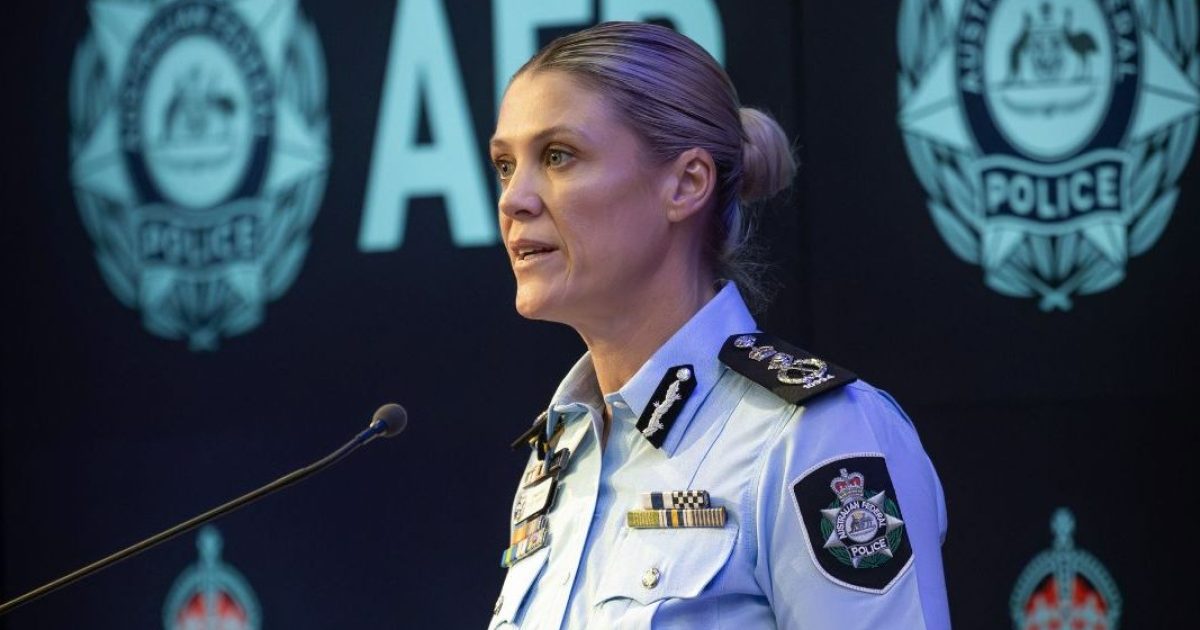
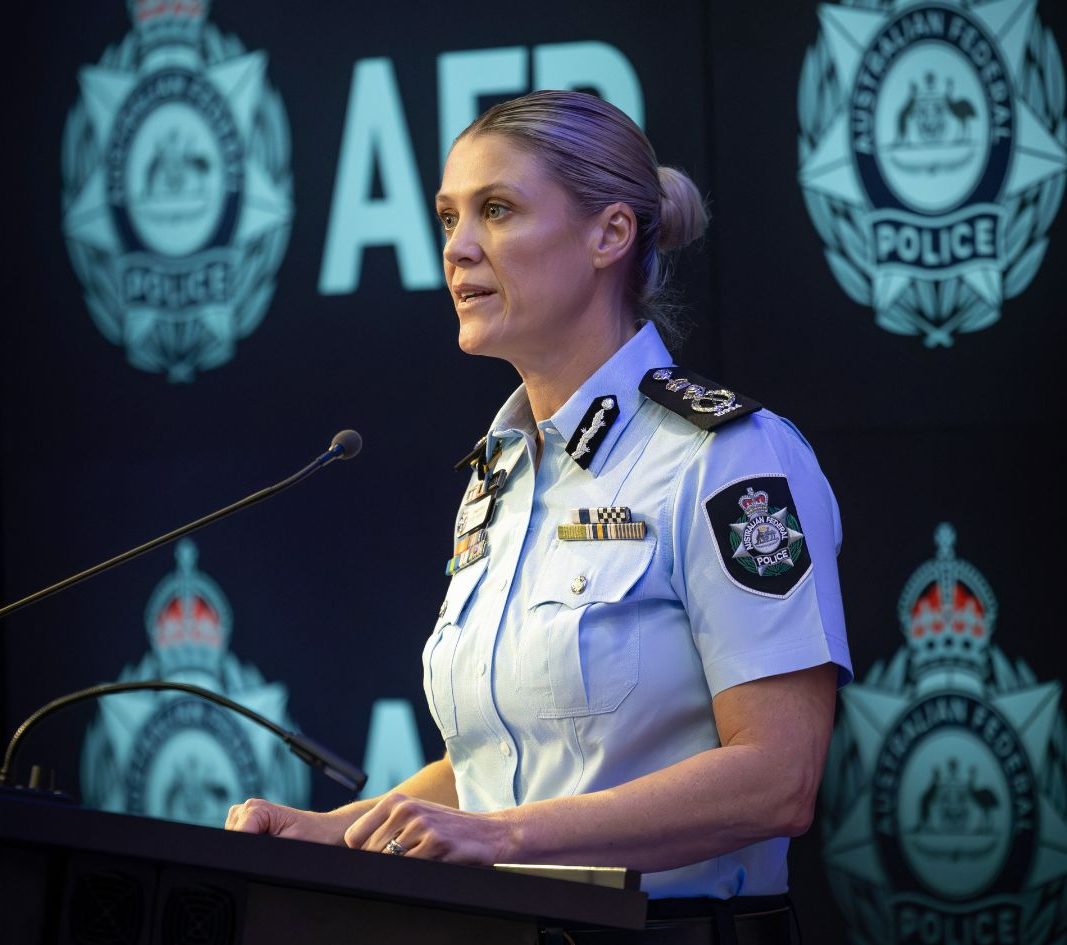
AFP Commissioner Krissy Barrett will deliver an address to the United Nations this week, encouraging more countries to adopt Australia’s peacekeeping model. Photo: AFP.
The Australian Federal Police model for peacekeeping missions is so effective that it should be adopted around the world.
That’s the message AFP Commissioner Krissy Barrett will deliver to the United Nations in a historic address in New York on Wednesday (8 July).
Commissioner Barrett will encourage the 193 UN member states to embrace the AFP Police Peacekeeping program that was successful last year in the Pacific.
She will say UN Police Peacekeeping missions could become leaner, more sustainable and more agile if they adopt Australia’s training model.
Last year, the AFP and Pacific Police Chiefs delivered the first residential UN-accredited program of its kind to more than 100 Pacific officers and members from Timor-Leste at Pinkenba in Brisbane.
The pass rate was 73 per cent.
Some Pacific Police Peacekeepers have already deployed to the UN Mission in South Sudan.
A second program for a further 50 officers will start on 27 July this year, with another course scheduled for early 2027.
“When UN member states adopted the Pact for the Future in 2024, they agreed that peacekeeping must become more agile and better tailored to today’s challenges,” Commissioner Barrett said.
“Australia took that call seriously.
“With our Pacific partners, we built a leaner, more sustainable police training model, without lowering the bar.
“When we say leaner, we mean a program delivered in five weeks instead of many months.
“When we say more affordable, we mean a model member states can actually sustain year on year, not one that strains a peacekeeping budget already under pressure.
“And, when we say more agile, we mean police who can be trained closer to home and deployed where they’re needed, faster.
“Cost matters because sustainability matters. Member states have been candid about the financial pressure on UN peacekeeping.
“A leaner training model means more countries can contribute capable, UN-ready officers without the price tag that has held them back. That’s how you protect police peacekeeping for the long term.”
Her address comes as Australia, for the first time, hosts the biennial United Nations Chiefs of Police Summit (UNCOPS), the UN’s premier global forum for international policing cooperation. Commissioner Barrett will lead the police delegation.
Commissioner Barrett will also sign new agreements in North America with the private sector, law enforcement and defence agencies to boost Australia’s safety.
Her UN address will outline how Australia heeded the UN’s call for a new model for police peacekeeping training and missions.
It will focus on the theme of the Vision for the Future of United Nations Police.
Three Pacific Police Chiefs will also join her to speak in several UNCOPS forums in New York throughout the week.
Details of a proposal for a new regional Pacific bloc to ensure sovereignty and security, as determined by the Pacific, will be shared.
Botswana, Canada, Fiji, Kiribati, Norway, Sweden and Tonga will also co-host the Australian side event, which is themed around Different Shores, Common Threats: Case Studies in Transnational Organised Crime. Co-sponsors are the Federated States of Micronesia, New Zealand, Palau, Papua New Guinea, Republic of the Marshall Islands, Samoa, Solomon Islands and Vanuatu.
“National security is regional security and global security,” Commissioner Barrett said.
“By sitting at the table with about 140 UN member states, we can meaningfully shape the frameworks that will empower police collaboration, not just for now, but for the generations to come.
“I have recently returned from the Five Eyes Law Enforcement Group meeting in London where we agreed to better work together to protect our kids from radicalisation, target the nihilistic online groups brutalising vulnerable communities and use technology to help stop online scam centres stealing the nest eggs of our hard-working citizens.
“Now, the AFP will put on the table some of Australia’s biggest concerns and how we could use the UN’s strategic direction of global policing to help safeguard our country.
“One of my priorities is to champion the views and role of Pacific Island Police Chiefs, who want a greater say at global forums about security and safety matters that concern their region.
“A decision will also be made by Pacific Chiefs of Police in October about whether they will agree to a new bloc, PACPOL. This will allow them to collectively establish priorities, with one voice at global and regional forums.”
New or expanded Memorandums of Understanding will be signed with the US Department of the Army Criminal Investigation Division and the FBI to combat transnational crime, and with PayPal for cooperation and information exchange.
The AFP Commissioner is also scheduled to meet with FBI Director Kash Patel, Drug Enforcement Administration Administrator Terry Cole, New York Police Department Commissioner Jessica Tisch and Royal Canadian Mounted Police Commissioner Mike Duheme.