
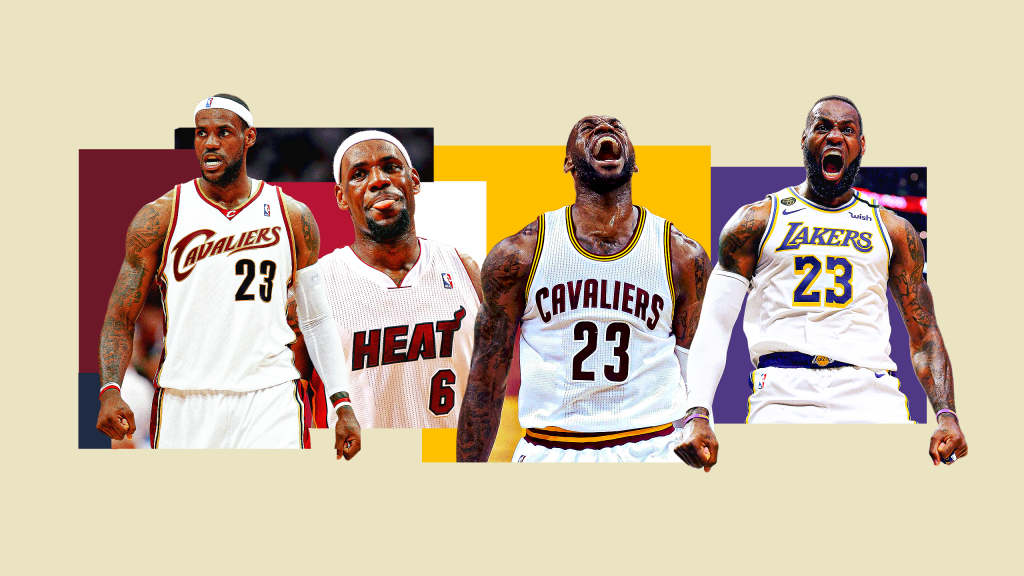
LeBron James announced his original Decision, famously, on primetime television in 2010. He migrated to the web for a first-person essay in 2014. Then Twitter proclaimed his move to LA in 2018. So, in 2026, it’s only fitting that a video podcast has provided the best intel to date on where James is taking his talents next.
Rich Paul, James’ agent, broke out a whiteboard on his Game Over show last week to list potential landing spots for his client, including Philadelphia, Miami, Minnesota, Denver, Golden State and Cleveland. James would’ve gone to the Knicks, Paul said, pointing stick in hand, except for the fact they just won an NBA title.
This offseason, the LeBronomy has rolled into motion again. Photoshoppers, now aided by AI, have put James on just about every team in the association (and probably a few other franchises, too). Podcasters have picked apart social media posts for potential Easter eggs. Bloggers have made their pitches for where they think James should go next.
But unlike in years past, the franchise that lands James won’t necessarily become an immediate title contender. While the chatter factories have been activated once again—Google search traffic for James is up roughly 6x from a year ago—teams don’t appear to be going to the same lengths to woo James as they once did.
Previously franchises managed their salary cap tables for years to ensure they had room for LBJ and other stars, should they become available. In 2014, much of free agency was on hold until James made his choice. Now others are making moves, and he’s the one waiting. James will likely accept a much smaller salary than he could command in order to fit in where he wants to play. Cleveland is the current favorite for James’ services, yet they have the seventh-best title odds.
There are now two kinds of elite NBA players: LeBron’s generation, still dominating attention even as their on-court influence wanes, and the new, young faces of the 2020s, who are hoarding the trophies.
“He’s still the face of the league,” Paul said on Game Over, before adding, “one of them.”
Yes, at 41 years old, LeBron is not the on-court asset he once was. But free agency itself is not the bonanza it was in its heyday, either.
Some combination of LeBron’s first move, the growth of Twitter and the development of morning sports talk shows desperate for conversation fodder helped the NBA turn the quietest sports month into a free agency frenzy. Hope sprung eternal not on opening night but on July 1, when every fan could believe their GM was preparing to make a splash.
But over the last half-decade, player movement lost its power. The Big 3 and the super team went the way of other 2010s fads like the dab and the ice-bucket challenge—in this case, they were crushed by a collective bargaining agreement that puts more constraints on high-spending teams and grueling play that rewards youth and team depth.
Since LeBron’s 2020 Lakers title, the last six NBA champions have won without luring accomplished free agents. Instead, the teams have largely drafted stars (Bucks, Warriors, Nuggets, Celtics) or assembled lineups by picking up players other teams were willing to part with (Knicks). The Thunder have built a perennial powerhouse by doing a bit of both, while the Spurs are tied with OKC as 2027/28 favorites thanks to a run of draft success.
“The path looked a little bit more challenging with 70% of our cap and such a high percent of our usage tied into two players,” Celtics president of basketball operations Brad Stevens said this week, explaining the once unthinkable decision of breaking up the pair of stars that delivered Boston a title two years earlier. “In this day and age … you have to do a great job … of building out depth that can hopefully replace the irreplaceable individual.”
And yet, the stars of the last generation are still here—and they’re still stars. This season, the Lakers and Warriors had as many nationally televised games as the defending champion Thunder. The Rockets jumped from three national games in 2024-25 to 28 after signing 37-year-old Kevin Durant. The Cavaliers got 24 national TV games last season, and they’ll almost certainly max out near 40 if the King comes home. Outside of Christmas Day, five of the six most-watched regular season games this year featured LeBron and the Lakers. The other one saw KD face OKC, his former team, on opening night.
On social media, James was the most watched player during the regular season, with 2.9 billion views, according to NBA data. Steph Curry and Durant also finished in the top seven, despite neither lasting past the first round of the playoffs. The Eastern Conference’s top-seeded Pistons and the eventual champion Knicks combined for zero players in the top 10.
Things were different a decade ago. During Kobe Bryant’s final NBA season, his Lakers only netted one of the top 12 most-watched regular season games, according to Sports Media Watch. Instead, younger Warriors and Thunder squads soaked up attention while chasing titles. But now, being competitive on the court isn’t enough to dominate the headlines; not with Steph and Dray and Harden and Kyrie still kicking—to say nothing of the NBA’s all-time leading scorer in both points and memes.
Turning 42 this season, James has at least one more chapter to write in a 25-year saga. It’s unlikely to end with another ring; new stars have risen to fill his space on All-NBA teams and Finals floors. And yet, no one has wrested the crown away from the attention king.