
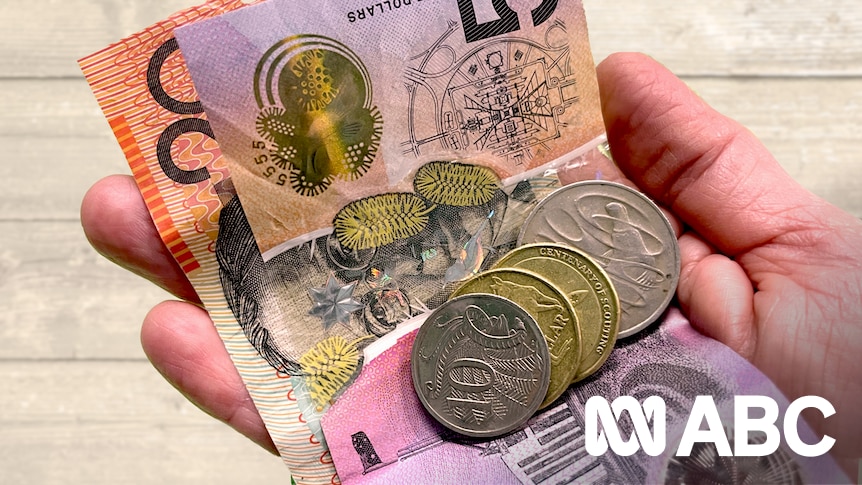
Rachel Mealey: First today, after a long stretch of high inflation fuelling a cost of living crisis in this country, Australians might be feeling their belts are already pulled as tight as they can go. But the latest economic forecasts are indicating things aren’t set to get any easier any time soon. The OECD is warning Australians’ real wages are set to fall further as the country faces its worst economic growth outlook in decades. AM’s Nick Grimm has more. Nick, what does this new economic analysis tell us about the nation’s prospects?
Nick Grimm : Rachel, the report that’s come from the OECD, the Organisation for Economic Co-operation and Development, it doesn’t have a good story for Australia at the moment, warning that real wages are going to fall further this year, leaving Australian wage and salary earners with less buying power as inflation continues to eat away at their pay packets. Looking in the rear view mirror doesn’t offer a better perspective either, with the OECD’s annual employment outlook revealing that Australians have already experienced one of the biggest declines in living standards in the developed world since the pandemic. Since 2021, there’s been more than a 5% decline in real wages in this country, in sharp contrast to the average OECD country, which saw a 5% boost in workers’ living standards. Australia and New Zealand, in fact, were singled out as two countries where real wages had barely recovered since the pandemic. The OECD calls our experience a sustained erosion of the purchasing power of household incomes, and Rachel, this follows Deloitte Access Economics offering a particularly downbeat assessment of Australia’s short-term outlook, forecasting the economy is expected to limp along at less than 2% annual growth for the next two years, which will be the longest stretch of weak economic growth since the recession of the early 90s. Independent economist Saul Eslake argues it highlights the need for more to be done to help make Australian workers more productive.
Saul Eslake: Well, it’s a combination of rising taxes, higher interest rates, falling real wages, and underpinning much of that, of course, is what has over the course of this decade been negative growth in labour productivity. And almost every economist, with his or her salt, would say that in the long run, productivity growth is the only sustainable source of improvements in people’s material living standards. And on that front, Australia has been going backwards over the course of this decade. We’ve been covering poor productivity performance up for a long time through a combination of above average population growth and the gains that have come to Australia, almost uniquely among Western economies from the impact that China has had on our terms of trade. And it’s enabled Australia to get away with very poor productivity growth by historical standards for a long time. But that tide is now going out.
Nick Grimm : And at the end of the day, is this yet another reminder that the good times are sort of over?
Saul Eslake: Well, yes. And as I say, Australia’s benefited almost uniquely among Western countries. Probably the only ones that come close would be Norway and Canada, which are also resource exporters. We’ve benefited uniquely from our economic relationship with China, something that’s actually been a negative for many other Western economies, like Japan, the United States, and many European countries, which import commodities and export benefacted goods. Our experience has been the reverse. But we can’t keep riding the China tiger in the way that we have been for the last 30 years. That era is drawing to a close and we’re yet to discover something that can do for us what China has done for us over the last 30 years.
Rachel Mealey: Independent economist Saul Eslake and before him, AM’s Nick Grimm.