

The ASX healthcare sector is finally showing a strong heartbeat. Pic: Getty Images
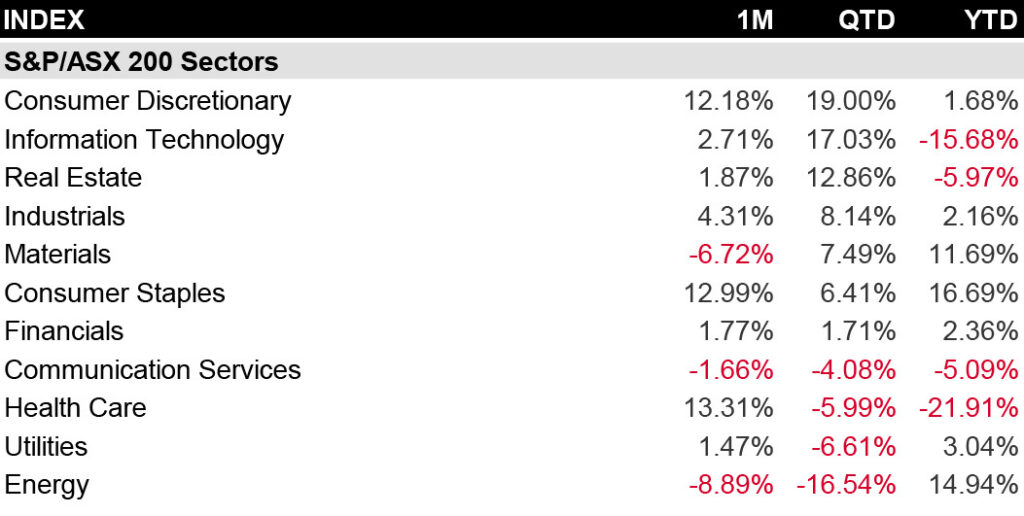
The S&P/ASX Healthcare index is up so far this week and rose 13.31% in June to be the top performing ASX sector for the month
Morgans healthcare analyst Iain Wilkie said the sector was starting to catch a bid as investors realise fundamentally good companies were now undervalued
Several ASX healthcare companies gaining momentum with Island rallying on news its antiviral candidate will be deployed in Ebola outbreak
Morgans healthcare and life sciences expert Scott Power is away this week so his colleague Iain Wilkie steps in to explain what the movers and shakers have been doing in the ASX healthcare sector.
The ASX healthcare sector is showing signs of recovery and while it may have gone relatively unnoticed the S&P/ASX Health Care Index (ASX:XHJ) moved sharply higher in June climbing 13.31%.
It was, in fact, the top performer of 11 sectors on the Aussie bourse.
At close on Wednesday the XHJ was up 1.07% so far this week, while the benchmark S&P/ASX 200 (ASX:XJO) had gained 0.67%.
“Monday was a particularly strong day for healthcare with the index up 1.5%, even though the last couple of days have been choppy,” Wilkie told Stockhead.
“The general vibe for healthcare is cautiously optimistic and if you can include so far this week the ASX healthcare index has been up for eight weeks in a row now.”
 Source: S&P DJI
Healthcare’s big names weigh on ASX sector returns in FY26
Healthcare’s strong June rally wasn’t enough to lift the sector into positive territory for FY26, with the XHJ finishing the financial year down 37%.
Morgans healthcare analyst Iain Wilkie told Stockhead heavy falls from the ASX healthcare large caps weighed on the sector.
The sector’s largest stock, blood products giant CSL (ASX:CSL), fell 49% in FY26, while hearing implant company Cochlear (ASX:COH) fell 60%.
Health imaging stock ProMedicus (ASX:PME) dropped 28% in FY26, while sleep apnoea device maker ResMed (ASX:RMD) was down 25% and pathology and radiology company Sonic Healthcare (ASX:SHL) fell 18.5.% for the financial year.
Wilkie said rare diseases drug developer Neuren Pharmaceuticals (ASX:NEU) and protective medical and industrial gloves maker Ansell (ASX:ANN) were among the rare ASX healthcare large caps to trade in positive territory in FY26, up 26% and 6% respectively.
“It was a pretty savage financial year for the sector,” Wilkie said.
“There were US tariffs concerns and higher interest rates along with investors chasing the AI trade.
“Then when the Iran conflict started there was also a rotation into energy and mining stocks and general rotation out of sectors like healthcare.”
He said for CSL company-specific concerns around profit downgrades, the flagged demerger of its vaccines business Seqirus, and leadership changes all weighed on sentiment. Flagged revenue downgrades also impacted Cochlear’s share price.
“CSL being the bellwether for the sector, once it falls over investors tend to look at the stocks below it more critically as well,” he said.
“ResMed hasn’t done too much wrong operationally but concern that GLP-1 obesity drugs will curb long-term demand for sleep apnoea devices weighed on the stock even though that has not come through in any form.
“For Pro Medicus it was all about software being able to be replicated easily by AI, which in our view is not going to be the case.”
‘Enough is Enough’
However, Wilkie said the healthcare sector was starting to catch a bid as investors realised there were bargains to be had with fundamentally good companies now undervalued.
“Investors are now thinking enough is enough and the sector is cheap enough now to have another go,” Wilkie said.
Pro Medicus soared 53.8% in June after announcing several contract wins and regaining momentum off multi-year lows, while CSL was up 19%, while the other large caps also rose for the month.
ResMed offloads MatrixCare in $US490m deal
In other news so far this week ResMed has sold its MatrixCare business to US private equity firm Frazier Healthcare Partners for 35% than it paid for the healthcare technology company in 2018.
The deal forms part of ResMed’s 2030 strategy to focus on “high-growth, scalable opportunities in sleep health, breathing health and connected home-based healthcare”, the company told investors.
The $US490 million all-cash transaction, subject to closing adjustments and regulatory approvals, is expected to complete in the first quarter of FY27.
Based on preliminary financial results for FY26, the MatrixCare business represented ~$220 million of revenue and ~$55m of non-GAAP operating profit.
ResMed plans to use the proceeds to return capital to shareholders, including through an accelerated share repurchase program, and for general corporate purposes.
Morgans healthcare analyst Derek Jellinek viewed the announcement “positively”, despite its much higher US$750m purchase price in 2018.
“It has created value over the past eight years (ie recurring SaaS revenue, cash generation enabled Brightree integration across the out-of-hospital care ecosystem),” he wrote in a research note.
“Bottom line, this divestiture looks to monetise a mature asset, sharpening the focus on core drivers while allowing capital to be recycled into higher-return opportunities and shareholder buybacks.”
Morgans has a buy rating on ResMed and 12-month target price of $41.72.
Island Pharma to deploy Galidesivir in Uganda Ebola outbreak
Island Pharmaceuticals (ASX:ILA) was up 27% on Tuesday upon news it will deploy its antiviral candidate Galidesivir to treat patients infected during the Bundibugyo Ebola virus outbreak in Uganda under a Monitored Emergency Use of Unregistered and Investigational Interventions (MEURI) protocol.
Sponsored by the Uganda Ministry of Health and supported by the World Health Organization (WHO), the program will provide Galidesivir to eligible Ebola patients, with investigators collecting clinical, safety and virological data.
There are currently no approved therapeutic options for Bundibugyo Ebola virus, with the outbreak escalating across several African countries.
Uganda has also confirmed a Marburg virus fatality, creating what the company described as a rare dual-pathogen event and underscoring the need for broad-spectrum antiviral treatments.
The MEURI framework was established following the 2014 West African Ebola outbreak to provide patients with access to promising investigational therapies during public health emergencies where no approved treatments exist and conventional randomised clinical trials are not feasible.
The MEURI program advances Galidesivir across two complementary development pathways, providing prospective human Ebola clinical data while supporting Island’s ongoing pivotal Marburg efficacy studies under the US FDA’s Animal Rule pathway.
“It’s a tick for the asset, securing all the government, regulatory and ethics approvals to supply their drug in a live outbreak situation under compassionate use,” Wilkie said.
Entropy’s IV psilocin achieves 50% remission in BED trial
Entropy Neurodynamics (ASX:ENP) has reported positive topline safety and efficacy results from Cohort 1 of its Phase II trial evaluating lead IV-infused psilocin candidate TRP-8803 for the treatment of binge eating disorder (BED).
All six patients in Cohort 1 achieving the trial’s primary and secondary endpoints, marking what Entropy believes is the first reported global efficacy data from precision-controlled IV-psilocin.
TRP-8803 achieved complete clinical remission in 50% of patients, defined as zero binge-eating episodes in the four weeks following treatment, while all patients recorded clinically meaningful improvement of at least 30% from baseline.
Weekly binge-eating episodes fell 74% across the cohort. Anxiety and depression scores each declined by about 60%, improving from moderate to minimal or mild levels within four weeks, while life satisfaction increased 63%.
Entropy said the improvements were directionally comparable with responses seen over longer timeframes in successful SSRI treatment studies.
The Phase II study is enrolling 12 patients across two cohorts of six, with each participant receiving two TRP-8803 infusions 14 days apart alongside supportive therapy.
Cohort 2 baseline assessments are expected to begin this month, with dosing scheduled to start in August. Cohort 2 results are anticipated by year-end, with final Phase II BED study results expected in Q4 CY26.
“The prize (is) likely the broader psychological conditions,” Wilkie said.
“This week’s results (go) some way to understanding the effects and biomarkers Entropy’s IV-infused psilocin candidate theoretically has the ability to impact, as well as likely a more controlled treatment differentiating it from oral psilocybin therapies,” Wilkie said.
Optiscan enters commercial phase with vet product launch
Optiscan (ASX:OIL) has reached a major milestone with the launch of its first clinical device, the veterinary-focused microscopic imaging system InSpecta, in the US market.
The launch follows the submission of a regulatory dossier for InSpecta to the US Food and Drug Administration’s Centre for Veterinary Medicine, enabling commercial sales and marking Optiscan’s transition from a technology developer to a commercial-stage company.
The milestone also establishes a regulatory and commercial pathway to support future product launches.
InSpecta will be showcased at the American Veterinary Medical Association Convention 2026, giving Optiscan access to veterinary clinicians, specialists and practice decision-makers.
Built on Optiscan’s proprietary imaging platform, InSpecta delivers microscopic imaging at the point of care, helping bridge the gap between clinical examination and laboratory diagnostics to support faster, more informed veterinary decisions across a range of tissues and conditions.
Imagion extends Siemens Healthineers collaboration
Imagion Biosystems (ASX:IBX) has renewed and extended its collaboration deal with Siemens Healthineers as it prepares to launch its Phase 1b/2 clinical trial of the MagSense HER2 breast cancer imaging agent.
Under the renewed deal, Siemens Healthineers will MRI expertise and technical support to help optimise imaging protocols at clinical trial sites.
The collaboration will also support the integration of advanced quantitative imaging techniques developed through Imagion’s research collaboration with Wayne State University.
The quantitative imaging techniques are expected to improve image quality while using lower doses of the MagSense imaging agent and reduce scanning times, improving clinical workflow.
The company also believes the combination of the imaging agent and advanced imaging techniques could support the future development of AI-based diagnostic and image interpretation tools.
Imagion said having the expertise and support of the world’s leading MRI manufacturer not only helps position the trial for success but also underscores the importance of molecular MRI to the broader diagnostic imaging market.
The views, information, or opinions expressed in the interview in this article are solely those of the interviewee and do not represent the views of Stockhead.
Stockhead has not provided, endorsed or otherwise assumed responsibility for any financial product advice contained in this article.
Iain Wilkie owns shares in CSL, PME and NEU. The journalist holds shares in CSL and Sonic Healthcare.
At Stockhead we tell it like it is. While Island Pharmaceuticals, Entropy Neurodynamics, Optiscan Imaging and Imagion Biosystems are Stockhead advertisers, the companies did not sponsor this article.