
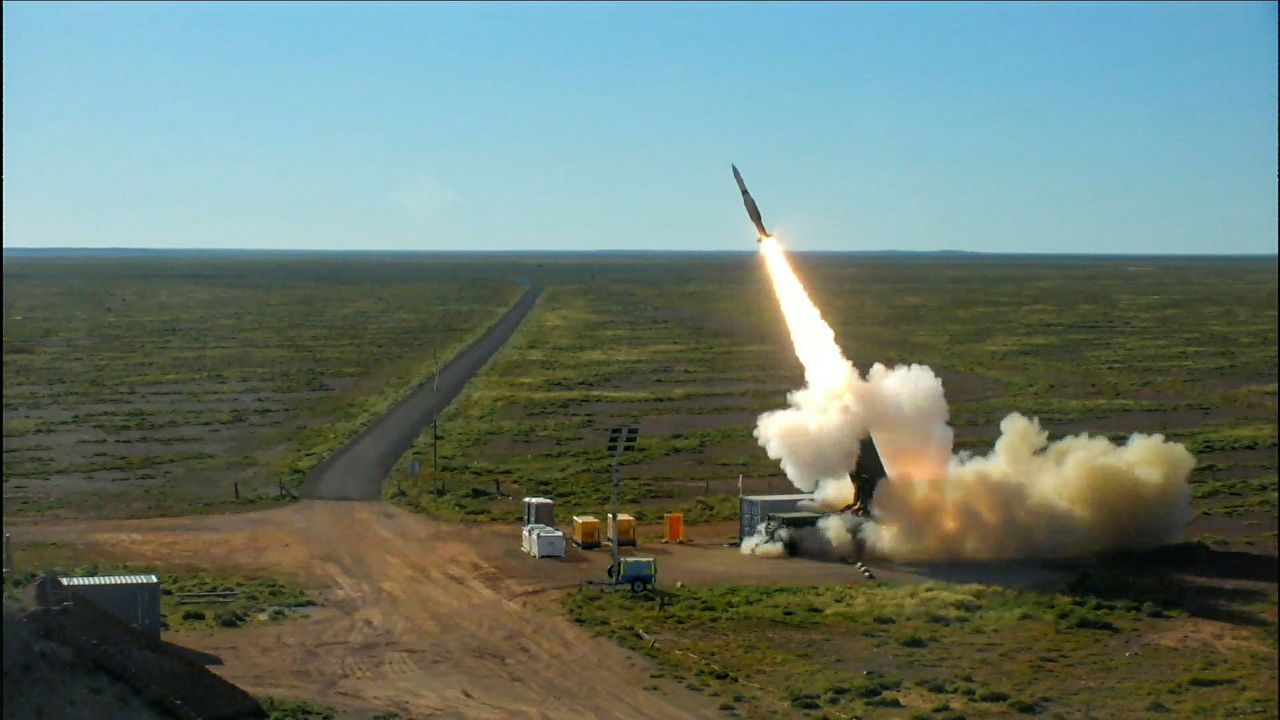
The Australian Defence Force has successfully conducted a live-fire test of a prototype ground-based missile defence system.
The landmark test, during Exercise Taipan Strike 26 in Woomera, South Australia last month, marks a significant achievement for Australia’s defence capabilities.
The system used an Australian radar linked to a United States weapon control system and missile launcher to intercept a cruise missile target with a Standard Missile-2.
Government-owned company CEA Technologies partnered with Lockheed Martin to integrate a CEA radar with the Aegis Combat System for the first time.
Deputy Prime Minister Richard Marles said the test demonstrated Australia’s ability to work with allies and local industry while “growing our sovereignty and helping to keep Australians safe.”
“This first-of-type live-fire test is a practical demonstration of how the Australian Defence Force is working with its partners, and local industry to deliver crucial defence capabilities,” he said in a statement.
The federal government said the capability would help strengthen Australia’s air and missile defences against long-range and high-speed missile threats.
Defence Industry Minister Pat Conroy said the exercise demonstrated the government’s commitment to strengthening Australia’s sovereign defence capability.
“Taipan Strike 26 highlights the Albanese Labor Government’s commitment to working with partners and defence industry to build sovereign capability and self-reliance in support of our national defence.”
Chief of Air Force Air Marshal Stephen Chappell said the exercise would help inform future capability acquisition decisions.
“The success of the Taipan Strike 26 live-fire event is further evidence of the strength of our partnerships, as well as our integral relationship with industry.”