
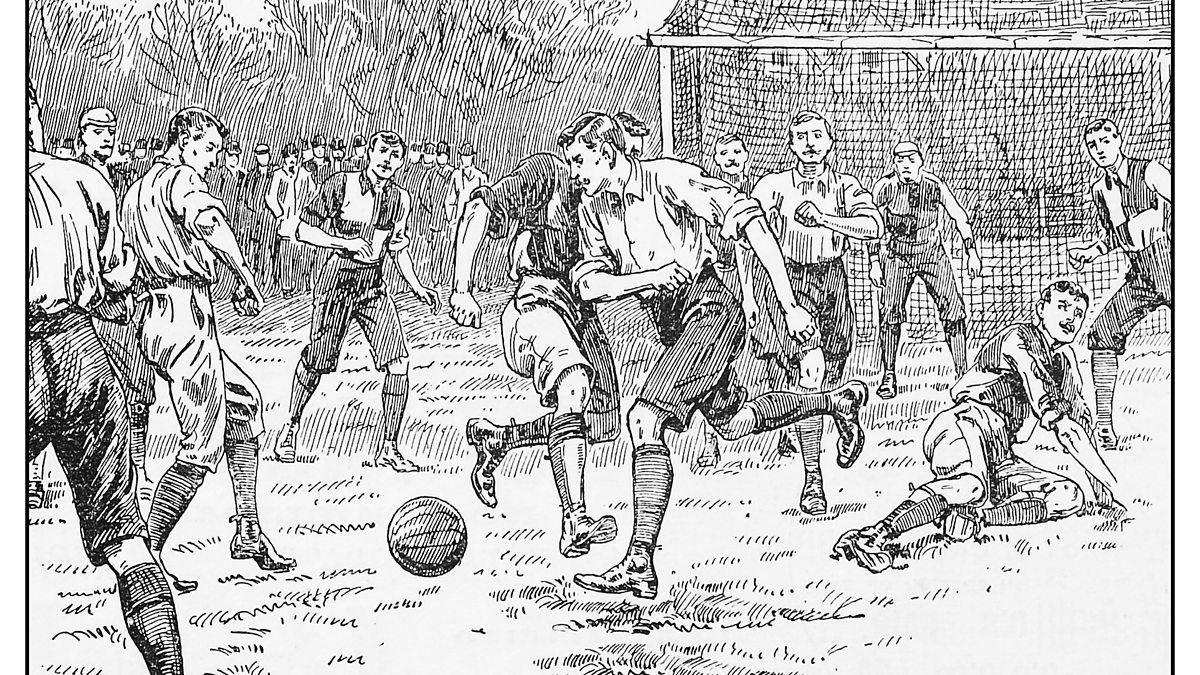
Clubs were banned from paying players. This didn’t worry the rich elite, but did affect the working-class clubs where players had to prioritise paid work over football.
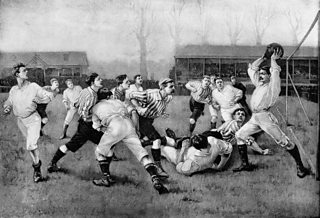
William Sudell, the successful manager at Preston North End F.C., who was drawing in big crowds and under pressure to get results, hatched a plan. In 1883, he secretly recruited a few superstar Scottish players and promised them a wage. He cleverly disguised this by giving them “work” in his cotton mill.
When the FA got wind of this, Preston was banned from the FA Cup for a year. But other working-class clubs rallied behind Preston. A power struggle followed between the largely northern, mainly working-class clubs and the southern, gentleman amateur clubs. In 1885, the FA finally legalised paying players.
“This changes football forever,” says Ben.
The FA Cup is never again won by a gentleman amateur team; it’s the professional working-class clubs who are victorious.
7. A new Football League turned the sport into the people’s game
William Sudell teamed up with the director of Aston Villa Football Club, William McGregor, to come up with a new concept: the Football League.
“It was very innovative and it gives clubs a set schedule for their competitive fixtures,” explains Ben.
They could now predict their income and a weekly competition also amped up fan loyalty.
The first Football League season in the 1880s was watched by about 600,000 people. By the outbreak of World War I in 1914, the top division was watched by a whopping 9 million people. Football had become the national sport.
“That growth is absolutely phenomenal in such a short period of time,” adds Ben.
8. Many famous football teams across the world were founded by Brits
When football was being established, all sorts of British workers – traders, teachers, diplomats – were going abroad and taking the sport with them. Brits set up the first football clubs in Brazil, Argentina and many European countries.
AC Milan, one of the most successful teams in European history, was founded by British expats. It’s still called Milan – rather than the Italian Milano – as a homage to its original British roots.