
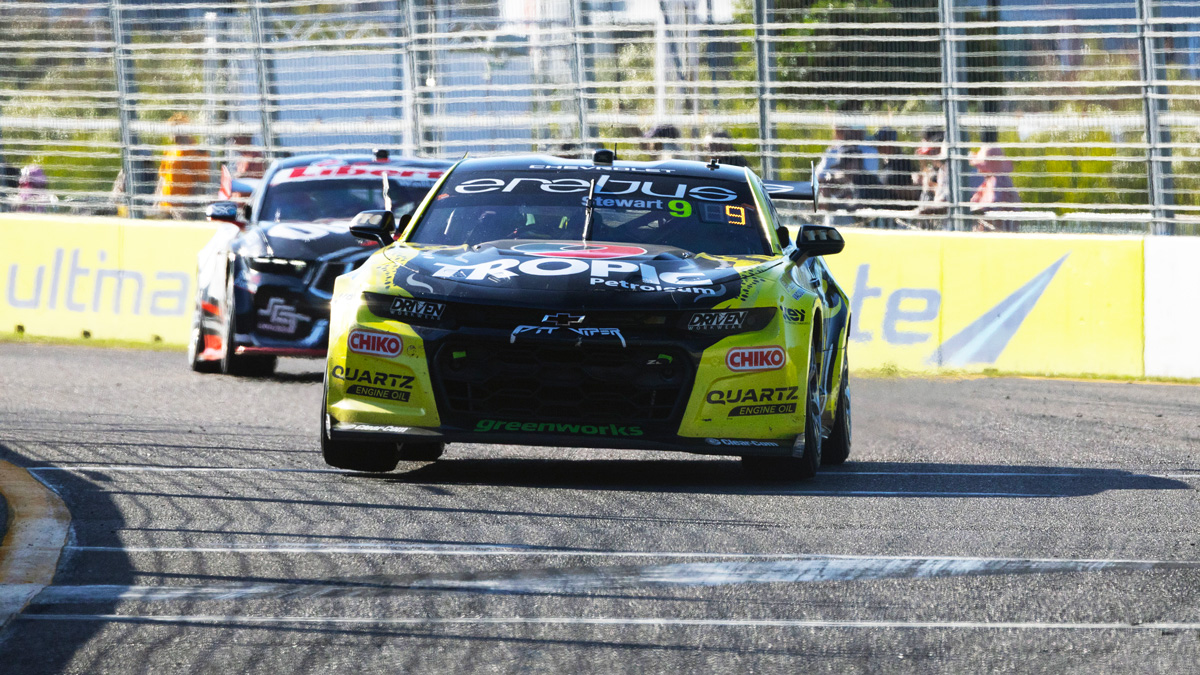
JOBE Stewart and Cooper Murray have welcomed the benefits of General Motors’ Supercars data-sharing initiative after an improved showing for Erebus Motorsport in north Queensland.
It has been an utterly brutal first half of 2026 for Erebus, but there were at least some glimmers of progress at the Townsville 500.
Murray ran consistently in the mid-teens, with rookie Stewart getting out of the 20s far more often – in what was the biggest field of the season to date.
Sunday’s race was just the second time all year that both Erebus Camaros started inside the top 17.
After initially opting out, Erebus quietly joined the Team Chevy alliance ahead of Darwin.
But the team’s gradual gains shouldn’t be attributed to just one factor, both drivers noted.
“This whole weekend was definitely a positive compared to especially Darwin and pretty much the whole first half of the year,” Stewart told V8 Sleuth.
“Everyone is putting their best foot forward and doing a better job.
“Me and Cooper definitely have learnt a few little things from the GM stuff but also we have just improved within the team, and the engineers are starting to work a few things out which is good. As a whole group, I think we have just improved.
“This weekend it was pretty positive… we had something to fight with in that mid-teens area.”
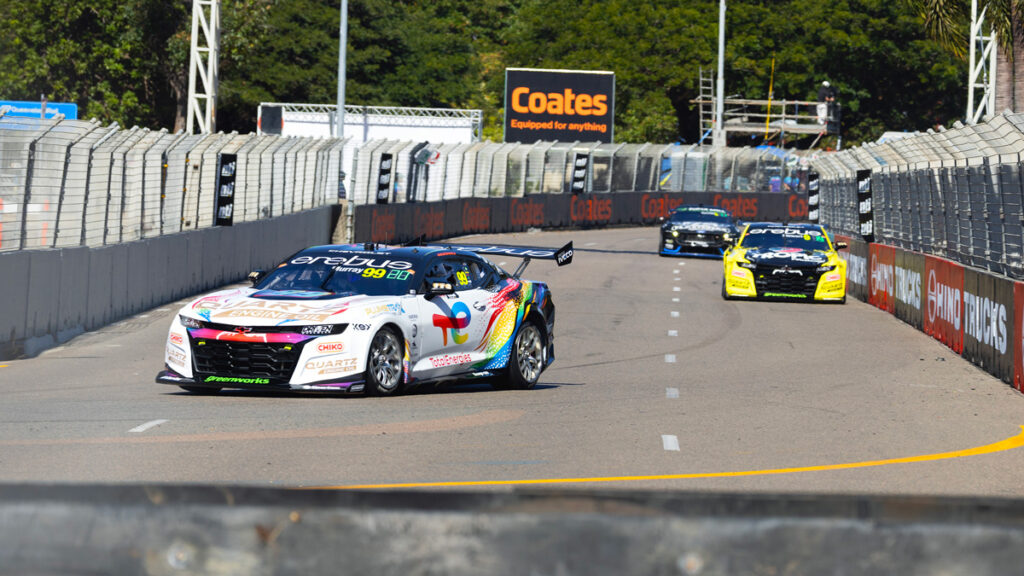 The Erebus Camaros of Cooper Murray and Jobe Stewart. Pic: Ross Gibb
Murray highlighted the fact Erebus rolled out of the truck better in Townsville as having laid a foundation for the three races.
As for the alliance component?
“Definitely having all of the Chev teams’ data and everything to look through and analyse definitely helped a bit, but a lot of the teams are still very independent in what they do,” said the #99 driver.
“When you only have got one practice session on a Friday, you haven’t got time to rely on what other teams are doing; you have got to dig in and do it yourself.
“Still a lot comes down to that and doing what you think is best between yourself and your engineer, and then you look at it after the session and see what others are doing; what worked and what didn’t.”