
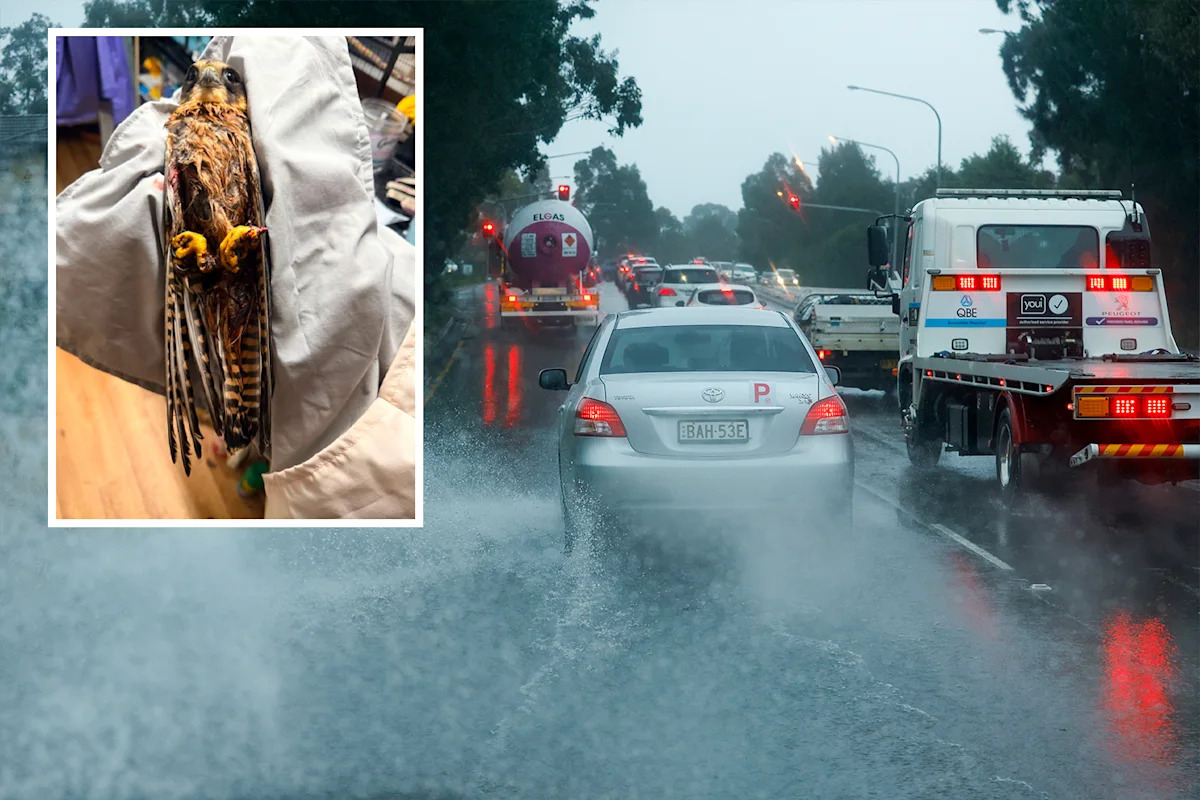
A woman claims she had no choice but to drive 30km in “dangerous” weather to get help for an injured falcon after being repeatedly refused, sparking concerns for the well-being of Australian birds.
Adelaide farm worker, Dakota, was heading home early due to heavy rain and winds this week when she spotted the bird south of the city on a major arterial road.
“I called two vets, but straight away they turned me down because of bird flu,” she said.
“It was frustrating that the vets wouldn’t take him.”
Dakota and the falcon were both cold and drenched by the rain. It had two broken legs and was likely in severe pain.
After two rejections, she chose to drive 40 minutes across the city to Minton Farm Animal Rescue Centre because she knew the bird could get assistance there.
Co-founder Beverley Langley said her centre has received an increase in bird admissions since the H5 strain of bird flu was first detected in Australia in June.
“We’re getting half a dozen calls a day from people who can’t get help elsewhere,” she told Yahoo News.

Minton Farm Animal Rescue Centre has received an increase in requests to help injured wild birds.
(Minton Farm Animal Rescue Centre)Wildlife treatment increasingly hard to find
This experience highlights a problem affecting wildlife rescue efforts across multiple areas of Australia.
In the area where the falcon was found, two vets confirmed they are reviewing their wildlife protocol, with a view to no longer accepting wild birds except for euthanasia.
We found a third clinic still accepting some birds.
Finding help for wildlife can be a struggle, and the Australian Veterinary Association recommends building strong relationships with local clinics and calling ahead.
RELATED:
For many vets, the decision to stop accepting wildlife is understandable, as the deadly H5 virus can spread to other animals, including cats and dogs.
Around 1,000 people have also confirmed to have contracted the virus worldwide, and around half of them have died.
To date, there have been no mass mortalities of birds in Australia, but the detection of H5 in a native tern indicates it has spread since it first appeared in migratory petrels and skuas.
Have you struggled to find a vet? Contact newsroomau@yahoonews.com
Cost of treating wildlife increasingly expensive
Some vets are preparing by setting up biosecurity facilities so they can continue to accept wildlife outdoors. They are paying for these set-ups themselves and volunteering their time.
In most cases, wildlife rescuers and charities face the same financial burden when buying their own PPE.

It’s feared that birds with other injuries and illnesses may be unable to find immediate treatment.
(Minton Farm Animal Rescue Centre)
If more vets opt out of treating wildlife, Beverley believes that fully funded treatment facilities in central hubs could be needed.
There are concerns that if the virus spreads, then volunteers may be overwhelmed.
“Otherwise, we could have suffering that’s not excusable in this day and age,” she said.
You can also follow us on Facebook, Instagram, TikTok, X and YouTube.