
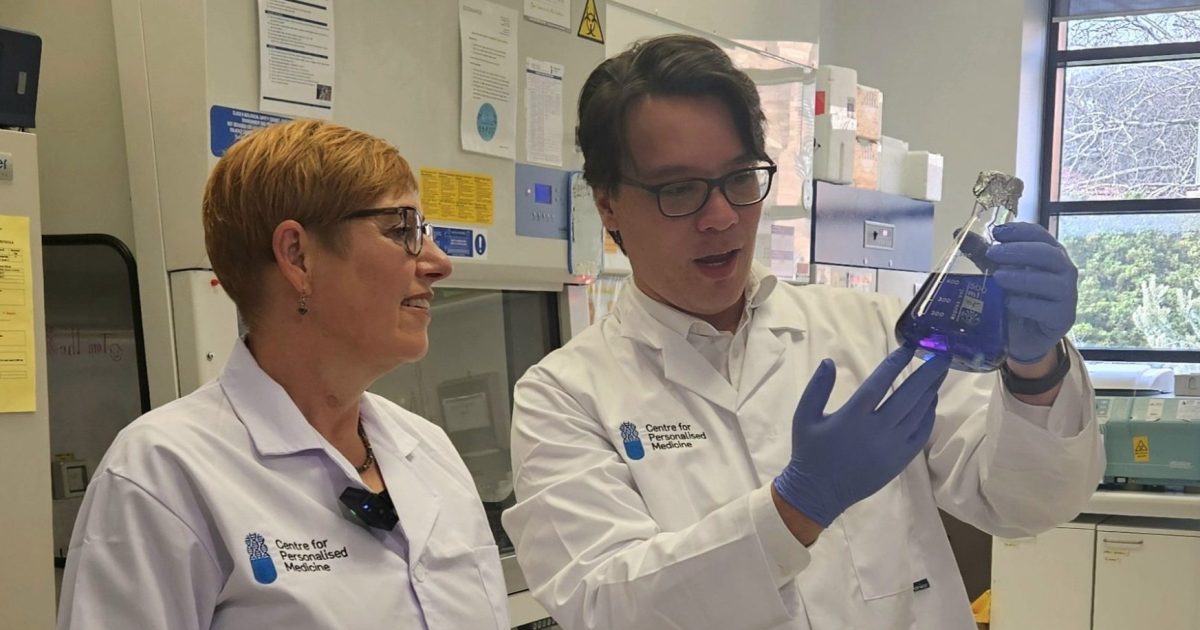
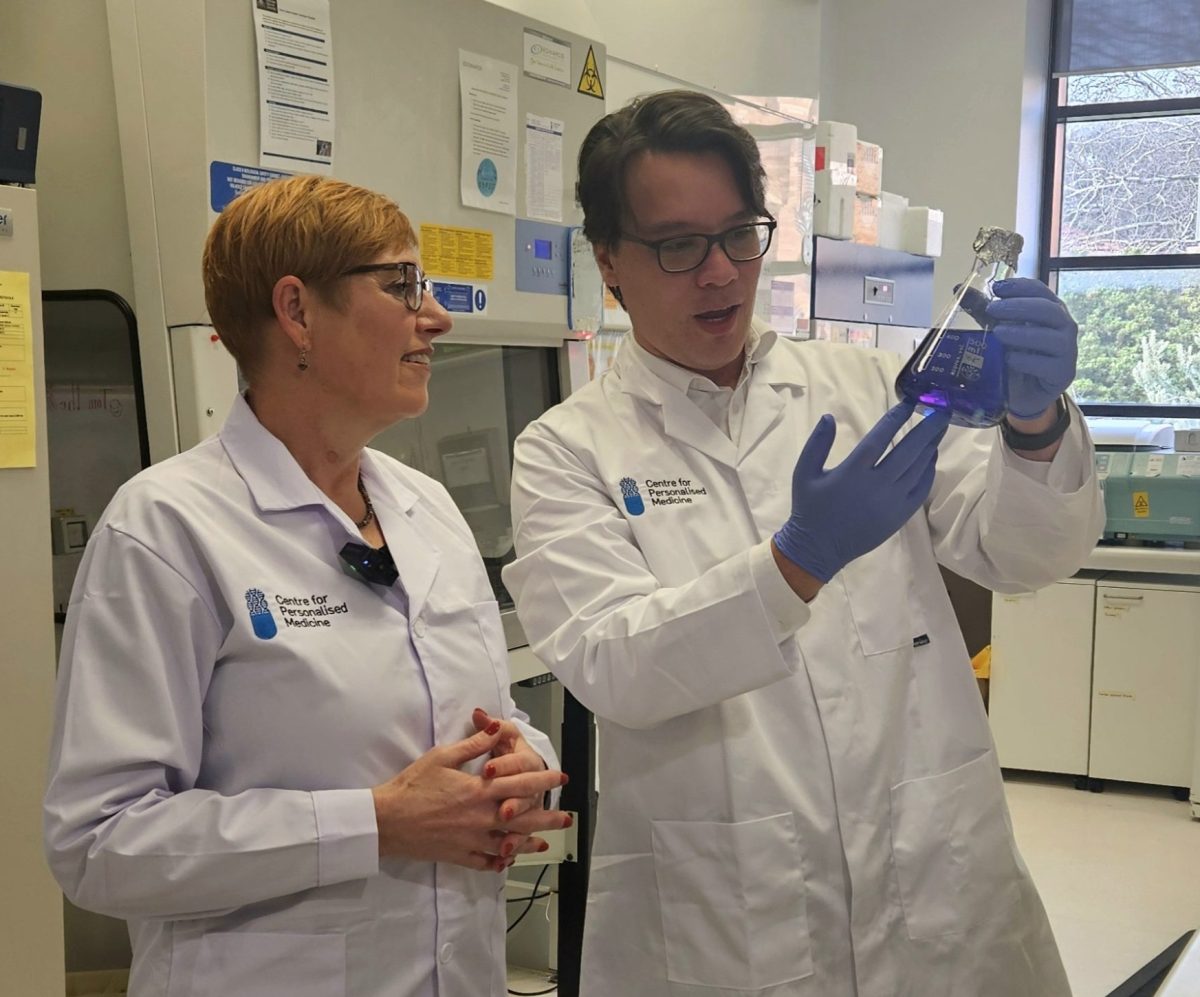
ACT Health Minister Rachel Stephen-Smith with Associate Professor Simon Jiang at the newly opened Centre for Personalised Medicine at Canberra Hospital. Photo: Naziya Alvi Rahman.
When Emma Gilmour’s father was first referred to Canberra’s personalised medicine team, doctors had spent years trying to understand what was driving his illness.
He was 65 when he arrived at what was then largely a research-led service. He died three weeks ago, aged 75, but Ms Gilmour believes the work done in Canberra gave him something precious: time.
“He fell sick at a very early age. No doctor or medicine could find out his exact problem until he was referred to the research centre here,” she told Region.
Through genetic testing and detailed immune analysis, clinicians were able to uncover answers that had eluded the family for years. Those answers did not end with her father.
Ms Gilmour later learnt that she, now in her 40s, and her 18-year-old son carried the same genes linked to his condition. For a family that had watched one generation suffer without clear answers, the discovery has offered the next one something different: the chance of earlier diagnosis, monitoring and treatment.
That is the promise behind Australia’s first personalised medicine clinic dedicated to immune diseases, officially opened at Canberra Hospital this week.
The Centre for Personalised Medicine, a partnership between Canberra Health Services and the Australian National University, aims to move patients away from the long process of trial and error that often defines complex immune conditions.
Instead of treating symptoms alone, the centre uses advanced genetic, immunological and clinical testing to understand the drivers behind a patient’s illness and shape treatment around the individual.
Health Minister Rachel Stephen-Smith said the centre combined clinical care with world-leading research.
“Understanding that every patient is unique, the centre combines the clinical excellence of Canberra Health Services with world-leading research at the Australian National University to deliver innovative and targeted treatment plans,” she said.
The centre supports patients with difficult-to-diagnose immune conditions, including inflammatory bowel disease, rheumatological disorders and kidney disease.
Built on more than 20 years of research, it is Canberra Health Services’ first quaternary-level clinical service, meaning it provides highly specialised care for complex cases that often cannot be resolved through standard pathways.
At present, its capacity remains limited. About 60 patients are moving through laboratory processes, while around 200 people have entered the system over the past year. For now, referrals are largely restricted to the most severe and complex cases where specialists are struggling to identify the cause of disease or the right treatment.
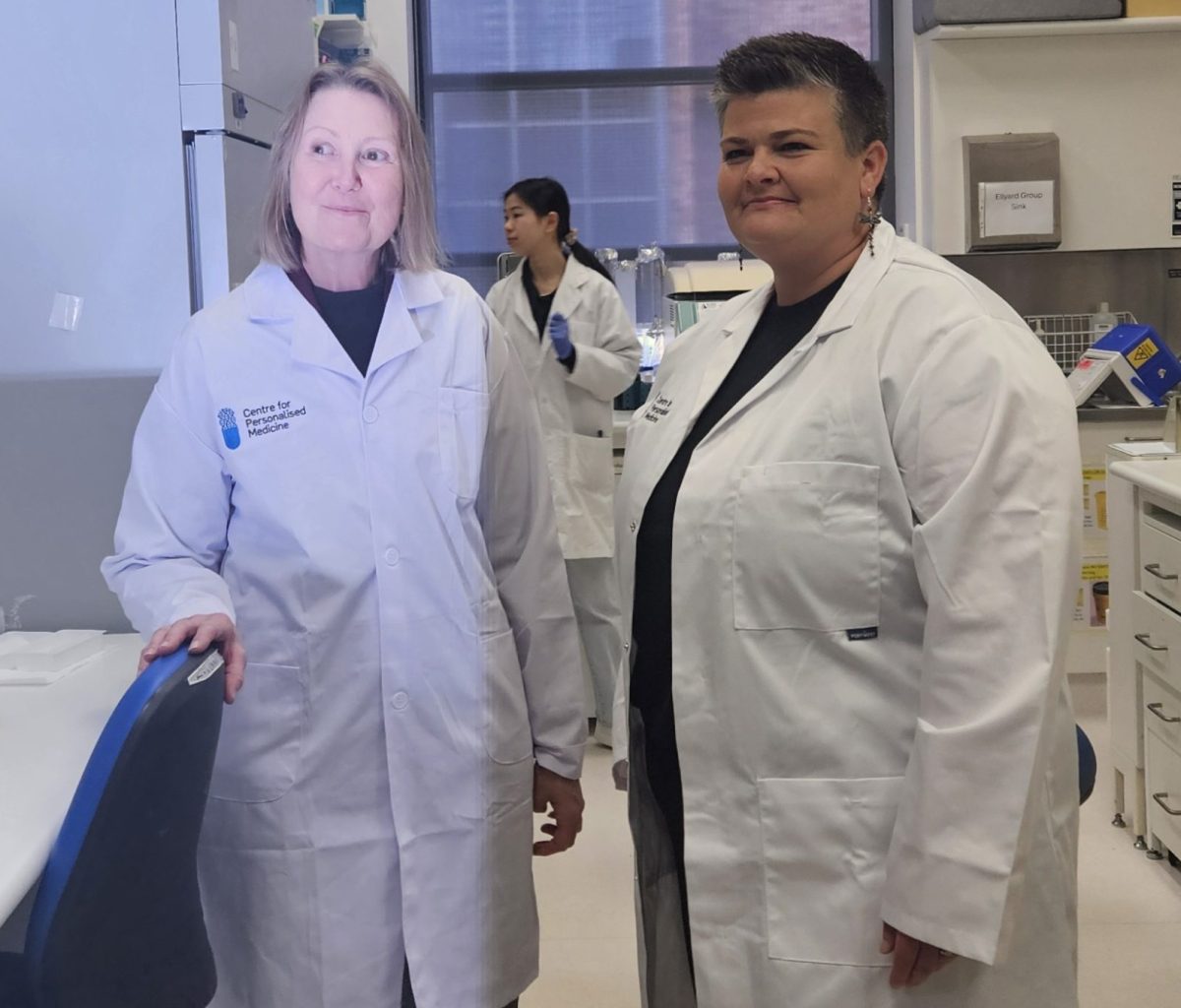
Emma Gilmour and Marilyn, whose lives have been transformed by treatment through Canberra’s Centre for Personalised Medicine. Photo: Naziya Alvi Rahman.
For Canberra resident Marilyn, who lives with the rare condition antisynthetase syndrome, the centre has already changed the way her illness is managed.
For years, treatment meant managing symptoms and juggling multiple medications. The centre’s approach, she said, had been more targeted.
“Rather than just treat the symptoms, my treating team has been able to identify the most appropriate medicines targeted to my condition. This has helped to improve my standard of living and reduce the number of my medical appointments and hospitalisations,” Marilyn said.
Centre director Associate Professor Simon Jiang said the goal was to give patients care based on the biology of their disease, not assumptions about what might work.
“For many patients, this means moving away from trial and error towards care that is more targeted, more precise and ultimately more effective,” he said.
“Our vision is to connect patients, clinicians and researchers across Australia so more people can benefit from this approach, no matter where they live and to help ensure research is translated into real improvements in patient outcomes.”
The centre will also work with Aboriginal and Torres Strait Islander communities across Australia to identify new treatment approaches for kidney disease.
Its work has been supported by donations from the Hindmarsh Family, the Ferguson Family, the Anderson Pender Foundation, Nobel Laureate Professor Rolf Zinkernagel and the McCusker Charitable Foundation.
For families like Ms Gilmour’s, the centre represents more than a new health facility.
It is the difference between not knowing and knowing. Between years of unexplained illness and the possibility of earlier intervention.
Her father’s diagnosis came late, but it may now help shape the care of his daughter and grandson.