
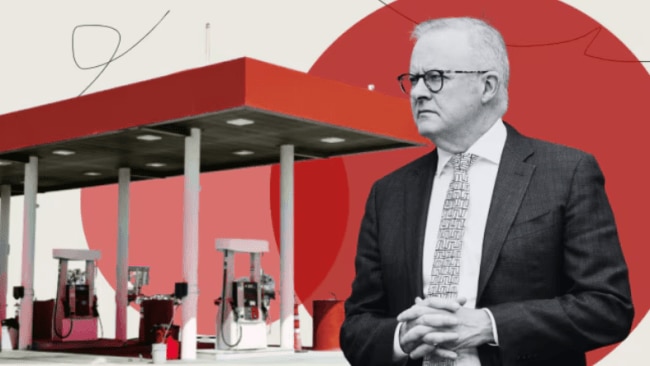
Australia has reached its highest fuel stockpile since the US-Iran conflict began, with Anthony Albanese saying the nation is now in a stronger position than it was at the start of the crisis.
The Prime Minister revealed 55 fuel tankers carrying 3.2 billion litres of fuel are already scheduled to arrive in Australia over the next four weeks.
He said the incoming deliveries had lifted confidence that supplies would remain stable despite continued uncertainty in global markets.
Mr Albanese said Australia now holds a total of 6.5 billion litres of fuel across all fuel types.
“This is the highest total amount of fuel in Australia since we introduced our fuel stockholdings, highest ever,” he said on Saturday.
He said the increase meant Australia held more fuel than it did before tensions in the Middle East escalated.
“What that means is that we currently have six and a half billion litres of fuel in Australia in total across all fuel types, which continues to be more than we had at the start of this conflict,” he said.
“Australians can continue to have confidence in the work that the government has done to ensure that we have fuel security.”
Despite the stronger position, Mr Albanese said the government was not treating the situation as resolved.
“It is stating the obvious to say that we are not through all of this conflict yet, we will continue to monitor these issues and to be responsible,” he said.
Australia remains at the government’s level two fuel security setting, with motorists again urged not to stockpile petrol or diesel unnecessarily.
“I’ll say again, we remain at level two, so we ask Australians to just take what fuel you need, no more but no less also,” he said.
The fuel security measures were introduced after fighting between the United States and Iran disrupted global energy markets earlier this year.
Iran’s decision to close the Strait of Hormuz temporarily cut off about one-fifth of the world’s oil supply, driving fears of shortages and higher prices around the globe.
In response, the Albanese government activated a National Fuel Security Plan and temporarily reduced the fuel excise.
They also expanded Commonwealth powers to underwrite additional fuel shipments and relaxed fuel quality standards to improve supply.
The latest government figures show Australia currently has 46 days of petrol, 39 days of diesel and 34 days of jet fuel available.
Fuel shipments have continued to arrive throughout the crisis.
Forty-seven tankers have unloaded in Australia so far this month after 91 deliveries were recorded in June.
While fuel availability has improved, global oil prices remain sensitive to developments in the region.
This week Brent crude posted its biggest one-day increase since 2020 after US President Donald Trump announced he would reinstate the blockade on Iran.
The benchmark price climbed 9.6 per cent to US$83.30 a barrel, highlighting the continuing volatility facing energy markets.
The latest market movement also comes just weeks before the temporary reduction in Australia’s fuel excise is due to end, with the tax scheduled to return to 52.6 cents per litre.