
ⓘ NASA – Unsplash
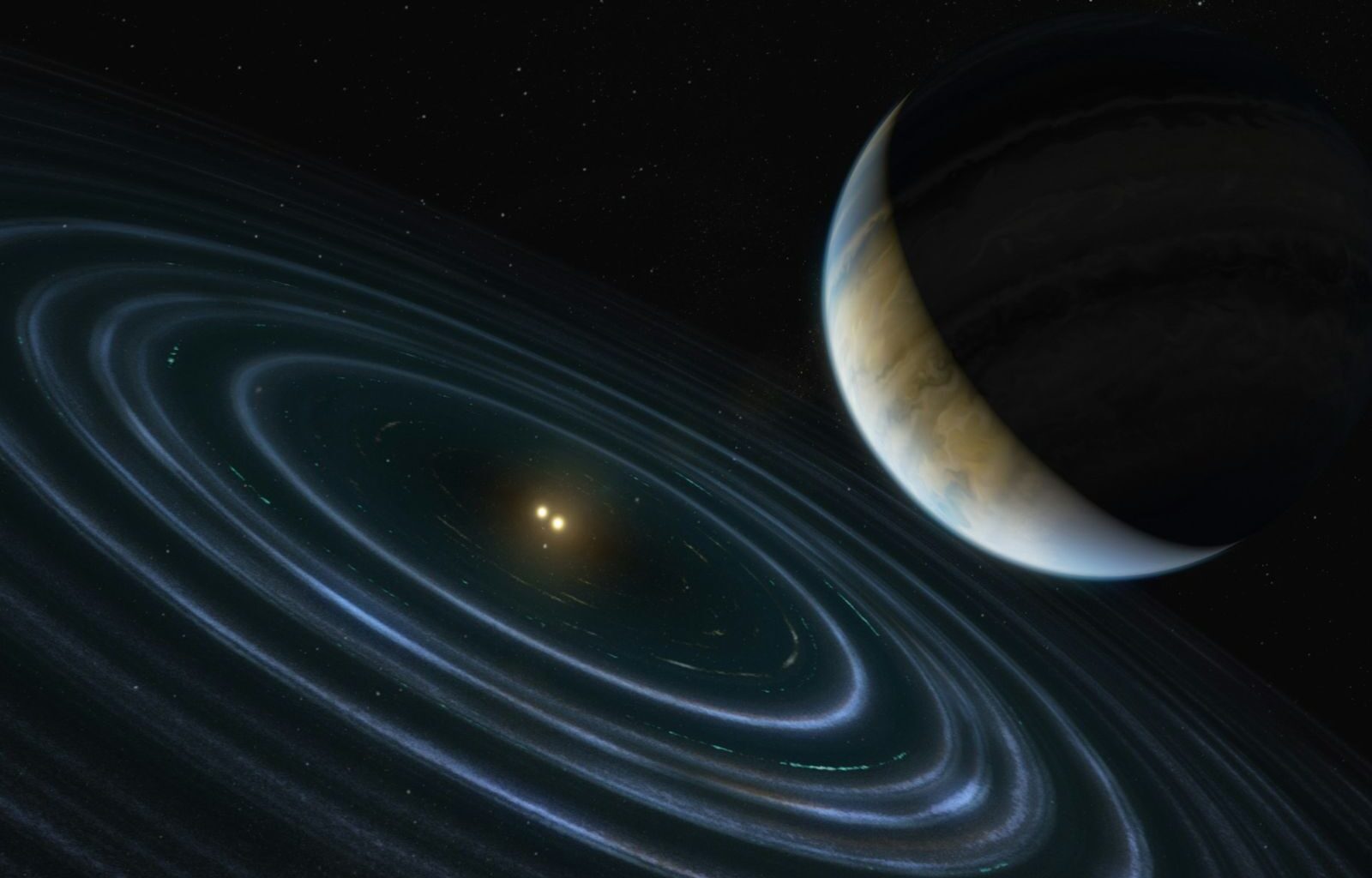
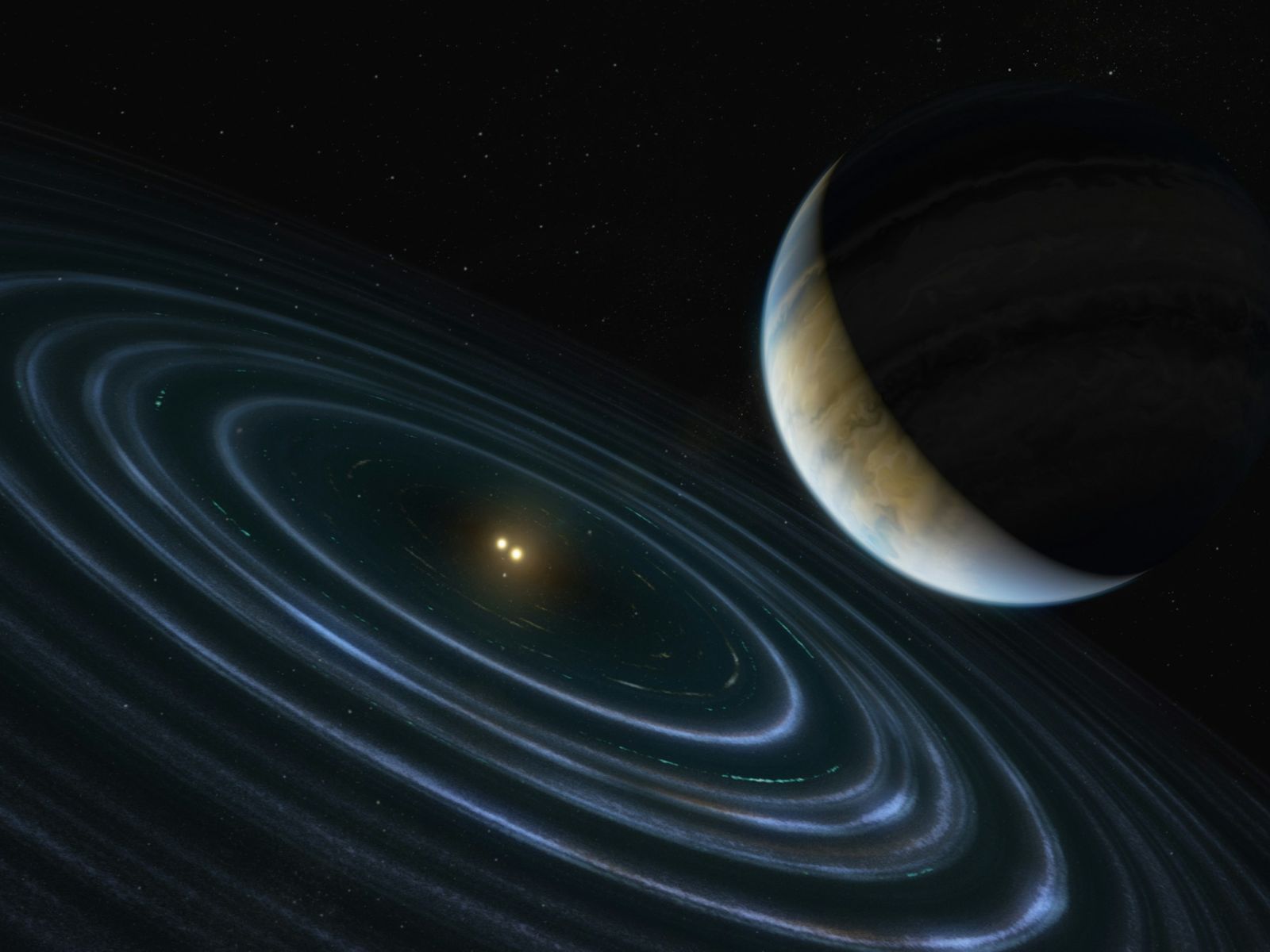
An artist’s illustration showing a blue planet and two stars.
Astronomers have detected an atmosphere on a rocky exoplanet orbiting a red dwarf for the first time. However, while this is a major breakthrough, further observations will be needed to better understand this unique world.
The search for life elsewhere in the universe has just reached a major milestone. Indeed, for the first time, astronomers have detected the presence of an atmosphere around an Earth-like exoplanet located in the habitable zone of its star.
In a study published in the journal Science, astronomers have studied the exoplanet LHS 1140 b, located about 48 light-years away, which is relatively close to Earth on a cosmic scale.
While astronomers thought that its atmosphere was mainly composed of nitrogen, they conducted new observations during its transit in front of its host star. They used the Warm Infrared Echelle (Winered) Spectrograph and discovered that helium was escaping into space.
With a mass 5.6 times that of Earth and a radius about 70% larger than Earth’s, this rocky exoplanet could potentially host life. However, there are still many uncertainties. Indeed, astronomers believe that vast oceans may exist on its surface, but no concrete evidence has yet been found.
In addition, the composition of its atmosphere is not fully understood, although it appears to be different from Earth’s. As a result, further observations and studies using various instruments will be necessary to obtain better results and potentially discover evidence of life elsewhere in the universe.
 Alexis Stegmann – Tech Writer – 690 articles published on Notebookcheck since 2025
I’ve been working in the field of web writing for several years, and I’m passionate about keeping readers up to date with the latest news on astronomy, technology, the world of video games and other exciting subjects. In particular, I’ve had the opportunity to work on a number of websites, which has enabled me to cover a wide range of subjects. In my personal life, I’m passionate about a wide range of subjects, including astronomy, video games, history and science. I’m also drawn to psychology, which is a subject that deserves greater documentation and recognition.