
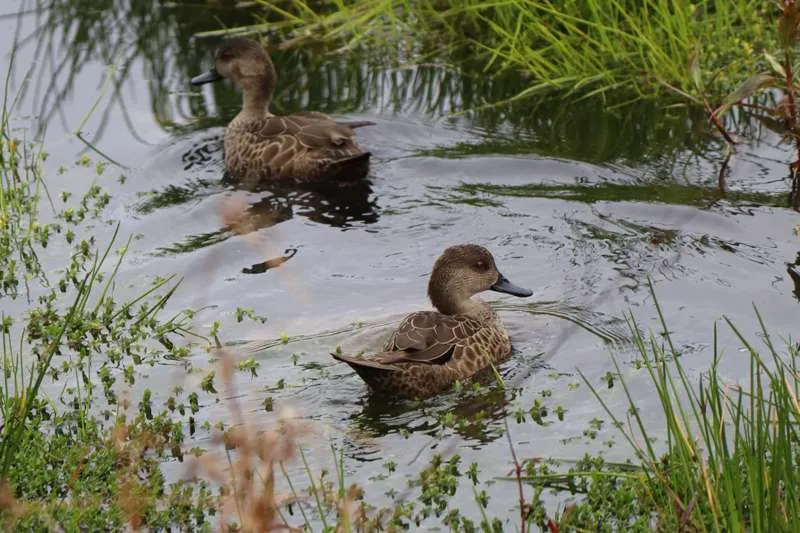
 Gray teal ducks are among the many water birds found on Lake McNess in Yanchep National Park. Picture: Anita McInnes
THE Department of Biodiversity, Conservation and Attractions (DBCA) says if bird flu is suspected or confirmed in an area that it manages such as Yanchep National Park, signage will be installed to alert visitors.
A DBCA spokesperson said this had already happened when bird flu was first detected at Cape Le Grand National Park near Esperance.
“Consideration may be given to restricting access to some areas should H5 bird flu become established and cause mass wildlife mortality, to minimise the risk of spreading the infection,’’ the spokesperson said.

On July 13 Yanchep News Online asked DBCA what biosecurity plan was in place (or would kick in) for national parks and other areas under its control in the City of Wanneroo and the Shire of Gingin after Curtin University school of molecular and life sciences deputy head Bill Bateman said while the chance of bird flu infecting people was relatively low, people do run the risk of being a spreading vector.
Yanchep News Online approached DBCA (before the reported cases of H5N1 at Lancelin and Seabird) after reading that Perth Zoo had put biosecurity measures in place to help protect the animals in their care following the arrival of the highly pathogenic avian influenza H5N1 clade 2.3.4.4b first detected in WA in June
“You may notice some small changes during your zoo visit as part of these precautions such as additional barriers, extra signage and hand sanitiser points or adjustments to certain habitats,’’ their website says.
“These measures are designed to reduce contact between zoo animals and wild birds, which helps keep vulnerable species safe.
“The risk to human health is very minimal, but we may close certain habitats or introduce extra hygiene practices in an abundance of precaution.’’
DBCA said Perth Zoo’s biosecurity plan had been developed to protect the animals kept at Perth Zoo.
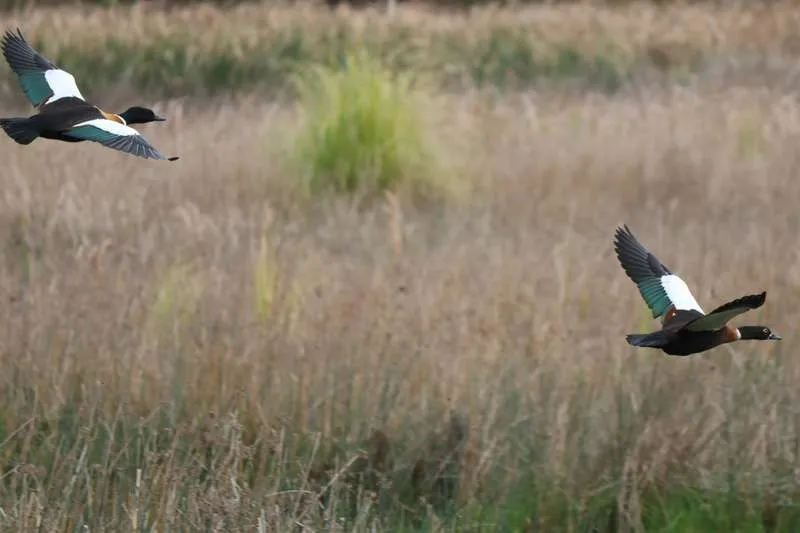 A pair of chestnut-breasted shelducks at Yanchep National Park. Picture: Anita McInnes
“It is not possible to put similar arrangements in place in natural settings such as national parks or regional parks where wild birds and other wild animals are free to move around,’’ the DBCA spokesperson said.
“As part of their day-to-day duties, DBCA’s Parks and Wildlife Service staff are on the lookout for sick or dead wildlife and will report occurrences to the emergency animal disease hotline for advice on how to respond.’’
According to the federal Department of Agriculture, Fisheries and Forestry (DAFF) infected birds can spread bird flu through body fluids, droppings and feathers and in the right conditions, the virus can survive in the environment for months.
“The virus can spread through contaminated clothing and shoes,” DAFF said.
“It can also spread through animals, vehicles and equipment and items like egg cartons.”
Lake McNess in Yanchep National Park is frequented by water birds including a variety of ducks, black swans, the straw-necked ibis and eastern cattle-egret.
Many coastal and seabirds are known to visit Lake McNess including the Australian pelican, great crested terns, white-faced herons, banded stilts, little black cormorants, pied cormorants, seagulls and great egrets.
All the birdlife means there can be a lot of bird poo in the national park, which is why the federal Department of Climate Change, Energy, the Environment and Water advises people when visiting national parks and nature reserves to keep their shoes and clothes clean as it reduces the risk of disease spreading between places.
In November 2024 the Cook Government said there had been record visitation at Yanchep National Park in the 2023-24 financial year, with 400,000 people visiting following an expansion to the campgrounds and renovations to Crystal Cave.
Since about 2020 the new strain of bird flu has caused unprecedented disease outbreaks in a wide range of birds and mammals overseas so experts believe its effects on some Australian native species are likely to be significant.
