
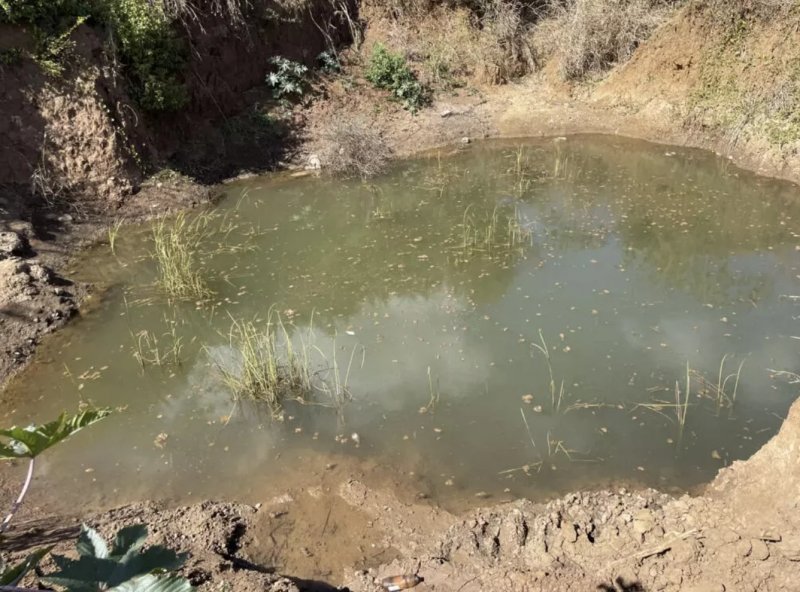
Stagnant water in open pits left by artisanal miners in Mutasa, in Manicaland Province in eastern Zimbabwe. Such pools are breeding grounds for mosquitoes that can transmit disease. © Farai Shawn Matiashe
In Penhalonga, a gold-rich region in eastern Zimbabwe, George Mutsoka woke up one morning experiencing fatigue, a severe headache, and joint pain.
The 43-year-old artisanal miner was too weak to work, so he went to rest at his home in Chishakwe village, just outside Zimbabwe’s second-largest city, Mutare, News.Az reports, citing RFI.
By late afternoon, his situation had deteriorated and he sought help from a village health worker. He tested positive for malaria and the health worker gave him treatment.
“I took the medicine for three days. After a week, I had recovered,” he told RFI.
Mutsoka soon returned to Penhalonga, where he works as an informal miner searching for gold.
There are thousands of artisanal miners in Penhalonga, who carry out open-pit and riverbed mining.
Malaria cases have been spreading fast in this mining community and others across Zimbabwe, as stagnant water pools left by miners prove ideal conditions for the mosquitoes that transmit the disease.
Virginia Chakandinakira, the village health worker in Chishakwe who diagnosed and treated Mutsoka, says that all the malaria cases she documented in her community this year originated elsewhere.
“I have treated four people. Interestingly, they are not based in this village. Some of them are artisanal miners from Penhalonga and others are family members who followed to stay with their husbands in that area,” she says.
A Ministry of Health official, who was not authorised to speak to the media, confirmed to RFI that movements of mining communities are making it harder to get malaria under control.
“Our interventions usually target immobile people. Artisanal miners are mobile and bring complications to the interventions,” said the official.
Sungano Mharakurwa, director of Africa University’s Malaria Institute in Mutare, says artisanal mining – and mining in general – has intrinsic environmental impact, including habitat expansion for mosquitoes.
“There is a high risk of outdoor malaria transmission, which is not amenable to control by mainstay indoor-based house spraying and bed nets in the mining areas,” he says, adding that research is underway to innovate more ways to prevent malaria in such settings.
Another complication is “the cosmopolitan background of the miner population”, Mharakurwa explains. Many miners migrate from non-malarious regions where they did not grow up exposed to strains circulating locally, leaving them especially susceptible to the disease.