
Practicing piano has become my new scrolling. When I feel restless or upset, I sit down for 10 minutes and play. I am a gray-haired amateur tapping out “Let It Be” over and over again (my dad loves the Beatles and now lives in memory care) and it’s transcendent. Often when I lose my phone in my house, I find it sitting on our piano — a symbol of how easily I forget the digital world when I enter a musical one.

In a life filled with oh-so-many emails, notifications, texts and screeds about how artificial intelligence is changing our very humanity (some say for better, some say for far worse), how does one move toward what is real and nourishing? I have a few ideas. And don’t worry, none of them involve chucking your devices into the Pacific.
Find something that gets you into artistic flow and practice it ritualistically. My return to piano lessons came after a 30-year hiatus. I did it for my daughter — or at least that’s what I told myself. My husband found a free piano off of Facebook Marketplace (see, the internet does have its upsides!) and I wanted my 12-year-old to take lessons. She was willing, but wanted to take them with somebody. I volunteered myself without thinking much of it. How bad could it be?
Article continues below this ad
Endless scrolling is destroying our mental health.
Getty Images
In fact, it has been so good for my mind, my mood, even my mothering. And there’s research to back this up. So many of the algorithmic ads I get as a midlife woman are about the importance of cross-training for aging bones. Well, it turns out that taking up a musical instrument is like cross-training for the brain. It is what is called a “multimodal task” — meaning it engages different system in the brain simultaneously, which can improve your executive functioning, working memory and focus. Given my genetic likelihood of getting dementia like my dad, it’s also comforting to know that researchers believe that playing an instrument likely decreases one’s chances of having cognitive decline as they age. There’s even a term for this: “cognitive reserve,” which means you’ve got more umph in the tank to resist the typical neurological deterioration of aging.
Like my experiments with meditation, I don’t feel like I can pinpoint just how tickling the ivories has increased my cognition in real time. But I have found that using it like a palate cleanser during my workday between tasks, or sitting down when I feel the urge to say something sharp to one of my kids, has really worked wonders.
The author returned to piano lessons after a 30-year hiatus. Playing musical instrument engages different systems in the brain simultaneously, which can improve your executive functioning, working memory and focus.
Mint Images/Getty Images
If music isn’t your thing, you might consider a return to drawing. The Bay Area’s own Wendy MacNaughton has an amazing newsletter with weekly assignments to give you some structure. You might learn to throw pots or block print or knit. You might start pressing flowers and sending them in real letters that you write to your friends who live in other cities to surprise them. Important notes here: It doesn’t matter if you’re “bad” at the creative pursuit you are returning to or starting for the first time. The point is that it’s real and embodied, not that it’s Mozart or Modigliani. It also doesn’t matter if you have very little time to devote to this artistic adventure — even 10 minutes a day will change your life a little.
Article continues below this ad
Another idea … this might seem too obvious to even mention, but I will anyway: Leave your cellphone behind briefly and frequently while moving your body. You probably already know that compulsive cellphone use is bad for you (according to studies, “sleep disturbance, anxiety, stress, and, to a lesser extent, depression, have all been associated with problematic cell-phone use”), and that those who create apps for our phones are economically incentivized to make them addictive. But did you know that research also confirms that even when your cellphone is just in your pocket or bag, it still limits your mental capacity?
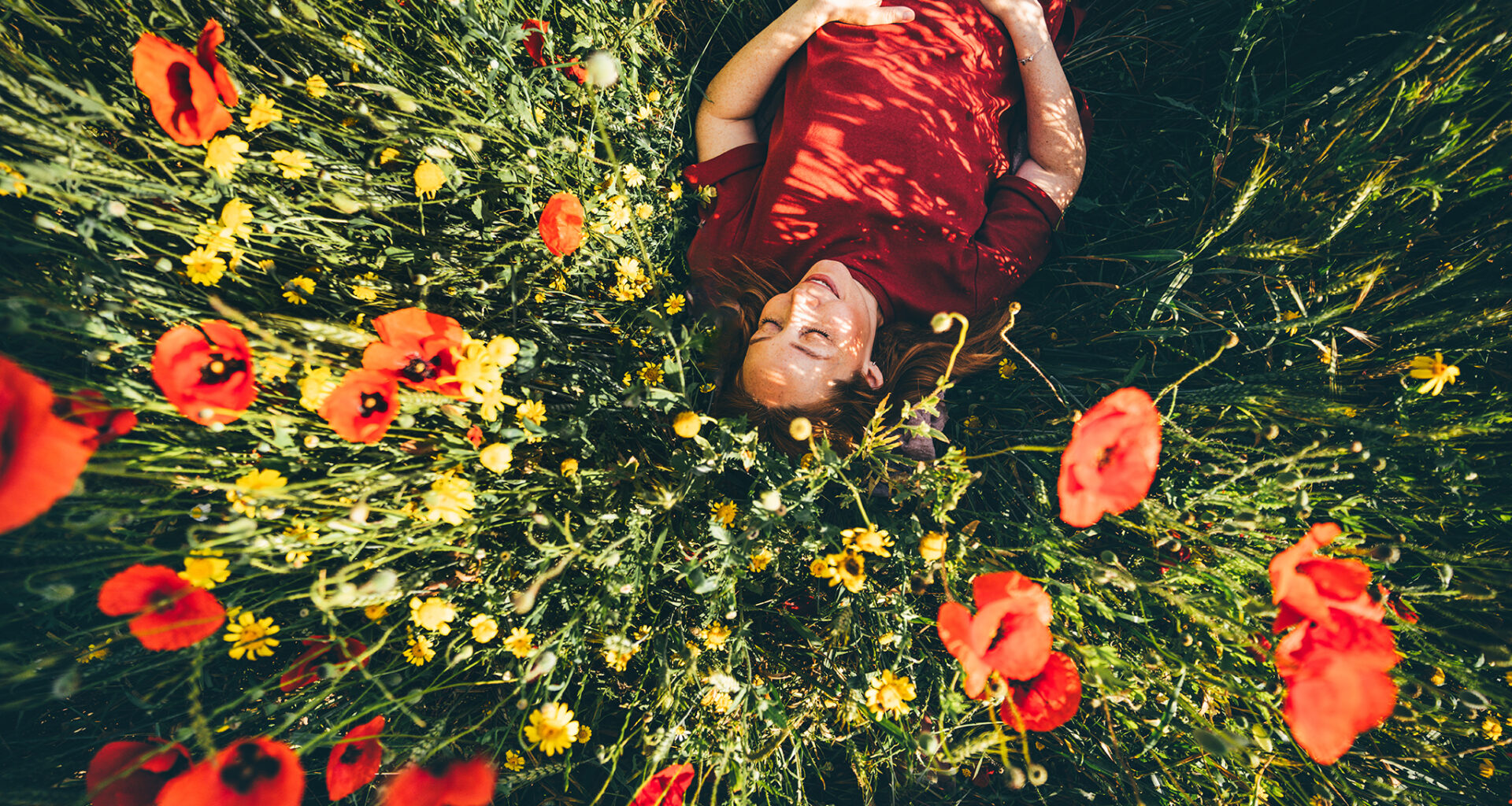
Even 10 minutes a day of creativity will change your life a little.
Maskot/Getty Images
Go on a quick jaunt through town or along a trail, unencumbered by silica glass, refined metals, plastics and polymers. You will, of course, notice different things, including the jitteriness of your own soul, but it will settle soon. You might actually see the face of a person you pass or the texture of the bark of a tree. You might enjoy the rich saturation of a spring flower without sharing it on Instagram, and that will feel strangely and wonderfully private.
Article continues below this ad
While the aperture of your attention expands, the self-importance which inevitably accompanies being constantly connected will diminish just a bit. Research shows that social media use increases our chances of what is called “vulnerable narcissism” — hypersensitivity to what others think of you. Ignore the dings and alerts for 30 minutes and the apocalypse doesn’t arrive. It’s healthy to be reminded of just how much the world goes on with or without you. You may as well study the architecture of a dahlia or chat with a benevolent stranger about the newest mural downtown.
A potter throws on the wheel.
Thanasis Zovoilis/Getty Images
Finally, if you want to feel less addicted to your phone, become intoxicated by a book instead. Yes, remember that old technology that usually fits about 300 pages in between two covers? It doesn’t fit as easily in your pocket, but gosh is it useful. It can build empathy. It can teach you history. It can make you feel accompanied in an increasingly lonely world. Devote just a bit of your screen time to becoming a more regular and devoted reader, and you will never regret it.

Stay informed, and entertained.
By signing up, you agree to our Terms Of Use and acknowledge that your information will be used as described in our Privacy Policy.
Even better, create an intergenerational book club that keeps you accountable to your reading and gets you into rooms with people of varying perspectives, or make a book report zine for your friends, a la artist Christie George’s practice. George went very deep on Jenny Odell’s “How to Do Nothing” during the pandemic and never really came back out. If an algorithm can be a black hole, it’s clear that a book can be a portal.
Article continues below this ad
To “compose a life” — as anthropologist Mary Catherine Bateson puts it — one must be intentional. That’s not only when it comes to the big stuff like who we marry (if we do), where we live, what we spend our money on. It also applies to the seemingly little stuff like what we do with a single hour in a given day.