
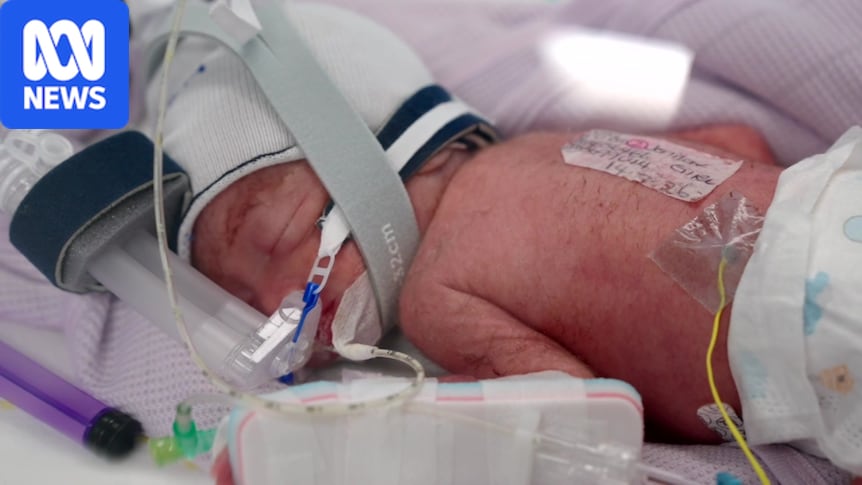
An Australian woman has given birth to naturally conceived identical quadruplet daughters, all sharing the one placenta and split from a singular fertilised egg in one of the few known cases of its kind in the world.
The quads Emily, Harriet, Alexa, and Catherine Na’amoana were delivered by caesarean at 28 weeks and four days gestation last week at the Royal Brisbane and Women’s Hospital (RBWH).
Parents Jenitar and her husband Jortham already had four children aged between one and 10 years old and had not planned for another child when the quadruplets were conceived.
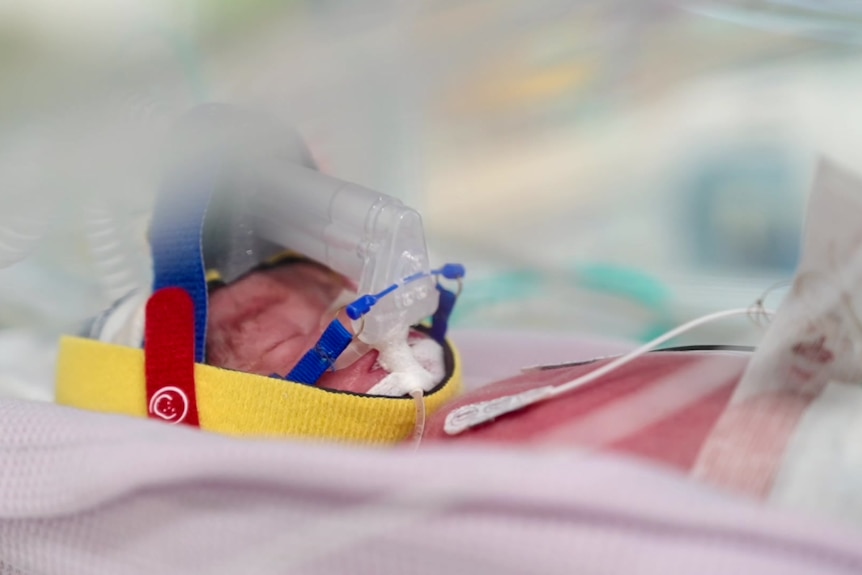
The babies were born at 28 weeks and four days and delivered by caesarean. (Supplied: Metro North Health)
The quads are being cared for in the RBWH’s neonatal intensive care unit and are said to be doing “extremely well”.
Emily weighed 1,025 grams, Harriet was 1,121g, Alexa tipped the scales at 1,120g and Catherine was the heaviest, weighing 1,151g at birth.
“Our precious miracles have arrived safely, and while our hearts are overflowing with gratitude the reality of caring for four newborns at once has brought challenges we never could have imagined,” Ms Na’amoana wrote on the fundraising page GoFundMe.
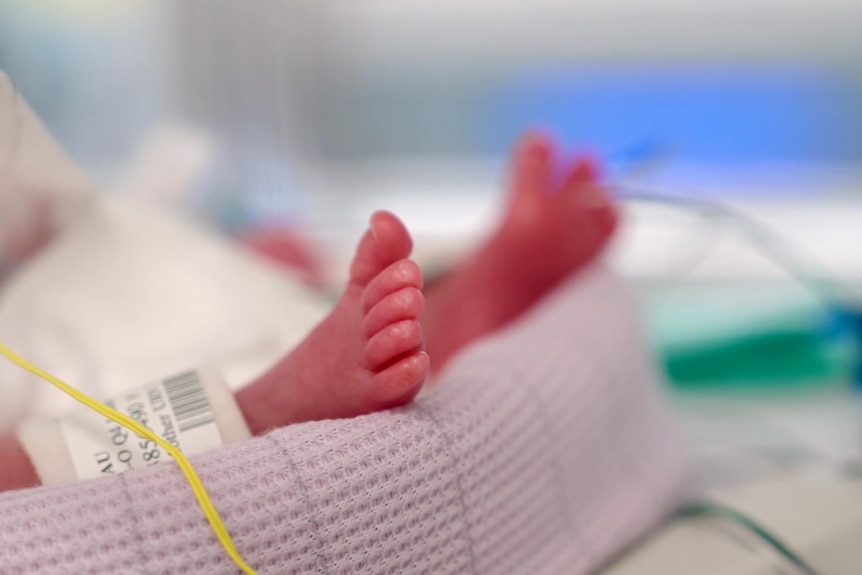
Monozygotic quadruplets are estimated at “one in every 15 million pregnancies”. (Supplied: Metro Health North)
RBWH maternal foetal medicine specialist and obstetrician Alexa Bendall has been caring for 34-year-old Ms Na’amoana since early in her pregnancy.
Dr Bendall said the pregnancy was “very, very high risk” and extremely rare.
“Whenever you have a pregnancy, a multiple pregnancy, which is usually twins, not quads, where the babies are sharing a placenta, there’s a very high risk of complications,” she said.
“Babies can be growth restricted, there will be blood vessels connected in the placenta. If the blood vessel flow is unbalanced the babies can have big complications. There is a high risk of mortality and morbidity for these babies and for mum.
“The fact that we’ve got four beautiful healthy babies born at 28 weeks and four days is incredible.”
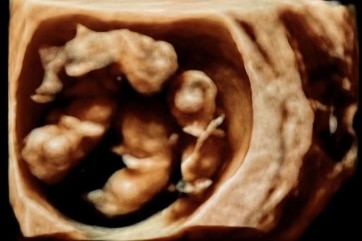
An ultrasound of the quadruplets. (Supplied)
Despite the risks, Dr Bendall said Ms Na’amoana had “taken everything in her stride from day one”.
“We always said that if we could get her to 28 weeks we would be doing well, so we are happy she could make it to this gestation,” the medical specialist said.
“She has somehow dodged every complication and risk for both herself and her babies to be here today, with four gorgeous newborn girls.
“They are very special. We are very excited to be able to care for this amazing little family — or big family now.”
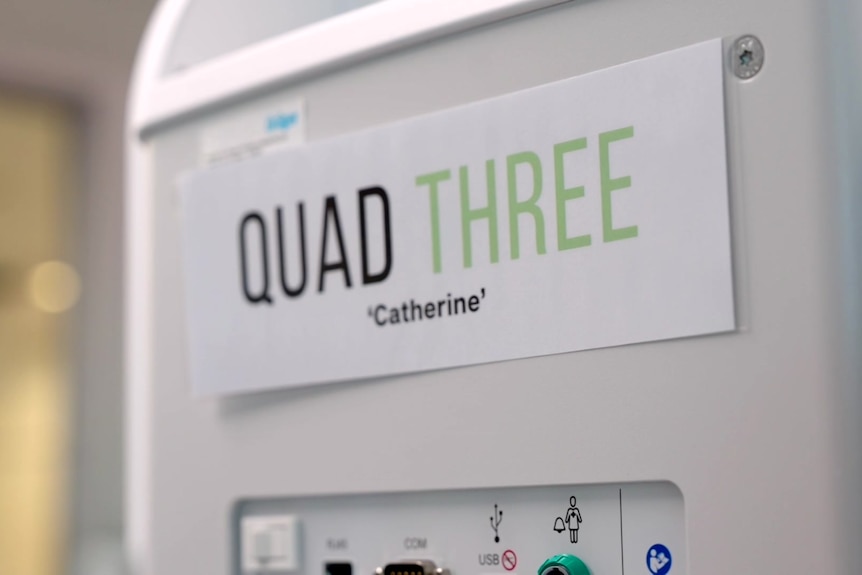
Catherine was the heaviest baby born, outweighing her siblings by less than 30 grams. (Supplied: Metro North Health)
Dr Bendall said monozygotic quadruplets is when a single fertilised egg splits into four distinct embryos during early development and were estimated at “one in every 15 million pregnancies”.
“To share the same placenta — this is unheard of,” she said.
“We don’t think it’s ever happened in Australia.
“There may have been a couple of cases elsewhere in the world and when I say a couple, literally two.”
Outlook ‘really good’
Ms Na’amoana was admitted to the RBWH last month so she could be monitored in the lead-up to the birth last Tuesday after what she described as “one of the rarest births in the world”.
Dr Bendall said the babies would spend an extended period of time in the neonatal intensive care unit to get bigger and stronger before being allowed home.
“But I think long-term their outlook will be really good,” she said.
She said she felt “incredibly honoured” the family had named one of their daughters after her, describing it as ” such a beautiful tribute”.
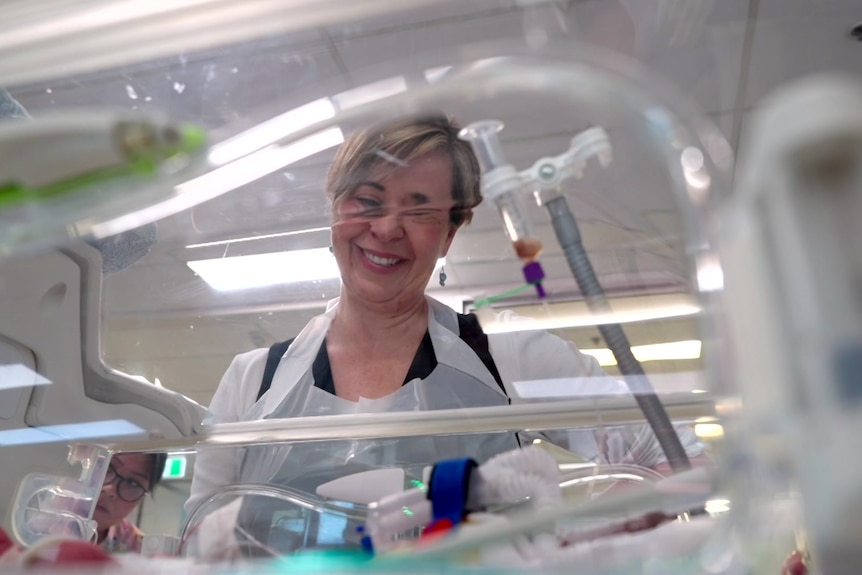
Dr Alexa Bendall has been caring for Ms Na’amoana since early in her pregnancy. (Supplied: Metro Health North)
“I feel incredibly lucky,” Dr Bendall said.
Obstetrician Gino Pecoraro, who was not involved in the births, said quadruplet births happened in about one in 700,000 pregnancies, but identical quads only occurred in about one in 15 million pregnancies.
“The fact that they’ve done well and they’re all alive is the big thing,” Dr Pecoraro said.
“Isn’t that fantastic.”
The family has set up a GoFundMe page to raise money for a larger van “with at least 10 or 12 seats”, essential baby equipment, and help with ongoing medical, travel, and everyday living expenses.
“If you’re able to support our family, no gift is too small. Every donation will make a real difference,” Ms Na’amoana wrote on the fundraising page.
“If you can’t donate, we would be so grateful for your prayers and for sharing our story with your family, friends, church, workplace, and community.”