
There are calls to ensure land earmarked for new housing is not instead acquired by companies building sprawling data centre projects.
The Housing Industry Association says there have been several examples in NSW and Victoria of this occurring, including in Geelong’s northern growth corridor.
Separately, its chief executive of industry and policy, Simon Croft, said instances of the sector being given “preferential planning treatment” need to be “called out”.
While Croft doesn’t oppose the building of data centres, he said governments must not be distracted from the nation’s “biggest challenge — building more homes”.
“While we have no objection to this type of development, housing should be afforded the same urgency,” he said.
“Under fast-track planning mechanisms, it is entirely conceivable that a data centre spanning many hectares could be approved faster than a single home.
“Families looking for a home should not find themselves behind data centres in the queue for land, energy connections or essential infrastructure.”
You can also follow us on Facebook, Instagram, TikTok, X and YouTube.

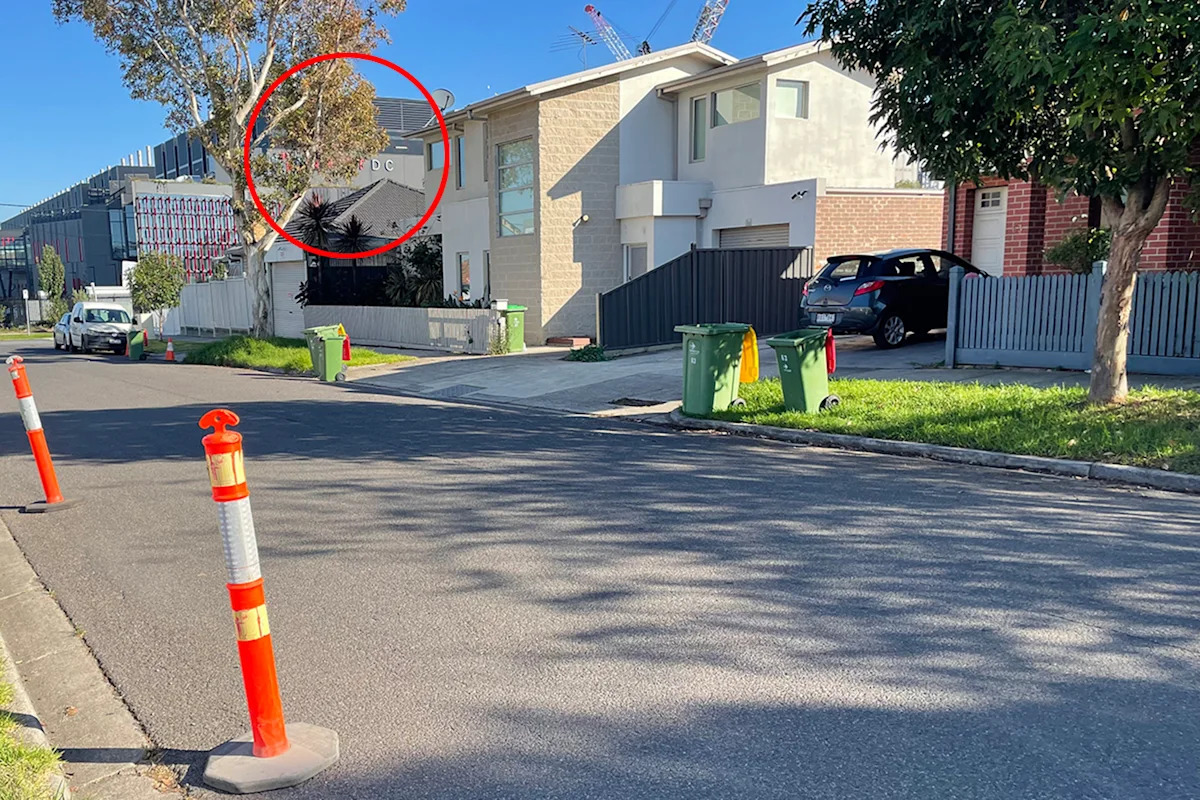
Many residents in West Footscray are frustrated by the ongoing expansion of the NextDC data centre.
(Yahoo News Australia)Residents frustrated by noise created by data centres
In May, Yahoo News met with residents living around the NextDC data centre in West Footscray.
Many had believed the idle industrial buildings in the area would be turned into much-needed housing, but instead they’ve found themselves living metres away from a 10-hectare data centre.
They complained of ongoing construction noise, concerns about diesel fumes, and a constant hum from its cooling units.
HIA welcomes PM’s data centre announcement
Last week, Prime Minister Anthony Albanese announced a plan to ensure the next generation of large-scale data centres are net generators of electricity rather than users.
He said “clear rules for large data centres” will be set by government about where they can be built and the resources they use.
RELATED:
HIA welcomed this announcement and said greater scrutiny of the industry’s electricity and water demands is needed.
“Over recent decades, the cost of housing has been ratcheted up by successive changes to building and energy efficiency requirements, designed to reduce household water and energy consumption,” Croft said.
“At the same time, a single large-scale data centre can consume resources equivalent to tens of thousands of homes.
“Unless these impacts are properly managed and offset, there is a real risk that households will face even greater pressure to reduce consumption through additional costs and regulatory requirements.”
You can also follow us on Facebook, Instagram, TikTok, X and YouTube.