
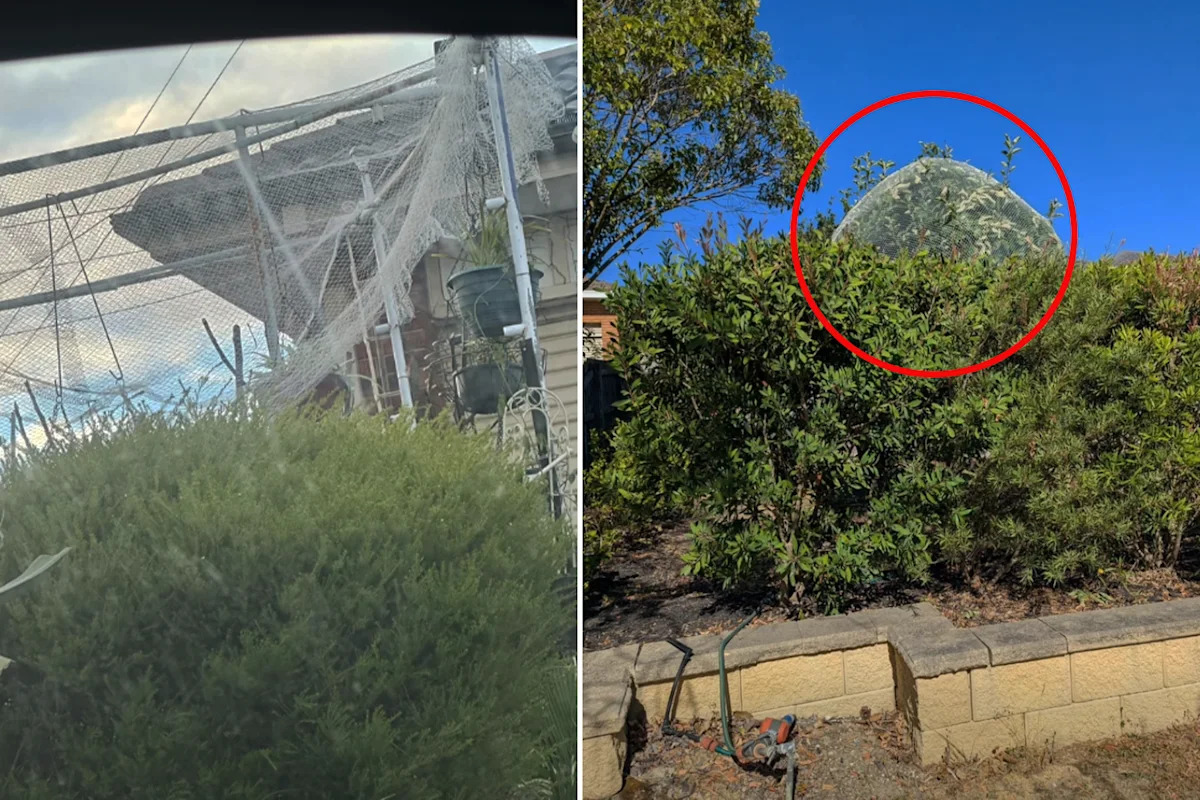
Despite the $395 fine in place, many Australian households continue to use illegal fruit tree nets in their yards, frustrated wildlife rescuers have warned.
In Victoria, households with fruit trees and vegetable gardens are permitted to use nets on their plants to protect them from hungry wildlife, but the netting must have a mesh size of 5mm by 5mm or smaller when fully stretched.
Larger-holed netting is strictly prohibited because it can trap and kill wildlife such as birds, possums and flying foxes, many species of which are already considered vulnerable.
These rules have been in place across the state for years, but Tamsyn from the Fly By Night Bat Clinic in Melbourne told Yahoo News Australia on Monday that some people still aren’t getting the message.
Tamsyn shared photos of numerous yards and gardens taken across Melbourne this month alone, highlighting how widespread the use of fruit nets is.
She believes flying foxes are likely becoming trapped without residents even realising they’re there.
“It’s likely people would be noticing too late due to the weather being too miserable,” Tamsyn said.
“People just don’t check these nets regularly.
“I am aware birds are still frequently being caught. It’s a real shame that after six years, most people still are not aware.”
Are fruit tree nets an issue in your area? Contact newsroomau@yahoonews.com

Wildlife officers can issue on-the-spot fines of $395, with offenders facing a maximum penalty of $2,964 if prosecuted in court.
(Fly By Night Bat Clinic Victoria)How can councils help play a role?
Tamsyn said the not-for-profit group had tried to “raise the issue multiple times” with the state’s Department of Energy, Environment and Climate Action (DEECA).
“But unfortunately, [we] have just been told repeatedly they don’t have the resources, and volunteers ‘just need to keep reporting’,” she said.
“We report the same address over and over and put in letters to try to inform homeowners, but the nets are still up.”
Tamsyn said councils could do more to raise awareness, suggesting messages in rates notices or other communications could help educate residents about the risks.

She said areas where the use of netting was most widespread were also not receiving enough information about the issue, despite the harm it can cause animals.
Tamsyn said a pilot program involving five councils last season should be expanded to areas where fruit tree netting is more widespread.
Boroondara, Brimbank, Manningham, Merri-bek and Yarra encouraged residents to swap illegal fruit tree netting for wildlife-safe alternatives.
More than 600 unsafe nets were surrendered, with 359 compliant nets provided free of charge as part of the trial.
“We’d like to see this reach councils with higher areas of net use,” she said.
She warned that illegal nets left in place are “another potential death trap for flying foxes, birds, possums, reptiles and other native wildlife”.
What penalties are in place for offenders?
In Victoria, it is illegal to use, sell, or advertise household fruit netting with a mesh size larger than 5mm x 5mm at full stretch to protect backyard fruit trees.
Wildlife officers can issue on-the-spot fines of $395, with offenders facing a maximum penalty of $2,964 if prosecuted in court.
RELATED:
Those in NSW face fines of up to $800 if caught using illegal nets, and in the ACT, maximum penalties of $1,100 can be enforced.
The sale of cheap netting through various online retailers means people have access to products that do not comply with the requirements.
eBay, Amazon and Temu have previously been called out for selling and shipping illegal netting, with Temu removing the entire search term “fruit tree netting” after being contacted by Yahoo.
Big W last year apologised for sending a banned item to a customer.
You can also follow us on Facebook, Instagram, TikTok, X and YouTube.Calls for councils crackdown as Aussies ignore $395 fine for common backyard item: ‘Real shame’