

In its most recent results announcement, Netflix has flagged Live TV and sports rights as a way of carving out growth as its subscriber numbers plateau in major markets. B&T has spoken to media analysts to see if such an arrangement would work with local TV networks Seven, Nine, Ten and SBS.
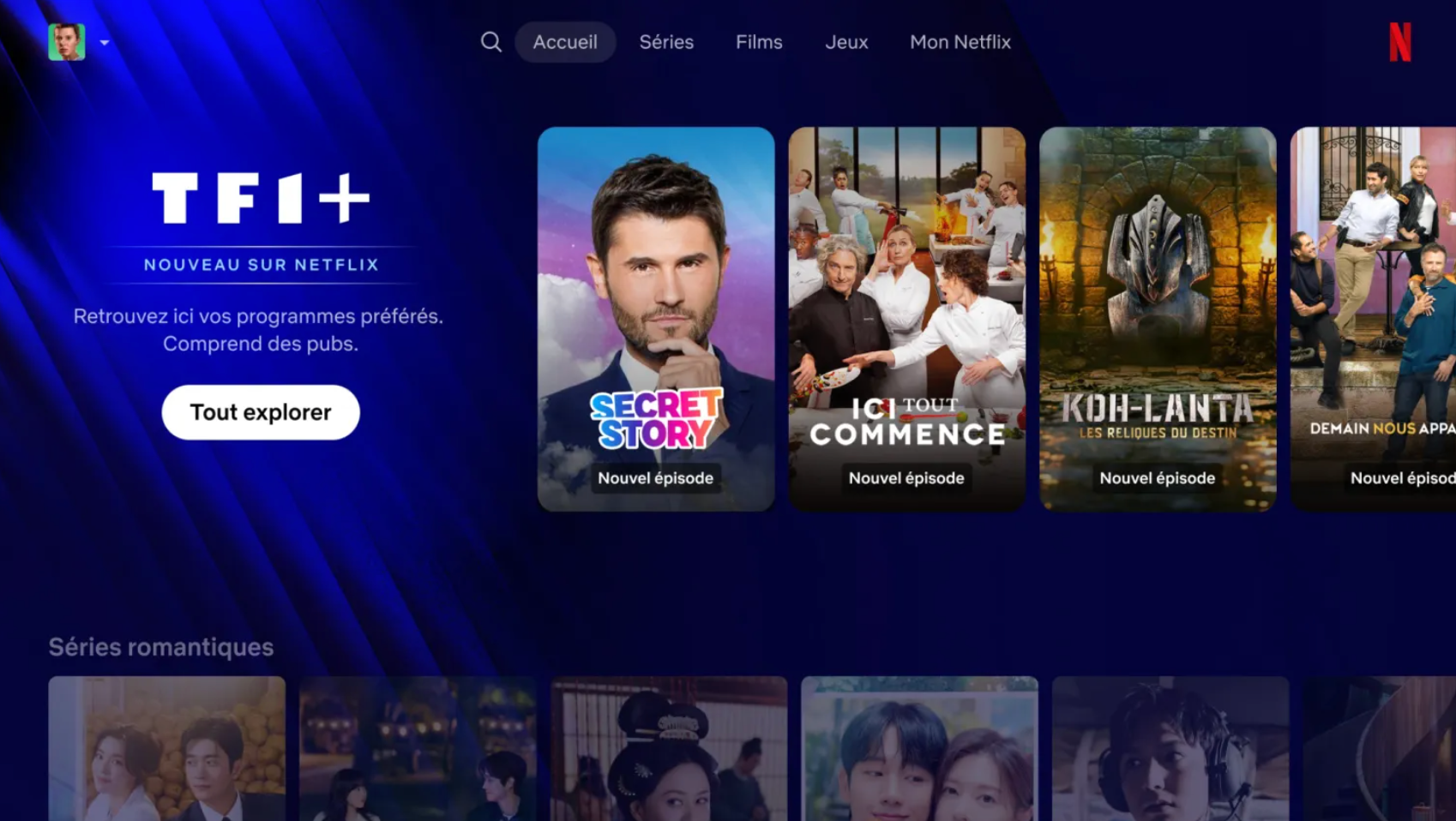
In France, the streamer has partnered with TF1 to carry live broadcasts and on-demand content from TF1 and its on-demand platform TF1+.
In its first three weeks into the carriage deal, the French broadcaster said it has hit record streaming numbers, including a 16 per cent rise in the number of unique daily streams for TF1 shows.
“We achieved our audience targets [for the Netflix deal], originally set for an 18-month timeframe, in less than three weeks,” TF1 CEO Rodolphe Belmer said in a statement. “This strong start confirms the value of this unprecedented partnership and the public’s appetite for our content.”
The TF1 deal with Netflix is the first of its kind with the global streaming giant, but not entirely unique.
The British broadcaster ITVX has signed a carriage deal with Disney+, while Spain’s RTVE and France TV have partnered with Amazon Prime Video.
There is also a growing trend of TV broadcasters signing content deals with YouTube to find new audiences.
“What distinguishes this deal, however, is that it is more than just a packaged content area; rather, it also involves inserting the channel’s linear feeds into the Netflix platform. From what I understand, this is a much more complicated proposition,” Ampere Analysis research manager Ed Ludlow told B&T, noting that it has taken more than a year to deliver Live streaming on the platform.
“Now it has been delivered in France, the technology is there, so it is very possible that we start to see other similar deals elsewhere.”
B&T asked Netflix whether it was eyeing other markets, including Australia, to strike more carriage deals.
Netflix declined to comment but B&T understands it is using the TF1 partnership to learn what might work elsewhere.
There are benefits for both parties in this arrangement.
For TF1 it offers the broadcaster the opportunity to extend its reach. Ampere’s consumer survey found that 29 per cent of consumers in France used
Netflix, but not one of TF1’s platforms (linear channel or on-demand service)., providing the opportunity for TF1 to grow its reach to new audiences.
Netflix benefits in two ways. France has relatively high linear TV viewing and incorporating TF1’s live channels into Netflix, the platform can cater to these established viewing habits and broaden its appeal beyond on-demand streaming.
It also provides Netflix access to a much larger range of high-quality French content.
Would it work in Australia?
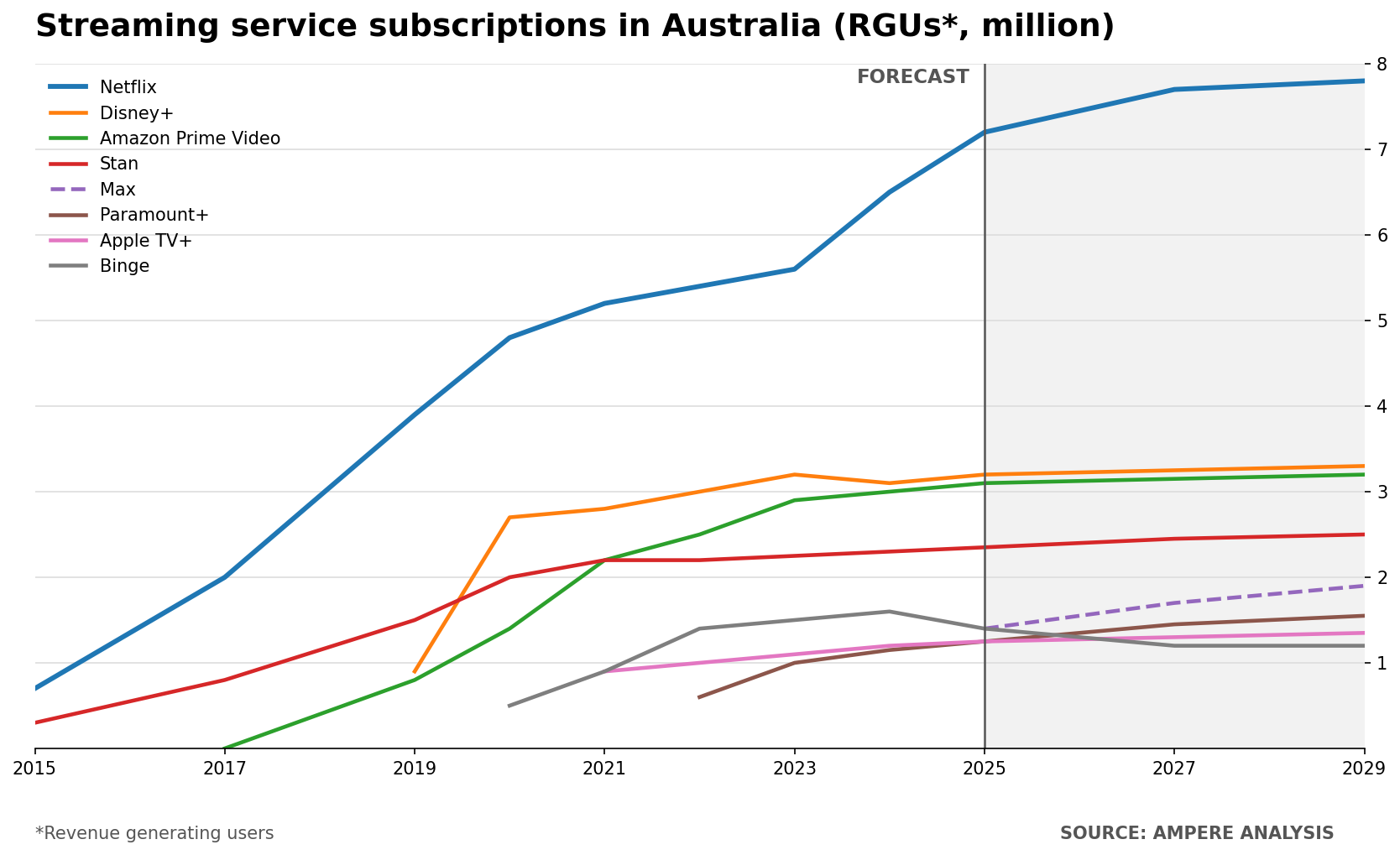
Australia has one of the most concentrated domestic TV markets per capita, but is under increasing competition from global streamers including Netflix, Amazon Prime Video, Disney+, HBO Max and YouTube.
It also has strict anti-siphoning rules around some sports.
As Nine and Seven try to grow their subscription audiences on 7play, Stan and Nine Now, it seems inconceivable they would entertain joining their largest streaming rival at this moment in time. Seven and Nine declined to comment.
Seven’s new chief executive Rohan Lund recently flagged the company “needs to meet our audience on any device, at any time” but B&T is not aware of any discussions with Netflix or other global steamers.
Nine, which owns major Aussie streamer Stan, also sells ads for Warner Bros. Discovery. Nine already uses its streaming platform Stan to show live sport and news, including the Olympic and Winter Olympic games.
Network Ten, which is owned by Netflix’s rival Paramount, told B&T that there are no plans at all for a Netflix carriage deal.
Meanwhile, SBS also declined to comment on a carriage deal, but may be the most likely starter.
Sport, News, Reality TV
Ampere Analysis estimates that Netflix has a 90 per cent penetration in households that take an SVOD subscription and questioned whether Netflix stands to gain much incremental audience reach.
Where the offering could be attractive for Netflix is adding live sports—should rights permit it—news and current affairs programming, and unscripted entertainment (reality, game shows, talk shows).
“If users can find everything they’re after in one location, they are much less likely to churn from their service,” Ampere’s Ludlow said.
“It’s particularly that final point which is why the prospect is so intriguing in Australia. Sports is one of the few genres where live transmission still delivers a huge audience, and represents a clear competitive advantage against on-demand viewing.
“We’ve just seen the value of live sport to Australian broadcasting with the record NRL deal which was struck last week. It is notable that thus far, Netflix, Amazon and Apple TV have largely stayed out of sports rights in Australia. Partnerships with broadcast channels could be a quick, and relatively lower-risk way into this space for these streaming services.”
Ludlow believes that aside from SBS, it will be interesting to see if another Australian commercial TV network is closely monitoring the TF1-Netflix arrangement.
“Seven – for example – has no paid streaming option of its own. It also has some of the most popular sports properties in the country,” Ludlow said.
“There would, of course, be some major considerations: like if the deal would present any legal challenges for current broadcast agreements; and how Foxtel – the current paid partner for its sports rights – would respond.”
Luke Stillman, a media analyst at Madison and Wall, said that Netflix needs more content, and deals with local broadcasters could potentially alleviate the “new release anti-churn treadmill”.
“It also makes it easier to get local culturally relevant stuff onto the platform and also helps improve the issues with fragmented viewing frustrating consumers. It also might help alleviate the concerns that global streaming platforms have had with local regulators in many places around support for local content,” Stillman added.
In Australia, new laws compel streaming services with more than 1,000,000 domestic subscribers, including Netflix, to invest at least 10 per cent of their total local program expenditure (or 7.5 per cent of their Australian revenue) into new Australian drama, children’s, documentary, arts, and educational programs. For Netflix this could add up to $100 million per annum.
“Regarding Australia, I don’t see any reason why it wouldn’t work,” Stillman added. “Of course there are local sports broadcasting regulations and regulations around what TV home screens have to show and more, so there are definitely some Australia-specific issues to iron out, but the fundamental concept makes sense for all parties.”