
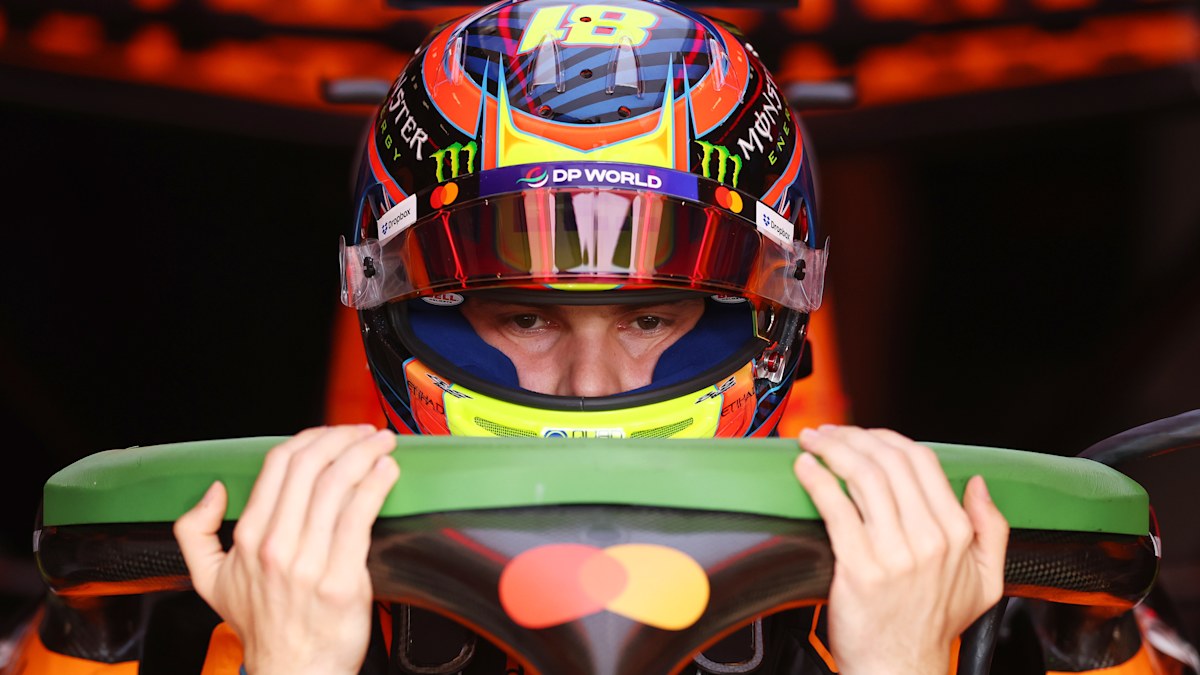
In Formula 1, you’d be hard-pressed to find a driver who is happy with their car right now.
It might sound like a wild statement, but as the paddock heads into the summer break after this weekend’s race in Hungary, widespread confusion over unpredictable car behaviour has left the grid at its wits’ end.
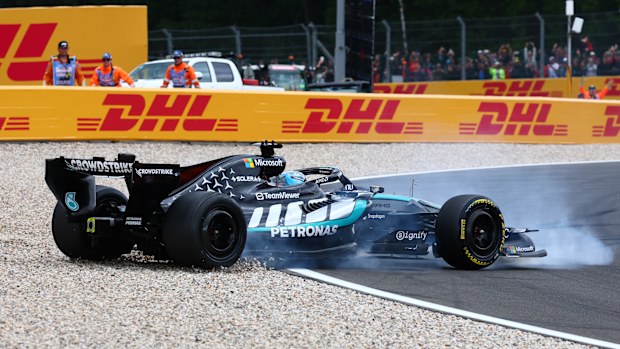
George Russell was a victim to engine gremlins. Getty Images
Specifically, multiple drivers have found themselves facing mysterious power deficits compared to their own teammates, with engineers entirely unable to explain why.
McLaren’s Oscar Piastri recently rued a bizarre anomaly after finding himself two-tenths of a second slower than teammate Lando Norris for no apparent reason.
Team principal Andrea Stella later revealed that Piastri had been compromised by the engine’s autonomous “self-learning” elements. These electrical systems calibrate lap after lap, adjusting energy deployment based on driver input.
Consequently, while Piastri and Norris ran identical engine settings, an errant mechanism on Piastri’s power unit left him starved of battery power through crucial sections of the track at Spa compared to his teammate.
“It sucks. I can’t really say it any other way than that,” Piastri said about how much the electrical part of the new engines are dictating results this season.
“When you’ve got qualifying grids decided by computers behaving or misbehaving, it’s a pretty crap way of going racing.”
“I certainly wouldn’t have been the only person,” he added.
“I know George has had a lot of issues with that this weekend, and maybe the last couple of weekends. And speaking to some others, it’s a similar story.
“It’s obviously exaggerated a lot and made worse, but yeah, when you come in from a qualifying session, you look at all the corners and go, ‘I’m on par with my teammate and yet I’m two tenths behind at the end of it.’ It’s not a very nice feeling.”
The Mercedes camp faced this exact scenario.
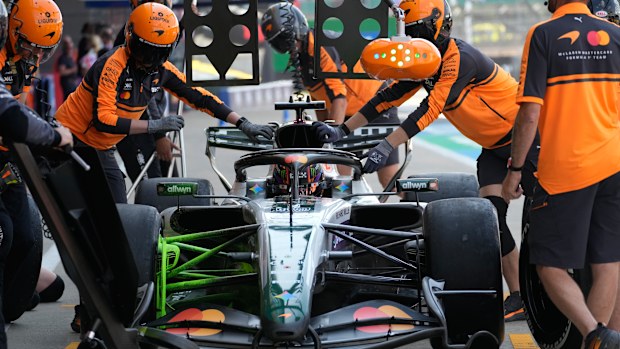
Piastri was not happy with the ‘crap driving’ the F1 cars reflect. AP Photo/Darko Bandic
A stark top-speed deficit emerged between George Russell and his teammate Kimi Antonelli throughout the Belgian Grand Prix weekend.
Antonelli took pole and won Sunday’s race and Russell managed to only qualify fourth and crashed out of the race.
“Even on my last lap, for some reason I lost another tenth and a half to myself, just on the straight. You’re watching on your steering wheel, just losing speed when you’re full gas on the straight. You feel powerless,” Russell said.
“We don’t know what’s going on. I don’t think it’s the power unit, to be honest. But there’s something slowing us down in the straights.”
Both teams and drivers have been left scratching their heads, desperate to figure out why these power unit challenges exist and why they vary so wildly across the garage.
It appears that even a slight change in wind up a hill or through a corner can trigger a “self-input” in the electrical unit to randomly learn, unfairly shifting the car’s baseline potential.
“The change in fuel flow and the less deployment are not going to fix those specific issues, it’s to do with how the engine’s calibrated, how the engine learns,” Piastri explained further.
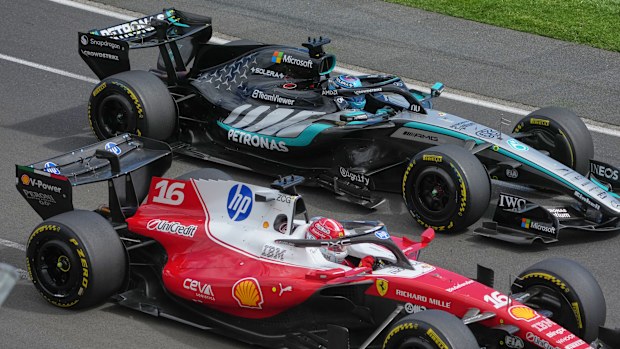
Drivers are struggling with the car’s ‘self input’ status. AP
“It’s kind of ingrained into these engines. Obviously, it will get better as all the manufacturers understand the engines more, and it’s not just a problem for us or Mercedes, it’s a problem with all the engines, speaking to some of the other drivers – but the fact that it’s even a problem is pretty annoying for more than just myself.”
Charles Leclerc, who finished second in the race in Spa, admitted that he had spent multiple sessions with engineers struggling to understand the behaviour of his Ferrari power unit.
“These power units are so complex that there are some days when you scratch your head trying to understand why you are losing so much on the straights. That was a bit the case for me on Friday and in FP3,” said Leclerc.
“Then, in qualifying, things went well again by slightly fine-tuning things.
“It’s just very difficult, but also very frustrating sometimes for a driver because, even when you are doing your best, there are things in the background that change constantly, and that’s not so nice.”