
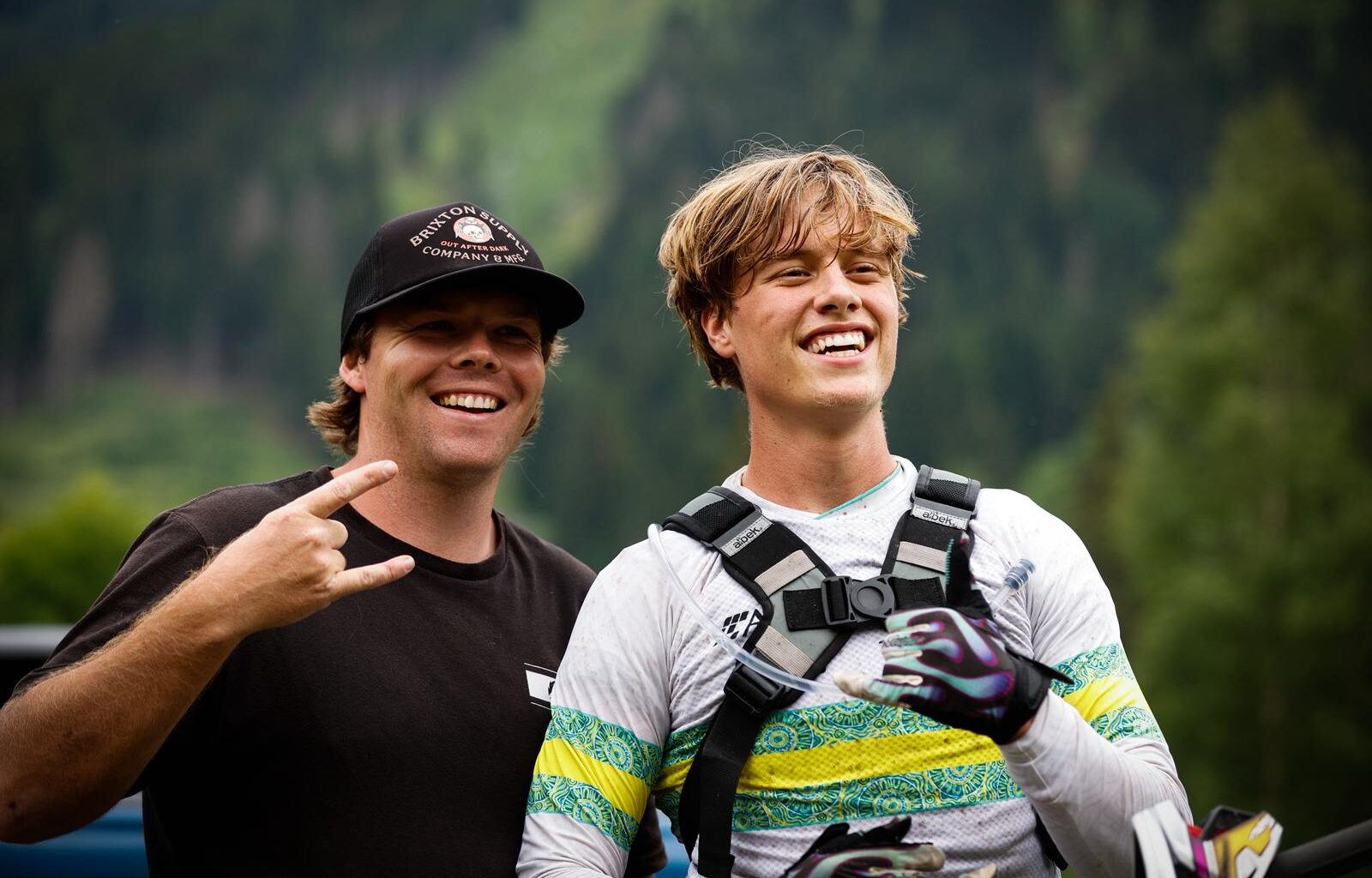
Hailing from Newcastle, Harper Nelmes is a 17-year-old who has just returned home from his first World Cup campaign. In what he says was a season to learn and find his feet, he landed a win, a podium, and a fifth-place finish. He’s also just been named by AusCycling to the 2026 ARA Australian Cycling Team set to compete at World Champs in Val di Sole. Not a bad start, eh?
Still at the beginning of his racing career, Nelmes has been a fixture on junior podiums and was even featured as a young rider to watch in the lead-up to the 2024 AusCycling National Championships at Awaba. But we didn’t really know all that much about this young up-and-comer. So we gave him a ring to find out more about this remarkable World Cup run.
Related:
Harper Nelmes Fast Facts
Age | 17
Hometown | Newcastle, NSW
Favourite Race | Mount Borah in Tamworth or Val di Fassa
Tim Tams or Mint Slice | Tim Tams
The thing you most missed about home | Having a consistent routine
Flow: This is your first year on the World Cup and your longest time away from home. What was that like for you?
Harper Nelmes: The longest before this was two and a half weeks in Canada, but that was with Dad the entire time. This year, I’ve been over here for a month with Dad, a month without a parent. It was a big adjustment when Dad left. I just had to grow up straight away.
It was no longer a problem that Dad could sort out; it’s all up to you now, in a foreign country where you may not know all the rules (or customs).
In Italy, they have this thing called riposo, where everything closes from 12:30pm to 3:30pm every day — it’s like peak lunchtime, right when you need to buy something. That’s caught me out a few times.
Flow: There is obviously quite a difference between racing here in Australia and the level in Europe. How jarring has that step up been for you?
HN: Imagine you go from climbing Kosciuszko without an oxygen mask and then say, “Let me go climb Everest without an oxygen mask.” That is how the step has felt.
One thing that I think was really scary for me this year is the trails over here. It is indescribable how gnarly they are, and you have to push on them.
At home, you can ride at 90% and still be flying. Over here, you have to be 110%, without crashing, and have a perfect race day with no mechanicals. You need to be totally on your game and firing on every part of every stage; otherwise, you’re gone. It’s exactly what happened to me at La Thuile (where I came fifth). I came into that first stage feeling really good out of the gate, but then I just didn’t have the intensity I needed for the bottom. I was riding too conservatively, and that was my race day gone.
Flow: What was your goal for this season, and what have you learned?
HN: Because I’m still at the bottom of the age group, the idea was to never go for the overall this year. You need a year to learn before you can actually expect any good to come from it, and the plan is to come back and go for the overall next year.
Coming from Aus, the trails aren’t super long, so my three- to four-minute and five-minute intensities are a lot better than anything over seven minutes, but that’s how long some of these stages are. After about six minutes on these trails, you’re pretty cooked. So I really need to focus on that intensity over a longer stage but also my super-short, max-effort sprints.
I’m definitely not the strongest on the circuit, and I’m a little limited because our trails are just so much shorter. But we have a good plan headed into next year.
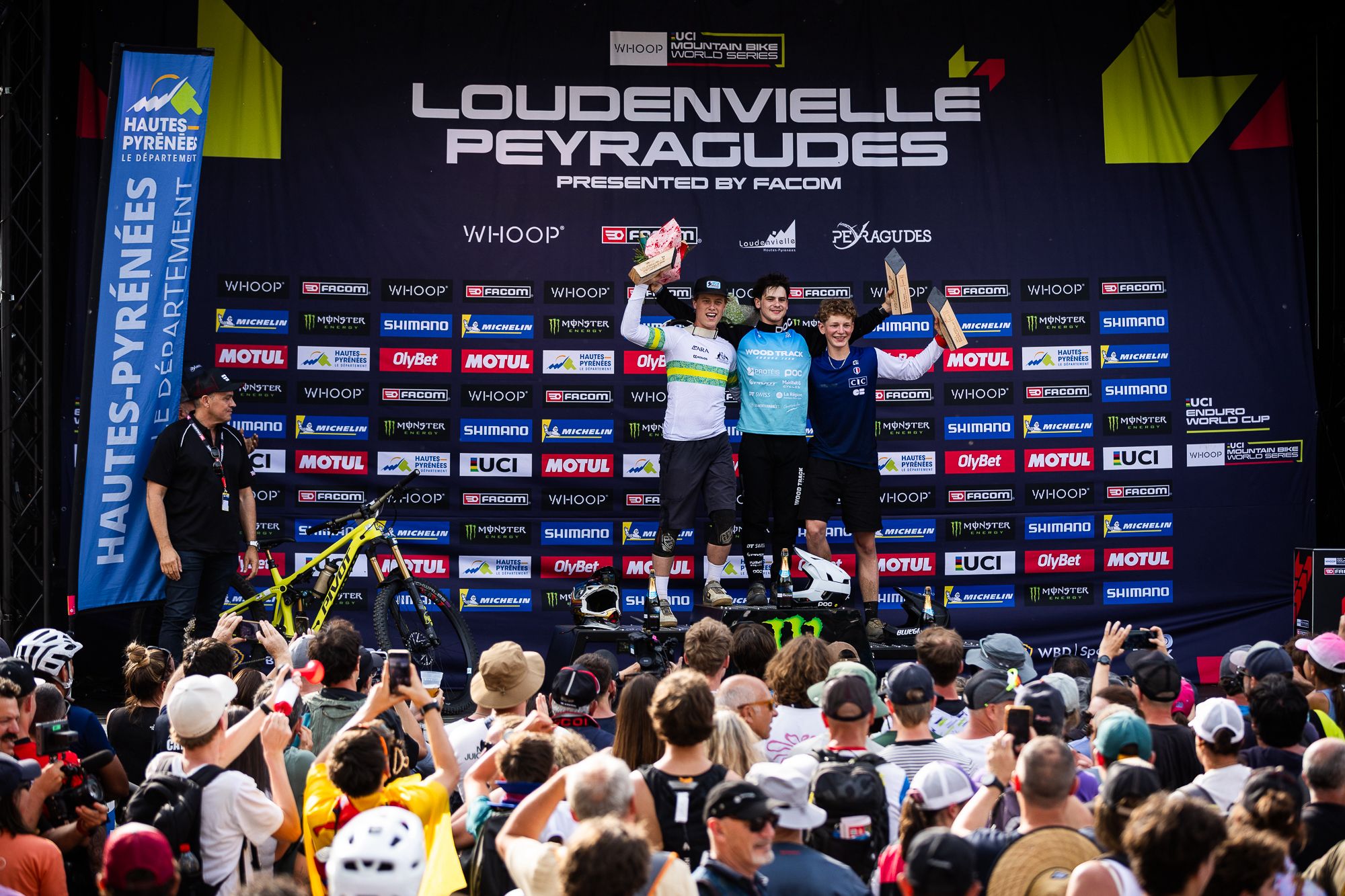 Harper announced his presence at the World Cup, storming to a second-place finish in his first race in Loudenvielle.
Flow: There is so much to process coming into your first World Cup race, and yet you pulled off a second-place finish. What was going through your head going into the race, and then as the day progressed?
HN: I remember that on race day, I felt super calm, which is not normal for me. Normally, I’m a little bit nervous, but I didn’t really feel anything, so I had nothing to prove — it’s just such a different race from home.
In the least arrogant way possible, I go to every race wanting to win. I knew that if I raced there (Loudenvielle) and was on point, I could do all right. I thought I was in that top-five rider pool. After the first stage, Hugo (Marti) was 13 seconds ahead, but I was fighting for second. I was like, “Yep, I’m here where I need to be, and I can do this. So now I’m just going to continue doing it all day, and I should be all right.”
Flow: First World Cup, first podium ceremony – what was that like?
HN: I will remember it vividly for the rest of my life. I remember walking up there, frothing, and there was a big old crowd. You get celebrated when you walk onto the stage, and then they celebrate you again when they give you your medals. They celebrate you again when you all stand together for the photo and then again when you spray the champagne.
They just keep celebrating you, and it’s like, “This is so awesome.”
Flow: The next round in Leogang was the opposite. You had an unlucky crash in the wet, which ended your day. What was that like, going from being celebrated five times in three minutes to DNFing due to a mechanical?
HN: I was very excited for Leogang. I love racing in the wet; I find it really suits me. I just wanted to be absolutely swinging off it because I knew I needed to go quicker on that first stage, and I just came out of the gate so hot.
I was on what felt like a bloody good run, and then just near the bottom, I pushed the front over a little root into a tree.
When I hit the ground, I drove my bars into the ground with my knee. I snapped my rear brake lever off at the bolt, so I couldn’t even strap anything on. It was done.
I couldn’t even really be that annoyed. I reckon if it were a race at home, I’d be more annoyed, but it was just so unlucky. I’ve never snapped a brake lever in my life.
I think that’s how racing works. You do well, and then it humbles you.
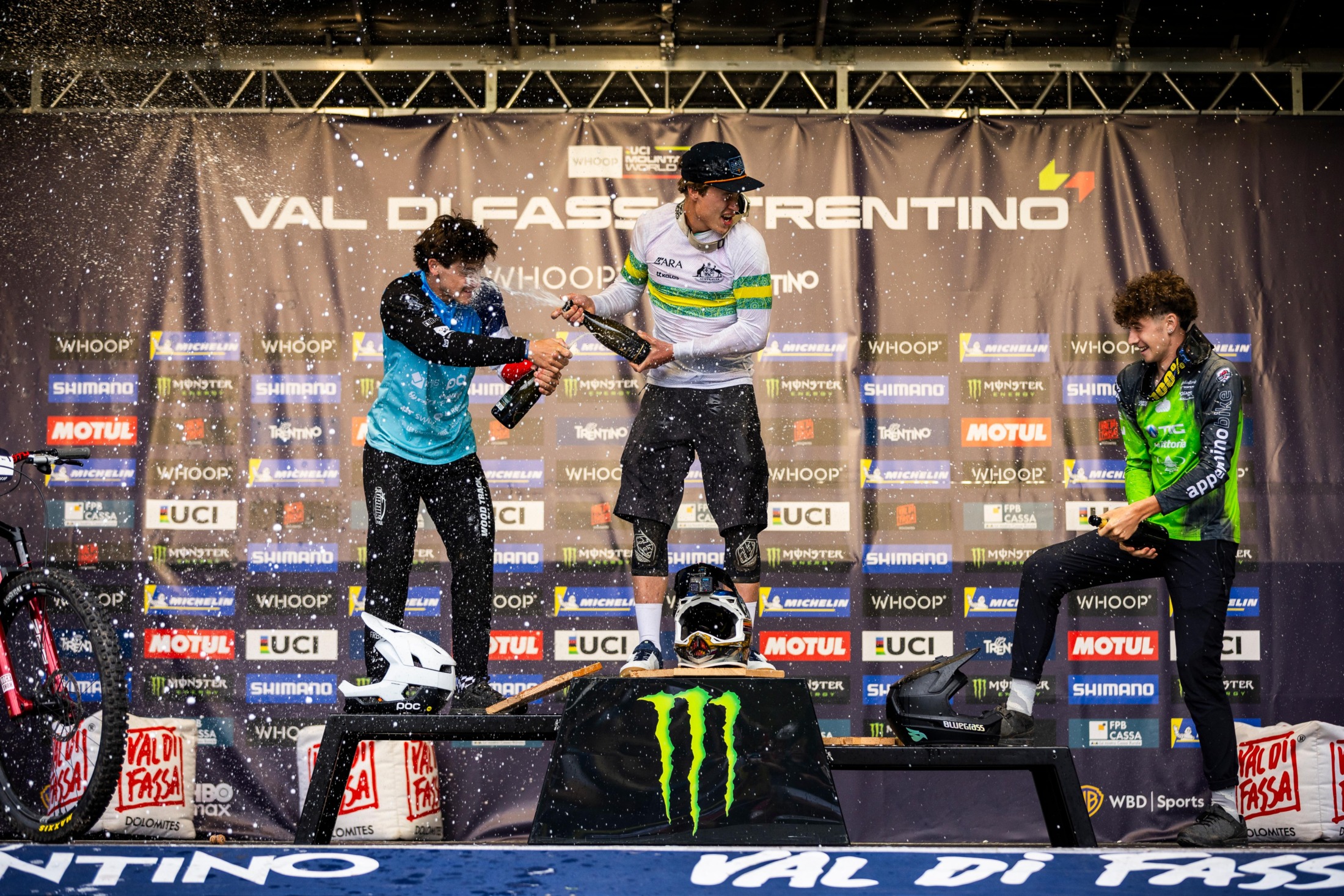 Harper followed up a difficult weekend in Leogang with a win in Val di Fassa.
Flow: Coming off a frustrating DNF, what was your mindset heading into the next round in Val di Fassa?
HN: Coming over here, I was so excited to race in Canazei (Val di Fassa) because it’s the Dolomites, and for someone who hasn’t been there before, it is so incredible. It’s just so beautiful.
Leogang kind of happened and went through my head, and then I moved on from it. I was over here with Jack (Moir) at this point. He’s had that same thing happen, where you just get crashed out of a race. It’s just part of it, and you have to move on — there are more races.
Coming into race week, there was no real stress. I just had a few little things we needed to fix, but everything just kept falling into place. I wasn’t holding onto my mistakes as much as I normally would.
Flow: Val di Fassa was the first two-day race of the year, with some pretty wild stages and a bit of chaos because of the weather. But it was also your first World Cup win. What was this whirlwind of a weekend like?
HN: Practice went really well, and I woke up on race day feeling good. Jack had told me, “Come out on this first stage and figure it out.” He said it was going to be slippery, wet, and rutted, and not to come out swinging like at Leogang. Just ride your bike, settle in, and don’t make any major errors because there were two days of racing, and plenty of time to make it up.
I was really nervous about the first stage on the second day, Titans. It’s this eight-minute-long stage, and it’s so full-on from top to bottom. It’s not full-on in that there are just big holes. It’s full-on in that there are features I would not normally even ride at home.
I was really just trying to focus on hitting all my marks. I’m definitely not the fastest rider in the field, but I’m pretty smooth and consistent. I can just hit my marks every lap. Over the course of a lap, if you just hit 10 more lines than another rider, that’s a couple of seconds there.
It was all going well, and then on that first stage on the second day — the really scary one I was a bit nervous about — I was like, “Yep, let’s just go ride it.” I got second by like 0.4 seconds, and Hugo (Marti) had a crash and lost some time. Even though you’re racing, you never wish a crash on your opponent, and I was pretty upset for him. But that also meant that I had a better opportunity now. Then it started hailing and raining, and stages five and six were cancelled due to electrical storms, so we all rolled down to the bottom in a massive 200-person Megavalanche. It was pretty awesome.
But as soon as the new start times were released, I just felt I would win. It’s a weird feeling, and I think only a racer could understand it. You’re sitting there, so composed and content, and you can just envision it. You can feel it. You know you can win.
On the final stage, I had three and a half seconds to make up. I looked behind me as soon as I came across the line, and it looked like Hugo was a bit more than 30 seconds behind me (because they send us off at 30-second intervals). But was he 33.5 seconds?
The announcer was speaking Italian, and he was like, “And Hugo second tempo,” and I was like, “Does that mean second on the stage?” Because if he had done that, he would have beaten me. I’m looking at the board, waiting for it to refresh, waiting, waiting, and then it refreshes. I was still at the top of the order, and I was like, “Holy shit!” I didn’t even know what happened. I was just so shocked and happy.
Flow: La Thuile was your final World Cup of this season, which included the now-infamous night stage. We all saw it on our phones. What was it like to ride through that crowd?
HN: Excuse my French here, it was f*cking crazy. It’s just insane. We didn’t start until like 2pm in the arvo, so your day is literally based around the night stage, and all you do is think about it.
We’re sitting there at the bottom, and you see hordes of people going up to the top of the hill, and you’re like, “Damn, this is gonna be pretty insane.”
I was dropping second-last, and you’re just sitting there, and all you can hear is chainsaws ripping. The crowd’s going wild; it’s just insane, and you’re so nervous because it’s not an easy trail either.
It’s only a 55-second stage, so you’re cranking as hard as you can, for as long as you can, along these flat grass corners — I nearly slid off the track and took out a cameraman. Then you get to these two janky roll drops, and as I came over the first one, all I could smell was flares.
You’re on 30-second intervals the whole way down, so you just hear constant ‘brrrr-aaaaauuuuu’ from the chainsaws. Then you come around that corner, take a deep breath, and you’re in it. It’s so loud, and your brain is overstimulated. Then you ride out of it, and it’s quiet, and you’re like, “Oh, thank God, I made it out of here alive.”
Then we went up and watched it (the rest of the stage), and it was so insane. When people say, ‘Enduro is dead,’ you look at that, and you’re like, it’s obviously not. People came to that (the night stage) and were yelling so loud — with chainsaws and flares, and chanting — and it was so incredible to watch. It really gave me hope about the future of this.
Photos: Rick Schubert / WBD, Warner Bros. Discovery
Editorial Guidelines
At Flow Mountain Bike, we’re committed to delivering engaging and trustworthy content, from product reviews to destination showcases, news, interviews, and features. While many of the brands and destinations we cover may advertise with us, our editorial team operates independently, ensuring our content is guided by expertise and passion—not commercial influence. Sponsored content is always clearly disclosed, and we remain dedicated to providing honest and unbiased coverage across everything we publish. For more details, see our Transparency Report.