
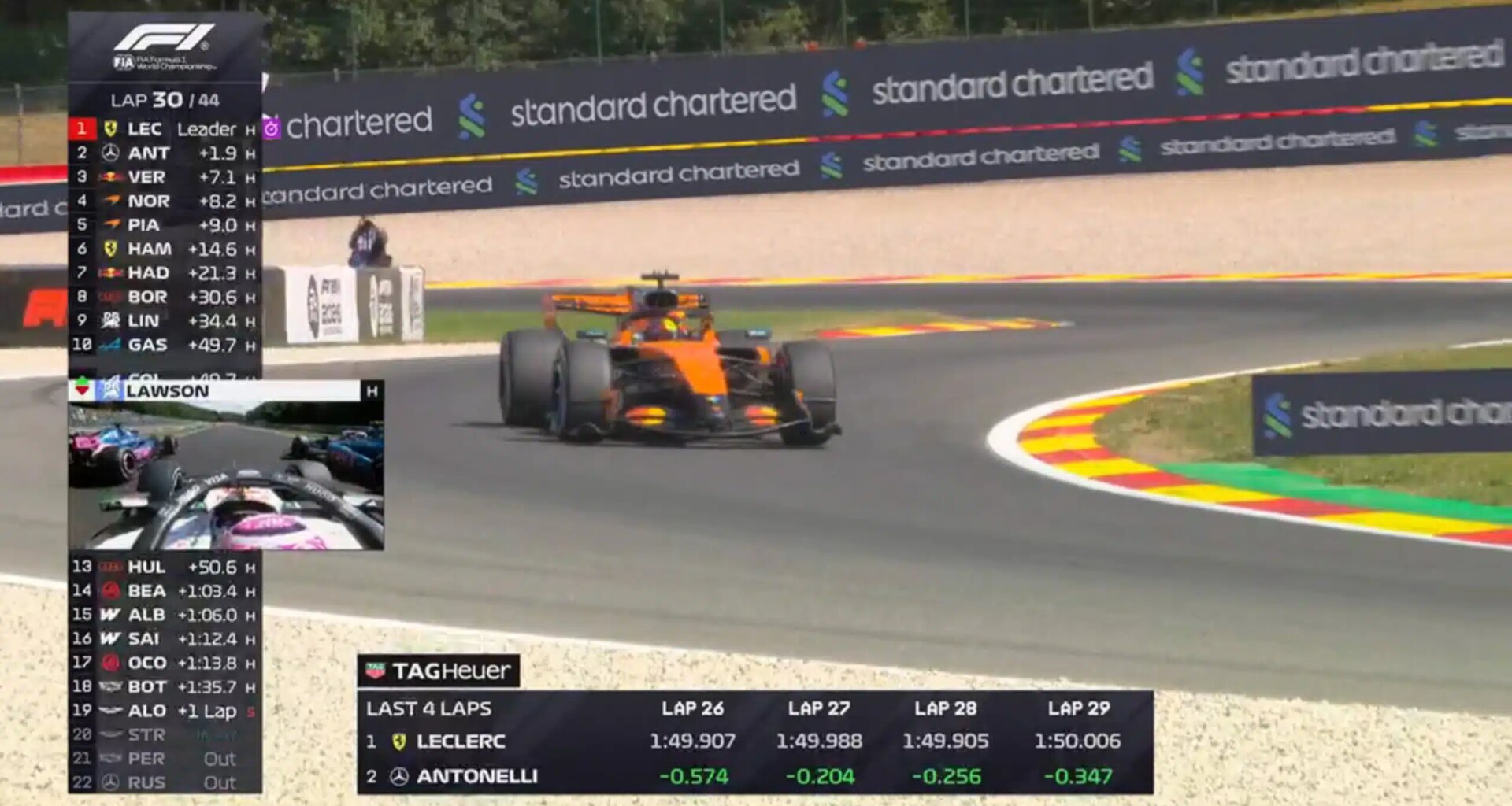
With 15 laps to go at Spa-Francorchamps, Franco Colapinto did something that doesn’t happen very often in Formula 1: he overtook two cars at the same time.
Coming off the Kemmel Straight, with Pierre Gasly and Liam Lawson still sorting out their own fight for position, Colapinto found the gap on the inside at Les Combes and went round both of them at once, taking 10th place and, with it, the final point on offer.
It was, by most measures, one of the moves of the race.
It also settled a genuine three-way fight for a points position between two Alpines and a Racing Bulls, two teams locked in a close battle for fifth in the standings (they are now equal on points).
Here is what the world feed showed while it happened: a small window on the left of the screen alongside the race positions graphic.
The main picture stayed with Lando Norris and Oscar Piastri, running behind Max Verstappen, with no move developing. There was no immediate replay of Colapinto’s pass either.
That split – a genuine, points-deciding overtake reduced to a picture-in-picture, while two cars holding station got the full screen – is a small moment, but it’s also a fairly clean example of something that has felt more pronounced this season: the midfield action going missing from Formula 1‘s live coverage, more than the usual grumbling about direction would suggest.
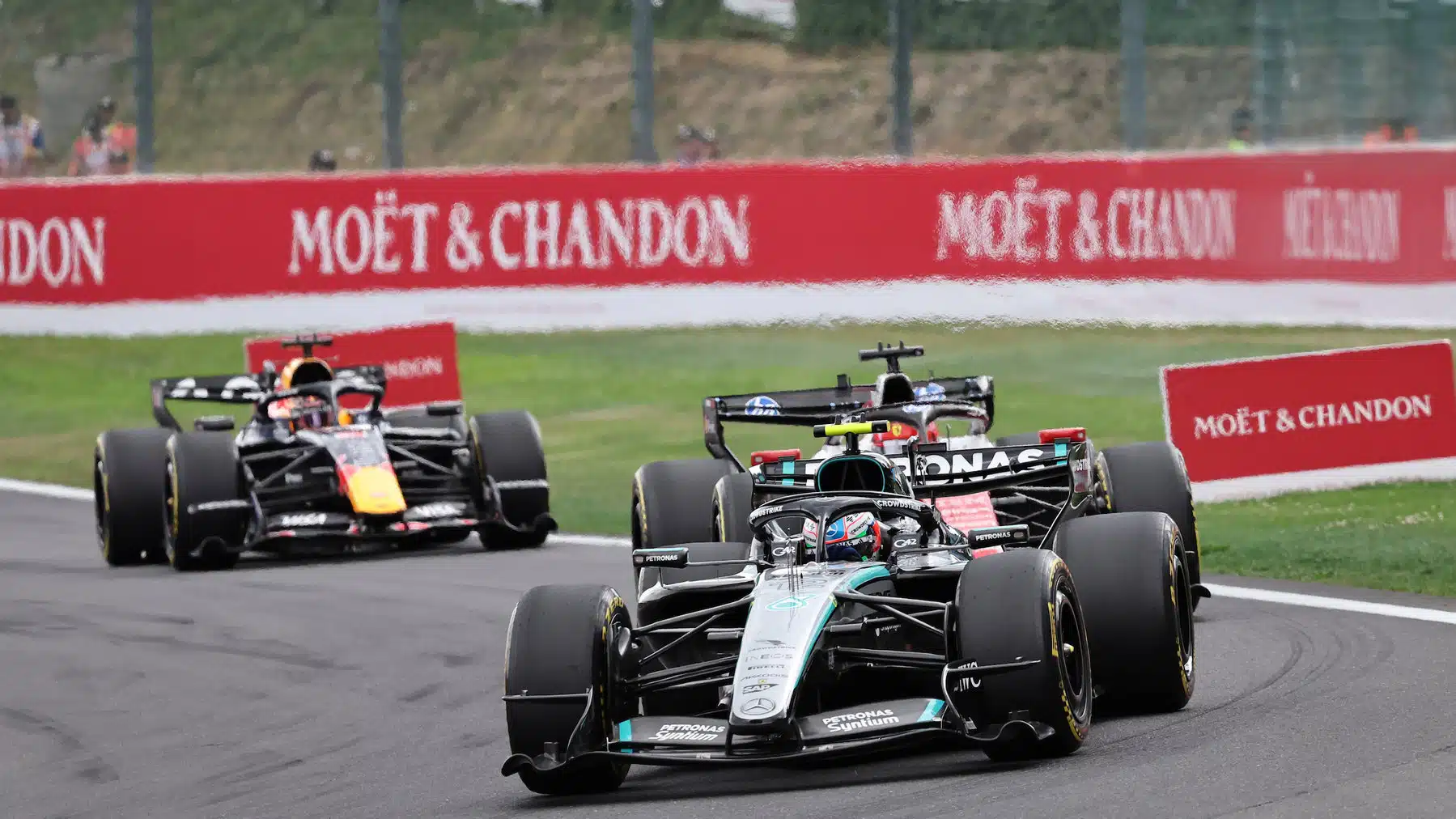
Is the action up front affecting coverage of the midfield?
Grand Prix Photo
Granted, one overtake proves nothing on its own, and it would be dishonest to build a whole argument on a single missed shot at Spa.
But re-watch enough of this season and the Colapinto moment starts to look less like a one-off directorial slip and more like a symptom.
Battles further down the order have had a habit of happening off-screen in 2026, surfacing only afterwards through onboard footage or Formula 1’s own after-the-fact packages.
Formula 1 now runs at least two recurring video formats – Radio Rewind and Top 10 Onboard Moments – built entirely around showing viewers what they didn’t get to see live.
Their existence isn’t proof that the midfield specifically is being ignored, but it is a tacit admission from Formula 1’s own media operation that meaningful on-track action regularly doesn’t make the live cut. In that sense, the Belgian Grand Prix got both.
So the real question isn’t whether things are being missed, as that much is institutionalised, but whether 2026 has made it worse, and if so, why.
It’s not hard to find that sentiment outside official channels either.
Spend time where the more committed end of the fanbase gathers – comment sections under those same Radio Rewind uploads, race-day threads on Reddit, the replies under clips on social media – and a fairly consistent complaint keeps surfacing: that the most engaged viewers, the ones cross-referencing radio and onboard footage as a matter of habit, are the ones noticing what the live broadcast left out.
That’s not a substitute for hard evidence, but it does suggest the frustration isn’t confined to one journalist re-watching a Spa highlights reel.
Canada supplied another example only a few races before Spa. Oscar Piastri‘s collision with Alex Albon at the Turn 10 hairpin, which ended Albon’s afternoon and earned Piastri a penalty, went largely unseen live.
It later emerged that the team radio around the moment, including a brake-temperature warning to Piastri seconds before contact, had never made the broadcast.
The closing stages of George Russell and Kimi Antonelli‘s fight for the race were treated much the same way, with Russell’s own radio during that battle likewise confirmed as untelevised.
Viewers noticed at the time. Discussion threads following the race singled out Canada’s production as among the weakest of the year, describing passes further down the order going unremarked on the feed, and viewers following via other broadcasters reported commentators themselves losing track of the race live on air.
As many regulars would know, the pattern isn’t limited to this season, either, which suggests a more structural issue.
At last year’s Las Vegas Grand Prix, leader Verstappen emerged from the pits directly ahead of George Russell in a moment that went unshown, because the world feed had cut instead to a battle over ninth place.
That’s the Colapinto situation in reverse: a genuinely significant order-changing moment lost to a fight further down the order, proof that the theory that the front eats the airtime doesn’t hold in every direction.
The case for the front eating the airtime
Having said that, there’s a reasonably strong argument that the direction isn’t just malfunctioning so much as responding to a genuine shift in where the racing is.
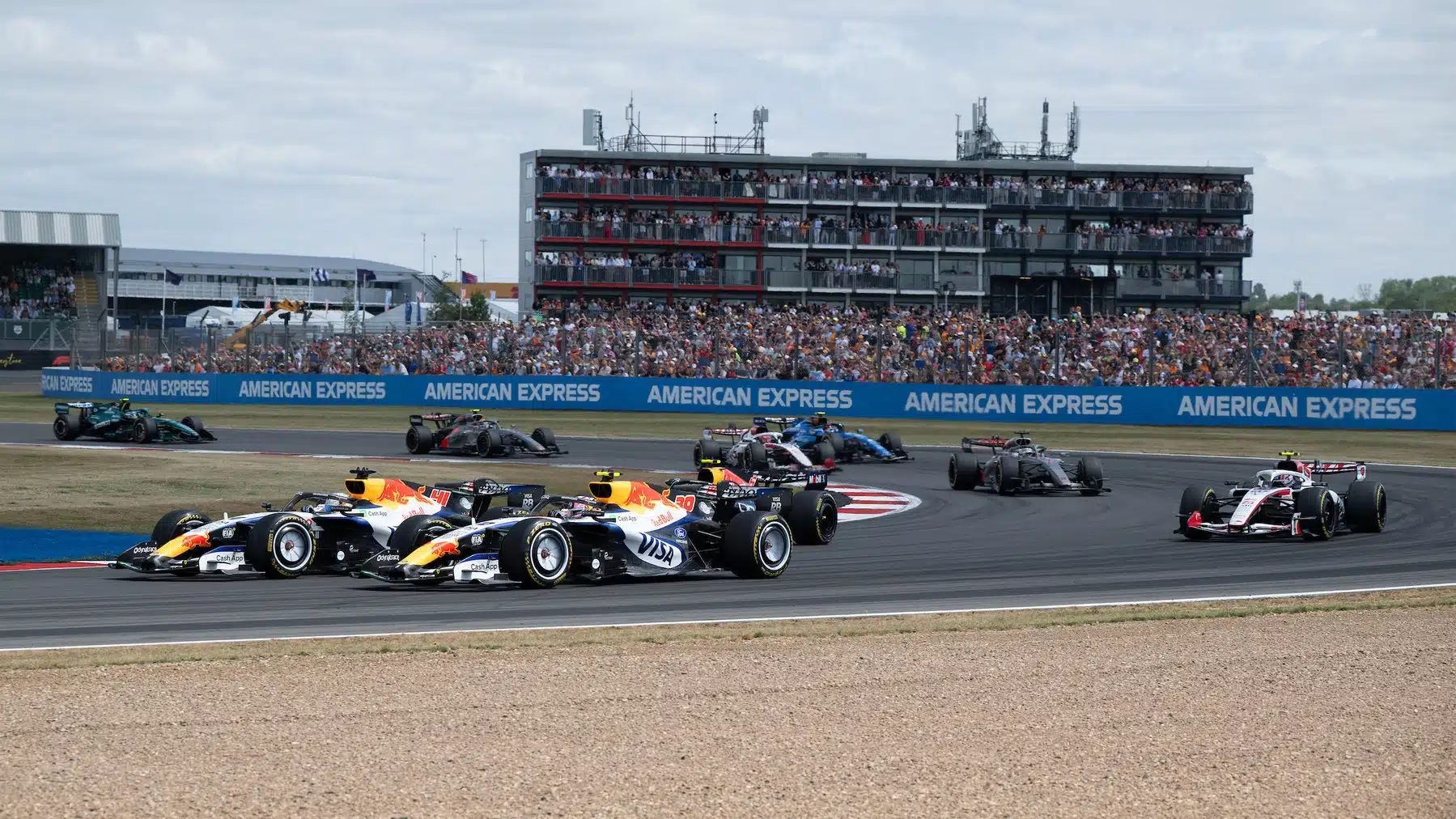
The midfield battles have also been intense this year
Grand Prix Photo
The 2026 power unit rules, with energy deployment strategies that reward drivers for managing energy through a lap rather than simply having the fastest car, have produced more variability at the front than Formula 1 has seen in years.
Cars on pole on Saturday haven’t reliably held that pace on Sunday as much as before, and battery depletion has repeatedly reshuffled the order in the closing stages of races.
If, for whatever reason, the front of the field is producing more lead changes and more overtakes than it used to, it’s not unreasonable for a director to keep cutting there.
Whether we’re missing midfield incidents because something more dramatic is genuinely happening up front, rather than through habit or oversight, is a fair thing to check race by race – it’s not something that can be settled from one moment at Spa alone.
Still, a TV director should understand that a static gap between two cars running in front is a different proposition to a live battle developing behind, and if the feed had genuinely nothing developing up front in that instant, that weakens the “front-loaded” explanation.
Set against that is a simpler, less flattering possibility: that TV direction habits and technology haven’t caught up with a grid that has more on-track depth as a result of the new rules.
In past seasons, a lack of overtaking at the front meant genuine jeopardy up there was rare, and usually slow-building rather than instant – a strategy gap opening up over several laps rather than a single decisive move.
That gave directors room to lean on the picture-in-picture: keep half an eye on the lead with a small window or graphic, and dedicate the main picture to whichever midfield scrap was actually delivering action in real time.
The format wasn’t built despite the front being boring, it was built because of it – a slow-developing lead was safe to relegate to a box while something faster-moving elsewhere held the main feed.