
Sydney’s property slump is turning savage in some suburbs, with “overvalued” prices now at risk of even steeper falls, while other areas have become “undervalued” and primed for a rebound.
New research from property analytics firm SuburbData reveals home prices in many of the suburbs that boomed over previous years have now overshot similar, neighbouring areas by up to $250,000.
The research indicated the high discrepancy between prices in these areas and neighbouring suburbs offering similar, cheaper housing and amenities has made current prices unsustainable.
The expected result is punishing drops in home values that could wipe out hundreds of thousands of dollars in house values as the current market downturn intensifies.
MORE: Sad truth behind RBA plans for Aussies

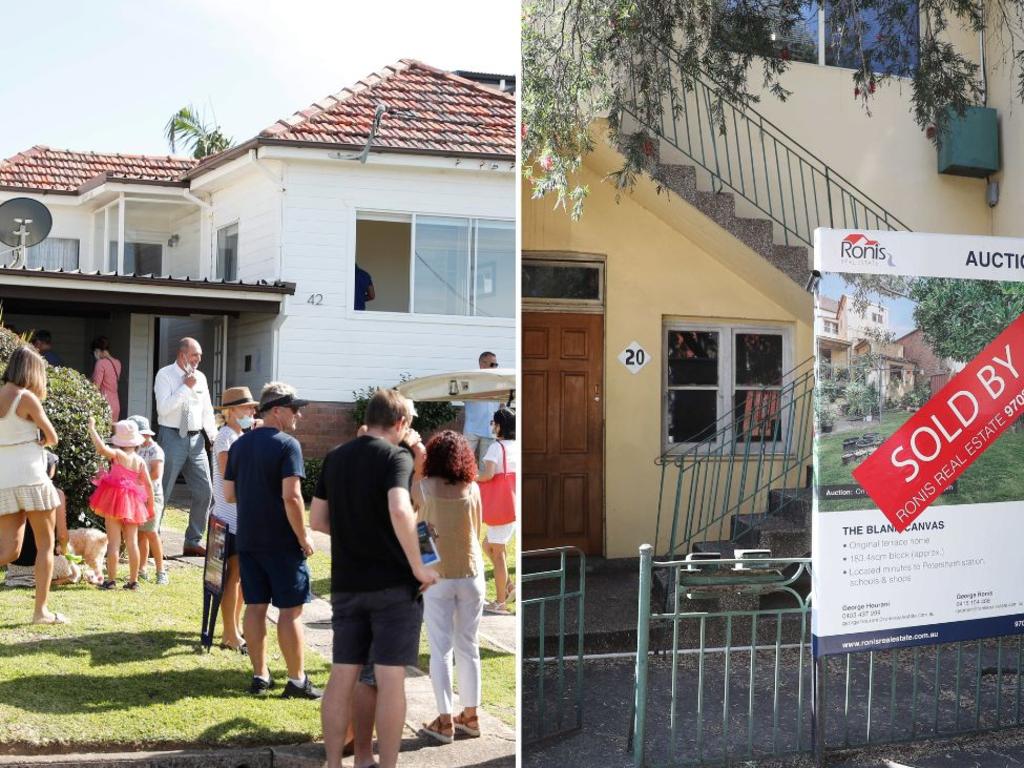
Sydney auction clearance rates have dropped considerably over recent weeks. Picture: Sarah Wilson
MORE: Inflation bombshell shows rate hikes backfiring
It follows PropTrack figures released last week that showed house values dropped in 91 per cent of Sydney suburbs over the July quarter.
There were about 400 suburbs that recorded a median drop greater than $50,000, including about 200 suburbs where the drop was over $100,000.
Most of the Sydney areas deemed “overvalued”, with prices much higher than what local metrics suggested was sustainable, were up-market suburbs in the east, north shore and northern beaches.
Notable overvalued suburbs were beach suburbs Collaroy, Avalon Beach, Palm Beach, North Manly and South Coogee, according to the SuburbData research.
Other suburbs flagged as overvalued were out west, including St Johns Park, Wakeley and Old Guildford in the Fairfield region and Ashcroft, near Liverpool.
Source: SuburbData/DSRScore.
SuburbData analyst Jeremy Sheppard said a key feature of these areas was that prices had grown outgrown neighbouring areas for many years, but buyer demand had recently dropped while housing supply had risen.
“Overvalued does not mean prices are expensive and undervalued does not mean they are cheap,” Mr Sheppard said.
“It’s about what the market is willing to pay … there are a lot of parts of Sydney where the prices are not just high, they’ve overshot the rest of the market.
“Suburbs don’t outperform forever. They reach a point where buyers aren’t prepared to pay the prices anymore because they have cheaper, comparable options nearby.
“The risk is that if you buy in a market like this your home may sit there for a while without getting any return on your investment, or values may fall and you go into negative equity.”
The data showed Sydney had a mix of overvalued and undervalued suburbs.
Mr Sheppard said it was the opposite a range of pockets deemed “undervalued”: these areas had prices that were lower than underlying market metrics suggested they should be.
These areas still had price growth potential despite the weakening market, he said.
“There are still plenty of areas around Australia where you are better off parking your money in a property than letting it sit in a bank,” he said.
“These areas have simply become harder to find. During boom times, like in 2021, markets like that were easy to find. You throw a dart on a board and hit one. Now you need to know where to look.”
The research showed that many of Sydney’s undervalued suburbs were scattered across Sydney’s Blacktown region, Sutherland and parts of the inner west.
They included Sutherland suburbs Oyster Bay, Caringbah, Caringbah South and Heathcote, along with The Ponds, Acacia Gardens, Woodcroft, Marayong and Schofields in the Blacktown region.
SYDNEY’S MOST OVERVALUED SUBURBS

Source: SuburbData/DSRScore
Inner west suburbs deemed “undervalued” were Newtown and Drummoyne.
Adrian Tsavalas, the director of inner west real estate group Adrian William, said home seekers could get better value in Newtown than they would have a year ago.
“Conditions are really favourable for upgraders in the area,” he said, noting that buyers who had been priced out of the popular suburb in previous areas were actually finding they had a window back in.
“The market is down now, but markets can bounce back, sometimes with no warning. You can blink and miss it, these good opportunities don’t always last,” he said.
REA Group economist Anne Flaherty said the current downturn was mostly fuelled by interest rate hikes, but the government’s recent negative gearing and capital gains tax reforms had added an extra layer of uncertainty for buyers.