
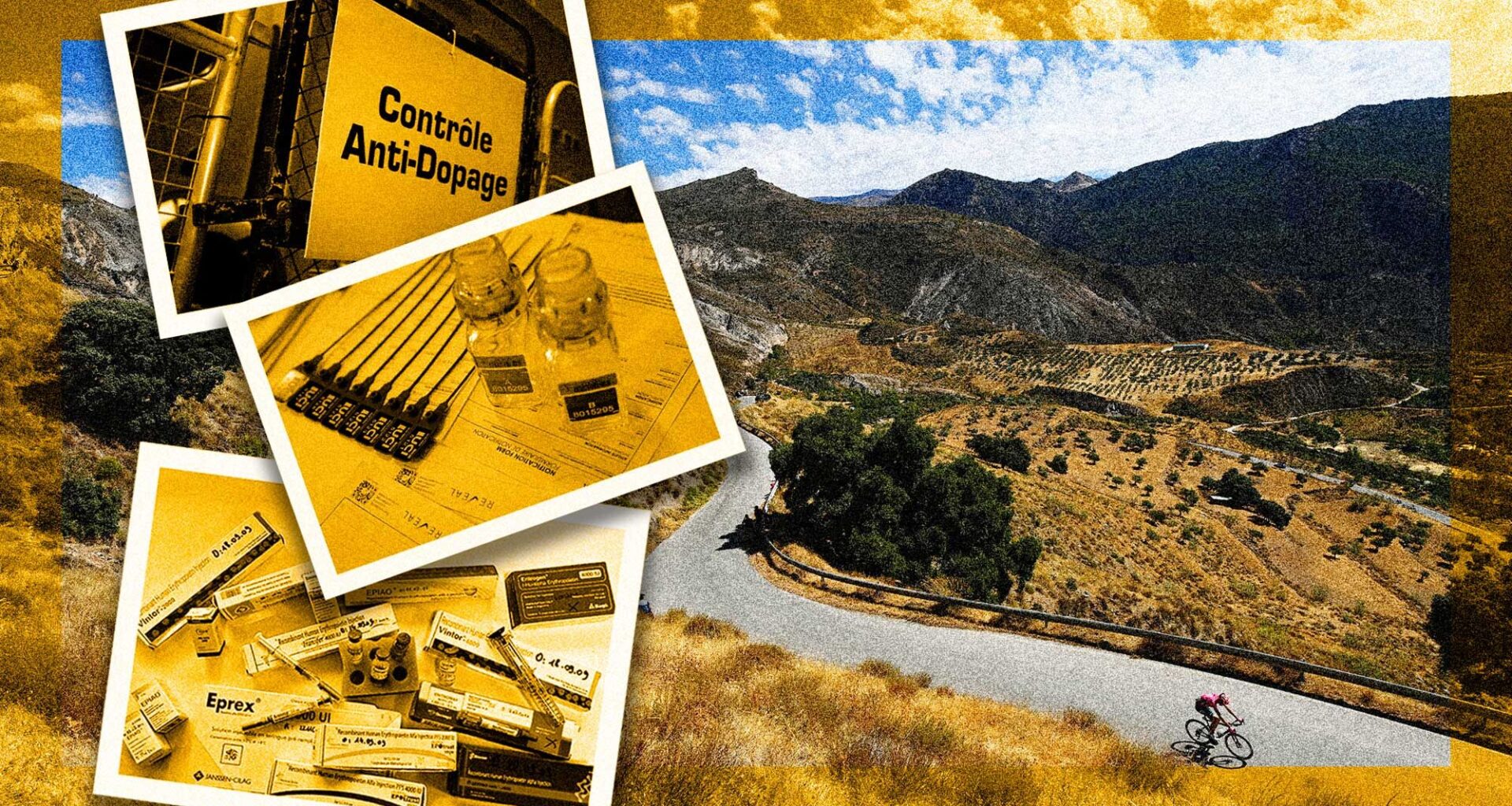
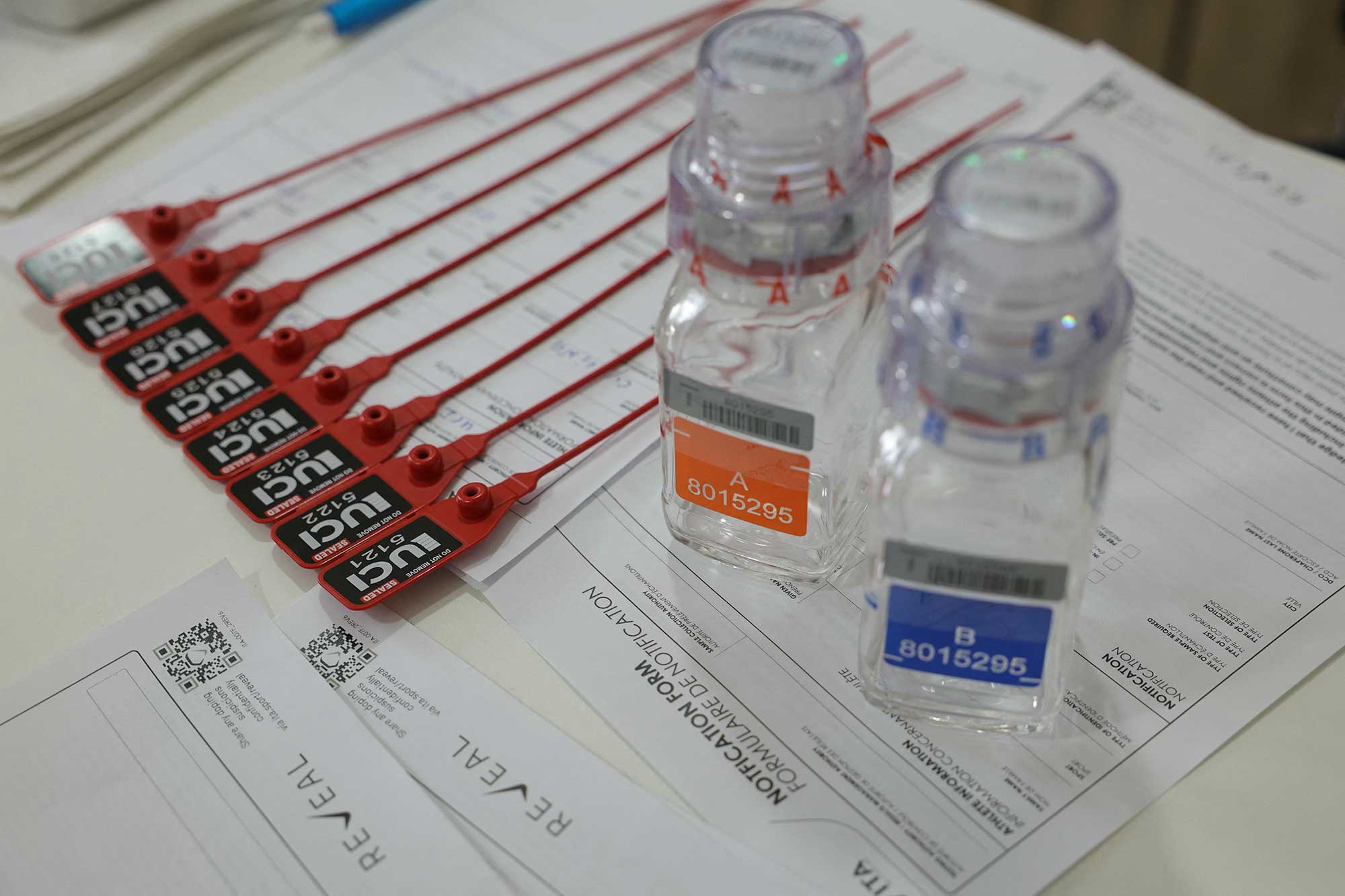
As I write this, online is abuzz with Jonas Vingegaard crashing out of this year’s Tour de France. The potential cause? Being awoken at 2 a.m. for an anti-doping test. Tadej Pogačar, wrote The Guardian’s Jeremy Whittle, said the disturbance could “be a small percentage in why he crashed because he probably didn’t sleep good”, adding: “I know how it feels. They woke me up at five in the morning also, but at least I got my deep sleep. It’s better than if they come at two.” Why were the Dane and Slovenian woken between 11 p.m. and 6 a.m., which is uncommon from the International Testing Agency (ITA), who roll out the anti-doping programme on behalf of the UCI? No official reasons have been given, and being selected for a test, including out of hours, is a standard part of anti-doping controls, and does not imply any suspicion of, or wrongdoing by, the riders concerned.
However, when WADA first permitted nighttime testing across all its sports in 2015, there was a reason for it. The Cycling Independent Reform Commission (CIRC) stated in 2015 that “the absence of nighttime testing [was] a weakness in the current system”, specifically regarding the issue of micro-dosing.
Here, we delve deep into micro-dosing’s detection challenge, made harder by the issue of altitude…
“In 2010, Carsten Lundby and I had a study published [in the European Journal of Applied Physiology] where we sent anonymous doped EPO [the blood-booster erythropoietin] samples to anti-doping laboratories in Cologne and Lausanne to see if the results would come back positive. The results were poor. Not because the technicians are poor, but the gaps in the test, especially the passport.”
The words of Dr Paul Robach, who works in the department of biomedical research at the National School of Mountain Sports, Chamonix, France. Robach is a world-leading authority on the blood changes fuelled by either the needle or a mountain.
Back to his eye-opening 2010 research. Half of the subjects who were injected with a significant amount of EPO before moving into the micro-dosing maintenance phase tested negative. Concerning. The World Anti-Doping Agency would rightly counter that the sensitivity of doping tests has improved in the intervening 16 years. Still, in my new book Dope it became clear that the micro-dosing shortcomings remained, one of the major flaws being rapidly flushed-out markers.
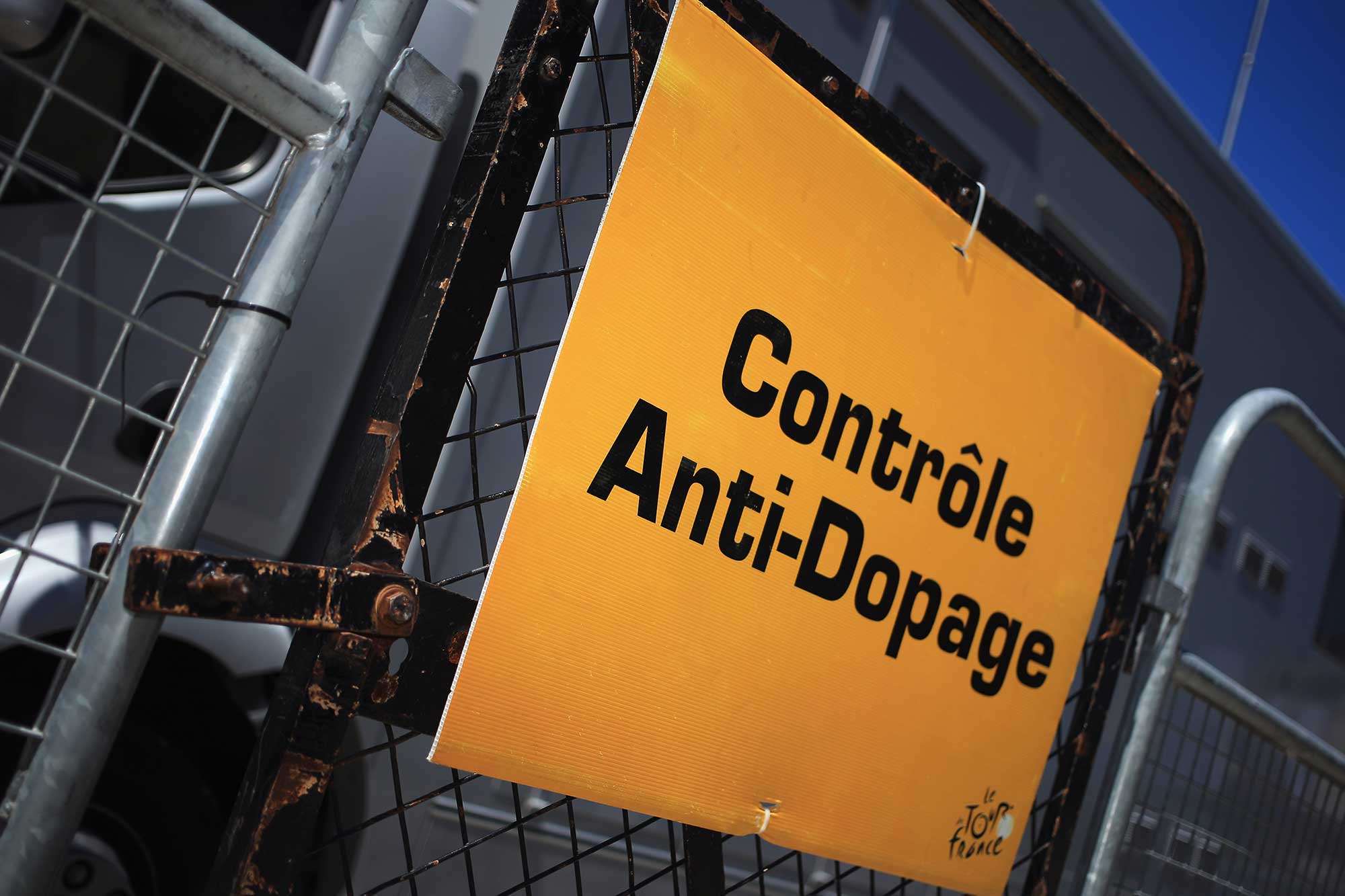
The ITA carried out several nighttime tests at the Tour de France recently (Image credit: Getty Images)
“If a rider micro-dosed EPO at 11 p.m. and the doping control officer tested them at six the next morning, they’d catch them with a direct blood test,” says Robach. “But the chances would be lower with the passport. It’s because EPO has a short half-life of a few hours.”
A direct doping test looks for a prohibited substance or its metabolites in an athlete’s urine or blood, providing evidence that a banned drug has been used. The blood test doesn’t search for specific substances. Instead, it tracks an athlete’s blood markers over time and flags up unusual changes that may indicate doping. While direct tests aim to catch the substance itself, the blood passport is designed to detect the lasting biological effects of doping.
Ultimately, no intelligence agency will communicate the reasons behind targeted or nocturnal testing. But the nighttime testing at the Tour does highlight a limitation of anti-doping procedures when it comes to micro-doping, which is exacerbated when trying to unpick the physiological changes accrued from synthetic EPO compared to altitude-stimulated EPO.
More features like this…
(Image credit: Getty Images)
Which is perhaps not surprising, as the aim of each intervention is the same: to boost red blood cells, meaning the rider can tap into more oxygen to fuel working muscles. Achieving that goal by injection is prohibited. Heading high and forcing the oxygen-starved body to generate more EPO to create more red blood cells isn’t.
A 2022 paper by Jonas Saugy highlighted the problem, the researcher revealing that an athlete’s blood profile when micro-dosing was “hardly distinguishable from those identified after hypoxic exposure” without doping.
The similar blood profiles included haemoglobin mass, which is the total amount of haemoglobin (oxygen carrier) in a rider’s red blood cells. There’s a tight relationship between VO2 max and haemoglobin mass, with research revealing that a 1g increase in haemoglobin mass can increase VO2 max by around 4ml/min/kg. As VO2 max is one of the limiting factors when it comes to an endurance sport like road cycling, the benefits are clear.
Further separate research highlights similar benefits enjoyed from micro-dosing and training at altitude. A 2024 study revealed that injecting nine IU/kg of bodyweight of EPO three times weekly over four weeks boosted endurance by up to 6% in trained athletes, which would equate to around 2% in elites, who have less room to grow.
As for altitude training, a 2016 meta-analysis of elite athletes reported an average VO2max increase of around 2%, so similar to those micro-dosing results.
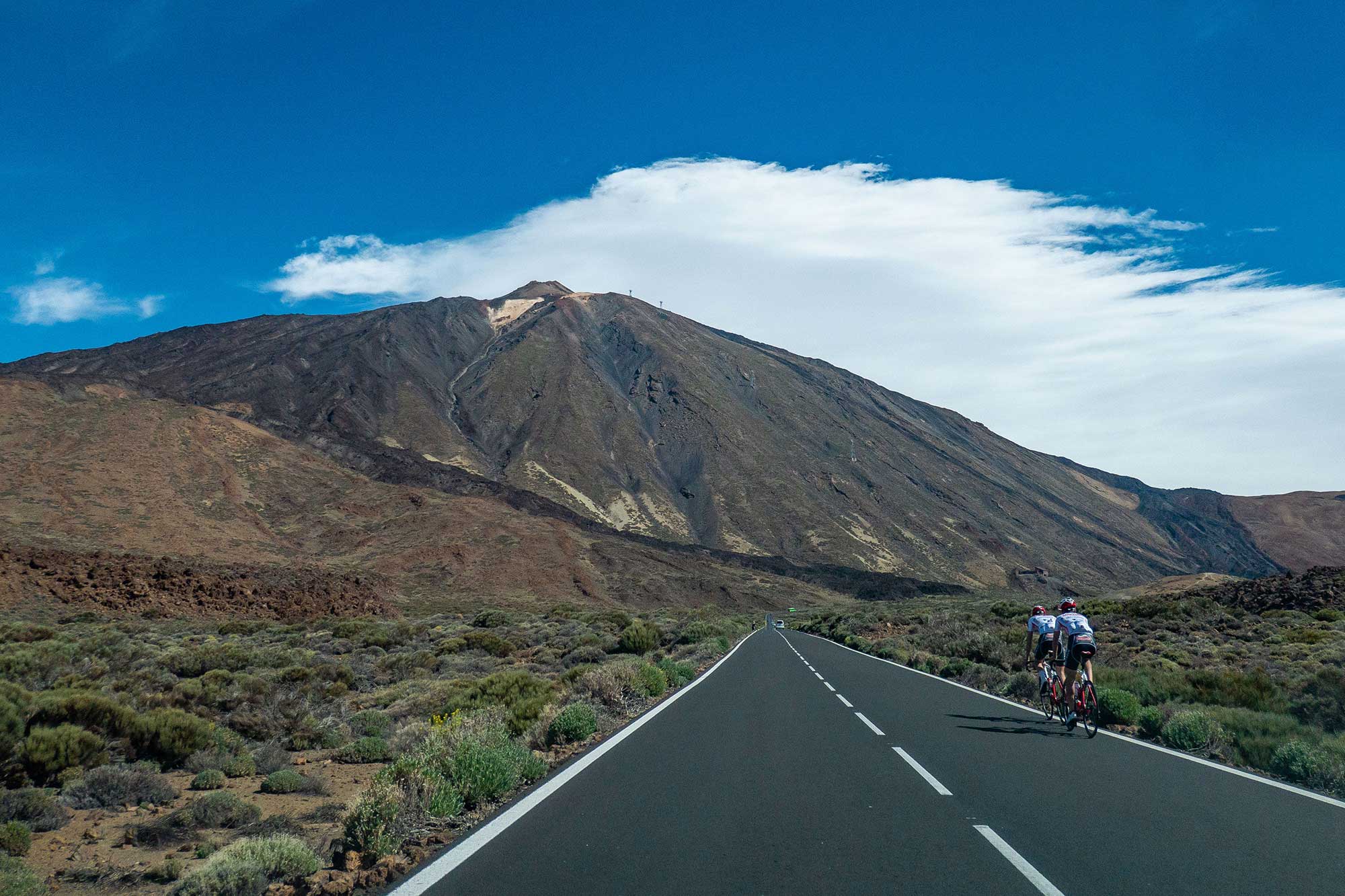
Tenerife and its iconic Teide volcano is a popular altitude training location for WorldTour cyclists (Image credit: Nicolas Economou/NurPhoto via Getty Images)The variability of altitude training
It begs the question: why cheat when the legal means (altitude) deliver similar gains? “A rider’s response to altitude training is highly variable,” says Robach. “We have an ongoing study that shows our group’s haematological response to one year at high altitude varies from 1% to 50%.”
Robach’s results mirror earlier research charting how elite endurance athletes respond to altitude training camps and whether they can be reliably classified as “responders” or “non-responders.” Researchers analysed 82 altitude camps involving 59 athletes and measured changes in haemoglobin mass.
Haemoglobin mass increased after 56% of camps, rising to 65% when athletes trained above 2,000 metres (we’ll come back to that height-related stimulus shortly). However, responses varied greatly both between athletes and within the same athlete across different camps.
“From the 15 athletes who participated in altitude training camps at least twice, 27% always had positive haemoglobin responses; 60% both positive and negative responses; and 13% only negative responses.”
In other words, altitude training doesn’t always work. Worse than that for the rider and support staff, it might work for a rider at one camp but not at the next.
Exercise physiologist Inigo Mujika would suggest this variability’s down to sidestepping the five I’s. These are: Iron – inadequate iron intake may compromise adaptations to altitude; Intake – low energy diets don’t support adaptations; Injury – prolonged inflammatory responses associated with serious soft tissue injury can interfere with adaptation; Illness – viral and bacterial infections do the same; and Intensity – excessive workload at the start of an altitude camp can promote excessive fatigue and, again, impair adaptation.
But even with the best-laid plans, results from altitude training remain inconsistent. One reason why is limitations in how low each rider can go…
“Ultimately, optimising altitude training is around the amount that you can safely reduce your oxygen saturation level [SpO2], which you can measure with a pulse oximeter on the tip of your finger,” says top coach and sport scientist Dan Healey, who formerly worked with Alberto Contador at Tinkoff-Saxo. A normal range at sea level is around 95 to 100%. When you train at altitude, the thinner air naturally means that [it] usually drops. “You’ll aim for the rider’s SpO2 to drop to 90 and into the 80s. The sweet spot for optimum EPO production is probably in the 70s.”
Healey says you need that rarefied stimulus to trigger a protein complex called hypoxia-inducible factor-1 alpha (HIF-1 alpha). “Every day, HIF-1 alpha is produced but killed. It’s a really complex mechanism. But when you go to altitude, it’s free to do its thing. HIF-1 alpha will join with HIF-2. That’s when you get EPO production and why teams spend a lot of money on altitude camps. Basically, they’re spending top dollar to trigger HIF-1.”
But even when ticking those five ‘I’ boxes of Mujika’s, how much HIF-1 alpha is triggered can vary greatly. In Dope, Rory Townsend told me that no matter what he does, his SpO2 levels remain well into the 90s. He’s seemingly a staunch non-responder. That said, he’s never hit the lofty heights of Healey’s recent research.
“The sweet spot for triggering HIF-1 is around 5,000m,” he says. “You’ll need to do it in really short doses of extreme hypoxia – so SpO2 in the 70s for accelerated EPO release – though you must monitor the rider closely and ensure things are done safely.”
Cyclingnews reiterates that this type of training should only be carried out under the supervision of expert medical guidance.
Robach agrees that adding a little more certainty from altitude training might require going higher than the 2-2,500m that most teams peak at. “But many coaches are concerned if they go too high the riders will be too fatigued or not sleep. I think it’d be okay at 3-3,500m. But 5,000m? That’s exploratory and yet to be scientifically proven.”
Exercise physiologists and sports scientists love nothing more than consistency. That their research and applied practice delivers gains time and time again. It’s repeatable. That’s anathema to altitude training. Sometimes it works, sometimes it doesn’t. But with micro-dosing EPO? “Ultimately, you’ll have a higher chance of consistently boosting your haemoglobin mass with EPO than altitude,” says Robach. “Altitude training is complicated.”
The biological footprint similarities between hypoxic adaptation and artificial EPO make the ITA’s job even more challenging (Image credit: THOMAS SAMSON/AFP via Getty Images)What of the future?
So, there are compelling reasons why a rider might micro-dose, especially at altitude, as there’s evidence that you enjoy a double boost, again without testing negative unless tested close to injection time.
It’s also not solely about micro-dosing EPO. Both infusing your own blood and injecting human growth hormone at nominal levels deliver a physiological advantage and a small detection window.
Which is why a credible anti-doping system can’t rely so much on the biological blood passport. Sidestepping the cost implications of research and implementing a new test that’s legally watertight, are there new tests on the horizon that could actually solve the micro-dosing and altitude riddle?
Possibly. While much of the focus has been on changes in reticulocytes and other red blood cell markers, an alternative approach may be to examine shifts in plasma volume. One of the primary physiological responses to altitude exposure is a reduction in plasma volume – the liquid component of blood – which can influence many of the variables monitored by the biological passport.
WADA has already explored machine-learning models that estimate an athlete’s expected plasma volume over time, using artificial intelligence to distinguish normal physiological variation from patterns consistent with doping. Although this would require an additional blood measurement, incorporating plasma volume estimates could help differentiate the effects of altitude exposure from those of EPO micro-dosing.
“There’s also great potential in the area of omics,” says Robach. This taps into the ongoing work of Professor Yannis Pitsiladis, a leading advocate for applying omics technologies – genomics, transcriptomics, proteomics and metabolomics – to anti-doping. By analysing thousands of biological markers simultaneously, these approaches could reveal subtle signatures of EPO use, blood manipulation and other forms of doping, potentially improving detection.
“Exploring iron metabolism could pay off, too,” adds Robach, who along with colleagues has shown that even low doses of recombinant EPO stimulate the hormone erythroferrone and corresponding changes in iron regulation. Altitude doesn’t result in the same iron profile.
“But my dream is that EPO manufacturers put a tracer in their drugs,” says Robach, “but I can’t see the likes of Novo Nordisk doing that. Their drugs are for therapeutic purposes. Understandably, sporting abuse isn’t top of their concerns.”
It’s clear that anti-doping faces two fundamental challenges: how do you detect a performance-boosting substance that has such a short half-life? And how do you separate a rider’s legitimate adaptation to the mountains from an artificial attempt to recreate the same advantage? It’s also clear that the battle against micro-dosing will not be won by one breakthrough test. Altitude, EPO and blood manipulation all exploit the same physiological pathway: increasing oxygen delivery through red blood cells. As detection evolves, the future may lie in looking beyond traditional blood markers towards plasma volume, iron metabolism and omics. Until then, the flaws of micro-dosing mean athlete welfare will play second fiddle to the credibility of the anti-doping system.