
(This is part 1 of a 3-part series featuring renowned cricket commentator Padma Shri Dr Ravi Chaturvedi)
There is a smile on Padma Shri Dr Ravi Chaturvedi’s face when he talks about how he became a cricket commentator. It is almost as if the 90-year-old Hindi cricket commentary pioneer still finds it unbelievable. There was no dream of becoming the voice of Indian cricket. No childhood ambition of travelling the world or sitting in commentary boxes with legends of the game. As a young boy growing up in Delhi, he only wanted to play cricket.
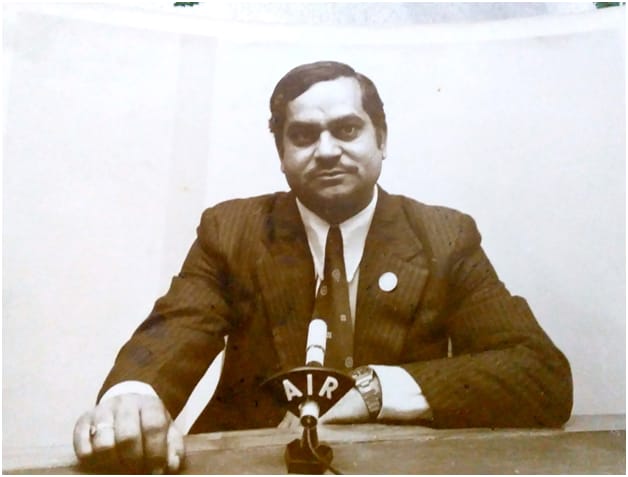 Ravi Chaturvedi is a pioneering Hindi cricket commentator. Photo courtesy: Ravi Chaturvedi
Ironically, it was getting out early in matches that changed his life.
“Whenever I got out early, I used to sit outside the ground with my friends and listen to cricket commentary on the radio,” he says with a laugh. “That is how I initiated myself into cricket commentary.”
Many years later, millions of Indians would know cricket through that very voice. For nearly seven decades, Chaturvedi has been one of the most respected names in Indian cricket broadcasting. He has commentated on countless international matches, travelled across continents, shared commentary boxes with some of the biggest names in the sport, including the late Sir Garfield Sobers and Indian batting legend Sunil Gavaskar, and seen Indian cricket change beyond recognition.
But every journey has a beginning, and his began in a village.
A village boy arrives in Delhi
“My childhood started in a village,” he says simply.
Born in Dalipnagar in Kanpur, Uttar Pradesh in 1936, his family moved to Delhi in 1945, and although India was still under British rule, life was slowly changing. The capital was growing, and around Delhi University, cricket was almost impossible to ignore.
The family lived near Mall Road. On one side were the university grounds where inter-college tournaments were played every winter. British officers stationed in Delhi also played the game regularly. For a young boy who had never seen so much cricket, it was an education.
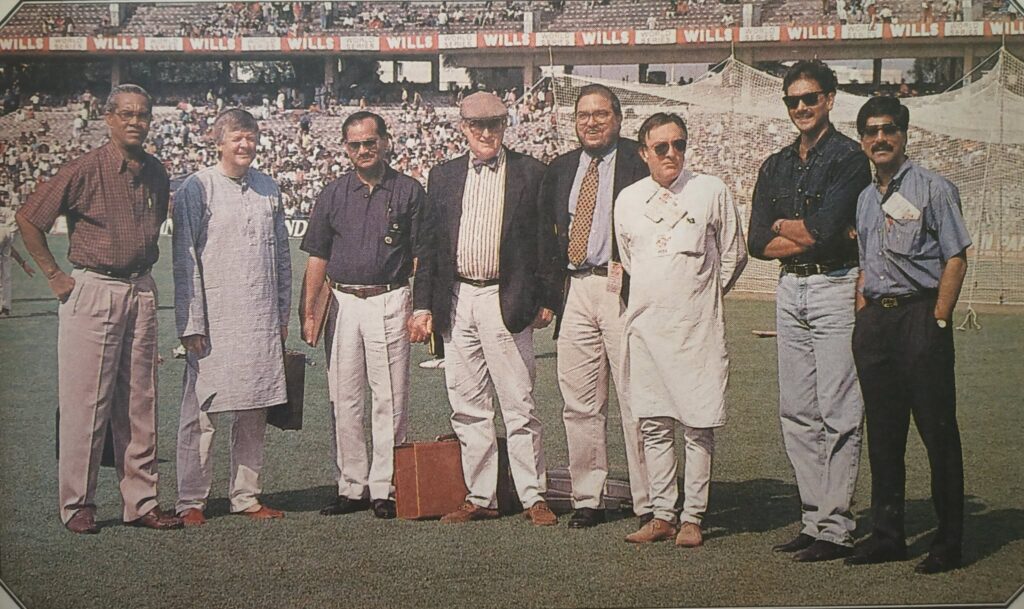 The 1994-95 cricket commentary team for Doordarshan. (L-R) Sir Garry Sobers, Glenn Turner, Ravi Chaturvedi, Henry Blofeld, Mark Mascarenhas, Mansur Ali Khan Pataudi, Ravi Shastri, and Kris Srikkanth. Photo courtesy: Ravi Shastri/ Facebook
“I used to watch the inter-college cricket tournament from October till January,” he recalls. “That surrounding initiated me into cricket.”
There were no academies then and certainly no YouTube videos explaining batting techniques or dynamics of the game. There was also no television expert breaking down every shot. The rule was simple: if you wanted to learn cricket, you watched people play and most importantly, you played the game.
That is exactly what Chaturvedi did.
Every afternoon he would find a place near the boundary rope and quietly watch the batsmen, the bowlers and the fielders. He observed everything. Slowly, the game started making sense. Soon, watching was no longer enough. Now, he wanted to bat.
An opening batsman with a famous hero
Chaturvedi laughs when he remembers those days because, in his mind, he was never meant to become a commentator. “I was an opening batsman,” he says proudly.
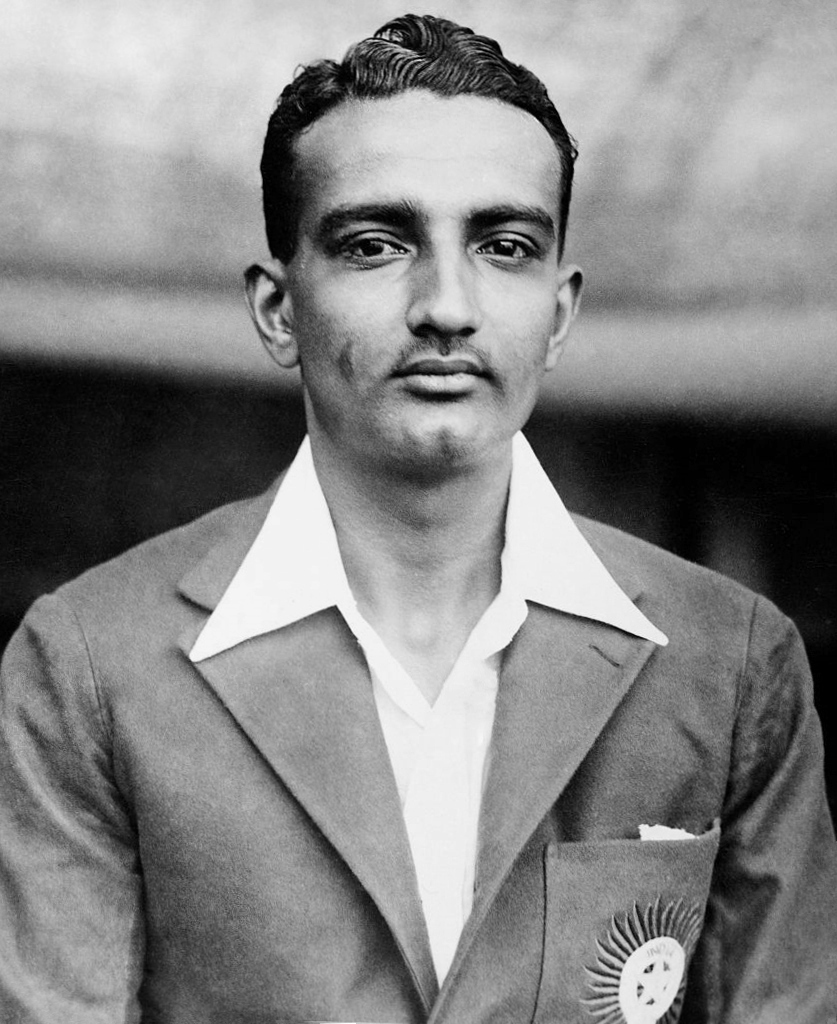 Vijay Merchant. Photo courtesy: Wikipedia
He played for his school, later for Delhi College and then for City Gymkhana Club in Delhi. Like thousands of young boys of that generation, he had a cricketing hero. For him, it was Vijay Merchant.
Merchant’s batting looked effortless, but behind it was immense discipline. His straight bat, precise footwork and patience made him one of India’s greatest batsmen long before television cameras arrived to record every innings.
Young Ravi tried to copy him. “I learnt those arts while I was at school,” he says.
Listening to him talk about those memories, one thing was clear, that cricket taught him much more than batting, it taught him the virtue of patience. Years later, this quality would help him sit through long Test matches with a microphone in front of him, describing every ball without ever sounding tired.
The radio outside the ground
Every cricketer remembers a few innings he would rather forget. For Chaturvedi, those failures became unexpected blessings.
Whenever he got out cheaply, there was little reason to stay inside the dressing room. Instead, he and a few friends would sit outside the ground with a transistor radio. That radio opened a completely new world.
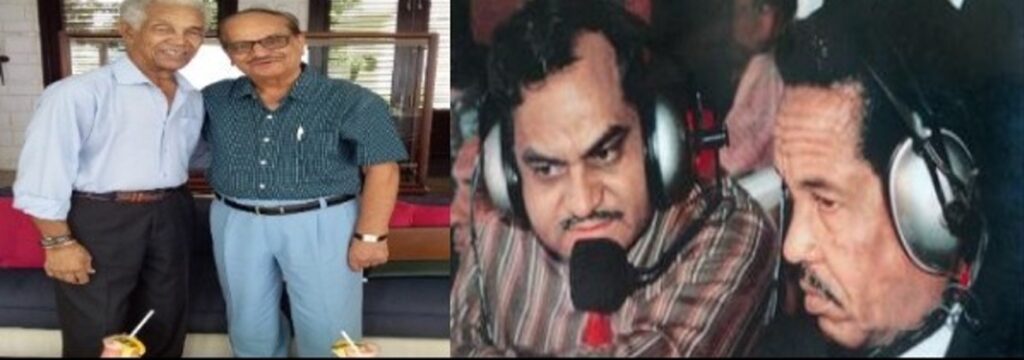 Ravi Chaturvedi was hosted by Sir Garry Sobers for lunch in 2019 (left). The duo while working in commentary. Photo courtesy: Ravi Chaturvedi
He listened carefully to the commentators. Every word, every build up and most importantly, the art of keeping silent between deliveries, were carefully studied. “I became very fond of commentary,” he says.
But there was one problem. Listening itself was difficult. Radio signals those days were weak and overseas commentary often faded in and out. “You had to keep adjusting the knob,” he remembers, “Otherwise, you would lose the commentary.”
Today’s cricket fan can watch a match in high definition on a mobile phone while travelling in a bus, but Chaturvedi’s generation had to fight with radio signals just to hear the score. Yet, he never lost interest. If anything, the struggle made him listen more intently.
The voices that became his teachers
Long before he met famous cricketers, Chaturvedi had already met his first heroes. Quite unsurprisingly they were commentators.
John Arlott was among his favourites. “He was outstanding,” Chaturvedi says. Then there was Alan McGilvray from Australia. Peter West from England. Closer home, Pearson Surita left a deep impression on him. “He was one of the finest commentators,” he says.
Interestingly, Chaturvedi never formally learnt or was trained in commentary. Nobody taught him how to describe a field setting or how to keep listeners interested during a slow session of Test cricket.
He learnt by listening, repeatedly, for hours, and the radio became his classroom, while the commentators became his teachers.
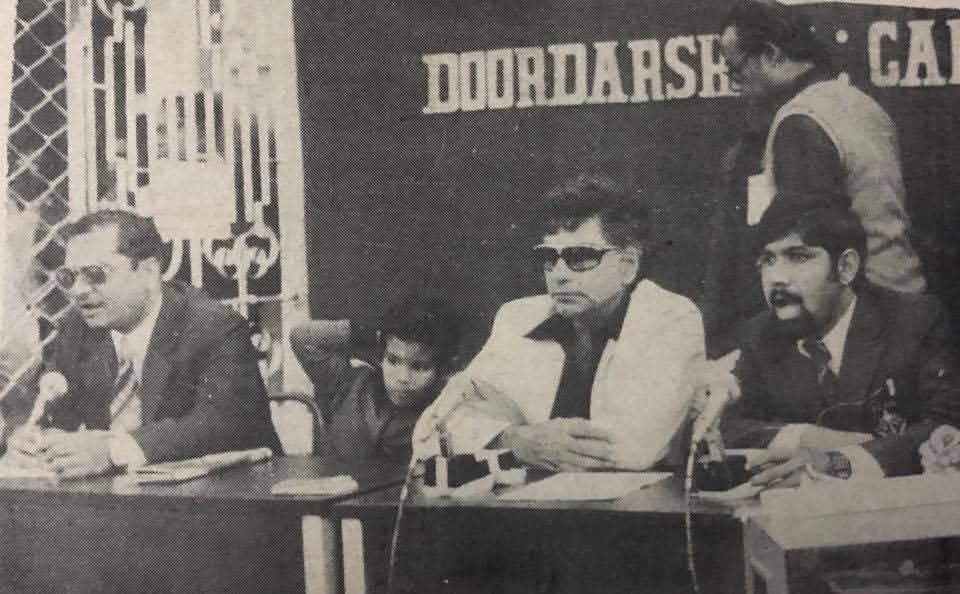 Ravi Chaturvedi (left) commentating in India vs West Indies ODI at Guwahati in 1983 with Farokh Engineer (3rd from left), and Pradeep Vijayarkar (right). Sitting in between Chaturvedi and Engineer is the son of West Indian cricketer Larry Gomes. Photo courtesy: Ravi Chaturvedi
Painting pictures with words
Ask Chaturvedi what makes a good commentator and he does not talk about knowledge or statistics first. He talks about imagination. “In radio commentary, you are a storyteller,” he says. “You have to create the picture through your words because the listener cannot see the match.”
That single sentence explains why radio commentary demanded a different kind of skill those days. Today, if Virat Kohli drives through the covers, television shows the shot from five different angles. On radio, the listener has only the commentator. If the description is poor, the shot is lost forever. If the description is good, the listener almost feels as if he has seen it.
That was the challenge Chaturvedi loved. He says television commentary is much easier because the pictures do half the work. But radio was different. Every ball had to be brought alive with nothing more than a voice.
Batsman’s dream fulfilled by a commentator’s voice
The defining moment of his early career, however, was still to come. In 1969, during the India–Australia Test at Delhi, destiny arranged a meeting that seemed almost unimaginable for the young man who had once copied Vijay Merchant’s late cut and learnt commentary by listening to Pearson Surita’s voice through a crackling transistor. Both legends walked into the commentary box.
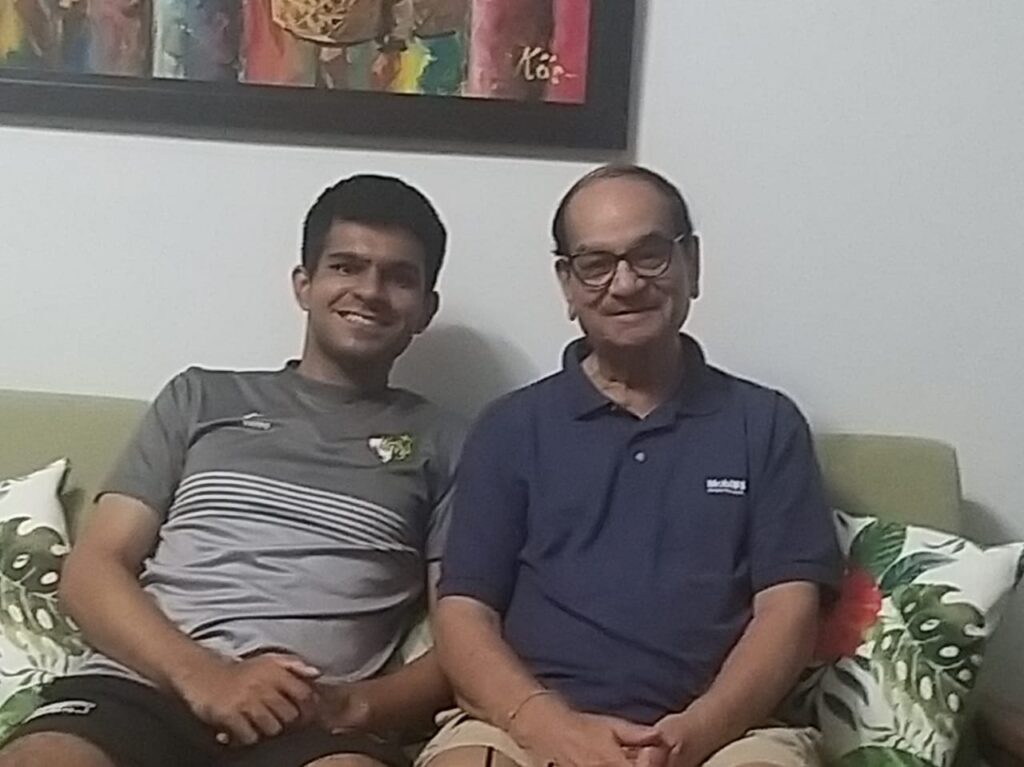 Ravi Chaturvedi with his grandson, Aahan Gopinath Achar, who represents Singapore in international cricket. Photo courtesy: Ravi Chaturvedi
They listened quietly as Chaturvedi described the ebb and flow of Test cricket in Hindi. When the session ended, Merchant—the batting artist he had idolised since childhood—and Surita—the broadcaster who had unknowingly mentored him through radio—warmly congratulated him.
They marvelled at his command over cricket’s subtleties and praised his effortless understanding of commentary’s finer nuances, recognising him as one of the pioneers of Hindi cricket broadcasting.
For Chaturvedi, it was more than professional recognition. It was the day a batsman’s dream found fulfilment through a commentator’s voice.
The game belonged to everyone
During our conversation, Chaturvedi shares a story that has stayed with him for years. A farmer had travelled to a market to sell his produce. By the time his work was over, the market had closed. Instead of returning home, the farmer spent the night near his bullock cart with his young son. Beside them was a transistor radio carrying cricket commentary from overseas. They listened till morning.
Chaturvedi still remembers that story because it reminded him what cricket meant to ordinary Indians. “It was through radio that cricket reached the villages,” he says. “It was no longer only a city game.”
Perhaps that is why he has always believed commentators had a responsibility. They were not speaking only to people sitting inside drawing rooms. They were speaking to farmers, factory workers, railway passengers, shopkeepers and students. Many of them had never seen a cricket stadium. Some had never even seen a cricket match. The commentator became their eyes. That thought never left him.
And years later, when he finally sat behind the microphone himself, he remembered the young boy who had once struggled to catch a weak radio signal outside a cricket ground in Delhi. He knew exactly who his audience was.
Among many recurring themes during our conversation, one which became the most prominent was his love for cricket.
“It was the love of the game,” Chaturvedi says it while talking about his early days in commentary. He says it while remembering the money he earned. He says it when the conversation turns to today’s commentators, who enjoy comforts that his generation could never have imagined or believed was possible.
For him and many of his contemporaries, commentary was never about becoming famous. It was another way of staying close to the game they loved.
Fifty rupees a day
The first generation of Indian cricket commentators worked in an era that looks and sounds almost unbelievable today. There were no celebrity commentators, no corporate sponsorships, no wide social media following and certainly no luxury hotels booked by broadcasters.
“When I started commentary, we were paid fifty rupees a day,” Chaturvedi recalls, but not with regret. Asked if he has any, he says none, adding, “If it was a radio programme, we got twenty-five rupees.”
Even English commentators, who were considered the bigger names at the time, did not earn much more. Nobody entered commentary expecting to make a career out of it. In fact, most commentators had regular jobs. Commentary was something they did because cricket meant so much to them.
Travel itself was an adventure and there were no elaborate travel arrangements waiting for them.
Train tickets had to be booked well in advance. Sometimes they stayed with relatives or friends because hotel stays were expensive. They reached the ground carrying their own bags and prepared for a full day’s work. Then there was lunch.
Chaturvedi bursts into laughter while remembering those days. “There were no snacks. We carried parathas rolled with sabzi from home. At the ground, we got tea,” he says, again, with no regret.
It is a small detail. But somehow it says everything about that generation. Nobody complained, and nobody demanded better facilities. All that mattered was the match and once the match started, everything else was forgotten. The microphone mattered more than the meal.
A different generation
Today’s cricket broadcasting is a world away from those days. Television rights are worth billions and commentators travel around the world covering franchise leagues and international tournaments.
Some are recognised almost as quickly as the players themselves. Does Chaturvedi feel jealous? The answer comes immediately. “No,” he says with a smile. “Good luck to them. Times have changed.” There is not even a trace of bitterness in his voice.
Instead, he sounds genuinely happy that the profession has become more rewarding. Every generation, he believes, gets opportunities that the previous one never had.
More than a commentator
Listening to Chaturvedi, one realises that cricket was only one part of his life. Away from stadiums and commentary boxes, there was another commitment that remained just as important. His village.
He never forgot where he came from. Whenever he found time, he went back. Not just to meet relatives or attend family functions. He wanted to see whether life had improved for the people there. If it had not, he wanted to do something about it, which he did by playing an important role in electrifying his village.
He speaks about helping bring better facilities to the village with the same satisfaction that he speaks about a memorable cricket match.
“I always wanted to give something back,” he says. Perhaps that desire came from remembering where his own journey had started.
The village had given him values, while Delhi had given him opportunities and Cricket had given him an identity. He believed each deserved something in return.
A poem that stayed with him
Most people remember a favourite cricketer from their childhood. Chaturvedi remembers a poem.
During our conversation, he recites lines from Henry Wadsworth Longfellow that have remained with him for decades. “Lives of great men all remind us, we can make our lives sublime, and departing, leave behind us footprints on the sands of time.”
He says those lines quietly, almost as if he is speaking to himself. Then he goes on to explain why they matter.
“I always believed we should leave our footprints behind,” he says. “People should remember that we tried to do something worthwhile.”
That philosophy explains many things about his life. About why he never chased money, why he continued working long while retirement would have been an easy, why he spent time helping his village, and why he speaks more about people than about awards.
For him, success was never about applause. It was measured by usefulness.
Watching Indian cricket grow up
Few people have watched Indian cricket evolve as closely as Ravi Chaturvedi. When he first became interested in the game, India was still trying to establish itself in international cricket. Winning overseas was rare and drawing a Test series abroad was considered as good as winning one.
The names that inspired young cricketers were Vijay Merchant, Vijay Hazare and Vinoo Mankad. Then came the next generation of idols.
Sunil Gavaskar showed that Indian batsmen could stand up to the world’s fastest bowlers. Kapil Dev gave India its greatest cricketing moment in 1983 by lifting the World Cup after shocking the mighty West Indies by defending 183 in the final at Lord’s.
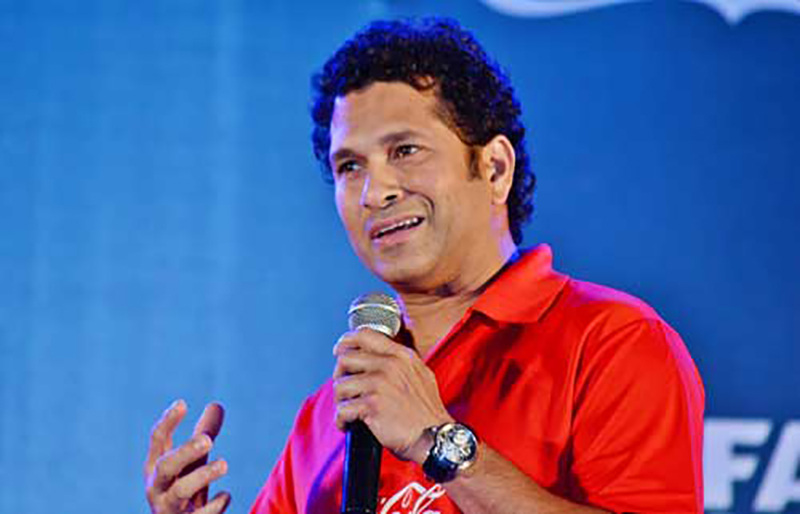 Cricketer Sachin Tendulkar. Photo Courtesy: IBNS File
In the 90s, Sachin Tendulkar became a global icon. Today, Virat Kohli and the current generation travel overseas believing they can beat anybody.
Chaturvedi has commentated through every one of those eras. He smiles while talking about how much the game has changed. The Fitness standards have improved. India’s preparation has improved, and crickets as young as 15 are confident about taking on their opponents at the highest level of the game.
Yet, one thing, he feels, has remained constant: the love that ordinary Indians have for the game.
Whether it is a village tea shop or a crowded railway platform, cricket still has the power to bring strangers together. He has seen that happen countless times.
The commentator’s responsibility
Towards the end of our conversation, I asked Chaturvedi what, in his opinion, makes a good commentator.
His answer is surprisingly simple. The match is not about the commentator, he says, it is about the game. According to him, a commentator should help people understand cricket and not try to become bigger than cricket.
That is why he always prepared carefully before every assignment. He believed a commentator owed that much to the listener. Especially during the days of radio, when one mistake could confuse thousands of people who depended entirely on the spoken word. He never forgot that responsibility.
In Part 2 of this series, Ravi Chaturvedi takes us inside cricket’s greatest dressing rooms and commentary boxes, sharing his memories of Sunil Gavaskar, Kapil Dev, Sachin Tendulkar, Sir Garfield Sobers, Wes Hall and many others who shaped the game across generations.