
After trading at a loss for most of the session, the S&P 500 enjoyed a buying spurt just before closing to eke out a marginal gain, but not nearly enough to push it into positive territory over the week.
The litany of recent worries — doubts about the durability of AI valuations in the tech sector, war and the attendant inflationary spike in oil prices — was joined by the Trump administration wheeling out another round of very broad and inflationary tariffs.
Still, the overall mood seemed to be cautious rather than fearful, although many would characterise it more as complacent.
S&P 500: +0.05% (-0.6% over the week)Dow: +0.5% (-0.4% over the week)Nasdaq: -0.6% (-1.6% over the week)
The tech retreat is still a dominant theme. Shares in chipmaker Intel fell 8% despite posting a strong quarterly result.
The so-called “Magnificent Seven” tech stocks, such as Amazon, Microsoft and Meta Platforms, collectively shed around 5% for the week. Amazon and Tesla fell around 10% and 18% respectively post results.
Across the Atlantic, European stocks recouped much of Thursday’s sharp losses to be up 0.8% for the session and 0.7% higher for the week.
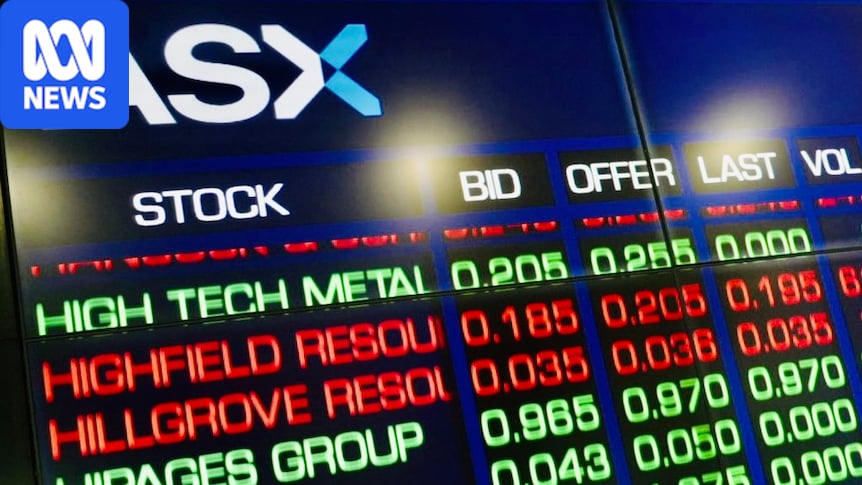
When ASX 200 futures trading closed on Saturday morning (AEST), the prospects for today were promising, pointing to a 0.6% gain today, which would recoup last week’s 0.3% slide.
Global oil prices eased back below the $US100/barrel mark despite two weeks of missiles, drones and threats whizzing back and forth across the Gulf.
Brent crude futures: -3.9% to $US96.78/barrelWest Texas Intermediate crude: 3.1% to $US89.31/barrel
The fall in prices came after news filtered out that China had initiated a push to resume stalled peace talks between the United States and Iran.
Oil prices may ease more today with the news overnight that the US and Iran had called a halt to their bombing campaigns, at least temporarily.
However, as Price Futures Group senior analyst Phil Flynn told Reuters, energy markets remain in a precarious state.
The global Brent crude benchmark gained around 10% over the week.
“Overall stocks remain pretty tight — and that situation could turn on a dime, so it’s worth keeping a close watch as things develop,” Mr Flynn said.
The easing in oil prices saw US Treasury bond yields dip from their 18-month high, but the fear of inflation and the Fed being forced to jack up rates meant investors remained cautious.
The Fed’s rate-setting committee (the FOMC) meets this week, with markets still pricing in another “hold”.
Most currencies were steady against the Greenback, although the Aussie dollar nudged higher to trade just under 70 US cents.