
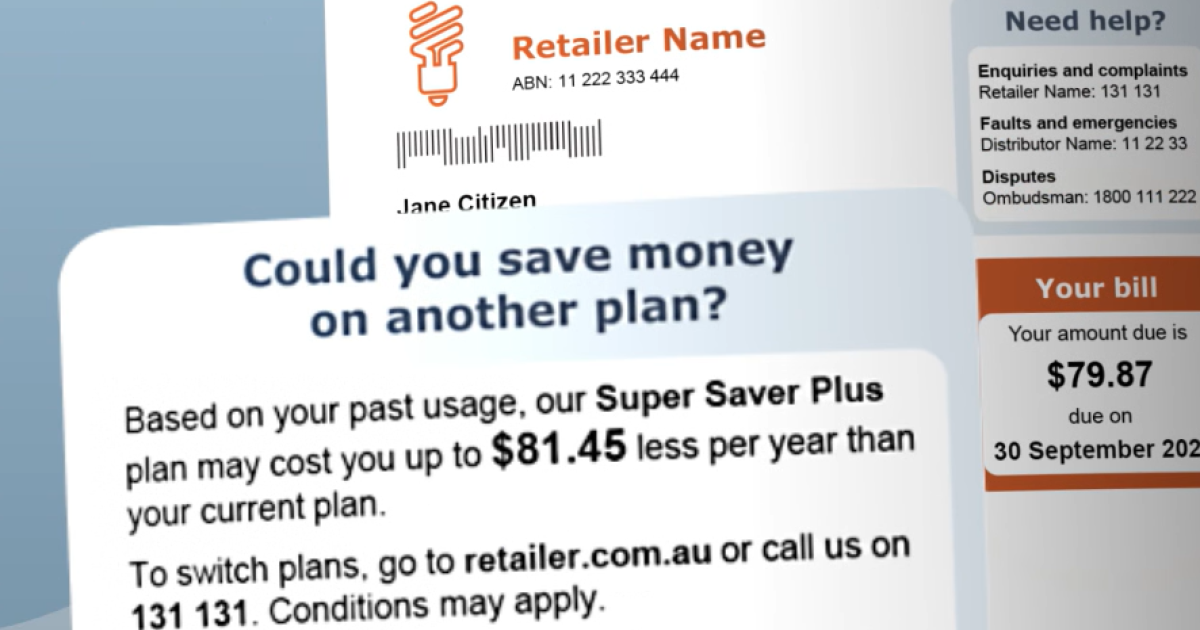
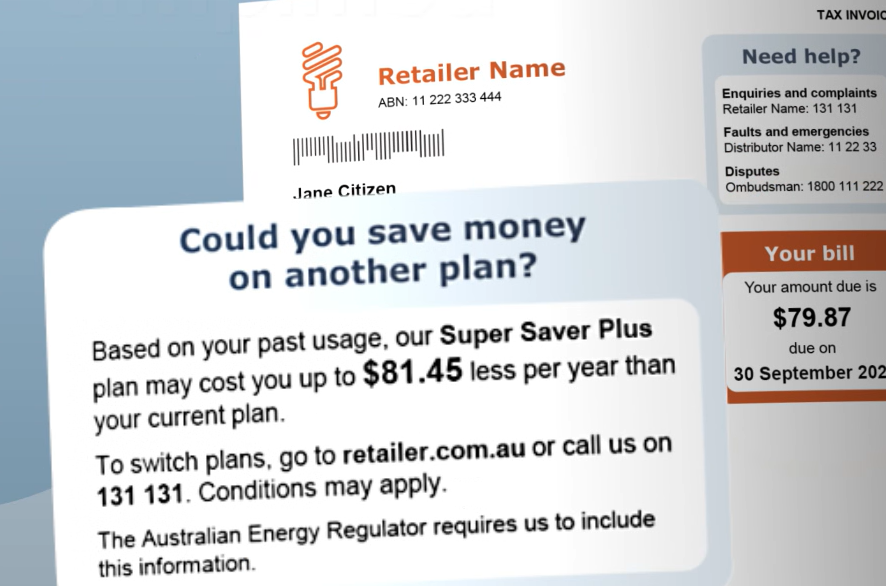
The Australian Energy Regulator makes sure electricity retailers are letting customers know about better deals. Photo: Energy Made Easy.
The ‘best offer’ listed on Canberrans’ electricity bills might not be the best deal available for their specific circumstances.
All ACT energy retailers need to base their offers and discounts on the standing offer price as determined by the ACT’s Independent Competition and Regulatory Commission (ICRC).
About every 90 days, customers can find out, on their bill, whether a better deal is available with their retailer.
But ActewAGL acting CEO Megan Willcox said a better offer than the one on the bill could also be pursued over the phone.
“Customers can [then] contact their retailer and seek to achieve a better discount than that,” she told a recent budget estimates hearing.
Independent Kurrajong MLA Thomas Emerson sought clarity, questioning if he could actually receive a better deal than the one listed on his electricity bill.
Ms Willcox explained it would depend on a customer’s individual circumstances and their “load profile”, such as when they’re using electricity during the day and whether they have other infrastructure, such as solar panels, that would lower ActewAGL’s cost of providing the service.
Mr Emerson asked whether Ms Willcox felt it was misleading for a bill to state a customer was on the best deal when they could potentially get a better one if they rang up.
She responded that energy retailers had to outline the best deal that they were able to offer, but people were welcome to “shop around”.
“It’s a competitive market, so customers can seek to find the best deal by seeking out a better offer from their current retailer or another retailer,” Ms Willcox said.
“Retailers may [also] want to retain [customers], or attract customers from other retailers.”
Better offer obligations on electricity retailers are part of the Australian Energy Regulator’s (AER) Better Bills Guideline. It applies to energy retailers who have customers in the ACT, NSW, Queensland, South Australia and Tasmania.
It means retailers are required to carry out better offer checks, identify deemed better offers and provide messages about any better offers to small customers.
The deemed better offer must be either:
A plan offered by the retailer which is the lowest cost generally available plan applicable to the customer (in regard to their annual usage history) and doesn’t have, as a precondition or condition, that the customer have or maintain an affiliation or membership with an entity that’s unrelated to the retailer, or
A plan that has a lower cost than the lowest cost generally available plan applicable to the customer
“Where the plan provides a discount on the condition that the customer buys another good or service, the deemed better offer identified must be determined without any such discount,” an AER fact sheet to energy retailers outlined.
“A better offer message must be provided on a small customer’s bill at least every 100 days, or in alignment with a longer billing cycle agreed with the customer.”
Given the guidelines refer to displaying the lowest cost “generally available plan”, this means retailers don’t have to display other types of plans that are available.
This also doesn’t stop the retailer from then creating a new offer for a customer when they call up to negotiate.
Mr Emerson said something needed to change.
“Why does my ActewAGL bill say I’m on ‘the best plan’ they can offer me if I can get a better plan by threatening to jump ship to Origin?” he asked.
“It’s misleading and unfair … Energy providers should be upfront with customers about what’s actually the best offer available to them.
“People shouldn’t have to haggle with a company that’s 50 per cent owned by their government to get a fair deal.”
(ActewAGL is 50 per cent owned by Icon Water, which in turn is a 100 per cent ACT Government-owned corporation).
Ms Willcox took on notice questions from Mr Emerson as to what triggered ActewAGL to offer a better deal than the ‘best plan we can offer you’ shown on a customer’s energy bill, as well as any complaints that have been made about these practices in the last financial year.
Region reached out to the ICRC for further clarification, but was informed it had “limited responsibility” for regulating retail electricity services.
“We investigate and set the regulated price for ActewAGL standing offer customers,” a spokesperson said.
“We monitor retailer compliance with the industry codes, including the ACT Retail Electricity (Transparency and Comparability) Code, which provide additional consumer protections, and we report annually on industry compliance with the codes.”
The ACT’s Code used to have a section about better offer obligations, but this was amended when the national guidelines came into effect.
Both the AER and ICRC encouraged Canberrans to shop around to find more competitive offers.
The Commonwealth Government operates Energy Made Easy, where people can input their consumption habits to find more suitable plans.