
Hi everyone, welcome back to SportsVerse, my twice-weekly newsletter that tells stories you can’t find anywhere else about the intersection of sports, fashion, business, and culture.
Last week, Nike gathered its favourite athletes, VIP cool kids and celebrity friends of Drake for the second annual “Nocta Manor” retreat, organised by the Swoosh and the Canadian rapper.
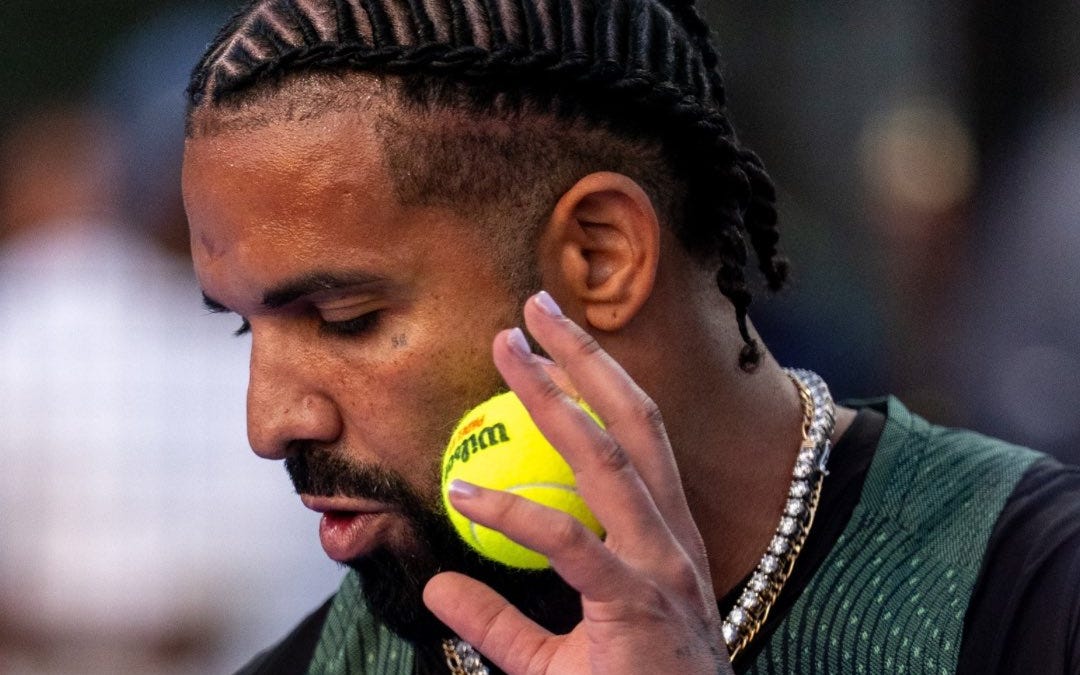
Taking place on a private estate in New Jersey (to make the most of the fact that everyone was still hanging around the area following the World Cup), the highlight of the retreat appeared to be a competitive padel tournament, featuring Drake, NBA stars Kevin Durant and Devin Booker, as well as world no.1 padel player Agustín Tapia. Bringing together these big names at a glitzy event with an elite — but far lesser known — athlete from padel was no coincidence. Juan Lébron, another elite padel player ranked no.5 in the world, also participated.
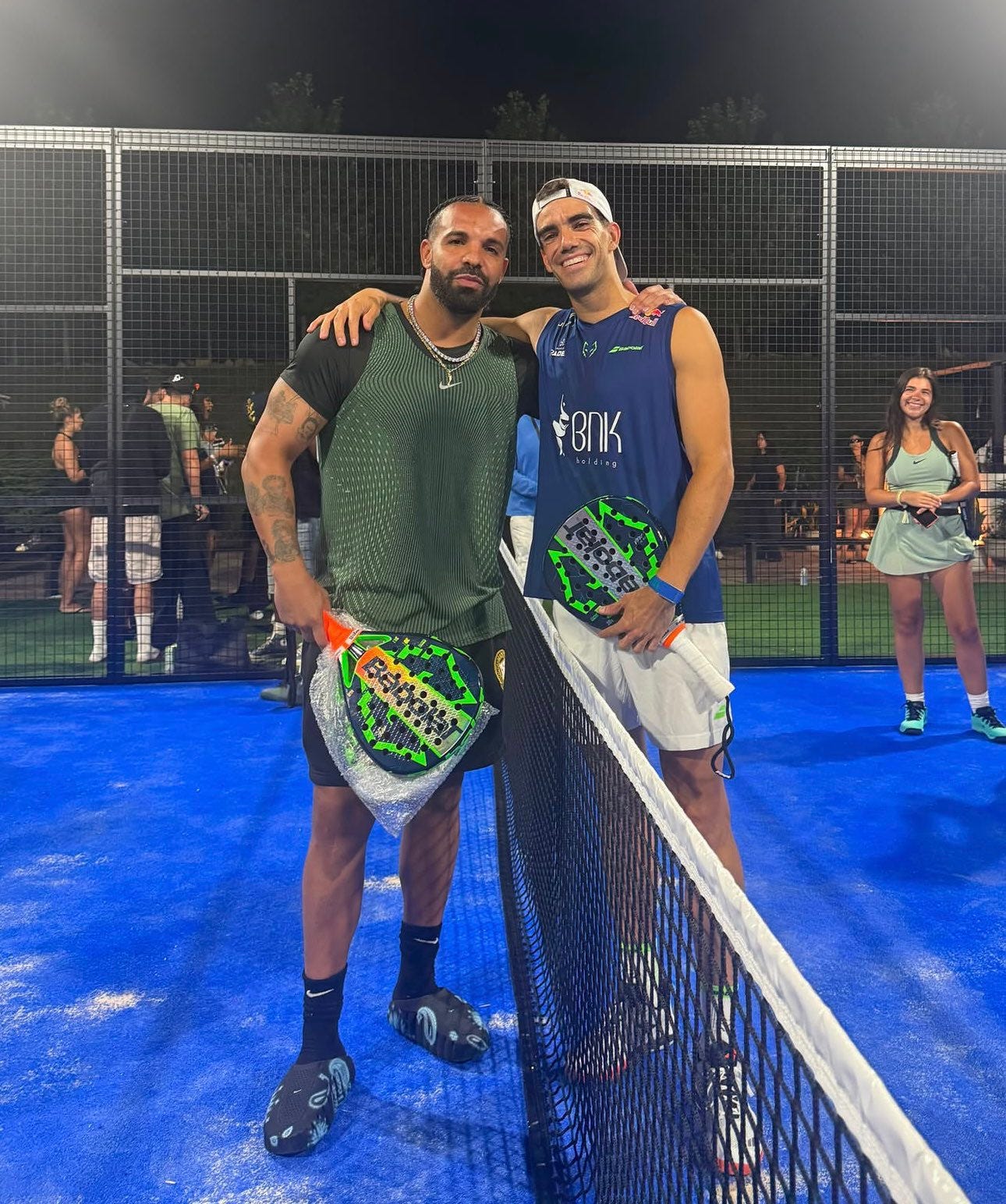 Drake on court with Lébron.
Nike has often used Nocta, its streetwear-focused sub-label run in partnership with Drake, to incubate or soft launch the brand’s interest in particular categories of sport that the main Nike brand doesn’t typically service. It’s a low-risk, experimental strategy because of 1) the lower profile of the Nocta brand vs. Nike overall; 2) the fact that Nocta releases products in limited drops; 3) the cool factor associated with Nocta thanks to its celebrity leader and his crew. Despite largely pulling out of the golf category in 2016, and stepping away from international cricket in 2020, Nocta has released drops dedicated to both sports.
 Nike and Drake Want You to Know That Cricket Is Cool
The Nocta Manor padel tournament was exactly in this vein, designed to build interest and hype in Nike’s growing investment in racket sports. Nike Court, which previously referred almost exclusively to Nike’s tennis product division, now also actively incorporates padel and pickleball. At the beginning of this year, Nike signed its first ever pickleball athlete, the world No. 1 Anna Leigh Walters. Meanwhile, Tapia’s on-court presence at Nocta Manor could be a hint that he is set to become the brand’s first marquee padel signing. The event also revealed what looked like the first set of Nike-made padel rackets, which are yet to go on sale.
The Nike Court category is, of course, spearheaded by the brand’s long-established tennis business, which has come under criticism in recent years with accusations of a lack of investment and uninspired product since the Federer/Nadal/Serena Williams/Sharapova heyday. That is now changing, with Nike looking to capitalise on its heritage in the sport, as well as the fashion appeal of players like Naomi Osaka. Now, padel and pickleball will sit alongside it, reflecting the latter two sports’ astronomical growth and newfound cultural importance in recent years.

Back in June, when I interviewed Ann Miller, Nike’s EVP of global sports marketing, we had a long conversation that touched on the importance of Nike rebuilding a presence across all sports — not just the ones that make the business the most money.
Drake, KD and Devin Booker getting their reps in at the Nocta Manor.
When Nike CEO Elliott Hill first set out his turnaround plan for the brand, he identified key categories that would remain the core of the business and form the foundations of its future growth. These included basketball, running, football, sportswear and training. The next phase of Hill’s strategy will see the business cast a wider net to reach a broader range of consumers drawn in by less mainstream sports. This is something that now-Adidas CEO Bjørn Gulden excelled at when previously CEO of Puma, keeping the brand close to sports like cricket which gave it huge visibility among audiences that were largely overlooked by Adidas and Nike at the time.
“I think Nike’s role is to help be a steward of sports,” Miller told me. “It’s important that we’re thinking of the future of sports, whether that’s exciting growth areas like padel or pickleball, or other sports that have been around for a long time, but maybe haven’t had enough gasoline on them.”
That same day I spoke with Nike President Amy Montagne, who echoed Miller’s argument and added that being present in smaller sports fits into Nike’s localisation strategy, an attempt to allow the brand to deeply embed itself among niche sporting communities once again — an element that it pulled back on somewhat over the past decade.
It’s not just racket sports that Nike has its eye on. When I spoke with Montagne in June, she and Hill had recently returned from a trip to India where the brand was exploring re-entering cricket — the gateway sport to the humungous consumer audience in large parts of South Asia. Similarly, the brand had also had a recent meeting with the Springboks, the South Africa national rugby team.
Nike has storied histories in both sports, with some iconic erstwhile product lines and throwback partnerships waiting to be unearthed.
That’s all for today, friends. Thanks for coming along for the ride.
See you next time,
DYM