
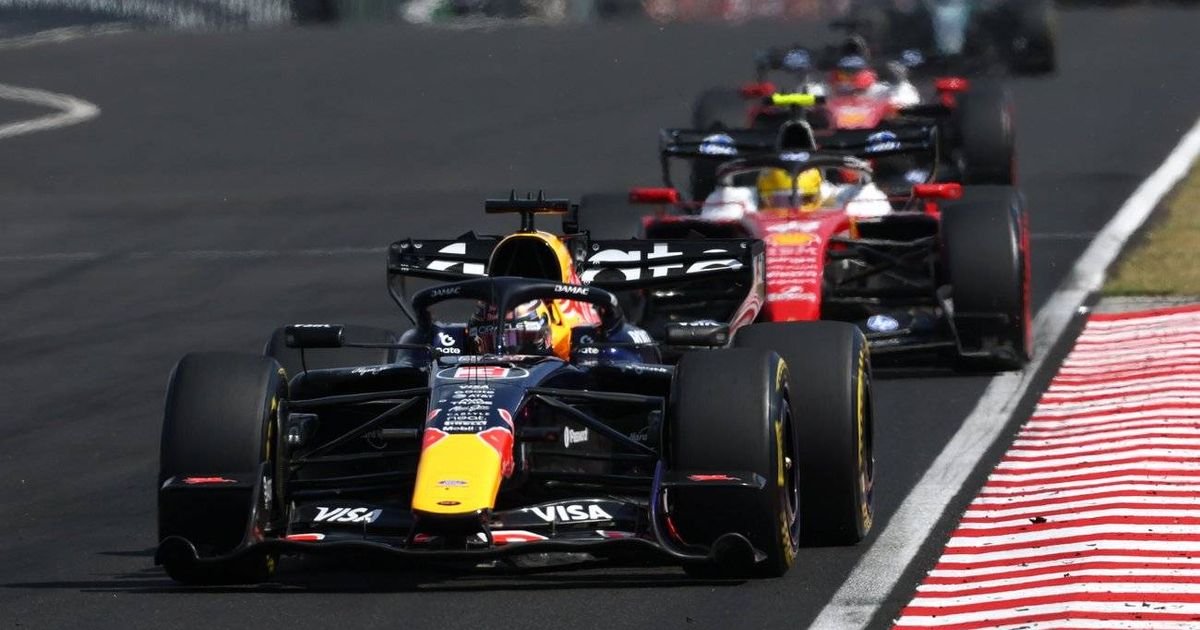
Formula 1’s 2026 rules are forcing the world’s leading drivers to wrestle with unpredictable handling, software-controlled power delivery of “insanely stupid” cars according to Christian Danner.
The former Formula 1 driver turned German television pundit believes the current generation is difficult, unnatural and often unpleasant to drive. However, he stopped short of labelling them the worst cars in the sport’s history.
Danner’s assessment followed an eventful Hungarian Grand Prix won by Lando Norris. Max Verstappen finished a surprising P2 for Red Bull, while Mercedes driver Kimi Antonelli completed the podium.
Charles Leclerc and Lewis Hamilton finished fourth and fifth after Ferrari’s expected challenge became trapped in traffic. Oscar Piastri had been fighting Norris for victory before retiring with a mechanical problem 14 laps from the finish.
Danner told the OLBG media team: “Well, for me, it was quite funny because I actually participated in the very first one 40 years ago, and ever since that day, I have all sorts of memories about it – the races I did myself there, but also when I came to watch the races, to do the commentary and everything.
“Everybody remembers it 40 years ago. It was just behind the Iron Curtain, and when I spoke to Martin Brundle, he said, ‘Oh, yes, yes, yes, and you were driving a Trabant’, which is true. A Trabant is an East German production two-stroke car, and all these sorts of things. So I had a good time in Budapest.”
The circuit remains notoriously difficult for overtaking. Norris produced one of the few conventional braking moves, while much of the remaining action depended on energy deployment, tyre differences and strategic offsets.
It was actually quite entertaining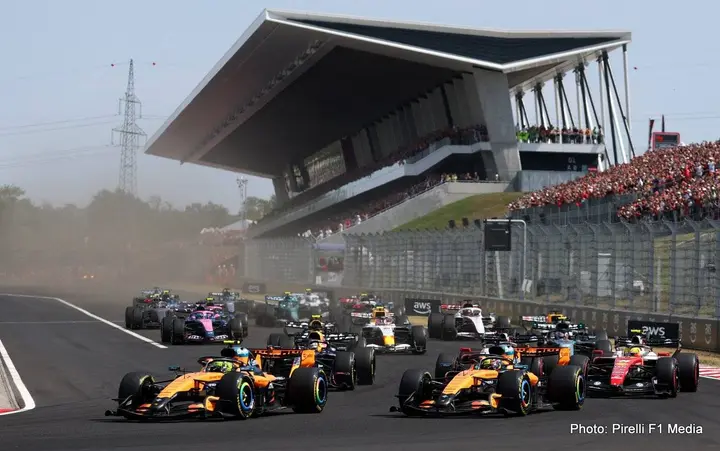
Danner added: “As far as the race was concerned, the regulations made this race a slightly better race compared to the ones we’ve seen there before. I think there was really only one thorough outbraking manoeuvre, which was done by Lando. The rest was overtaking, but it was the classic overtaking, or the first half of the yo-yo effect.
“But there was no second straight where you could do the second yo-yo. So, it was actually quite entertaining. I don’t want to take anything away from that race. It was one of the best Budapest races I’ve seen,” admitted the 68-year-old German.
Hungary also exposed the physical corrections drivers must make behind the wheel. Verstappen spent much of the weekend fighting an unpredictable Red Bull before strategy elevated him to second. Ferrari’s drivers struggled to follow closely, while George Russell recovered to seventh after dropping to the back following an anti-stall problem.
Danner said: “All these cars are a real handful. If you compare it to a few years ago, or even last year, compare the steering activity. Jesus Christ, they’re correcting it, and have understeer, and twitch oversteer, and have everything turning in.
“To drive that car smoothly without a lot of correction on the steering wheel is virtually impossible. So, in that respect, we’ve seen nicer cars than the ones we’ve got now,” ventured Danner.
The Hungaroring’s short straights meant the championship’s controversial energy-management characteristics were less visible. At faster circuits, drivers can suffer significant electrical deployment losses and sudden changes in available power.
We’ve got to live with it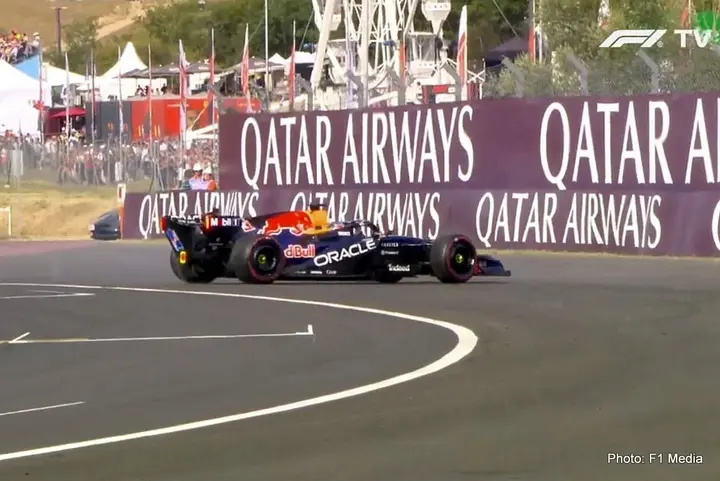
Danner believes the deeper problem is the disconnect between the throttle pedal and the power ultimately delivered: “It’s down to the regulations that you have to cope with a fact that you don’t like in a racing car, which is you’re totally out of control once you’re using your right foot on the throttle.
“The reaction you get from the engine is not what your foot does. It’s what the software behind the throttle pedal, in combination with Mercedes, for sure, with AI, controls. So you don’t get what you think you should get, and that is a very bad feeling.”
Danner pointed towards the manufacturers involved in shaping Formula 1’s new power-unit regulations: “The combustion engine we’ve got this year is a joke. It’s so bad. Why is it so bad? Audi. Mainly Audi. They insisted on less fuel flow, less compression ratio, and less boost. So the same, or very similar engine last year delivered about 850 brake horsepower. Now, 550.”
The former Arrows, Zakspeed and Rial driver contrasted the current formula with the turbocharged Benetton BMW he recently drove at the Goodwood Festival of Speed.
Danner concluded that the cars are not necessarily historically bad pieces of engineering: “I would say the cars are very definitely not a lot of fun to drive. But are they the worst cars, or really bad cars? They’re a result of the regulations, and that’s as usual.
“We’ve gone through these regulation changes in the past, and this particular one is one I think is so insanely stupid, but we’ve got to live with it,” lamented Danner, as Formula 1 enters the summer break.