
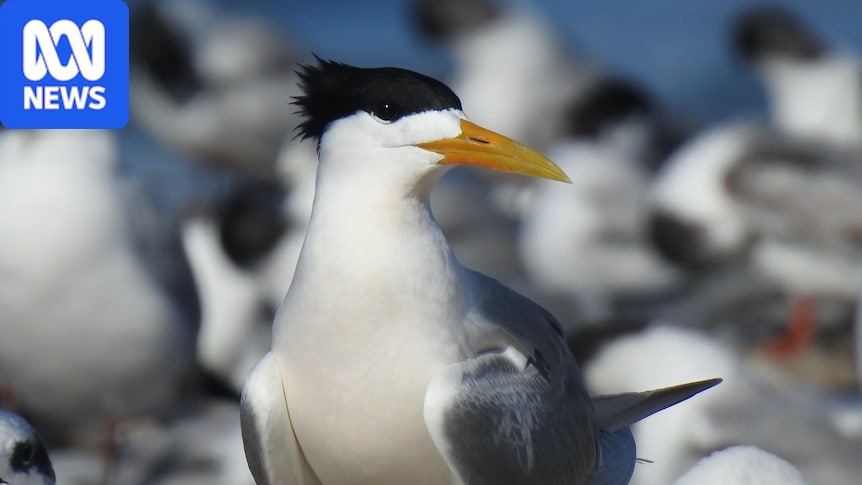
South Australian authorities say it is “very, very likely” the H5 strain of bird flu is spreading locally, in what would represent the first known cases of local transmission of the virus.
The state has identified 11 more suspected cases of H5 bird flu, seven of which are in the state’s South East and four on Kangaroo Island.
While officials are still waiting for final testing results, “due today or tomorrow”, SA’s Primary Industries Minister Clare Scriven said it was “extremely likely” to represent “localised distribution” of the virus.
Of the suspected cases found in the South East, one case was at Southend, one was at Cape Jaffa, two were at Port MacDonnell, and three were at Beachport.
Of the suspected cases on Kangaroo Island, one was found at Seal Bay and three were found at D’Estrees Bay on the island’s south coast.
“What we’ve seen around the world is we can’t stop H5 bird flu and there has of course, in every other continent around the world, been local transmission,” Ms Scriven said.
“So it was pretty much inevitable that it would occur.
“We’ll wait for the scientific definitions to say whether we are considered to be at that point now but certainly if we’re not it’s likely that it will be quite soon.”
Ms Scriven said the results were expected later on Wednesday or on Thursday.
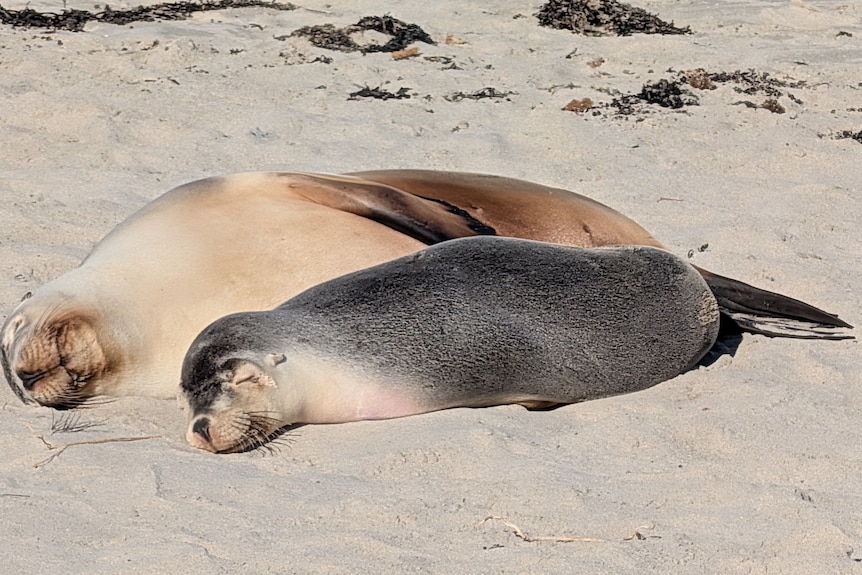
Ms Scriven said on-beach tours at Seal Bay will be temporarily paused to help protect the local sea lion population. (ABC News: Eliot Fish)
Beach tours temporarily cancelled
Ms Scriven said authorities were “temporarily pausing” on-beach tours at Seal Bay to help protect the local sea lion population.
“Less human interaction means that there’s higher levels of resilience to all diseases or all threats and risks to the Seal Bay population,” she said.
Ms Scriven said guided tours along Seal Bay Conservation Park’s boardwalk would continue.
“Additional Department of Environment and Water rangers have been deployed to Kangaroo Island to assist with ensuring that those guided tours can continue,” she said.
“We know the Seal Bay experience is incredibly valuable to so many people and that will be able to continue, just not on the actual beach itself.”
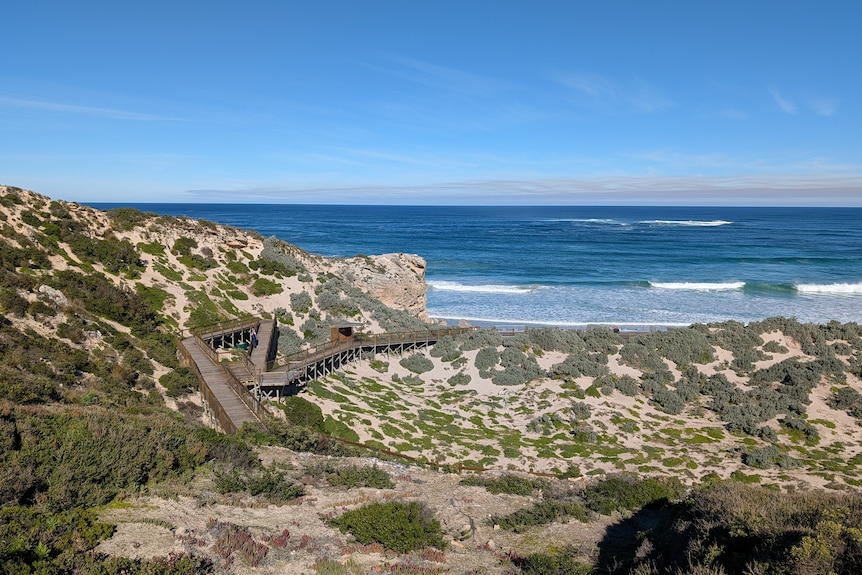
Ms Scriven said guided tours along Seal Bay Conservation Park’s boardwalk would continue. (ABC News: Eliot Fish)
Wildlife veterinarian and Adelaide University associate professor in wildlife health Wayne Boardman told 891 ABC Adelaide the suspected cases on KI were “sad news” and a “worst-case scenario”.
He said he was concerned about the “potential for the virus to be very close” to the endangered Australian sea lions.
“Seal Bay is an iconic, fantastic place to see the Australian sea lions,” Dr Boardman said.
“My concern is that we will see it in the sea lions shortly, over the next week or so, as we see more birds affected and possibly going along Seal Bay and affecting our iconic sea lion.
“It would be an absolute tragedy if that’s the case.”
Dr Boardman said sea lions seemed to be “uniquely susceptible” to the virus.
“I think part of that is related to the fact that they are on a beach where big groups of birds aggregate, so the birds are moving in and around where sea lions might move around as well,” he said.
“We know what it was like with COVID — we had to quarantine ourselves, we had to keep away from other people, and that’s going to be impossible, of course, with these animals.”

Wayne Boardman has welcomed the decision to temporarily close the beach to tours. (ABC South East SA: Caroline Horn)
Kangaroo Island Mayor Michael Pengilly told 891 ABC Adelaide he fully supported the decision to temporarily cancel beach tours.
“Anything we can do to reduce the risk of spreading the disease and also keep the visiting public happy and seeing our attractions is very worthwhile,” he said.
Dr Boardman was also in favour of the move.
“I think that’s really important to make sure that people aren’t going on to the beaches and potentially coming in contact with the virus, but also the fact that they might spread the virus manually on shoes and gear and so on across into different areas,” he said.
“If we know that there’s virus on that beach, we want to isolate it as much as possible.
“It’s most likely to spread via the birds, of course, but we can’t discount the fact that there could be some form of mechanical transmission, as well, from people.”
Possible threat to a variety of species
Dr Boardman said other species of birds and mammals were also susceptible.
“Basically, if you’re a bird, you can get it,” he said.
“Fairy penguins are very much susceptible, any of the penguin species are.”
Dr Boardman also raised concerns for threatened species, including hooded plovers.
“Egrets, ducks, cormorants, oyster catchers, lots of the shore birds … all of those birds that come on to the beach are susceptible. We can see it in raptors as well.
“Of course mammals like fur seals and sea lions [are at risk], but there’s lots of other evidence for other species, like small carnivores in South America and North America, that have been affected as well.”
Commercial poultry remains in the clear
SA’s first confirmed case of bird flu was in a giant petrel found on the Fleurieu Peninsula on June 14.
On Sunday the CSIRO confirmed two native birds that were found dead on SA separate beaches tested positive for the H5 strain.
One greater crested tern was found near Robe and the second was found near the Semaphore Surf Life Saving Club, the first time a case has been detected on a metropolitan beach in SA.
On Wednesday, Ms Scriven said there had been no detections of H5 bird flu in commercial poultry across SA or the rest of the country.