
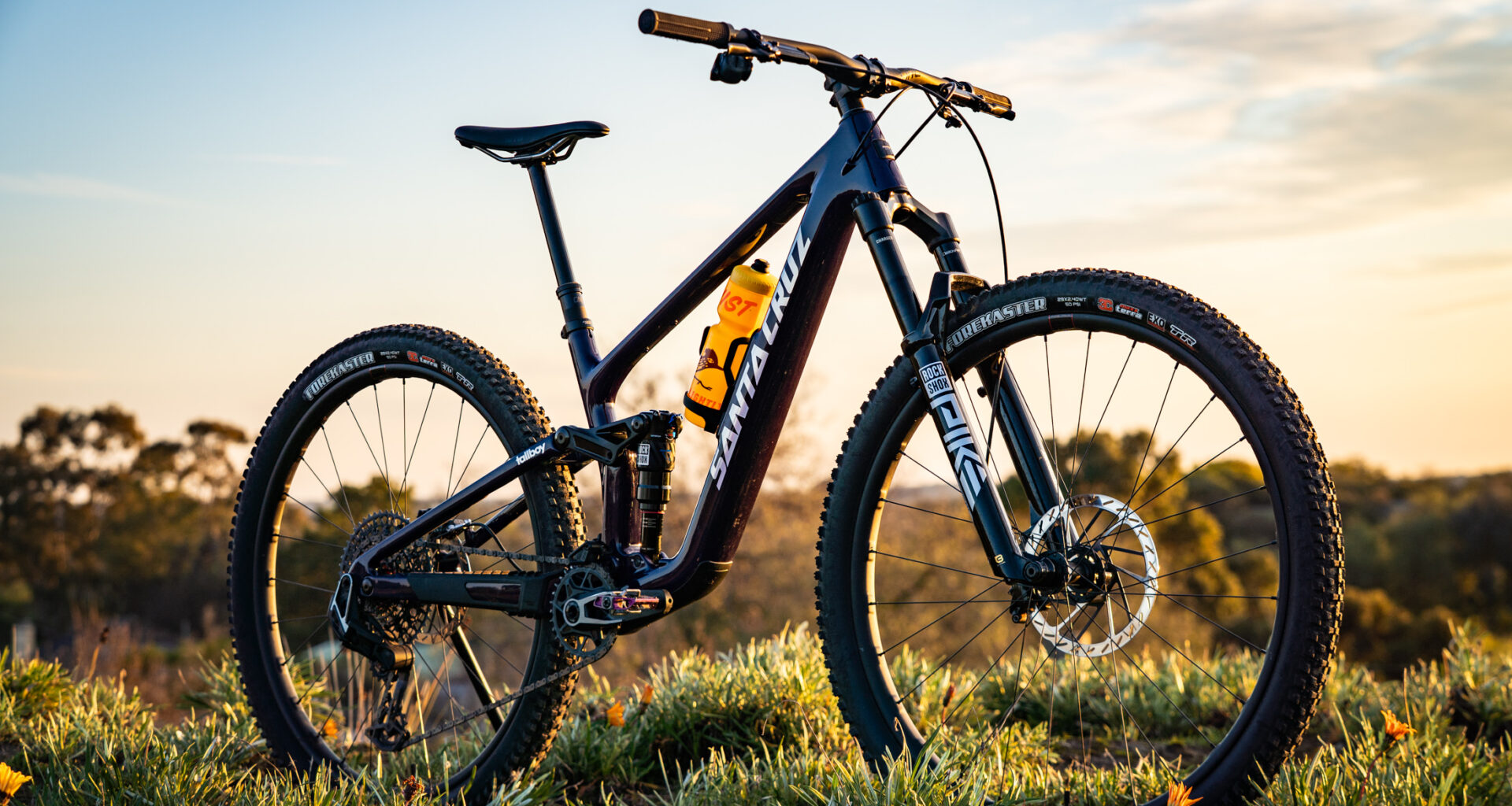
Wil reviews the Santa Cruz Tallboy 6
Of all the mountain bike launches in 2026 so far, it’s perhaps the Santa Cruz Tallboy that has caused the biggest stir. That’s because the new Tallboy has, for the first time ever, abandoned the iconic VPP suspension design. The shock! The horror! In its place is a more conventional four-bar layout that isn’t worlds apart from what you’d find on a Norco, Cube or Transition.
It certainly looks more conventional, and that’s clearly upset die-hard fans. I’ve read comments online stating there’s no longer any valid reason to spend the extra on a Tallboy, and that Santa Cruz is just trying to cut manufacturing costs. There’s even an amusing conspiracy theory that alleges the new Tallboy is actually just a rebadged GT frame that was repurposed following the decision by Pon Holdings (the Dutch conglomerate that owns Santa Cruz, Focus, Cervelo, Cannondale, OneUp and Reserve, among others) to shut down the GT brand. Juicy!
I suspect the tin foil hat wearers have already made their minds up, but the Californian brand is keen to point out that there are both practical and performance reasons for the VPP-delete. As well as reducing weight and improving seatpost insertion, the four-bar platform is claimed to be more efficient and smoother across choppy terrain.
Indeed there is a bit more going on with the new Tallboy that means this isn’t exactly your average four-bar dually. And having spent the past couple of months riding it, I can say without doubt that this is one of the best trail bikes currently on the market.
Watch our video review of the Santa Cruz Tallboy here:
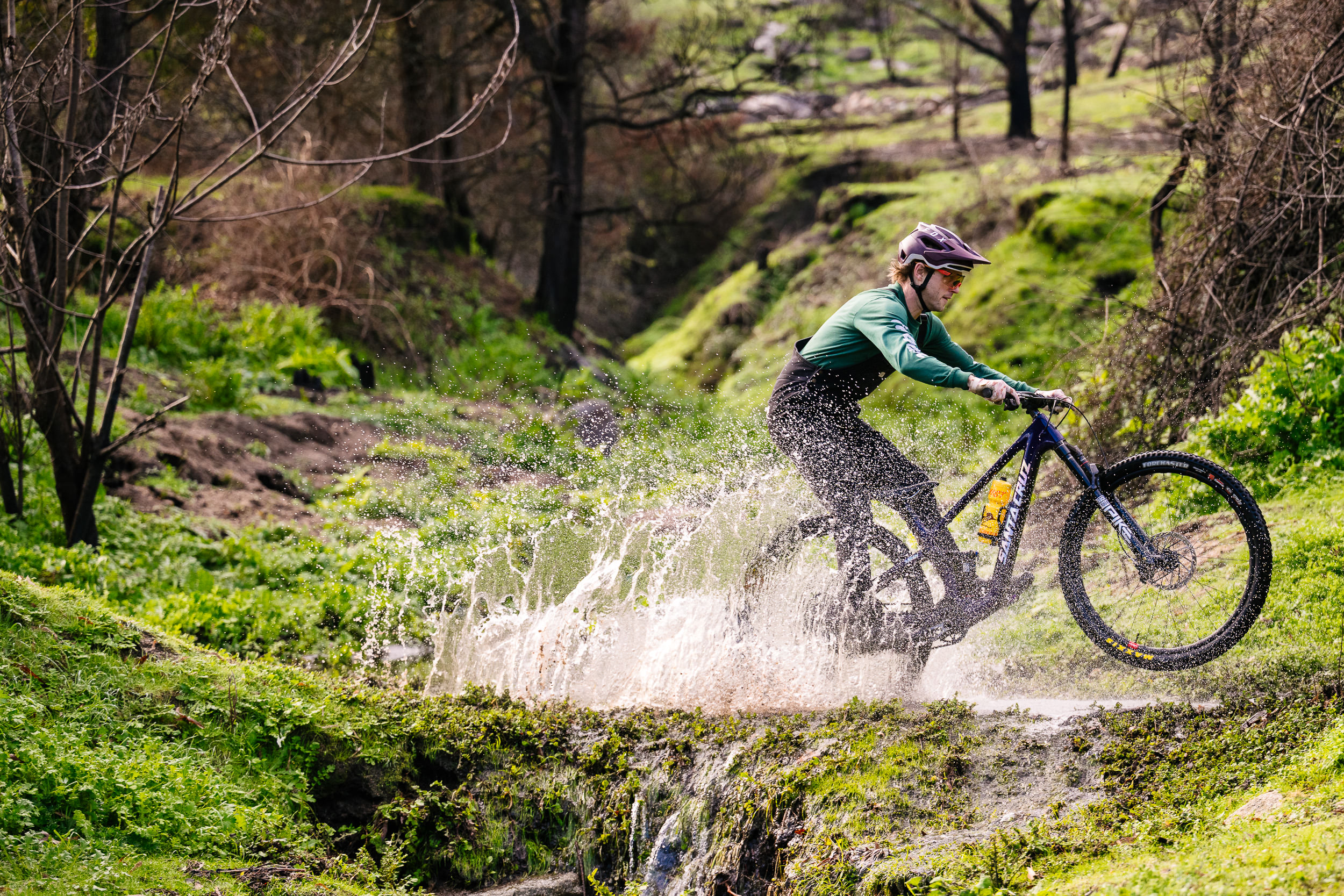 The new Santa Cruz Tallboy has been a breath of fresh air amongst the recent tidal wave of Avinox releases. How good are lightweight trail bikes!
Santa Cruz Tallboy Overview
The new Santa Cruz Tallboy 6 is a lightweight 29er trail bike that’s equipped with a 140mm travel fork and 130mm of rear travel. It’s designed for long pedally rides, covering everything from blue flow trails through to techy black diamond singletrack.
If you want something lighter and sharper for XC racing, look towards the Blur. If you’re after a squishier bike for sending it on bigger descents and rougher terrain, consider the Hightower. The Tallboy aims to strike a middle-ground, offering sufficient capability while keeping things light and peppy.
The frame is a full-carbon affair, save for a chunky alloy rocker link that drives the trunnion-mounted shock. Whereas the previous Tallboy 5 was offered in C and CC variants, the Tallboy 6 is only manufactured using the higher-end CC carbon. Whether you buy the cheapest or most expensive model, both feature exactly the same frame.
Thanks to the simplified layout, the new chassis boasts a weight saving of 300-580g over its predecessor. In a world where many trail and enduro bikes have steadily been getting heavier, that’s refreshing.
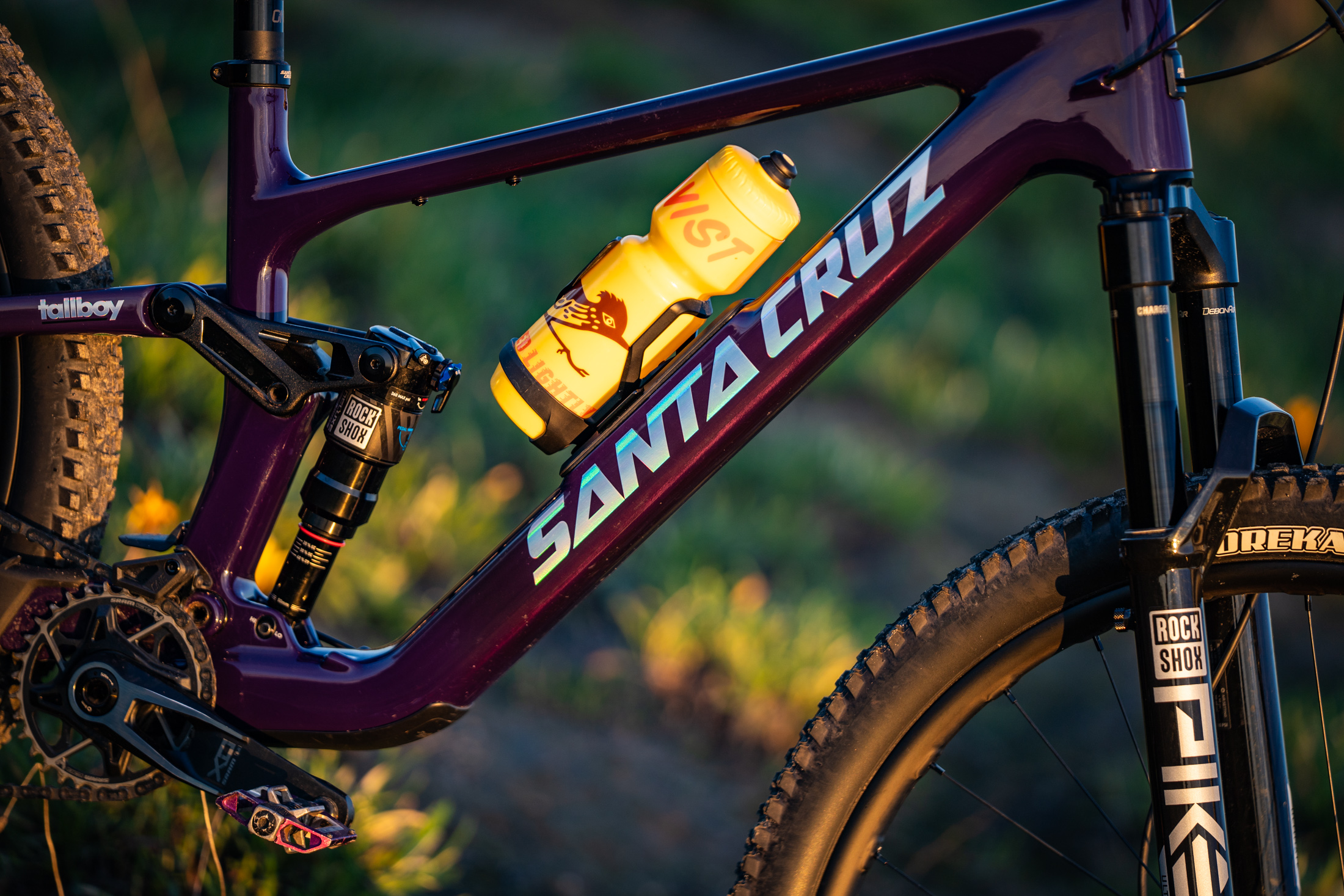 Built exclusively with premium CC carbon fibre, the Tallboy 6 drops 300-580g over its predecessor.
Why No VPP?
According to the development team at Santa Cruz, the main driver for moving the Tallboy away from VPP was the leverage curve.
The previous Tallboy 5 was a very progressive bike with a high starting leverage rate. That made it soft off-the-top, with support ramping up significantly through the travel. Good for hard-charging riders hitting big jumps, but less ideal for floating over rough terrain. It also featured a lot of anti-squat to ensure it still pedalled well, though that came with increased chain-growth and the associated drivetrain feedback.
To address those drawbacks, the goal for the Tallboy 6 was to engineer a more neutral and consistent suspension kinematics. However, the team realised they’d already squeezed as much juice out of the short travel VPP platform as they could. Short links are inherently rampy, and there was only so long they could make them before running into issues with excess weight and stretched-out chainstays.
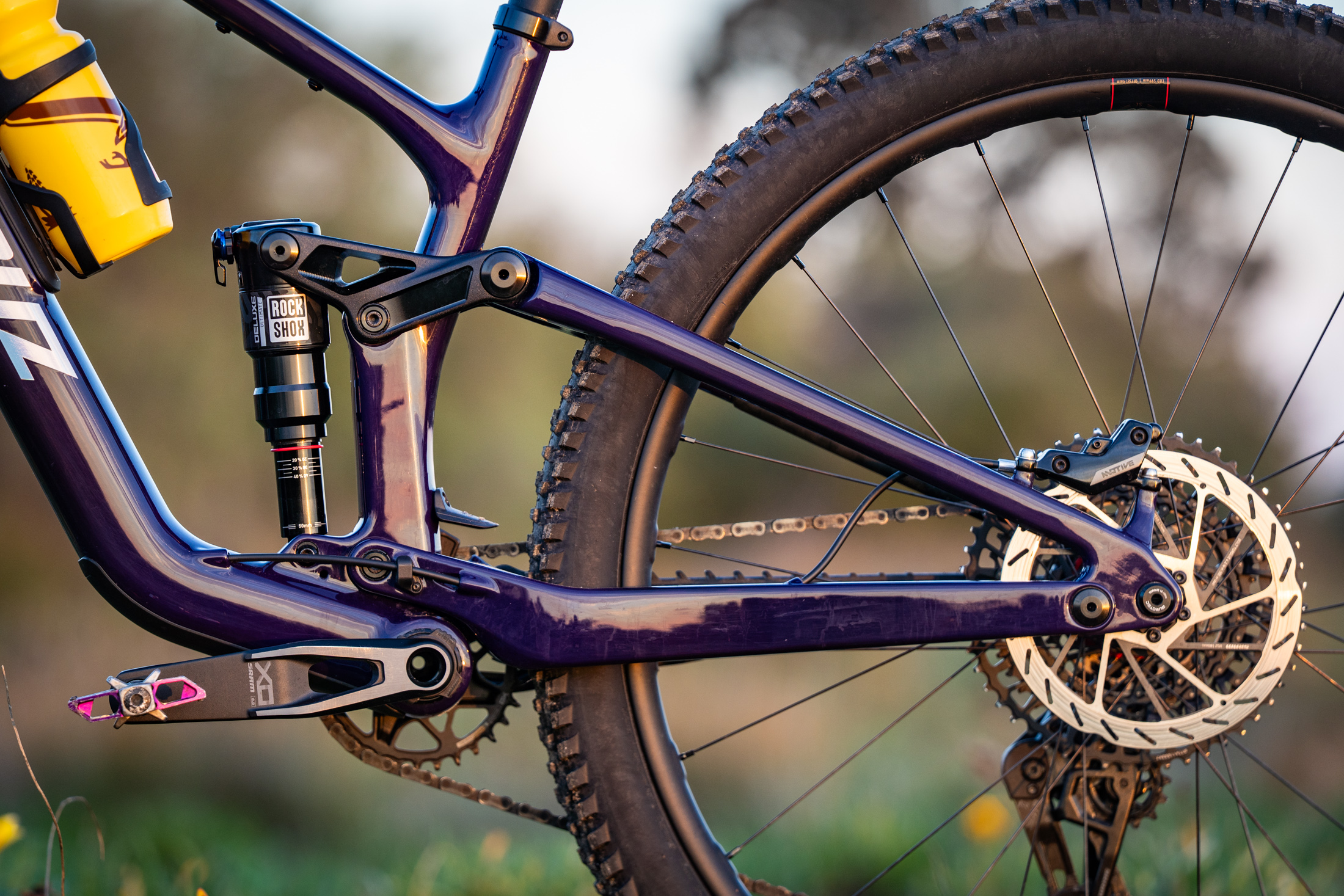 Santa Cruz built several mules and numerous rocker links to perfect the kinematic of the Tallboy’s four-bar platform.
Having already developed a four-bar design for the motorised Vala and Bullit, the team decided to try it out on a Tallboy prototype. A second mule was also developed around a single pivot flex-stay design, kind of like a longer travel Blur. While the flex-stay bike was considerably lighter, the team realised within the first ride that the four-bar would be the way to go. Not only could it mellow out the leverage rate, it also allowed for significantly reduced anti-squat and anti-rise, making the suspension less impacted by pedalling and braking forces.
Of course not all four-bar platforms are created equal, with small changes in pivot placement having a noticeable impact on suspension performance. The team continued dialling in the Tallboy’s kinematics, creating some 20 different rocker links to test out various leverage curves before they were happy.
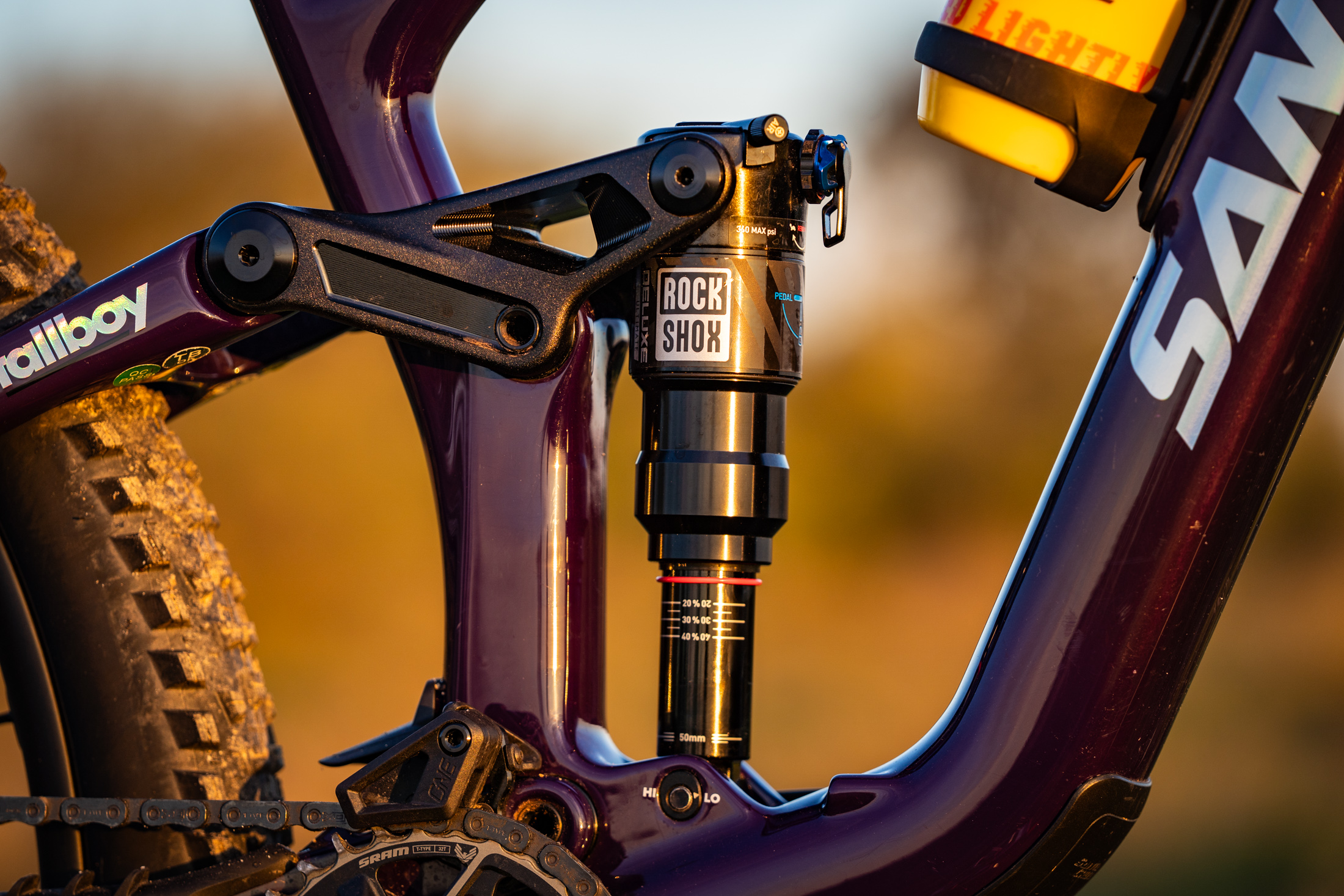 Every Tallboy model gets a RockShox Deluxe shock with some special sauce on the inside.
Special Shock Sauce
To match its new suspension layout, the Tallboy comes with a unique RockShox Deluxe. Santa Cruz has long been known for custom-tuning shocks to suit the kinematic of its bikes, though this time it went a step further.
During initial testing, the in-house suspension team encountered oil flow limitations with the Deluxe’s high-speed rebound circuit. With the aim of improving responsiveness, the team worked with RockShox to develop a custom high flow piston, along with tailored compression and rebound valve stacks.
On top of that, they also dove into the Linear XL air can. By enlarging the communication holes between the outer sleeve and main positive chamber, it’s claimed to reduce hysteresis and improve overall bump performance consistency. While currently unique to the Tallboy, that particular update will trickle through to production shocks.
It isn’t usual for a bike brand to bring about a structural improvement to a suspension product, and it says a lot about the effort that Santa Cruz is willing to go to in order to achieve its desired ride quality.
Geometry & Size Chart
While many brands only offer four sizes, the Santa Cruz Tallboy is available in six. No doubt this adds to the development and manufacturing costs, but it also makes it more accessible to a wider range of riders.
The only adjustment you’ll find is a two-position flip chip at the lower shock mount. Bikes come from the factory in the Low setting, which delivers a 64.8° head angle, a 76.3° seat angle and a 335mm BB height.
Switching to High will steepen the angles by just 0.3° and lift the BB 3mm. Given the somewhat inconsequential change on paper, I was surprised to notice the difference. Santa Cruz suggests the High setting is beneficial for climbing performance and I’d have to agree. You get a skosh more pedal clearance and a bit more weight over the front wheel, which is handy for whipping through tight corners across lower-angle terrain. You only need a 6mm hex key to flip the chip, making it easy to try out mid-ride.
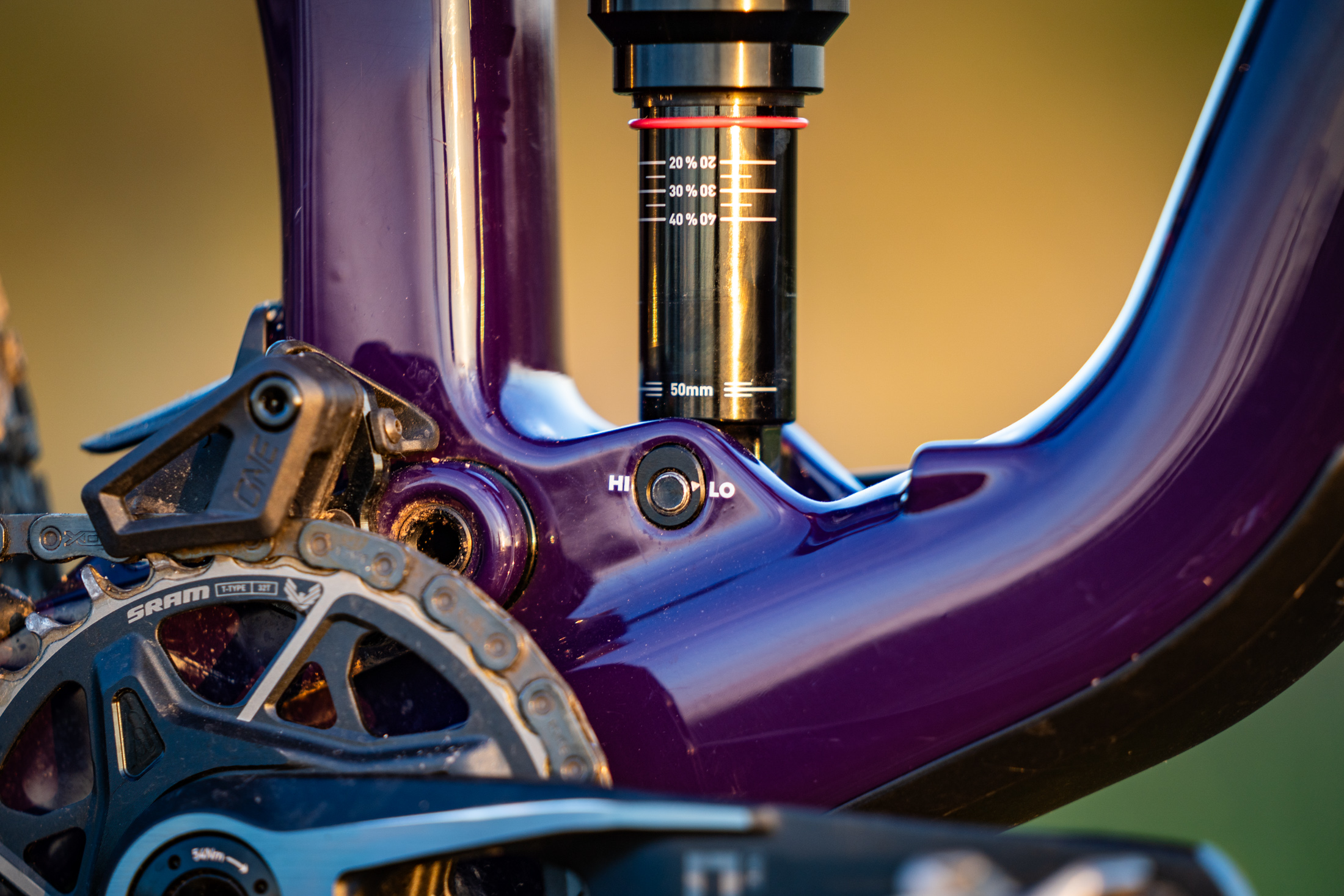 The Tallboy comes set up in the Low position, giving you the option to increase the BB height and steepen the angles with the High setting.
Of note, the Tallboy features different rear centre lengths throughout the size range. Starting at 435mm on the XS and ending at 444mm on the XXL, it isn’t a huge variation, but it should add some stability for taller riders without making things too front-heavy.
Santa Cruz achieves this lengthening effect not with different chainstays, but by modifying the pivot locations on the front triangle. As well as having unique pivot placement and geometry, each front triangle is unique from a stiffness perspective. Santa Cruz tailors both the layup and tubing diameters on each size to achieve the desired strength and stiffness values based on the expected rider weight.
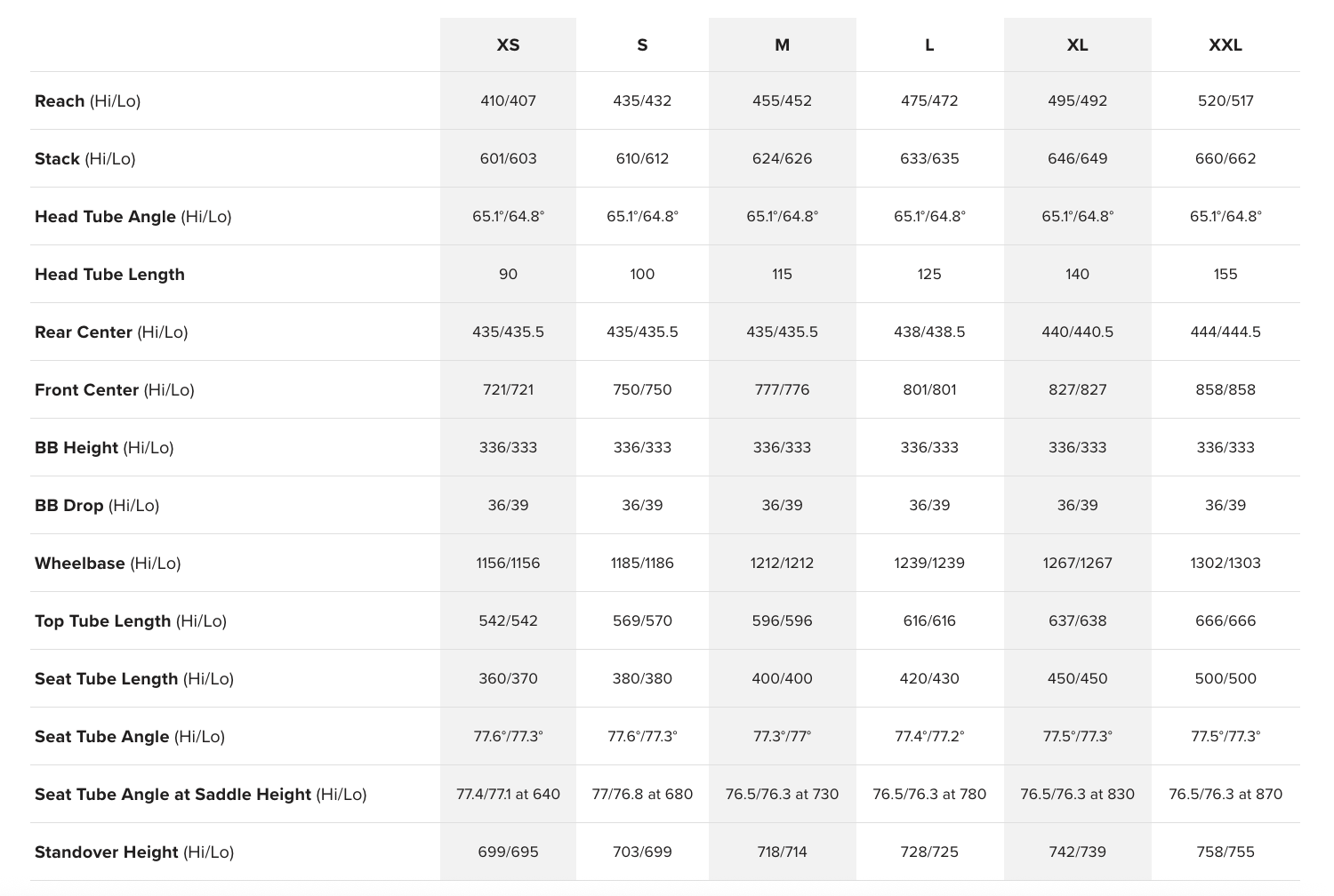 Santa Cruz Tallboy Geometry & Size Chart
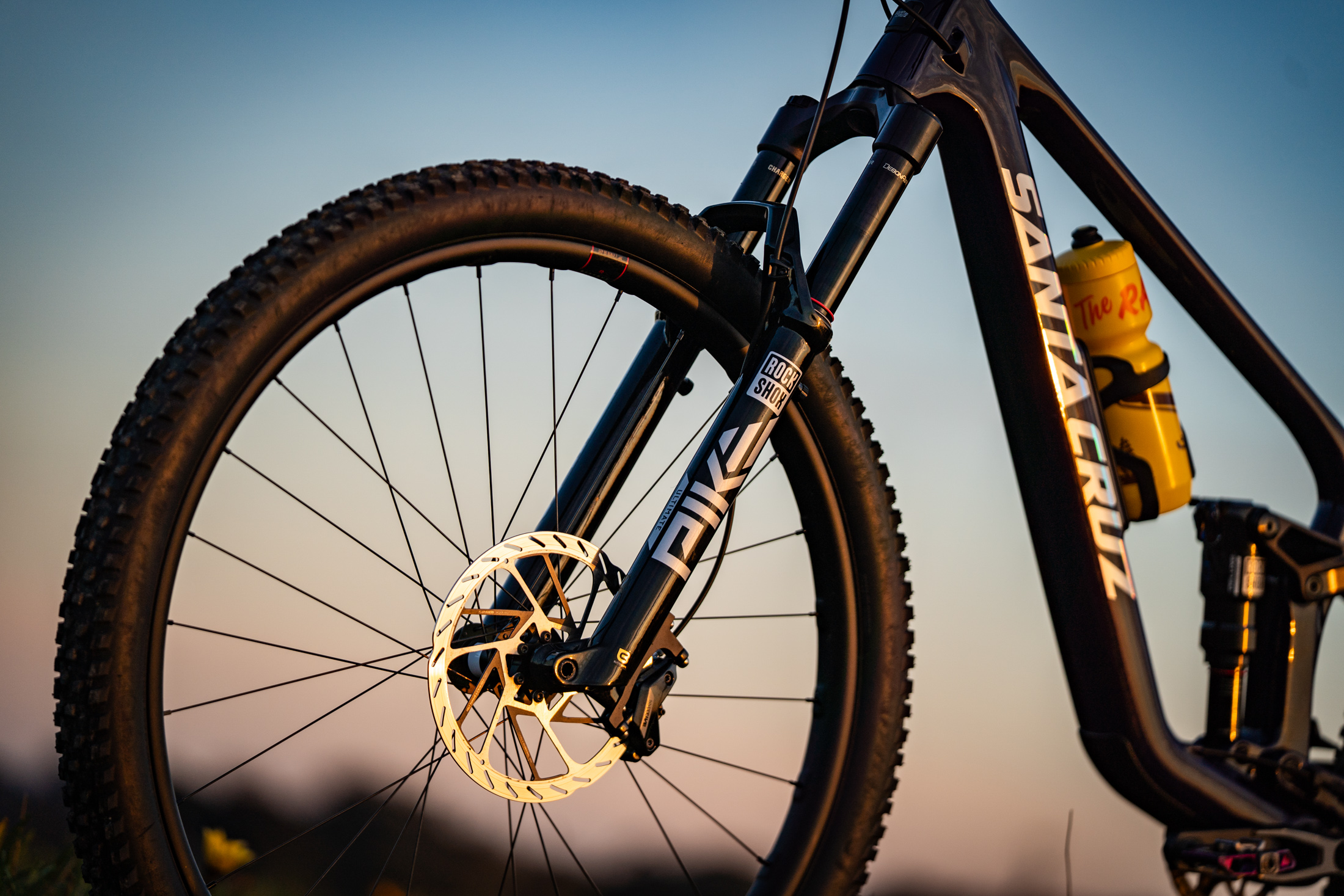 A 140mm travel RockShox Pike comes on the front of every Tallboy model.
Price & Specifications
There are five models in the Santa Cruz Tallboy lineup with prices starting at $7,699 AUD. Check out our first look article for specs and pricing of the full range.
As mentioned earlier, every Tallboy features exactly the same CC carbon frame. There is no longer a cheaper ‘C’ carbon variant, and Santa Cruz also says there are no plans for an alloy frame either. Boo!
Regardless of price, each Tallboy comes with a RockShox Pike and the custom-tuned Deluxe. They all get the same Maxxis Forekaster tyres, SRAM Motive or DB8 brakes, and a very similar cockpit setup. So, while our test bike is the high-end X0 AXS RSV model, much of the on-trail experience will translate to the cheaper builds.
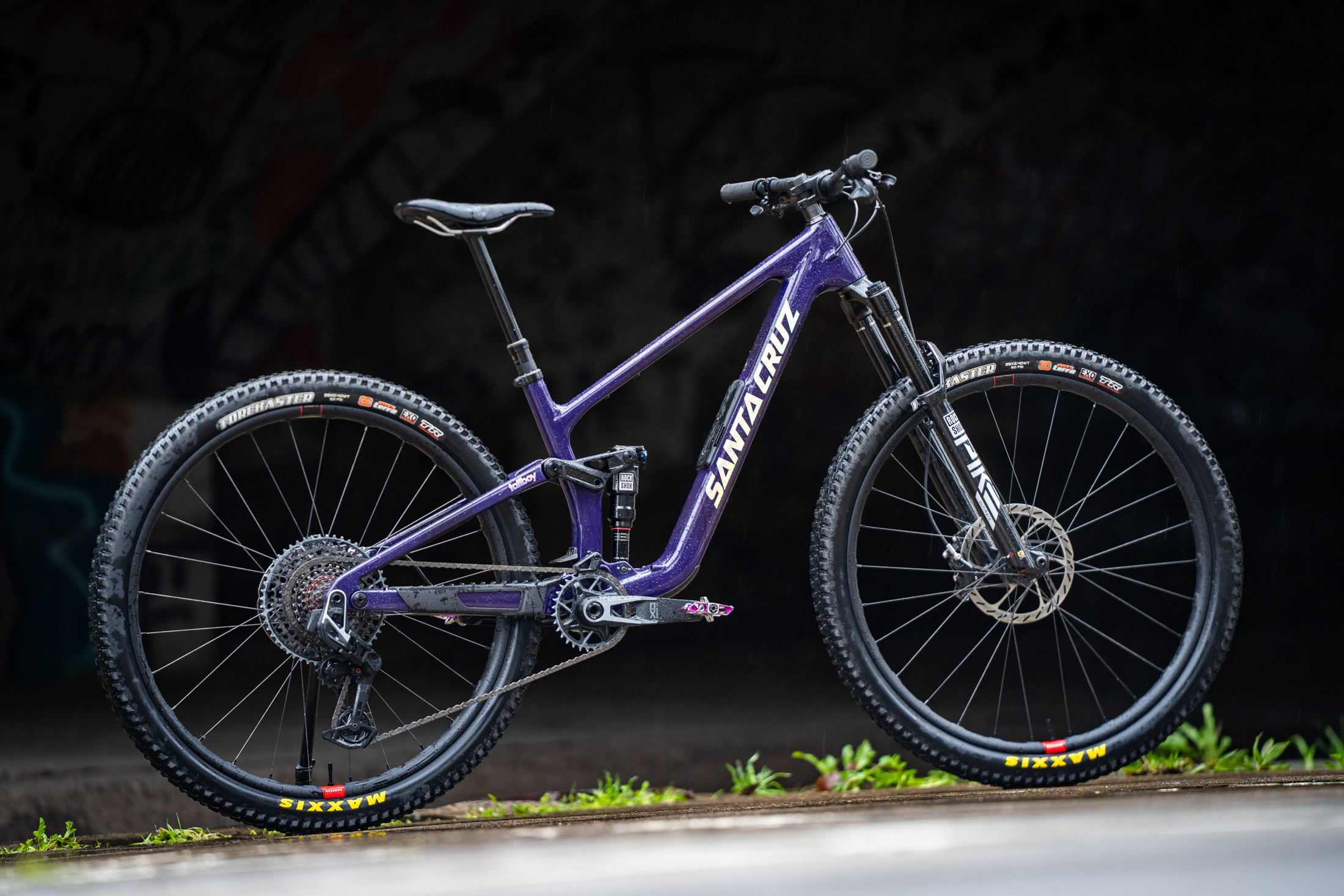 Our test bike is the top-end Tallboy CC X0 AXS RSV.
Frame | CC Carbon, Four Bar Suspension Design, 130mm Travel
Fork | RockShox Pike Ultimate, Charger 3.1 Damper, 140mm Travel
Shock | RockShox Deluxe Ultimate, 185x50mm
Wheels | DT Swiss 350 DEG DF Hubs & Reserve 30|SL Carbon Rims
Tyres | Maxxis Forekaster EXO MaxxTerra 2.4in Width
Drivetrain | SRAM X0 AXS Transmission 1×12 w/32T Crankset & 10-52T Cassette
Brakes | SRAM Motive Silver 4-Piston w/200mm Front & 180mm Rear HS2 Rotors
Bar | OneUp Carbon V2, 760x20mm (XS-M), 800x35mm (L-XXL)
Stem | Race Face Turbine SL, 40mm Length
Grips | Santa Cruz House Grips
Seatpost | OneUp Dropper, 31.6mm Diameter, Travel: 120mm (XS), 150mm (S), 180mm (M), 210mm (L-XL), 240mm (XXL)
Saddle | WTB Silverado Medium Fusion, CroMo SL
Claimed Weight | 13.24kg
Confirmed Weight | 13.28kg (Medium, Tubeless, No Pedals)
Price | $13,499 AUD
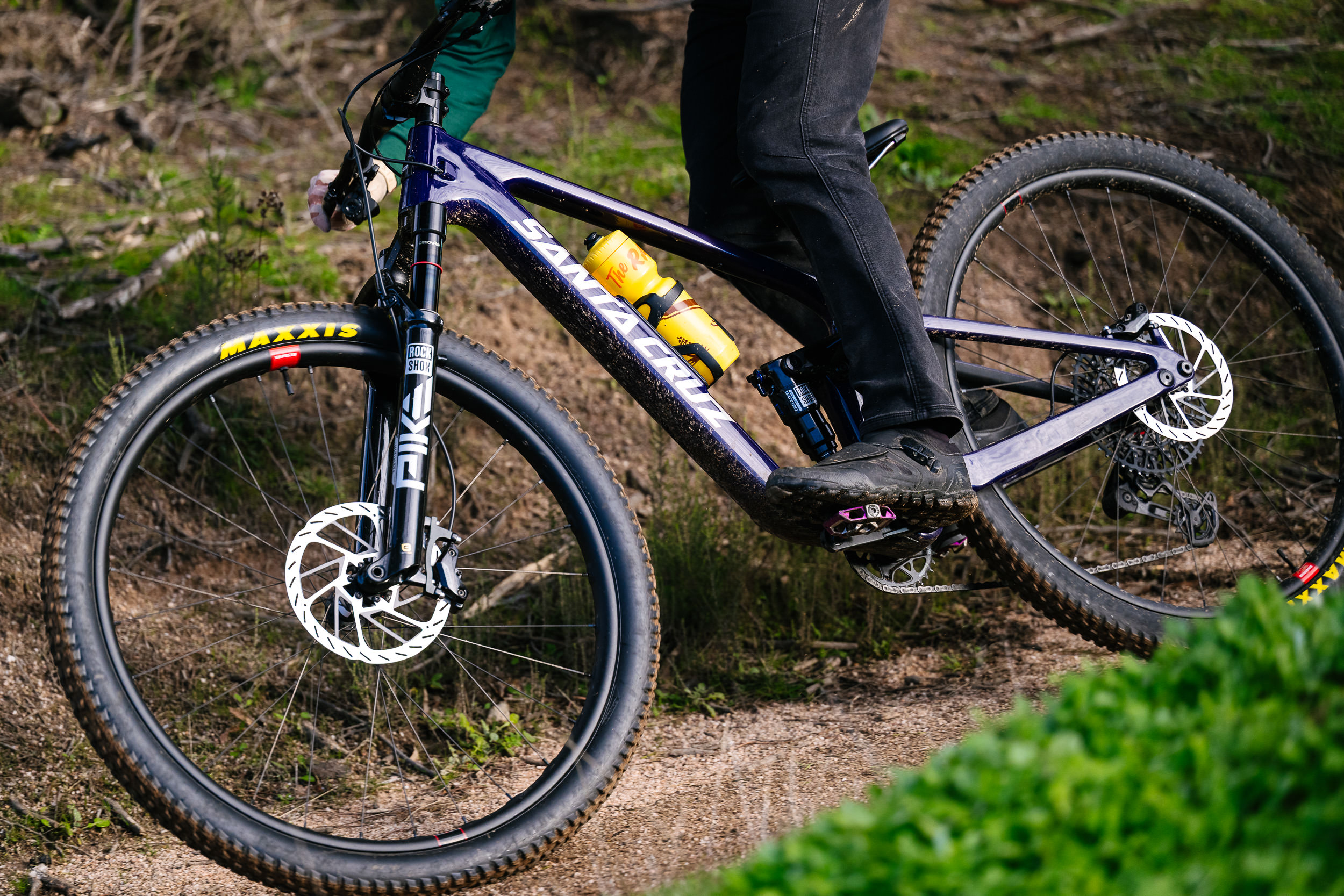 At 174cm tall, Wil elected for the Medium size.
Sizing & Fit
I’ve been riding a Medium size Santa Cruz Tallboy to suit my height of 174cm. It’s a great-fitting bike with geometry and proportions that are contemporary, without being over the top.
Of note, Santa Cruz lists the effective seat angle for each size based around a specific saddle height. Short legs mean my saddle height is a bit lower than average for a Medium, which steepens the seat angle to a touch over 77° according to my measurements.
The 455mm reach is on the money, while the generous 624mm stack is quite tall for a trail bike. It makes for a roomy cockpit with a comfortable and centred riding position.
Kudos to Santa Cruz for sticking to a normal headset and spacers, which makes it simple to dial in the stem height. Furthermore, the Race Face Turbine SL can be flipped to provide you with 6mm more stack height to play with.
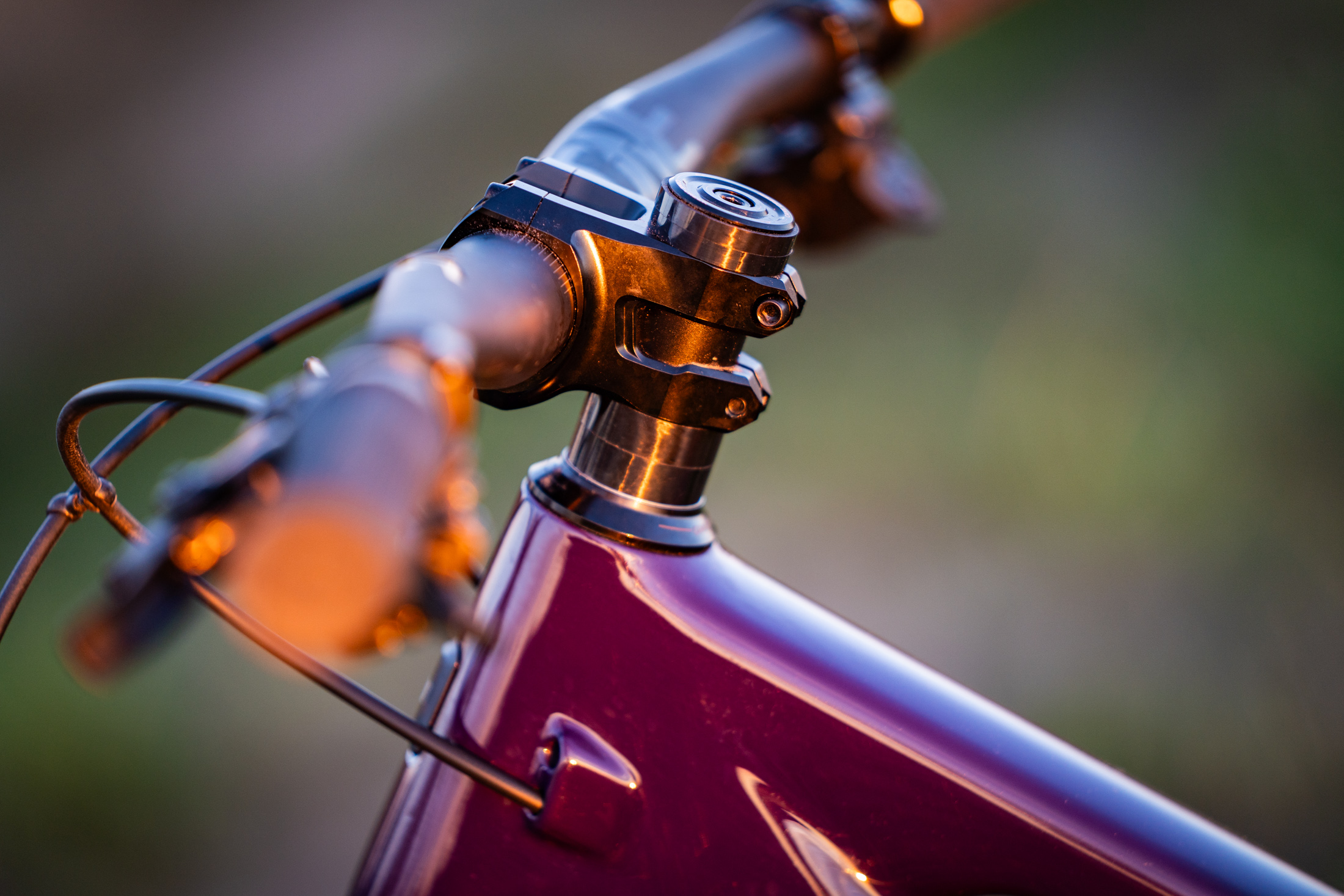 A flippable Race Face Turbine SL stem and normal headset spacers gives you useful adjustability.
I love that the Medium and smaller sizes come with a 760mm wide handlebar as standard. That negated the need to bust out a hacksaw, and it meant I could enjoy the OneUp bar’s vibration-damping qualities to the fullest. Hot tip – I’d recommend checking out the OneUp installation guide when aligning the bar with the stem faceplate. I ended up rolling the bar backwards to position the sweep in-line with the bike’s head angle. It’s more roll than I would normally go for, but it feels great.
Thumbs up also for the Santa Cruz grips with their soft compound, textured pattern and slight inwards taper. The WTB saddle is less to my personal tastes, though, being a professional, my bum made it work. It did develop a loud creak partway through testing though, which has been annoying on an otherwise quiet bike.
It’s great to see a 180mm dropper post on the Medium, which wouldn’t have been possible for me on the previous Tallboy with its interrupted seat tube and shock tunnel. There is a heap more insertion depth available on the new frame, to the point where I could easily fit a 200mm dropper. Nice!
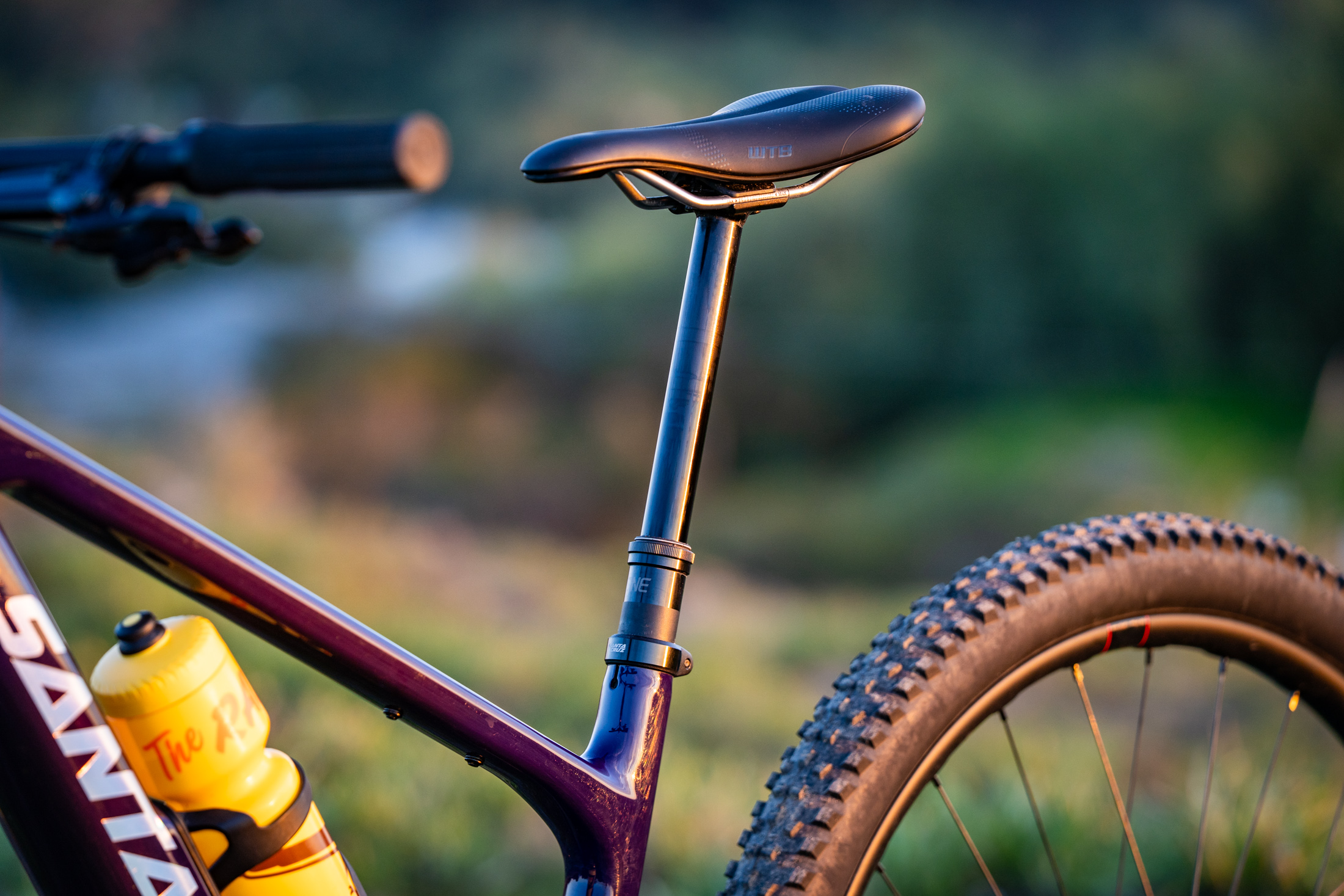 A 180mm dropper post with room to go even longer.
Suspension Setup
The Santa Cruz suspension calculator is a fantastic resource that gives you a solid starting point when setting up the fork and shock.
To suit my riding weight of 70kg it was recommended I air up the Deluxe with 163psi to hit 30% sag. Rebound was set at 6/10 clicks, which felt quite slow while bouncing around the carpark. This is due to the digressive nature of the rebound tune, which opens up at higher shaft speeds and allows the shock to flutter through the rough stuff. So, before you reach for that dial to speed things up, I’d implore you to give the Santa Cruz settings a go for a few rides.
You get a two-position lockout lever on the Deluxe shock, and the Ultimate level version on the higher-end Tallboys also gets a three-position low-speed compression adjuster. However, it’s worth noting that the shock internals are exactly the same regardless of the model. They all feature the Linear XL air can too, with five volume spacers (four in the eyelet and one in the outer sleeve) fitted from the factory. There’s room for up to eight in total, giving you plenty of options for tuning progression in either direction.
For the Pike, Santa Cruz recommends a higher pressure than RockShox (76psi vs 67psi). This is consistent with our experience of the Vala and Bullit, where support is prioritised over outright comfort. In this instance, having experimented with the 9psi range, I ended up going back to the Santa Cruz setting. While initially a bit firm, the ride quality improved as the Pike bedded in, and I found I preferred the taller ride height.
Rebound was set halfway (9/18 clicks) and I left both the low and high-speed compression adjusters in their neutral position (0).
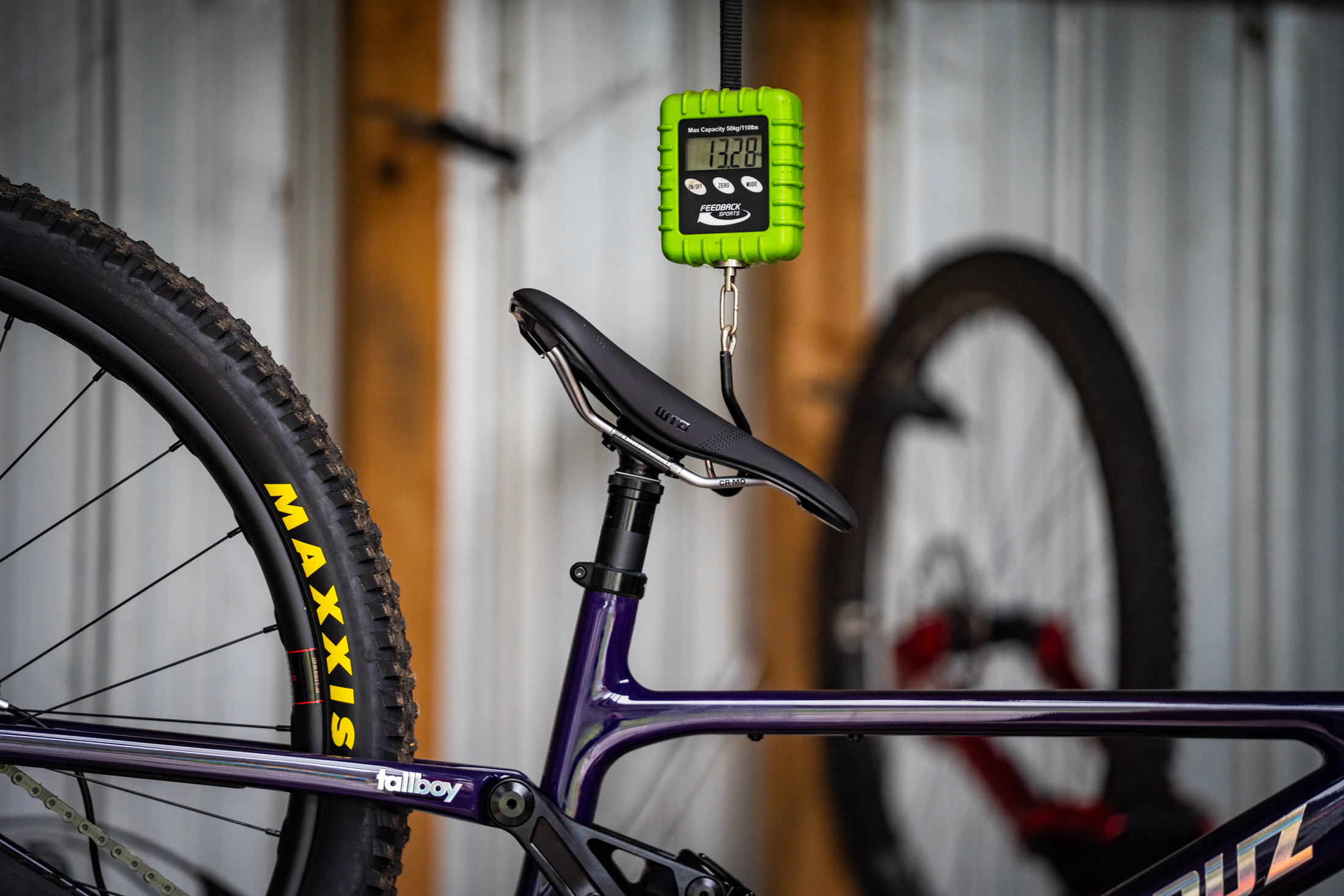 Without pedals and the tyres setup tubeless, our Tallboy test bike weighs in at 13.28kg.
Weight
Our Santa Cruz Tallboy test bike weighs in at 13.28kg (without pedals and with the tyres set up tubeless), which is pretty good for a trail bike that’s as capable as this.
Claimed frame weight is 2,530g including the shock and hardware, which is very similar to the Trek Top Fuel and Pivot Trailcat SL. For some further context, here’s how it compares to the previous Tallboy 5 and the shorter travel Blur;
Blur 4 CC – 1,855g
Blur 4 C – 2,054g
Tallboy 6 CC – 2,530g
Tallboy 5 CC – 2,830g
Tallboy 5 C – 3,110g
 As modern trail and enduro bikes continue to get heavier, it’s nice to see the Tallboy bucking the trend.
Santa Cruz has put together a good mix of components that prioritise performance where it counts, without being too porky. The bulkiest item is the Pike, which tips the scales at 1,900g. If you wanted to shed some grams, a Fox 36 SL Grip X fork weighs less at 1,750g.
The Reserve 30|SL wheelset comes in at around 1,700g, and the Maxxis Forekasters weigh 940-950g each. The EXO casings will raise eyebrows amongst heavier riders and those coming from a gravity background, but they sure do add some zip.
To reduce the chance of pinch flats and rim damage, I fitted a CushCore Trail insert in the rear wheel. Tyre pressures varied from 20-21psi up front and 22-23psi out back.
 There aren’t a heap of options available in the 130-140mm travel space, making the Tallboy all the more exciting.
What do we dig about the Santa Cruz Tallboy 6?
There are a couple of things I want to acknowledge before diving into ride impressions.
Firstly, trail bikes in this travel range are totally my jam. The latest Top Fuel is a good example, and so too is the previous generation flex-stay Stumpjumper (which, funnily enough, has near-identical geometry to this new Tallboy). With slimmer forks, in-line shocks and faster-rolling tyres, they’re more suitable for longer map-crossing journeys compared to their bigger travel siblings, and really thrive at technical, fast-paced trail riding.
Unfortunately, there are fewer bikes in this category these days. Looking at Specialized for example, there is now a hefty gap between the 120/120mm travel Epic 9 and the 160/145mm travel Stumpjumper EVO.
Of course there are still options in that zone, such as the Ibis Ripley and Pivot Trailcat SL. Both of these are down-stroked versions of a longer travel variant (the Ripmo and Trailcat LT, respectively), which does present some compromises.
Two other well-known examples are the Transition Smuggler and Norco Optic. Like the Tallboy, these feature a dedicated chassis that isn’t meant to double-duty as a shorter or longer travel bike. It’s good to see brands committing to the category, and hopefully we’ll be more options arriving in the future, should this new Tallboy be an industry bellwether.
Secondly, it’s been about eight years since I last reviewed a non-motorised Santa Cruz. I don’t have much experience with the VPP suspension design, so I had few preconceptions coming into this test.
It’s true that the previous Tallboy 4 and 5 were something of a cult favourite. A lot of folks out there, Mick Ross included, really liked those bikes. With that in mind, I had high expectations coming into this test, especially given the radical redesign and associated public outrage.
Turns out the Tallboy 6 would be even better than I anticipated.
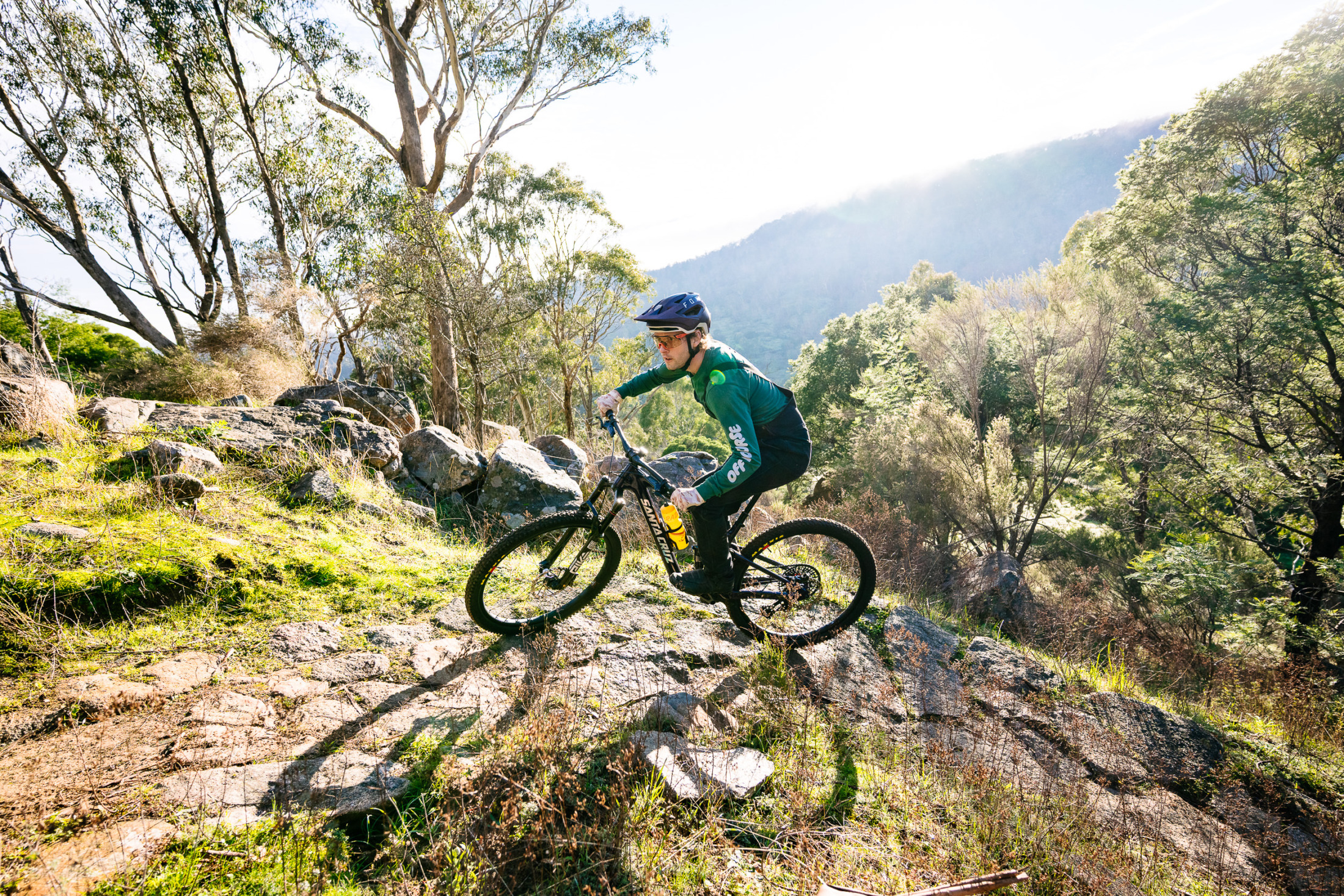 It’s no XC race bike, but the Tallboy is still a great climber.
Take me higher!
One of the reasons you’d be considering a Tallboy over the Hightower is its ability to carry you across longer distances.
Pedalling along, it feels suitably spry compared to its bigger travel brethren. The lower weight and fast-rolling tyres do a lot of the legwork here, but the suspension is also well behaved. No, it’s not as urgent as a flex-stay XC bike, and with the plush Pike up front it doesn’t goad you into leaping out of the saddle to hammer the pedals. The Tallboy generally prefers seated pedalling, and although there is a bit of shock movement during weight shifts, energy loss is mitigated effectively.
I’ll note here that while anti-squat has been reduced a lot compared to the Tallboy 5, it still sits over 100% at sag. This means chain torque will extend the shock slightly to prevent it from diving into its stroke, providing good response as your efforts increase. The efficiency was sufficient enough that I never bothered using the lockout lever, even on the road commute to and from the trailhead.
This can also be attributed to the lowered leverage rate, which starts at around 2.82 (compared to 3.05 on the old bike). This gives the shock more stability around the sag point and through the middle of the travel.
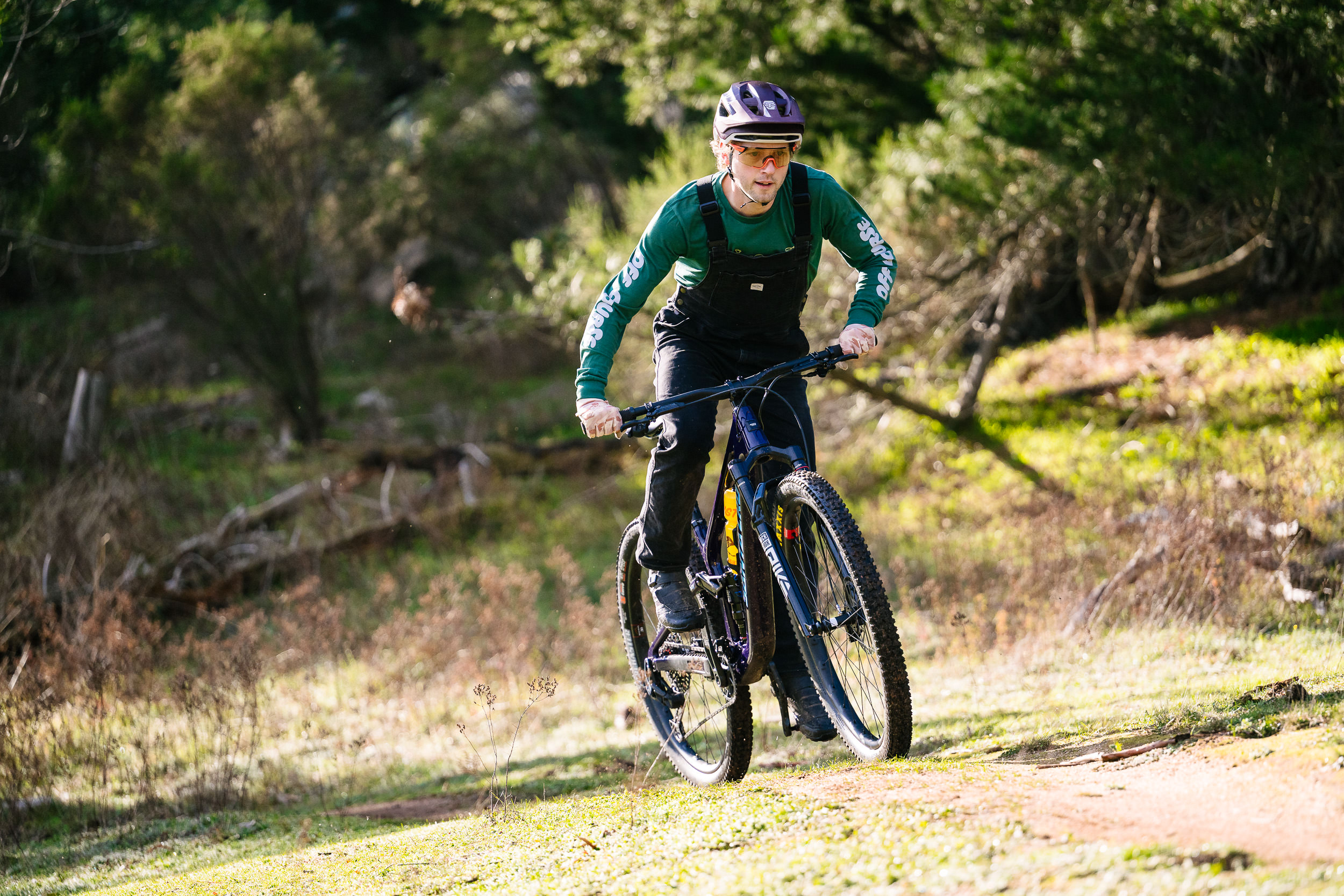 Shock movement is kept to a minimum, giving good response at the pedals.
Reactivity across rippled trail surfaces remains excellent, however. You’re presented with loads of grip when pedalling up technical climbs, with the positive anti-squat helping to drive the rear tyre into the ground.
Indeed it’s this active traction that makes the Tallboy a better technical climber than most XC bikes. It’s light enough to shimmy around and thrust over chunkier obstacles when needed, while being calmer and more planted overall. There is very little kick through the saddle during seated pedalling, with the shock’s slow rebound damping keeping the back end steady when thumping into rocks and roots.
More turbulent ascents have seen the occasional pedal strike, though not enough to be bothersome. If it were to upset you, flipping into the High geometry position is an effective way to achieve more ground clearance before going out and buying shorter cranks.
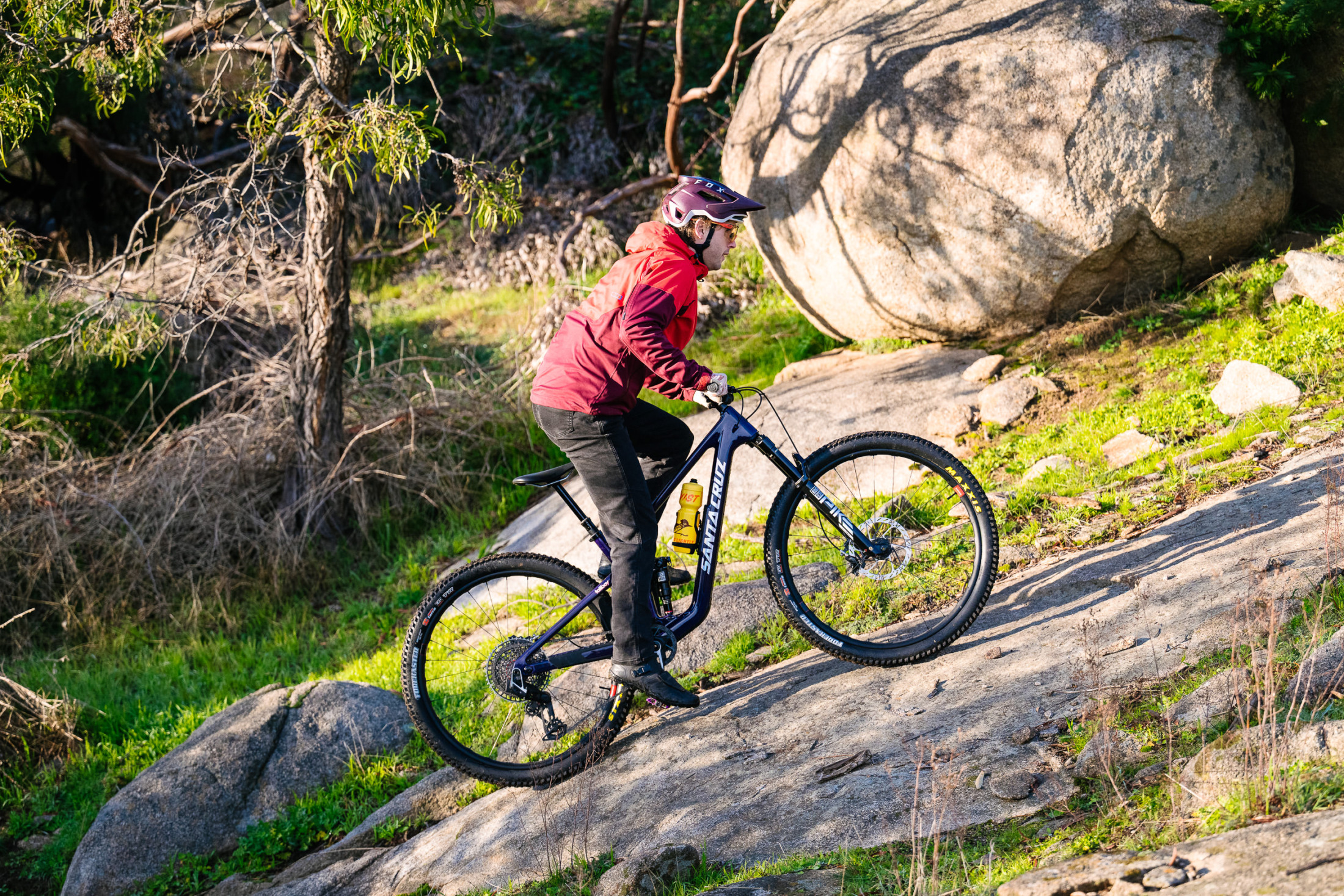 There’s a heap of grip on tap from the active suspension.
Getting down
Personally, I much preferred the Low position and the in-the-bike sensation it provides. It inspires more confidence and lets you really lean into the Tallboy’s descending capabilities.
That low-slung BB is accentuated by the tall and commanding front end, which makes it feel like you’re behind the bars rather than perched on top. As a result, I found it easy to push the front end since I wasn’t having to hinge over as far to the grips.
I also have to acknowledge the Pike, which is a brilliant little fork. It’s comfortable, easy to tune, and the stout 35mm chassis is a great match for the Tallboy. The higher pressure I settled on contributes a lot to the bike’s dynamic stability, though it remains sufficiently smooth and responsive to hoover up all manner of impacts. Combined with the neutral and active rear suspension, the Tallboy handles rough trails with ease.
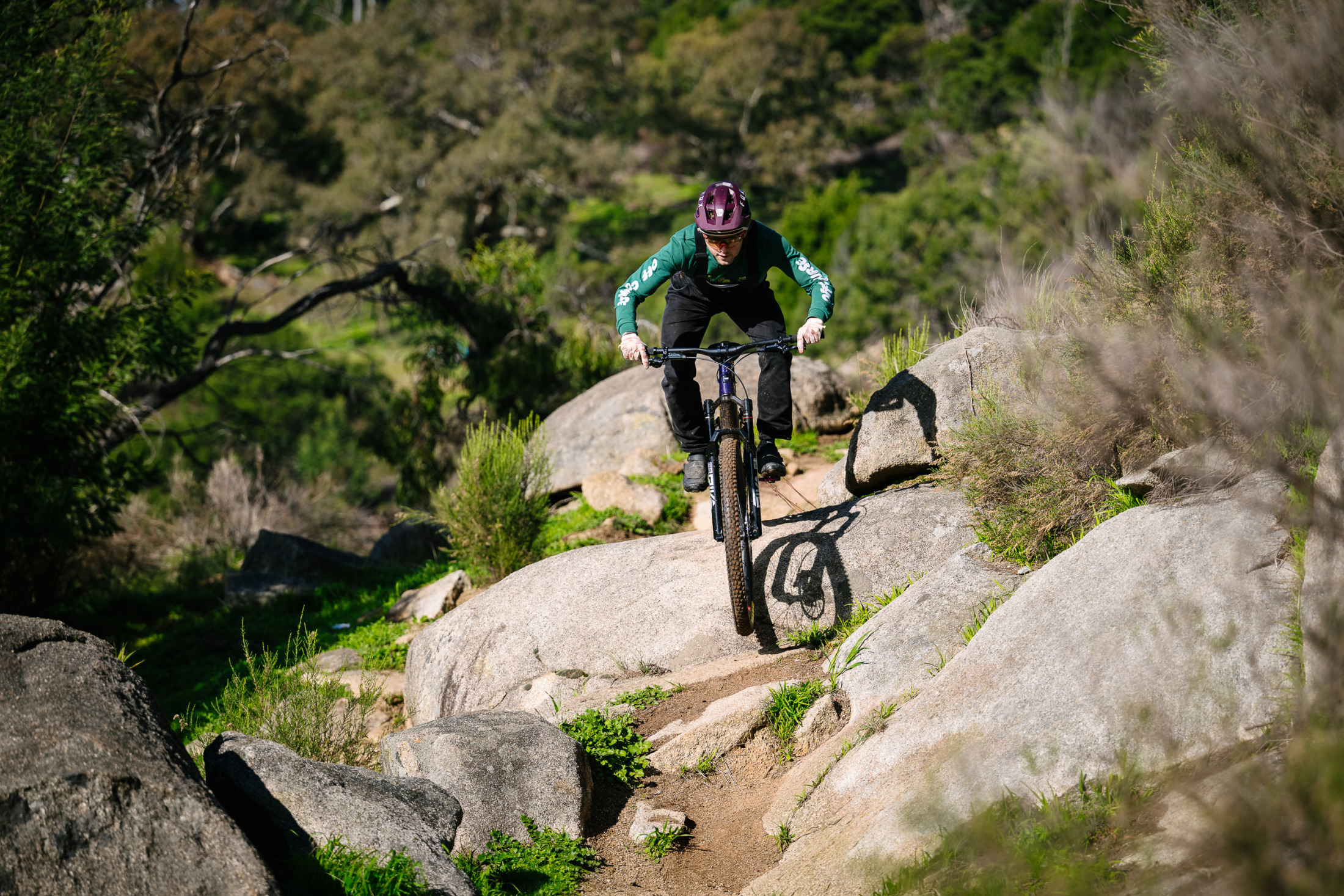 The balanced geometry and sensitive RockShox suspension inspires plenty of confidence on the descents.
On particularly bony chatter, there is notable compliance all-round. The low-profile Reserve carbon rims, supple EXO casing tyres and oval-shaped OneUp bars all contribute to overall vibration attenuation, as does the Tallboy frame itself. Santa Cruz states that rear end stiffness is basically the same between the Tallboy 5 and 6. However, the front triangle is considerably less rigid, which is very much deliberate. We’ve seen other brands moving in a similar direction as riders have come to the realisation that stiffer isn’t always better.
In the case of the Tallboy, that chassis compliance means it is surprisingly settled when careering across rocky off-camber lines. There is little harshness to speak of, allowing the tyres to maintain welcome grip on chunky terrain. Along with the balanced geometry, it makes for a stable ride that throws up few surprises.
That isn’t to say it’s a wet noodle, far from it. Indeed the Tallboy retains good pop and a spirited ride quality through banked twists and turns. It corners accurately and intuitively, with no need for exaggerated weight shifts to hold traction. Assume a central stance and it asks very little of you.
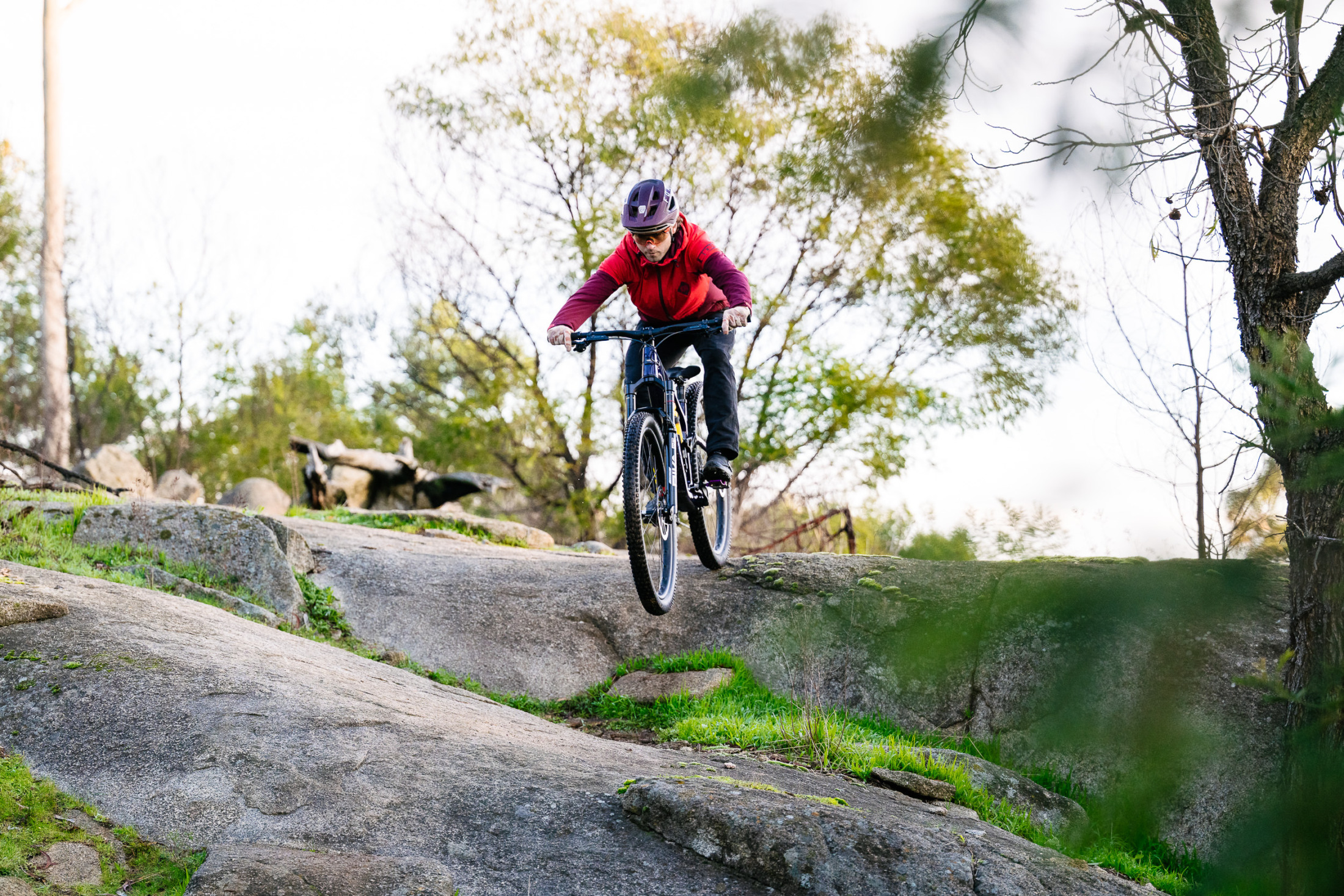
When getting airborne on feature-rich flow trails, there is loads of room to move about thanks to the long dropper post and low-slung top tube. The suspension gives you good output too, which is initially surprising given the slow feel in the carpark. Once calibrated, I had a blast hopping about and searching out imaginary transitions. It is a really fun bike to throw around.
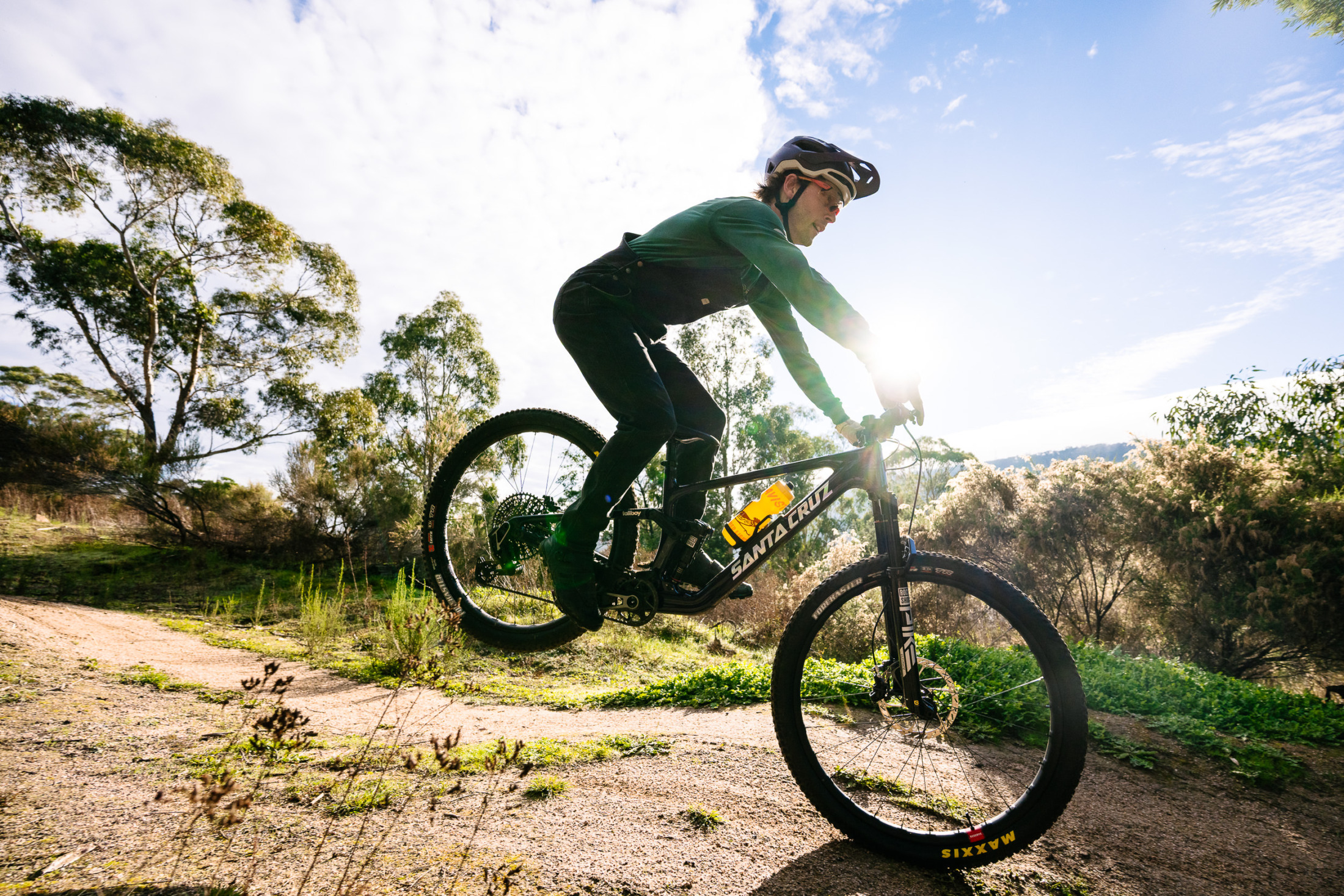 It’s got a load of pop to play with on flowy jump trails.
Any downsides?
It’s hard to criticise the Santa Cruz Tallboy for what it is, which is an absolutely killer trail bike.
Of course there is only so much you can ask of a 140/130mm travel suspension package. It is plush and there is loads of grip when the trail is loose and chunky, though big-energy impacts can be unsettling if your elbows and knees aren’t prepared for them. I did take the Tallboy on some pretty rowdy trails and subjected it to brutish landings that I’d normally be tackling aboard a 160/150mm All Mountain bike, such is the confidence it inspires. Indeed, on several of those occasions it’s left me pondering whether I really do need a bike with a Lyrik, Super Deluxe and DoubleDown tyres.
While a bit more travel would undoubtedly widen the margin for error, I’ve still been able to get down some very ugly sections of trail. Both ends of the bike handled it admirably, with the thick bottom-out bumper inside the Deluxe proving effective at eliminating any harsh metal-on-metal contact. If you did want more progression, there is room to fit additional volume spacers inside the Deluxe. It’s also worth noting that the Tallboy will accommodate a Super Deluxe or Float X piggyback shock, and the frame is rated for up to a 150mm travel fork.
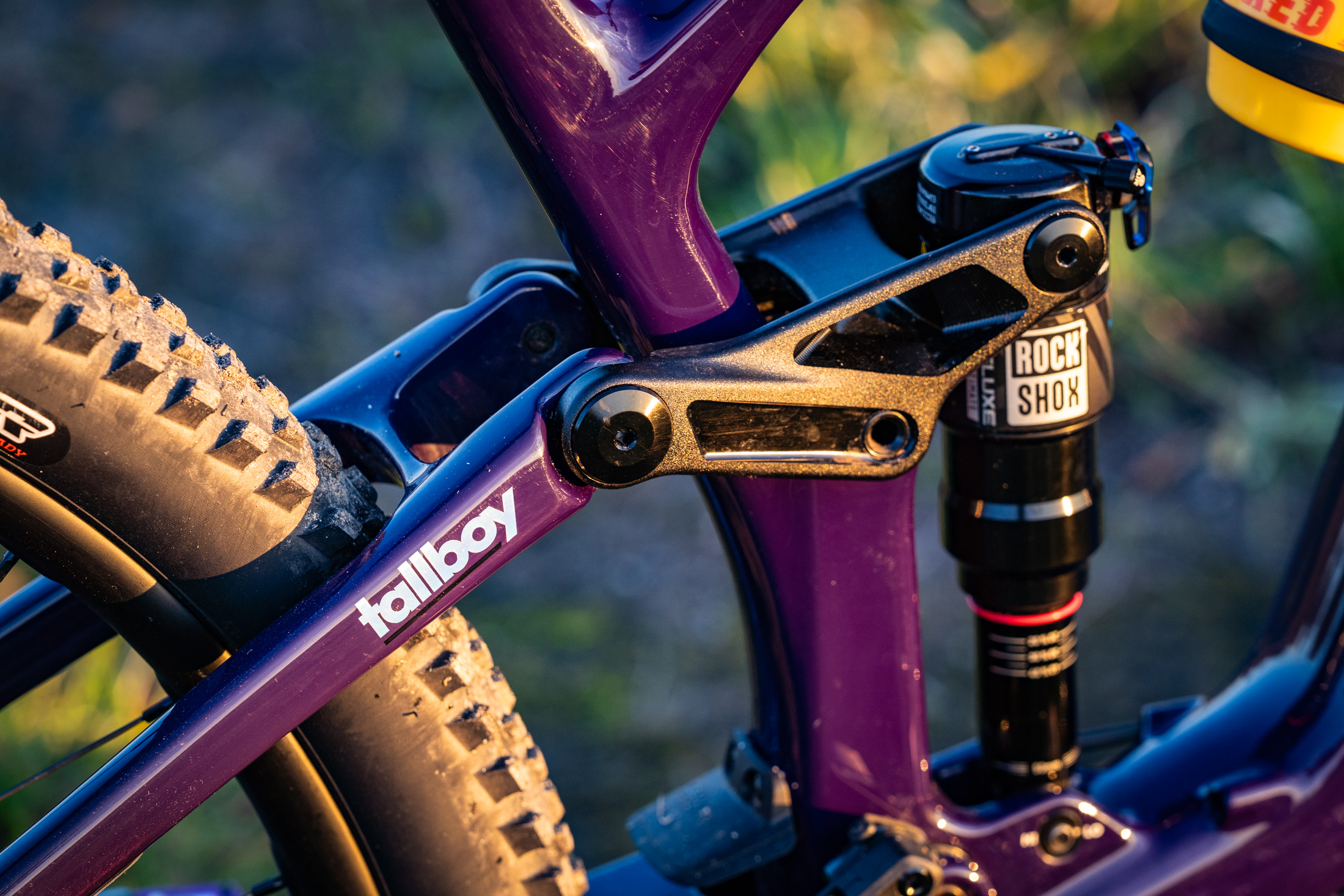 The Tallboy isn’t designed to work with a coil shock, and the 50mm stroke is as long as you should go – otherwise that seatstay bridge will come crashing into the back of the seat tube!
However, coil shocks are not recommended due to the lower leverage rate. And for those who are tempted to increase the shock stroke to 55mm and boost rear travel, Santa Cruz explicitly says do not do that. It could lead to the seatstay bridge crunching into the back of the seat tube at full bottom-out, so please just stick with the stock 50mm stroke.
I would say that if any of these ideas float your boat, you’re probably better off looking towards the Bronson or Hightower. You’ll get a cushier ride with a wider safety net that will be more suited to enduro-type trails and shuttling jump lines.
Speedy intentions
Personally, I like that Santa Cruz has kept the spec and weight in check on the Tallboy. It isn’t an overbuilt slug, and it retains a playful attitude on smoother and flowier trails.
On that note, I’ve actually been able to clear more jumps on the Tallboy compared to my personal Trek Fuel MX. It’s quite a bit poppier and the low-drag tyres accelerate quicker, allowing you to build speed more effectively in between lips and table tops. I’ve also been totally happy taking it on longer 4+ hour rides, which I’d be second guessing with the bigger bike.
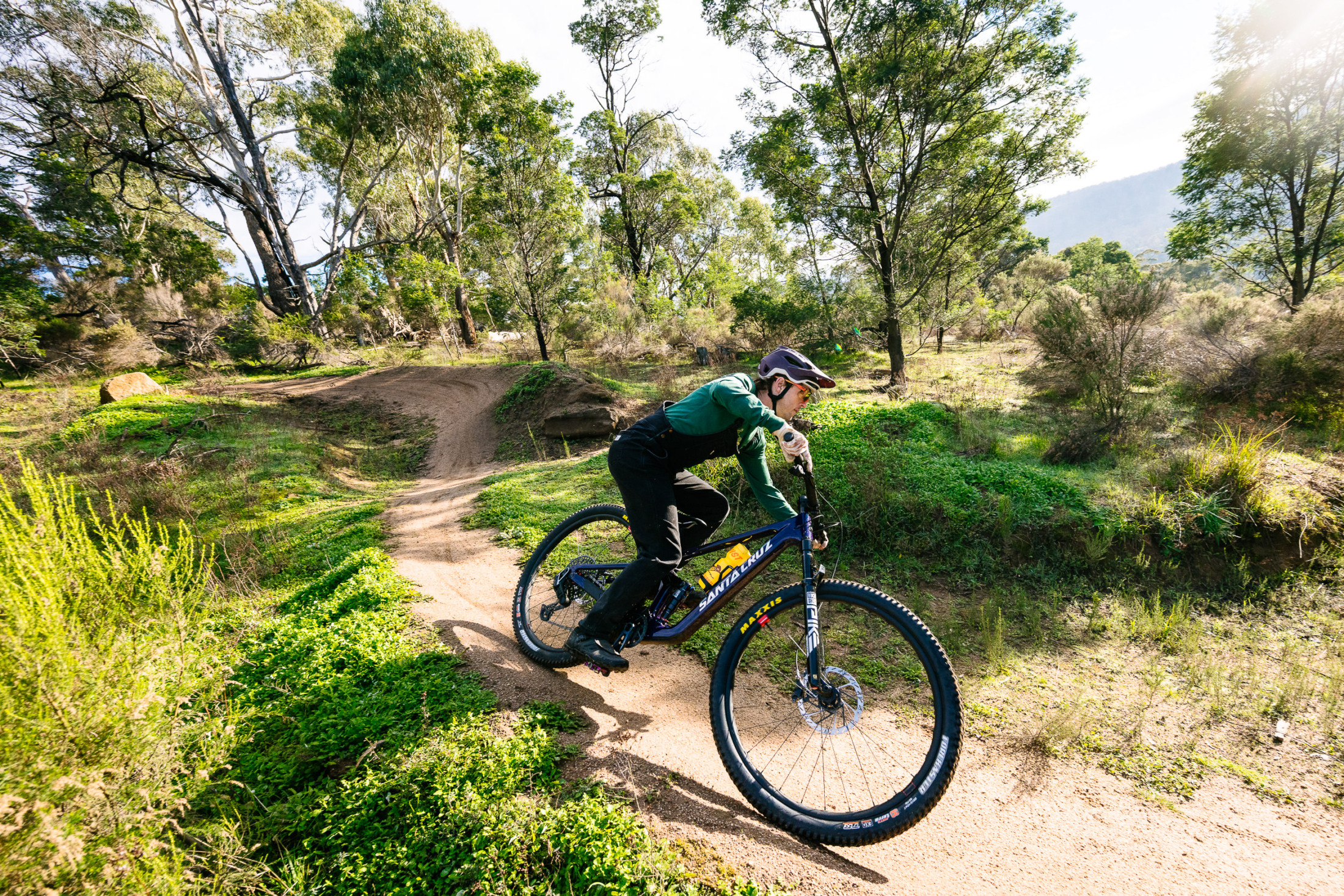 The low-slung geometry and grippy suspension allow you to slice and dice corners with ease.
For those who like to dabble in a couple of XC races a year, I’d say the Tallboy would be just fine, as long as you’re not bothered by the lack of a remote lockout. Swapping the tyres to a set of Rekon Race or Aspens would drop half a kilo of rotational mass to provide an even sharper turn of speed.
It is worth mentioning that Santa Cruz doesn’t recommend fitting a shorter fork as it would drop the BB too much. That rules out the 130mm travel Fox 34 SL for those who are eyeing off potential weight savings.
If that’s more your flavour then you’re probably in Blur territory anyway. As indicated above, the Blur CC frame is 675g lighter than the Tallboy, plus you’ll drop a fair chunk of weight with the shorter travel fork.
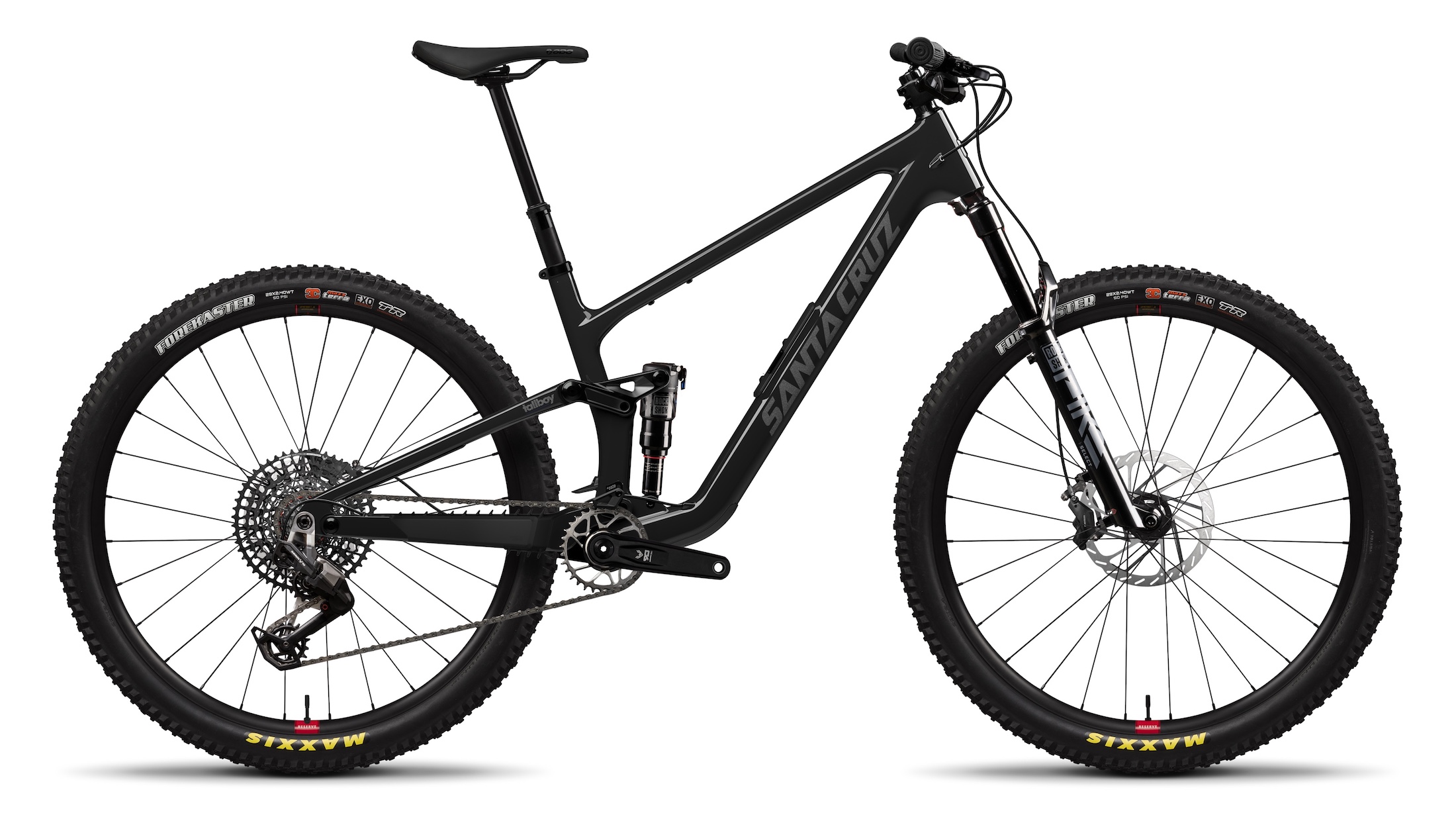 The Tallboy CC 90 looks like the value pick of the range.
Value for money
Out of the lineup, I reckon the Tallboy CC 90 offers the best bang for buck. At $8,799 AUD it’s quite a bit cheaper than our test bike, while featuring the same frame and custom-tuned Deluxe shock. The main differences are the DB8 brakes and cable-actuated Eagle 90 drivetrain, both of which perform really well in our experience. You’re still getting nice Reserve alloy wheels, a OneUp finishing kit, and a Pike Select with the Charger RC damper. It’s not that much heavier than our test bike at 13.97kg.
Measuring the Tallboy’s value against the competition is tricky because there just aren’t a lot of options currently available in Australia. Trek is reportedly out of Top Fuels, Norco doesn’t even list the Optic on its website anymore, and there’s no sign of the Transition Smuggler hitting our shores as of yet.
Giant doesn’t have anything that competes directly with the Tallboy, though there are options on either side. There’s the bigger and heavier Trance X, or the lighter and shorter travel Anthem X, both of which can be had at fairly competitive price points.
Given the trail bike category is looking a bit sparse at the moment, here’s hoping we’ll be seeing more brands re-entering this space in the near future!
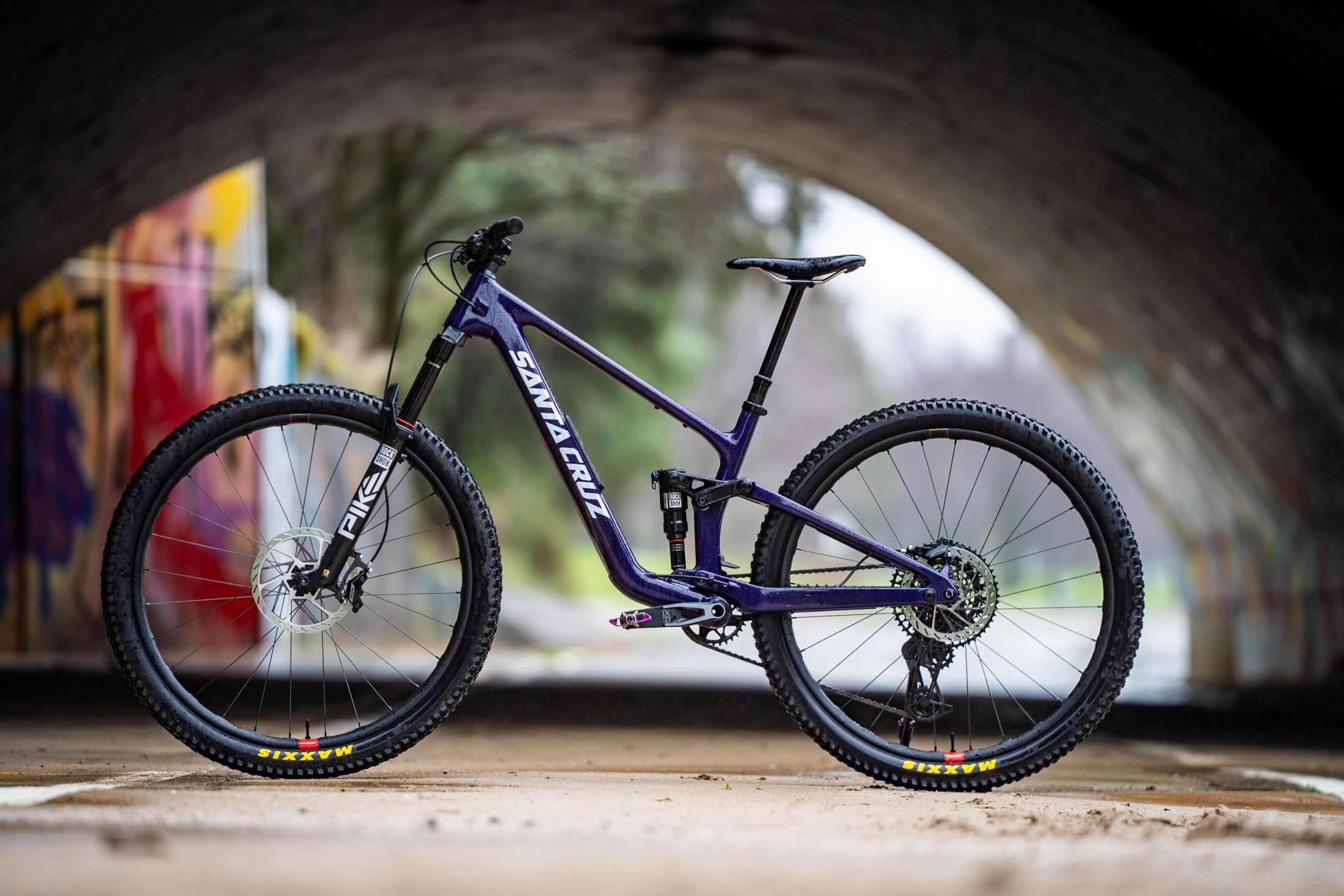 The component spec is well chosen, with few flies in the ointment.
Component Highs & Lows
Our Tallboy CC X0 AXS RSV test bike is a top quality package. Even the less visible components, like the Fillmore valves, Burgtec thru-axle and Cane Creek metal headset, show great attention to detail.
Aside from the creaky saddle, the only hiccup came from the X0 Transmission. This was shifting rough during the first ride, which was due to the chain being too long and the derailleur setup key having been oriented in the wrong position. Once corrected, it’s been flawless throughout testing.
From a performance perspective, the RockShox suspension is a standout. The Pike and hopped-up Deluxe work beautifully, they’re easy to tune on-the-fly, and the recommended settings from Santa Cruz are accurate.
I really like the SRAM Motive brakes too. The factory bleed was good, and after running through the usual piston massage procedure they’ve been solid and consistent from start to finish. They have a light lever feel and a consistent leverage rate that makes them totally intuitive. Santa Cruz also knows what’s up with the HS2 rotors and metal pads. There’s plenty of bite without overwhelming the tyres.
Speaking of, the Forekasters are a truly awesome XC tyre. They’re fast, predictable and they perform in a surprisingly wide range of conditions. The EXO casings keep them light and supple, though heavier folks and those bashing along toothy trails will likely want something more substantial. I’d be wary of going too beefy though, as I think you’d deaden some of the Tallboy’s magic.
The Reserve 30|SL wheelset is another standout, albeit in a subtle way. The lightweight, low-profile carbon rims help to filter out general trail buzz while still being fast and responsive. Easily replaceable J-bend spokes and an industry-leading crash replacement rim warranty also offer peace of mind for the long run.
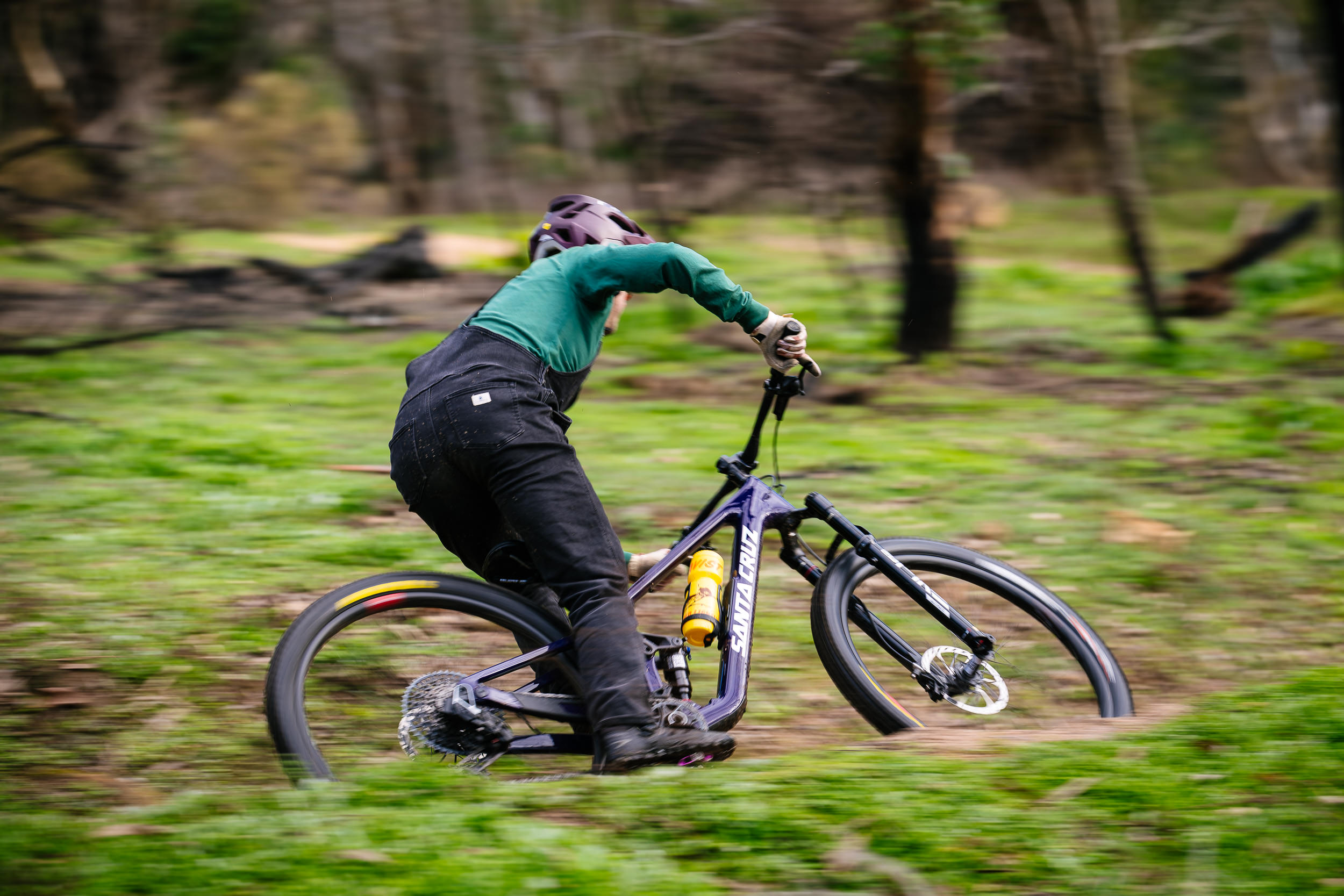 The Reserve 30|SL wheelset is lightweight, responsive and compliant.
What about the DEG DF hub?
At the centre of the Reserve wheelset is a DT Swiss 350 hubset with the new DEG DF anti-kickback freehub mechanism. This provides you with three settings; 0, 10 and 20°. The mechanism comes locked out in the 0° setting from the factory, so you have the option to add more float if you so choose. Doing so allows the cassette to rotate forwards slightly, which DT Swiss says mitigates the effect of the chain during suspension compression. This is the same goal as the SRAM Ochain.
In comparison, the DT Swiss version doesn’t add any weight or complexity, though it isn’t quite as easy to adjust on the side of the trail. You need to remove the rear wheel, pull the cassette and freehub body off the axle, realign the inboard ratchet with your chosen setting, then slide the freehub and cassette back on and refit your wheel. After a few goes I had this down to less than 30 seconds.
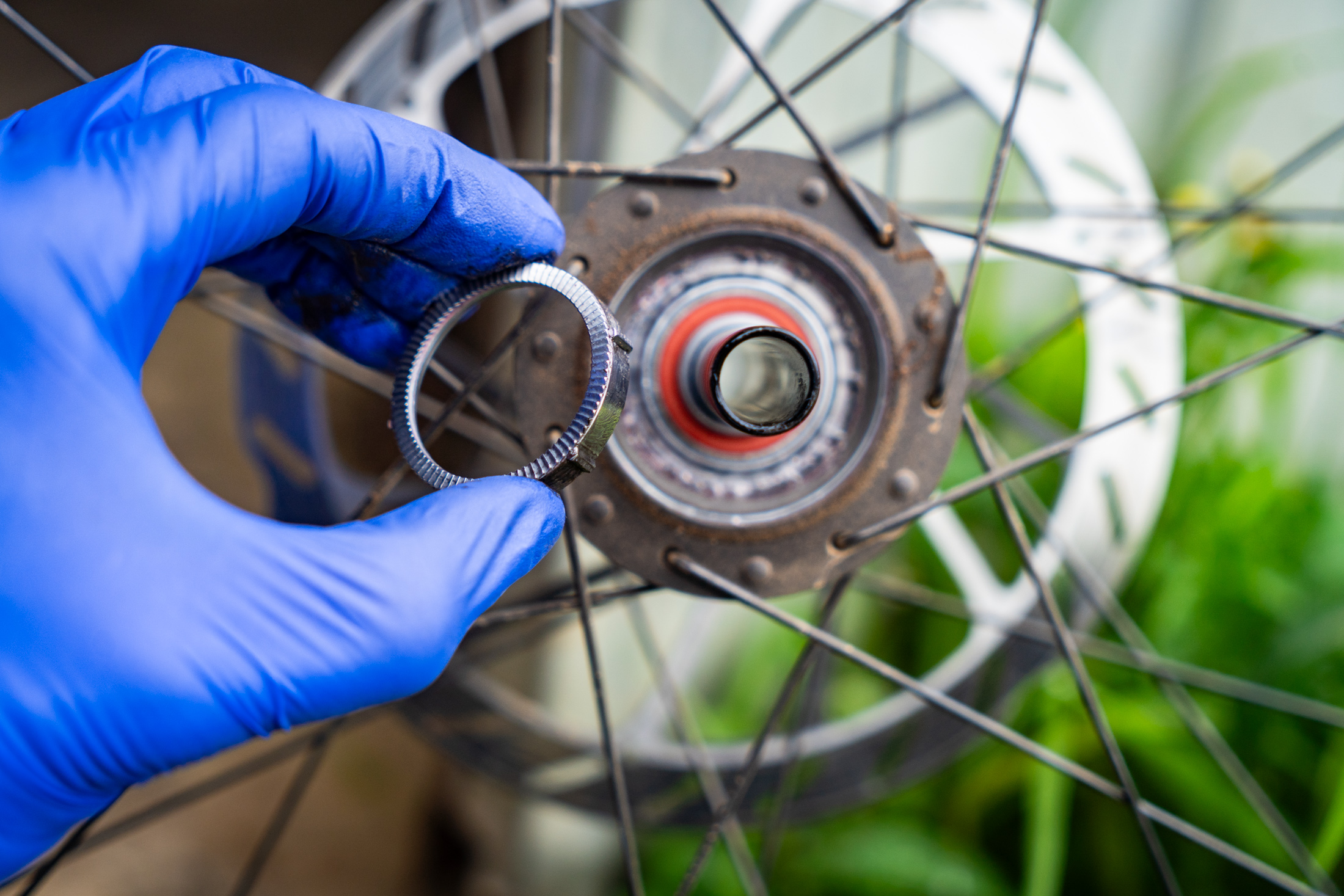
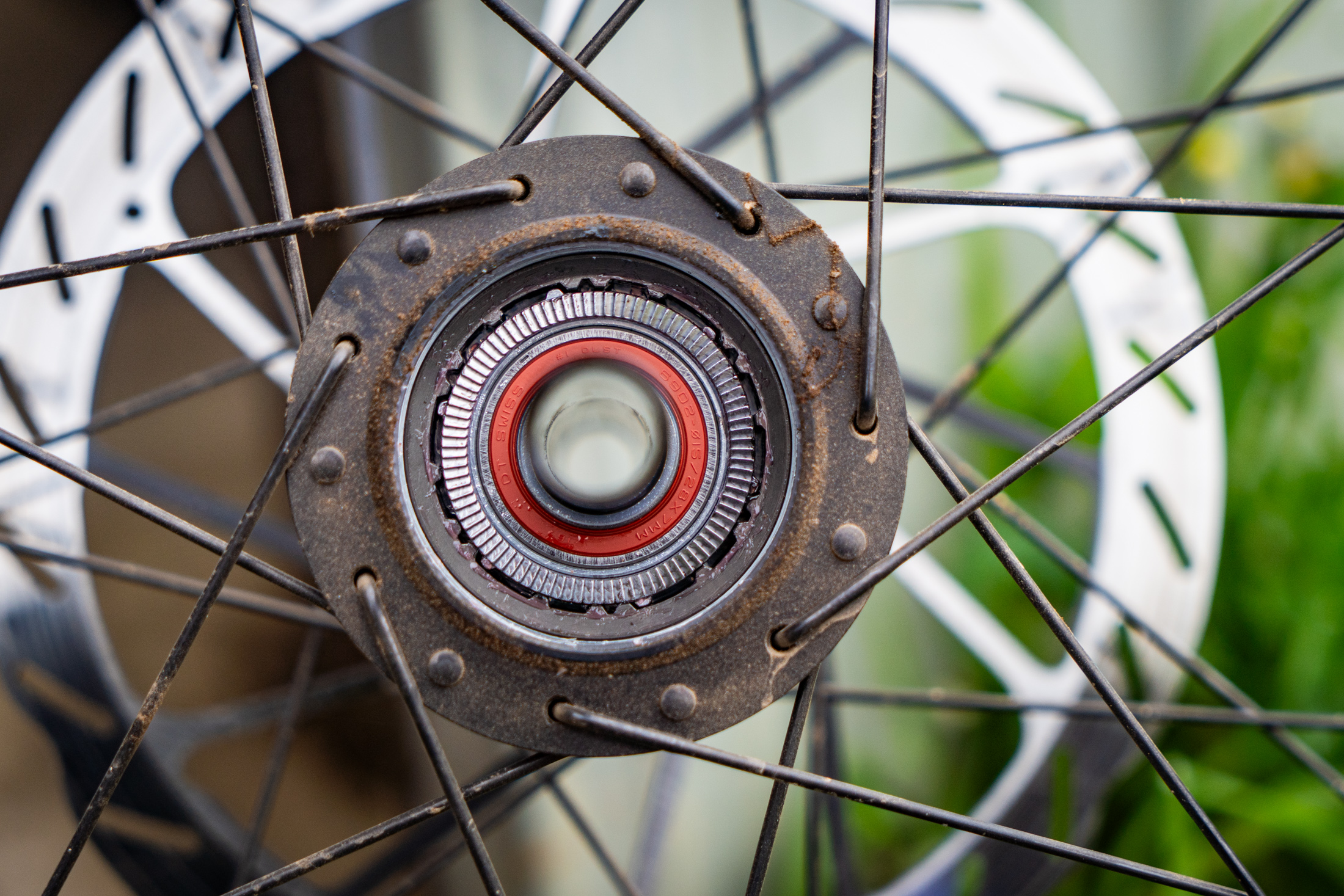
In the stock 0° setting, the 350 hub works as normal with 90 loud points of engagement per revolution. Switching to the 20° setting, the extra deadstroke is very noticeable on the climbs. In the lowest gear you’ve got nearly a quarter of a crank turn before the freehub engages. This didn’t actually bother me nearly as much as I thought it would. In fact, after five minutes of riding I kind of forgot about it, even on techier climbs where I was on and off the power.
Based on Nick’s review, I had high expectations for the descents. However, I must admit I couldn’t really tell much difference on the first attempt. After further back-to-back testing on different trails, I did notice the back end was a touch smoother and quieter with the 20° setting, though it wasn’t as significant as I’d hoped.
Based on that experience, I assume the DEG DF system would be more beneficial on longer travel bikes and those with more chain movement. The Tallboy is already quite neutral, so the effect appears to be somewhat muted.
I still think it’s cool that this mechanism comes standard with the 350 hubset, so riders have the option to mess around with it if they like. That being said, I suspect many Tallboy owners won’t know it’s even there, since there are no labels on the hub to indicate there’s anything different going on inside.
 The purported advantages of the DEG DF freehub weren’t all that noticeable on the Tallboy.
Frame quality
Santa Cruz was one of the earliest brands to make a carbon mountain bike with the original Nomad C back in 2010. These days the vast majority of its models are made from the stuff. Santa Cruz also owns its very own carbon manufacturing facility, rather than outsourcing like many other brands do.
As you’d expect, the finish on the Tallboy CC frame is excellent, with nothing weird or proprietary to be found. Internal guide tubes make cable and hose routing easy, and I really like the little external guides around the main pivot. I’d suggest the textured chainstay protector could be a bit thicker to deaden drivetrain noise. Overall protection is otherwise good with an optional downtube shuttle guard and a tidy bolt-on fender behind the main pivot.
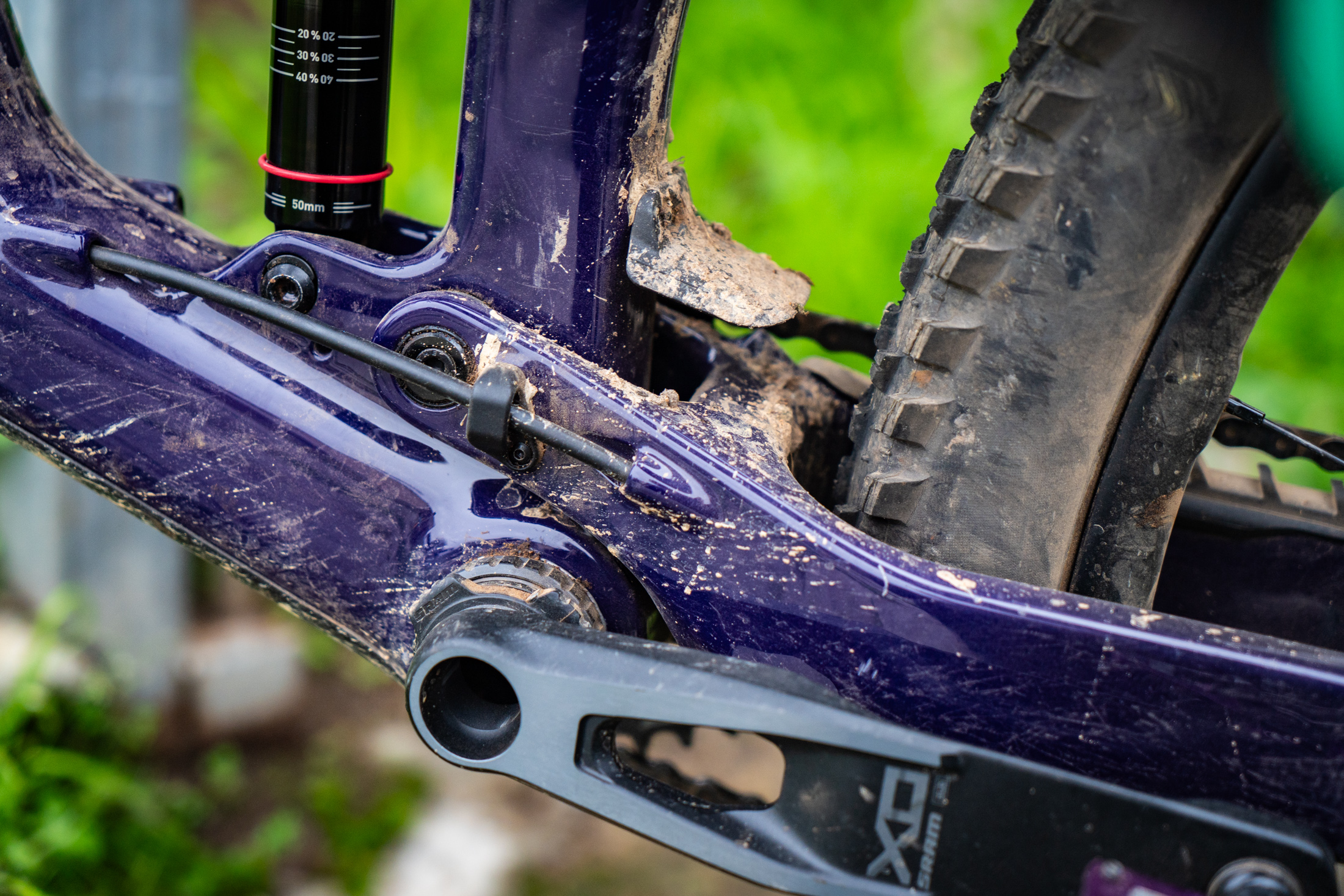 A threaded BB, bolt-on debris deflector, locking collet hardware for the main pivot, and a tidy hose guide for the rear brake. Santa Cruz showing some great attention to detail.
The four-bar design is simple to work on, with the shock and hardware being easily accessible. Large, sealed cartridge bearings are used throughout, and locking collets are employed for the main and seat tube pivot axles. The pivot bearings are warrantied for life for the original owner, as is the frame itself.
The updated Glovebox V2 storage hatch has a much tighter fit than the original, and I’ve encountered none of the creaking that Mick complained about with his Tallboy 5.
Two pouches are included with the bike so you can hide a tube, tools and spares inside the downtube. Fitment and removal is fairly easy, especially now that the external downtube protector is stuck-on rather than being attached with rivnuts (which could snag the tube pouch on the inside).
Personally, I’m not fussed about downtube storage. I’d rather carry spares externally if it meant the frame was lighter and cheaper to manufacture without a big hole in it. But I understand this is a feature that other folks genuinely love. If you do cram it full of stuff, just bear in mind it isn’t waterproof, as Nick acknowledged in his Nomad 7 review.
Santa Cruz Tallboy vs Trek Top Fuel
I spent a lot of time on the latest Trek Top Fuel when it launched back in 2024. It comes standard with 130/120mm of travel, but it’s relatively easy to extend the fork and shock to turn it into a 140/130mm bike. I loved it in that configuration, it made for a really fun and responsive trail ripper that was still quite light.
I wish Trek would offer the longer travel Top Fuel as a stock option, which would compare directly with the Tallboy. Frame weight is almost identical at 2,600g including the shock. The component spec is quite similar, and it also features internal downtube storage.
Trek’s ABP suspension design is effectively a linkage-driven single pivot. Compared to the Tallboy, the Top Fuel is snappier at the pedals, though not quite as neutral and floaty across choppier sections of trail. And while the geometry is similar, a shorter head tube and lower stack puts it a bit more towards the XC side of the spectrum.
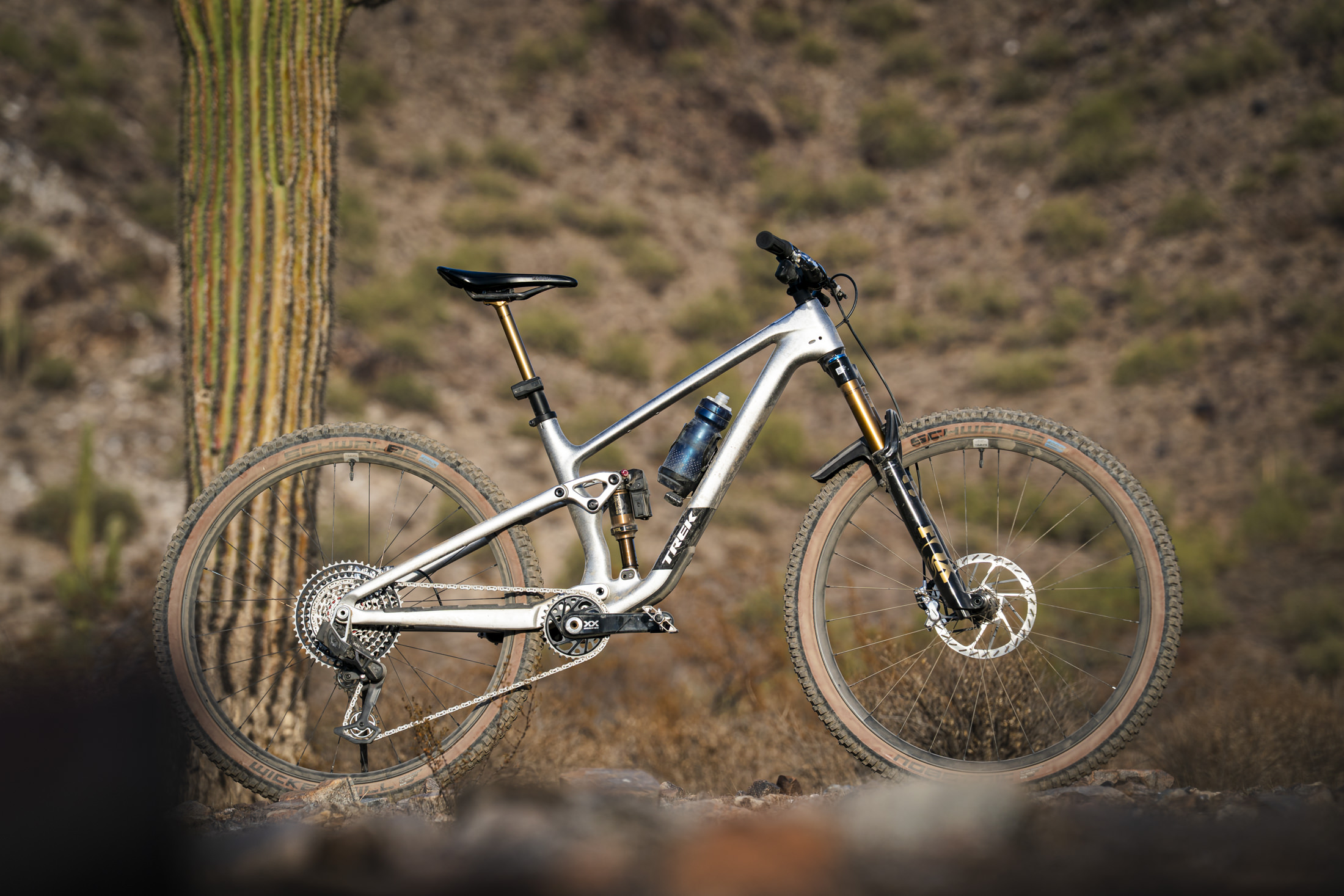 The Trek Top Fuel is another brilliant trail bike, though it offers more adaptability with its 4-position Mino Link and multi-travel configurations.
You can actually turn the Top Fuel into an XC bike with 120mm of travel at each end courtesy of the 4-position Mino Link. This provides you with geometry and progression adjustment that, combined with the 50-55mm stroke shock and 120-140mm fork range, gives the Top Fuel a huge amount of adaptability.
In comparison, the Tallboy has a narrower performance window. It’s less adjustable, though that’s by design as Santa Cruz wants to optimise it specifically around trail riding. That bears out on the dirt, with a calmer and more planted ride quality at speed.
When it comes to price, the Top Fuel presents a much lower barrier for entry thanks to the option of an alloy frame. The carbon 9.8 XT Di2 model retails for $7,999 AUD, which is a lot cheaper than the equivalent Tallboy. However, as mentioned earlier, availability is an issue at the time of typing, so that comparison may change once new season bikes arrive in Australia.
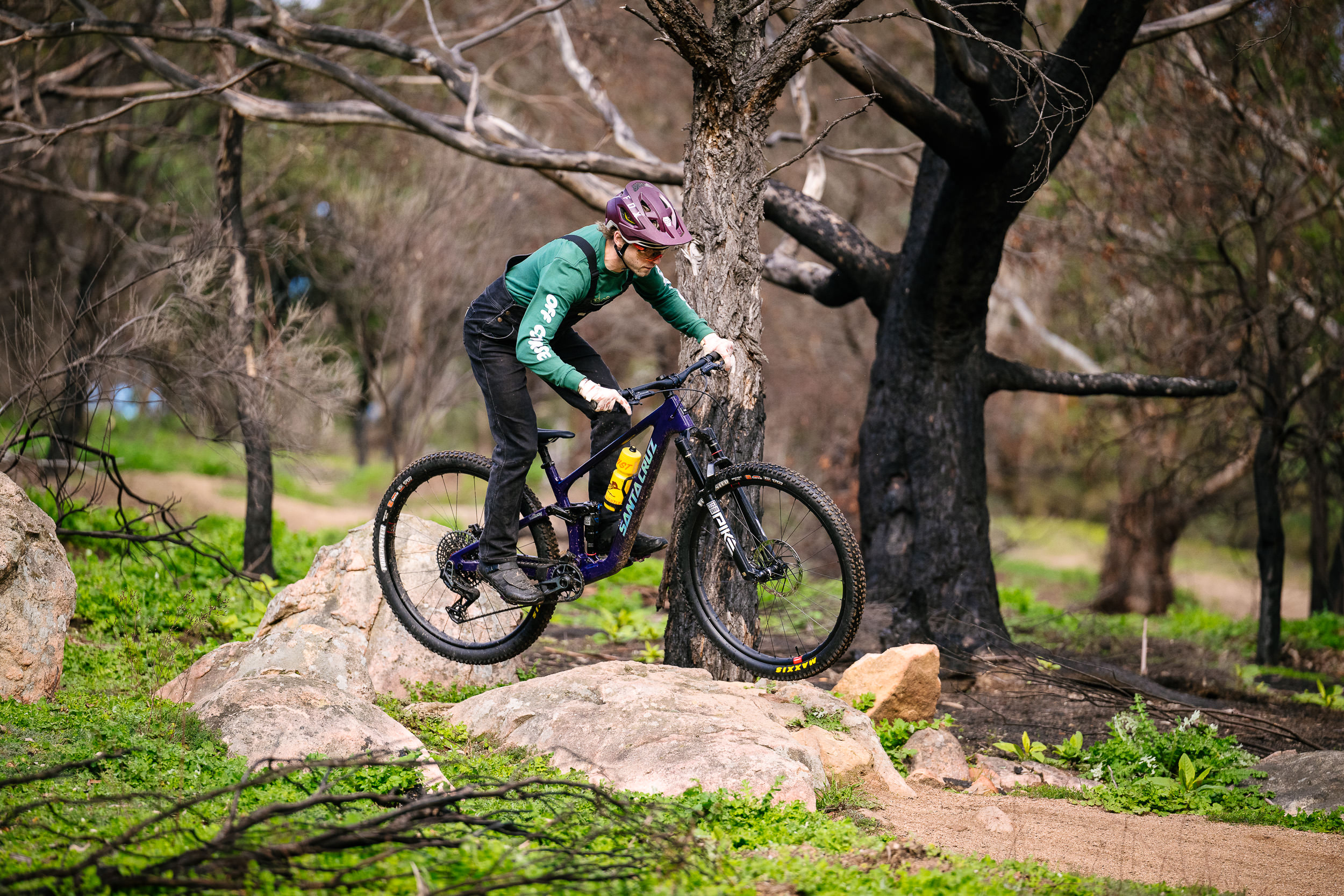 On rough terrain, the Tallboy is the smoother and more planted bike of the two. It is remarkably capable for the amount of travel it has.
Flow’s Verdict
Having given up its distinctive VPP platform, the Santa Cruz Tallboy 6 has evolved into a more practical and well-rounded trail bike. Sure, it’s just a four-bar, but leave it to Santa Cruz to execute one of the best four-bars out there.
The suspension is efficient, grippy and comfortable. Combined with the balanced geometry and compliant chassis, the Tallboy is impressively smooth and planted and across rugged terrain for a 130mm travel trail bike.
Perhaps the real magic is how it achieves this while still being whippy and energetic on modern flow trails. The low weight and fast-rolling tyres inject good pace, making it a load of fun to throw around. Those attributes also make it well suited to all-day exploration rides, where it offers a significant advantage over its porkier, longer travel siblings.
Sadly, there are folks that will discount the Tallboy now that it’s left VPP behind. There are, of course, many ways to skin a cat. And if we’re getting technical, VPP is really just another variation of a four-bar. It’s also true that some of the fastest mountain bikes in the world are using just a four-bar, like the Frameworks DH bike, and the Specialized Demo 11. When designed properly, they can perform exceptionally well.
I’ll also point out that if the Californian brand wanted to save cash it could have done so by simply tweaking the existing Tallboy 5, which was already a popular bike. Instead, it made the decision to give up one of its biggest USPs while pouring time and energy into developing an entirely new frame design.
That investment shows in the ride quality, but it also shows on the price tag. As with any Santa Cruz, the Tallboy is expensive and the barrier to entry is significant, putting it out of reach for many. With that in mind, I’d love to see an alloy frame option to help bring the price down to a more attainable level.
If you can afford it though, the Tallboy is undoubtedly a high quality bicycle. It’s also one of the best trail bikes you can currently buy, and could very well be the new category leader.
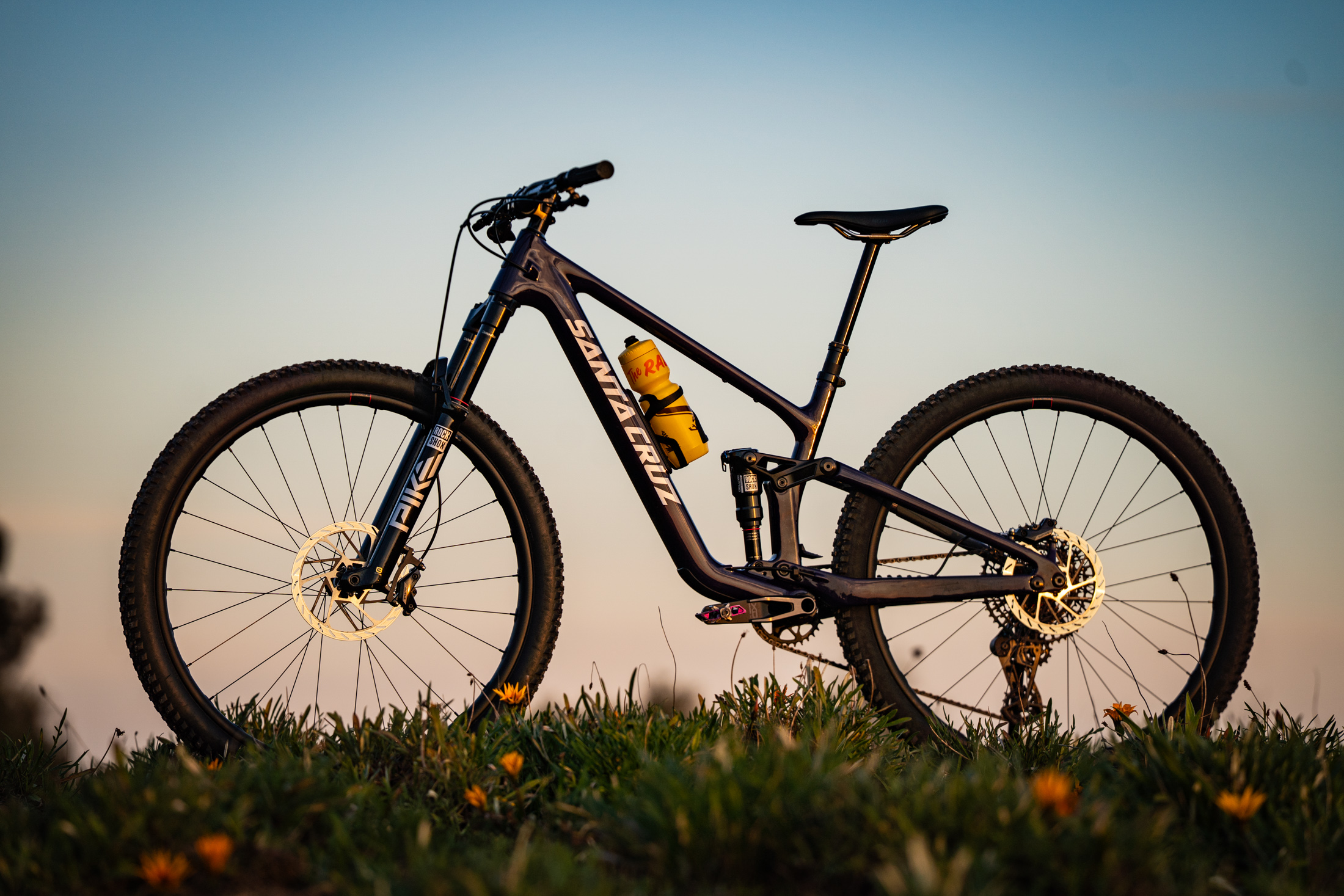 The new category leader? Quite possibly – the Santa Cruz Tallboy 6 is bloody brilliant!
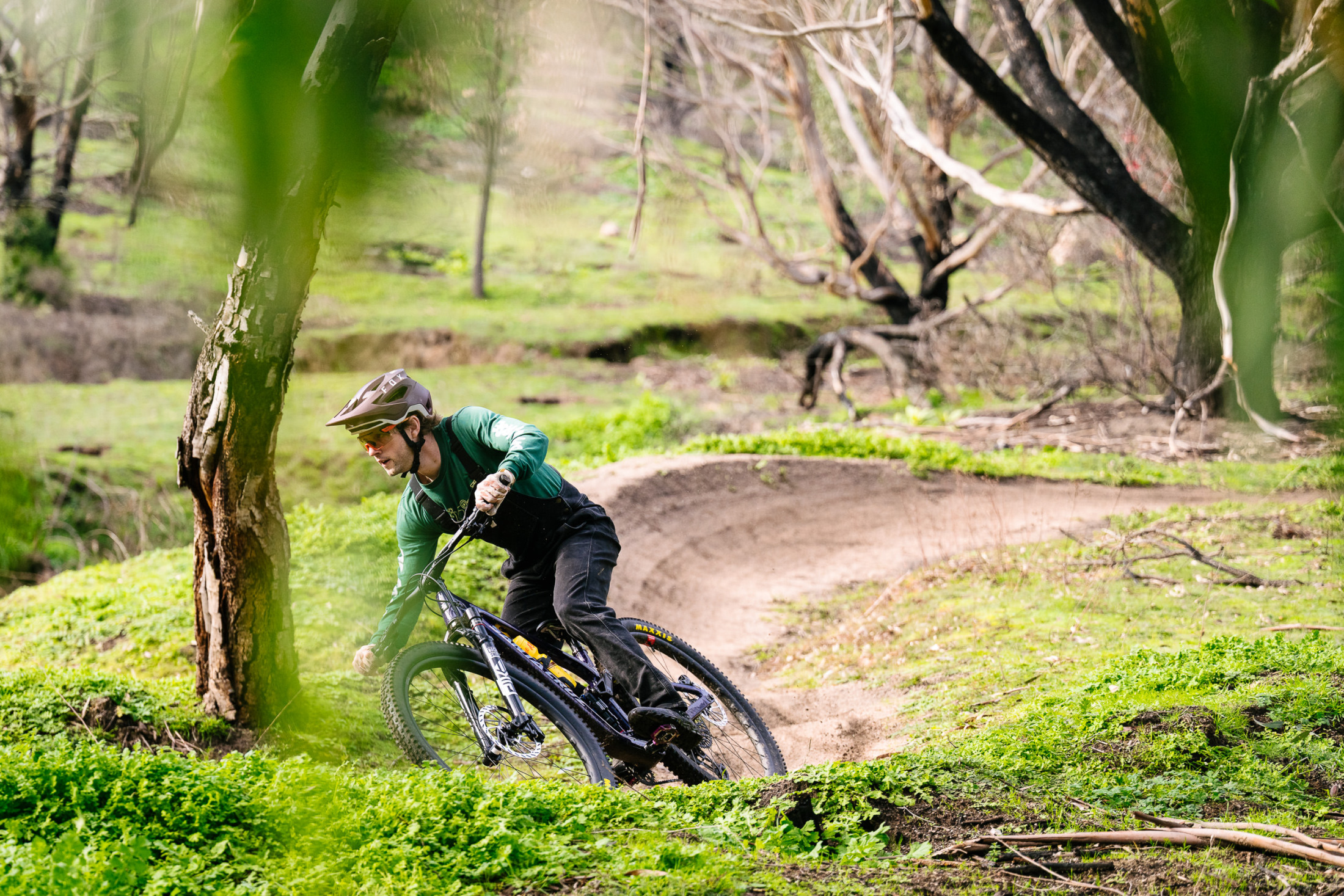 The Tallboy 6 has been a real highlight of 2026. Let’s have more 130-140mm trail rippers please bike industry!

Hometown
Bendigo, Victoria
Weight65kg
Editorial Guidelines
At Flow Mountain Bike, we’re committed to delivering engaging and trustworthy content, from product reviews to destination showcases, news, interviews, and features. While many of the brands and destinations we cover may advertise with us, our editorial team operates independently, ensuring our content is guided by expertise and passion—not commercial influence. Sponsored content is always clearly disclosed, and we remain dedicated to providing honest and unbiased coverage across everything we publish. For more details, see our Transparency Report.