
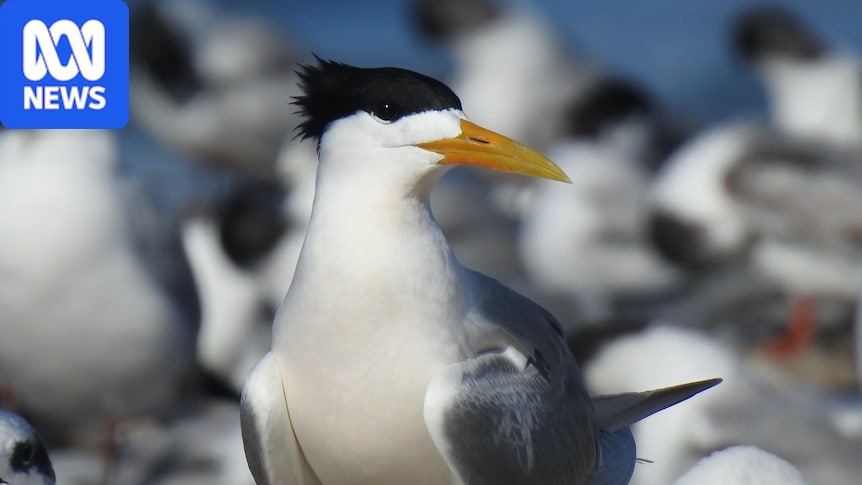
The deadly H5N1 bird flu strain has reached Victoria after a positive test in a bird was detected in the state’s south-west.
Agriculture Victoria has confirmed the virus was detected in a greater crested tern found near Portland.
Victoria’s Chief Veterinary Officer Dr Graeme Cooke said further genetic testing was being conducted to formally confirm the result at the CSIRO’s Australian Centre for Disease Preparedness at Geelong.
“Following weeks of enhanced readiness, we have now enacted Victoria’s State Emergency Animal Disease Response Plan,” Dr Cooke said.
“Based on international experience, this H5 variant differs from previous strains and has been known to cause large numbers of deaths in wild birds and some mammals.
“Our plans aim to limit impacts where possible, particularly on our most threatened species, while also supporting our farmers and reducing risk to domestic and commercial poultry.”
This week, local transmission of H5 bird flu occurred for the first time between a number of greater crested terns in South Australia.
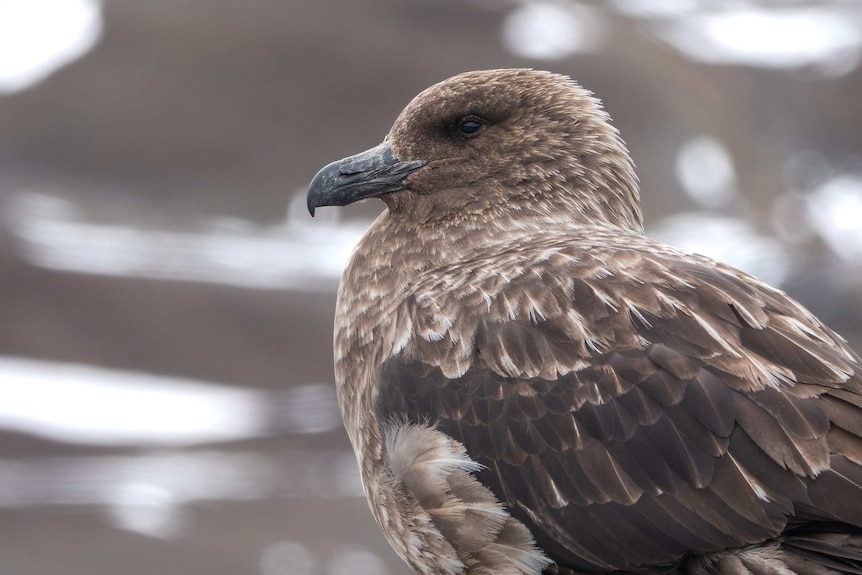
Avian influenza was first detected in Australian in a brown skua. (Supplied: Simon Gorta)
The strain was first detected in Australia in a brown skua discovered in the Cape Le Grand National Park near Esperance, about 700 kilometres south-east of Perth, in June.
The virus has quickly spread across the southern coast through migratory birds, with a second case in Western Australia confirmed in a giant petrel.
A third case was then confirmed in SA at Knights Beach, just a few hours drive from the Victorian border.
Additional cases have since been confirmed in WA, SA, New South Wales, and Queensland.
Concern for farmers
The detection of the strain will concern Victorian producers who were previously hit hard following the detection of the H7N8 strain in 2024.
Almost 2 million birds were culled in the state due to the H7 outbreak, and egg supplies to supermarkets were disrupted.

Dr Graeme Cooke says farmers should review their biosecurity practices. (ABC Landline: Tim Lee )
In light of the detection, Dr Cooke asked farms to review their biosecurity practices.
“Poultry owners can help protect their birds by keeping sheds, yards and equipment clean, quarantining new birds and limiting contact between poultry and wild birds,” he said.
“Always make sure your footwear is clean and wash your hands before and after handling your birds or eggs.
Victorian Farmers Federation President Ryan Milgate said farmers had been preparing for a possible outbreak.
“While this detection is concerning, it’s not unexpected, and the wider agriculture industry has been undertaking an enormous amount of preparation over the past few months for this very moment,” he said.
“We are continuing to work closely with government and industry as the response continues.”
Agriculture Victoria is warning people to be careful around sick or dead birds and to report suspected cases.
If you see a sick or dead bird:Do not touch it.Take note of the location and, if possible, take photos.Report it to the Emergency Animal Disease Hotline: 1800 675 888.Increasing numbers
Meanwhile across the border in South Australia, the state has just recorded its 15th case of H5 bird flu.
The positive result was confirmed this morning in a giant petrel at Port Lincoln on the Eyre Peninsula.
All 15 of the state’s confirmed H5 bird flu cases have been in wild seabirds.
Testing is underway on an additional 13 suspected cases in South Australia, bringing the total suspected cases to 24.
There remains no H5 bird flu detections in poultry or other livestock, nor evidence of mass mortalities in any animals anywhere in Australia.
The risk to human health of H5 bird flu is low.
The 15th positive case in the state comes just after Federal authorities said local transmission of H5 bird flu had occurred between a number of greater crested terns in South Australia.
The announcement is the first time the virus has been confirmed as being transmitted between birds within Australia.