
Eric Woehler
Go to the official government web pages, we’ve got an official bird flu web page with the Australian Government. We’ve got the Australian Wildlife Health Network online as well. So there are reputable sources and I’m just concerned that we’re seeing people making predictions and statements and speculations on social media that are personal opinions or not based necessarily on fact.
Ryk Goddard
That’s never happened before on social media, Dr Eric Woehler, far out.
Eric Woehler
It’s one thing to talk about something and just have an opinion on social media, that’s fine. But at the moment we’re seeing, I’m seeing reports that are causing, I believe, unnecessary concern and stress in the community. I think the one thing we really need to remember is that we know that the H5 variant, that dogs are susceptible to the H5 variant. So if I was walking a dog on a beach I wouldn’t be letting it off the leash or letting it sniff on any bird carcasses because we know that is a potential route. But some of the other claims that are being made are just out there.
Ryk Goddard
What are some of the claims we should be wary of in terms of their truth?
Eric Woehler
Well in terms of just some of the species, I mean I’ve seen reports that platypus could be affected by the bird flu. It’s like well maybe they could, maybe they couldn’t. But what’s the ecological link between say seabirds, giant petrels from the sub-antarctic or crested terns to a platypus? It’s hard to piece together those species in an ecological, sensible manner.
Ryk Goddard
Neil the seal, Eric, at risk?
Eric Woehler
Certainly we’ve seen the reports from Heard Island, McDonald Island of widespread mortality in elephant seals there. We’ve seen mortality of elephant seals in the South Atlantic as well. So certainly it is a species at risk given that Neil’s only around for short periods of time, we have to have a number of events coinciding such as an infected bird coming close or having some sort of close encounter with Neil. So again, that’s sort of bordering on hypotheticals and speculations and requiring certain assumptions to be met.
Ryk Goddard
What about the risks to the poultry industry?
Eric Woehler
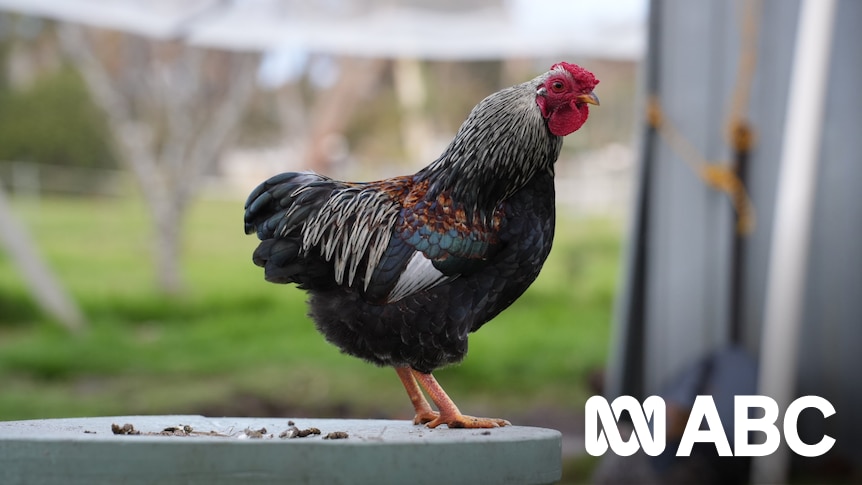
It’s a definite risk. I mean you may recall that when the first records of bird flu were made in Western Australia, there was a local poultry farm that went into voluntary lockdown to minimise the risk to the industry or to that particular poultry farm. It is a genuine risk and obviously the federal government’s talking with the industry looking to minimise the potential of infection entering the poultry industry. It’s certainly, that is a genuine concern because we’ve seen H5 in chicken farms around the world.
Ryk Goddard
I mean I’m listening to you and I’m feeling quite concerned, Eric.
Eric Woehler
Well, as am I. I’m not downplaying the concerns. What I’m saying is that we have risks, they are genuine risks, they are to our native wildlife, both bird and mammal and also to commercial products such as the chickens. But what I’m saying is that we should be making our comments and concerns based on science, data and evidence rather than speculation on opinions and beliefs.
Ryk Goddard
Great to talk to you as always, really appreciate it. Dr Eric Woehler on 936 ABC Radio Hobart. Just finally there’s some transmissions in South Australia. Have we seen much in Tasmania? When do you think we’re likely to see it here?
Eric Woehler
Look, we’ve got now something like 18 or 19 cases of crested terns in South Australia. The Federal Minister has announced that it’s now deemed to be local transmission so we’re getting crested tern to crested tern transmission. We’ve got crested terns breeding here in Tasmania. The breeding season will start in the next couple of months. So we can reasonably expect some likelihood of the bird flu in Tasmania if it’s going to get here, increasing as the breeding season approaches.