
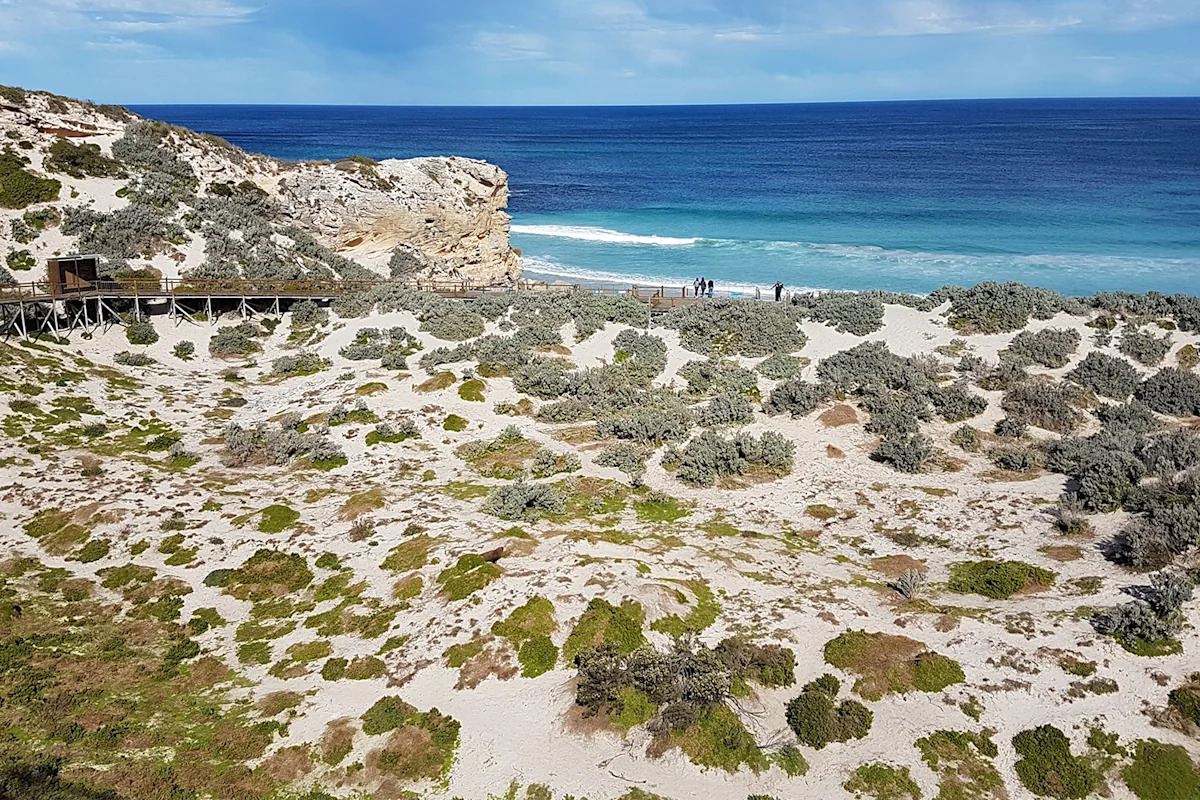
Tourists visiting Seal Bay on South Australia’s Kangaroo Island are barred from setting foot on the beach.
The state government announced the suspension after it discovered 11 suspected new cases of deadly H5 bird flu in native birds.
Seal Bay is home to one of the most important populations of Australian sea lions, a species listed as endangered after its populations declined by 60 per cent over 40 years.
There are fears the virus could push the species further towards extinction.

There are fears the H5 virus could spread from birds to sea lions as it has overseas.
(Getty)
In 2022, 30,000 closely related American sea lions died when H5 spread across South America.
And when the disease reached the Australian sub-Antarctic territory of Heard Island, more than 13,000 seal pups rapidly died.
South Australia is home to 85 per cent of Australian sea lions, with the remaining 15 per cent inhabiting Western Australia.
The total population is estimated to be 10,000 to 12,000, of which 10 per cent live at Seal Bay.
Visitors to the area can still undertake guided tours along the boardwalk, but they cannot venture onto the sand.
What conservationists had been dreading
The 11 new suspected cases of bird flu are all in greater crested terns, the first non-migratory Australian species confirmed to have contracted H5.

In Chile, the spread of H5 killed off the nation’s sea lions.
(Getty)
The cases were concentrated around Kangaroo Island and the Limestone Coast including:
Three birds at D’Estrees Bay, Kangaroo Island Council
One bird at Seal Bay, Kangaroo Island Council
Three birds at Beachport, Wattle Range Council.
One bird at Cape Jaffa, Kingston District Council.
One bird at Southend, Southern Limestone Coast Council
Two birds at Port MacDonnell, Southern Limestone Coast Council.
The findings follow an announcement on Tuesday by the federal agriculture department (DAFF) that there had been seven other confirmed cases in greater crested terns in South Australia.
Those cases were concentrated at Cape Jaffa, Southend and Port MacDonnell.
The Invasive Species Council’s Dr Carol Booth said the detection of H5 at Seal Bay is what “conservationists have been dreading”.
“We have watched this story unfold overseas, it starts with a handful of dead seabirds, then breeding colonies begin collapsing, and entire populations of vulnerable wildlife,” she said.
Have you seen wildlife impacted by bird flu? Contact newsroomau@yahoonews.com
H5 bird flu confirmed to have spread to native wildlife
On Wednesday, Environment Minister Murray Watt issued a statement confirming local transmission of H5 avian influenza had occurred.
How Australia’s native animals and birds will react to H5 is unknown, but scientists fear it will be catastrophic, resulting in serious declines or even extinctions.
RELATED:
The federal government advises that the risk to human health is currently low, and there has been no evidence of mass mortalities in Australian animals, nor has it been detected in poultry.
Anyone who finds sick or dead wildlife is advised to avoid contact, record what they see, and contact the Emergency Animal Disease Hotline on 1800 675 888.
You can also follow us on Facebook, Instagram, TikTok, X and YouTube.