
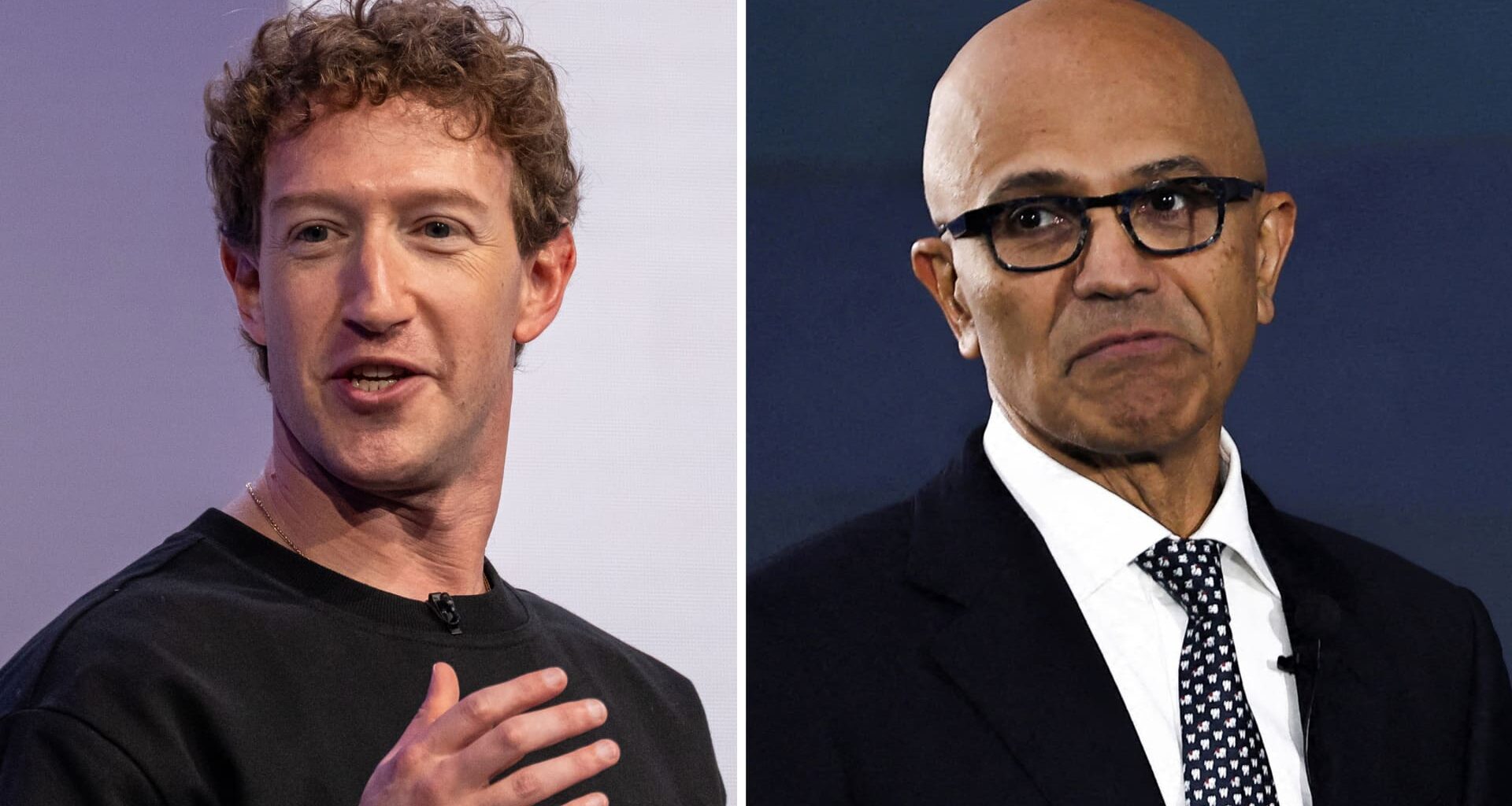
Meta CEO Mark Zuckerberg, left, and Microsoft CEO Satya Nadella.
Getty Images | Reuters
Microsoft shares jumped in premarket trading while Meta tanked as investors gave differing verdicts on the two tech giants’ earnings.
Shares of Microsoft were last 9% higher while Meta was down 9%.
On Wednesday, Microsoft posted fiscal fourth-quarter revenue that beat analyst estimates and reported 43% growth at its key Azure cloud business, which was also ahead of market expectations.
The company said that it now has over 30 million paid seats for Microsoft 365 Copilot, its AI work assistant, up from more than 20 million as of April, in further signs that parts of its AI investments are paying off.
“Microsoft’s strong revenue performance, combined with accelerating Copilot adoption, signals that its $190 billion data‑center buildout is beginning to deliver returns,” Tracy Woo, principal analyst at Forrester, said in a note on Wednesday.
Microsoft’s stock popped even as the company reiterated its 2026 capital expenditure forecast and signaled a potential spending expansion in its 2027 fiscal year at a time when the market is jittery over the cost of AI.
The stock rose 8% higher in extended trading on Wednesday and is down around 24% this year.
Stock Chart IconStock chart icon
Microsoft and Meta shares this year.
It was a different story for Meta. The social media giant missed investor expectations on earnings and its revenue guidance for the current quarter.
Meta said it expects revenue this quarter of between $61 billion and $64 billion, or $62.5 billion at the middle of the range. Analysts were expecting guidance of $63.15 billion, according to LSEG.
At the same time, Meta’s free cash flow plunged 91% year-on-year to $784 million as it continues to spend on AI investments.
Meta’s shares slid in extended trading on Wednesday and are down around 16% this year.
Meta CEO Mark Zuckerberg said the company is “getting a lot of offers for compute at a significant premium” over what the company paid for it. This would be a change of direction for Meta if it begins leasing out its excess computing capacity to third parties. However, there were very few details on what this business could look like.
At the same time, Zuckerberg acknowledged that the company will need to keep compute resources for itself to develop new products.
“Right now, the narrative from Mark Zuckerberg is a little light on detail and relying on what could be done in the future,” Ben Barringer, head of technology research at Quilter Cheviot, said in a note on Thursday.
“Meta still has a crucial role to play in the AI world, but it is still finding its way somewhat and that is why we see both costs and revenues looking a little volatile.”
— CNBC’s Jonathan Vanian contributed to this report.