
The artificial intelligence boom has delivered another eye-watering milestone this week as Samsung posted one of the biggest profit surges ever seen from a major technology company.
The South Korean electronics giant revealed quarterly net profits rocketed almost 1300 per cent compared to a year ago, fuelled almost entirely by the global race to build the computers powering artificial intelligence.
Samsung reported a record net profit of 71.6 trillion won (A$49.6 billion) during the June quarter, while revenue more than doubled to an all-time high of 171.5 trillion won (A$171 billion).
Its semiconductor division generated almost all of the company’s earnings as demand for advanced memory chips continued to outstrip supply.
It marks a massive shift for the company, which rivals Apple on the global smartphone market. What was once the company’s bread and butter (smartphones and home appliances) has now slipped into modest losses as rising component costs squeezed margins.
Despite concerns earlier this year that enthusiasm around artificial intelligence was beginning to cool, Samsung said it expected demand for AI memory chips to remain strong throughout the second half of the year.
For most consumers, artificial intelligence means tools like ChatGPT, Claude or Google’s Gemini.
Behind every AI chatbot, however, sits an enormous network of data centres packed with specialised chips consuming vast amounts of electricity.
Every new AI model requires thousands, or sometimes tens of thousands, of advanced graphics processors and high-bandwidth memory chips working together around the clock.
Samsung sits at the centre of the increasingly-chaotic supply chain.
Its advanced memory products are used alongside processors made by companies including Nvidia and AMD, helping feed what many analysts have described as the biggest technology infrastructure build-out since the early days of the internet.
The scale of investment into the sector has been staggering, with some analysts warning the uncapped optimism could be forming a bubble.
Microsoft, Meta, Amazon and Alphabet are collectively spending hundreds of billions of dollars building AI infrastructure, while OpenAI, Oracle and SoftBank have announced plans for massive new computing projects designed to support the next generation of artificial intelligence.
Much of that money ultimately flows back through companies like Samsung, which manufacture the critical components underpinning the AI boom.
The fear is that the world economy is rapidly sailing into uncharted waters, because virtually every major technology company is spending simultaneously on a scale rarely seen before.
Nvidia has been one of the biggest success stories, becoming the world’s single most valuable listed company after demand for its AI chips exploded earlier this decade.
Taiwan Semiconductor Manufacturing Company (TSMC) has repeatedly raised forecasts as factories operate at full capacity.
Broadcom, SK Hynix and Micron have all reported surging demand linked directly to AI infrastructure.
Samsung’s results suggest the spending spree is still accelerating.
Nevertheless, some investors have become increasingly nervous that the industry is building more computing power than businesses can ultimately justify.
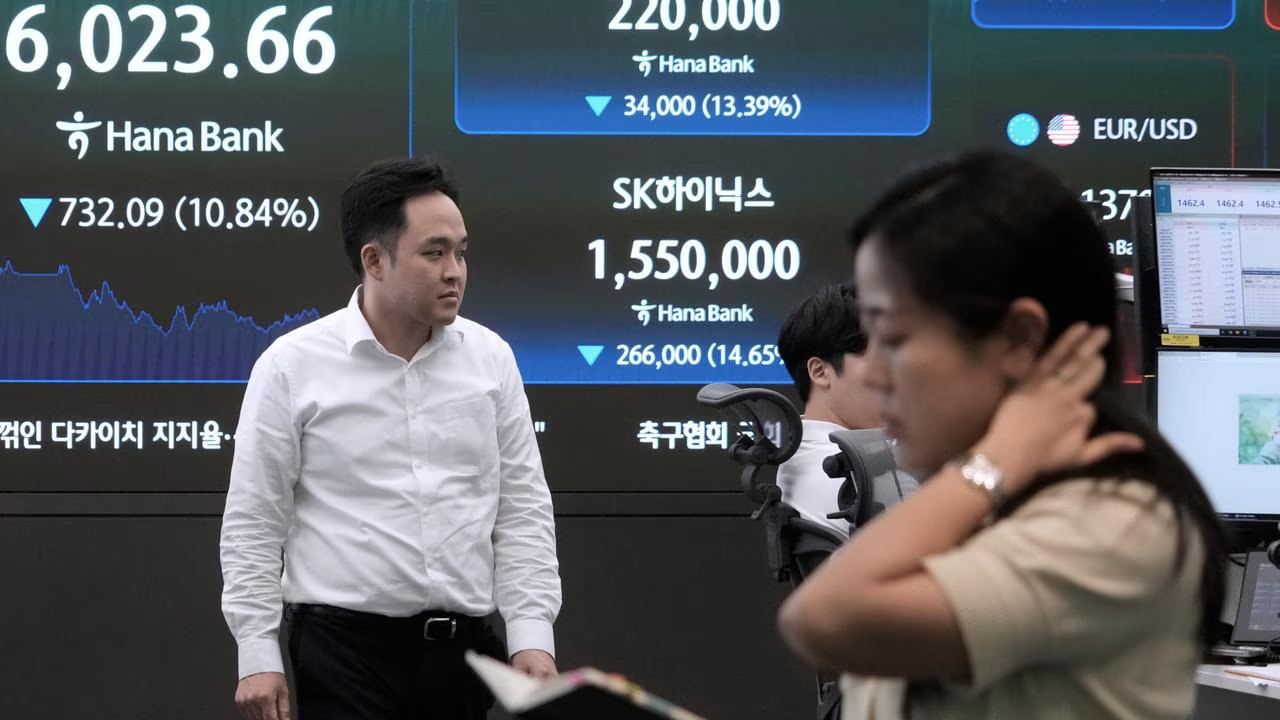
Those concerns triggered a huge sell-off across global semiconductor stocks earlier this year, wiping hundreds of billions of dollars from company valuations.
Even considering the on-paper results, Samsung’s own shares remain more than 40 per cent below their June peak despite almost tripling over the past 12 months.