
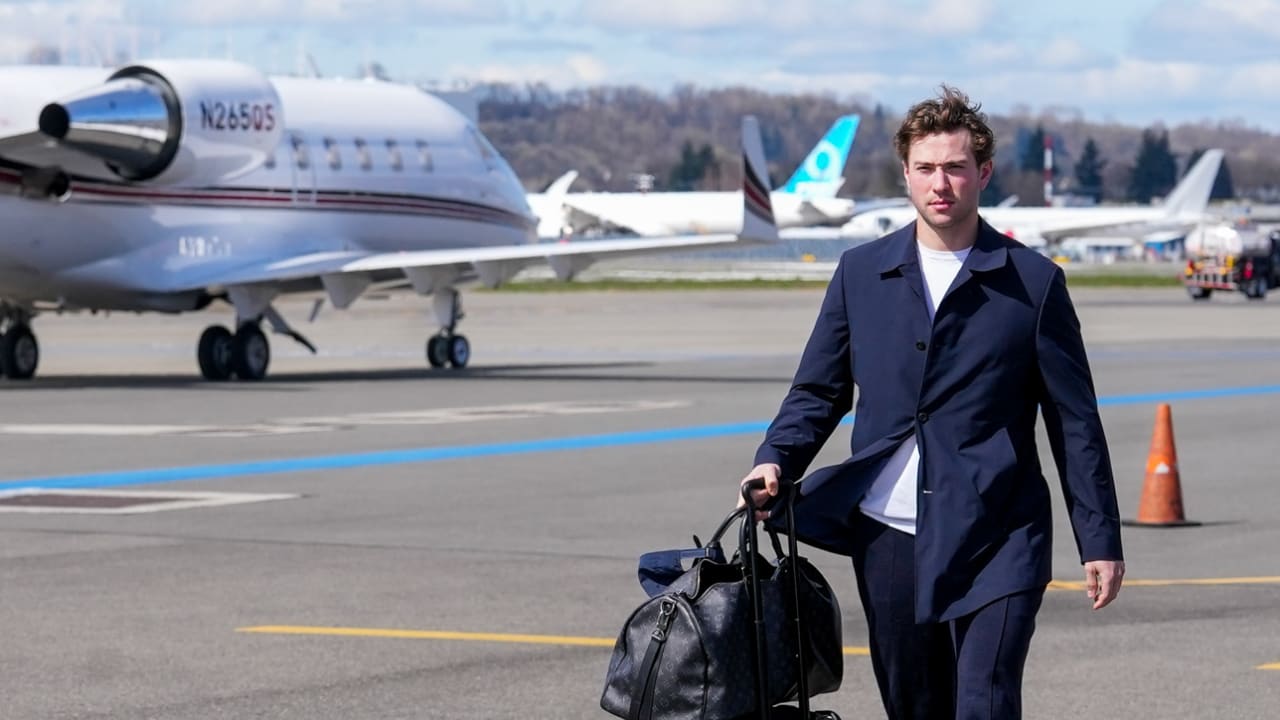
This system comes in handy upon conclusion of any road trip.
The Kraken can play a night game in Winnipeg, then arrive back in Seattle, clear customs and be home in bed by 1:30 a.m. That allows them to wake up at a relatively normal time and be at the Kraken Community Iceplex for a noon or afternoon practice if needed.
Teams often try not to schedule practices right after completing a road trip but skipping too many can impact performance. Eventually, even with first class travel and five-star accomodations, the road schedule wears players down mentally and physically since they are also grinding through games and practices while adjusting to time zone changes.
“For me personally, I do a lot of stretching postgame,” Kraken winger Jared McCann, 30, said. “I feel like as I’ve gotten older, I need to stretch out a lot more, ride the bike to flush out the lactic acid.
“For the short games, where it’s only a 45-minute flight or an hour, I feel like it doesn’t affect me too bad. It’s the long flights that get me, where you’re in the air for hours.”
McCann will try to walk around on the plane during those longer flights. He also wears compression socks and pants to help lessen the inflammation on his legs, which have given him a variety of physical problems over the years.
But he’s used to extensive travel, having done it with the Vancouver Canucks when he first broke into the league a decade ago. He also had a heavy travel load with the Soo Greyhounds of the Ontario Hockey League in his pre-NHL junior playing days.
“Mentally, I’m kind of used to it,” McCann said. “I mean, we play cards together on the plane. We’re always thinking and doing things, so that makes the flight go by a little quicker. But physically, once you get past the midway point of the season, it starts to catch up to you a little bit.”
So, any bit of team help is appreciated.
Getting external help
In cities where the Kraken can’t stay close to an arena, team services director Baxandall will often flip open his contact list of state troopers or county sheriff’s department officers and request a police escort. Those have come in handy getting to games in rush hour traffic in places such as Long Island, New York, New Jersey, Florida and Anaheim.
During the inaugural Kraken season, their bus from Manhattan to Long Island took two hours and saw players arrive at the arena barely 90 minutes before game time. It was a learning experience they haven’t repeated.
Baxandall also keeps a detailed notebook of all hotel experiences good and bad so he knows what he’s dealing with when it comes to booking an ensuing season’s travel.
“We’ve tried new hotels that are home runs and we go there every time,” he said. “And then we’ve tried hotels in a pinch where we’re like, ‘OK, we got through that but we’re not going back.’”
Often, the ability of a hotel’s staff to handle a professional team will come into play. Some are better suited than others, but the team’s needs – and ability to win the next game – must be a priority for the hotel in order for them to keep getting repeat Kraken business.
And it is often a good deal for the hotel, filling multiple floors of rooms during quieter winter periods while also having the prestige that hosting an NHL team such as the Kraken can bring their marketing department.
But it isn’t easy. The Kraken require private rooms for meetings, team meals, player medical treatments and fitness training. They often need 24-hour room service if arriving in the middle of the night and a strong concierge staff to direct players around town so precious down time isn’t squandered.