
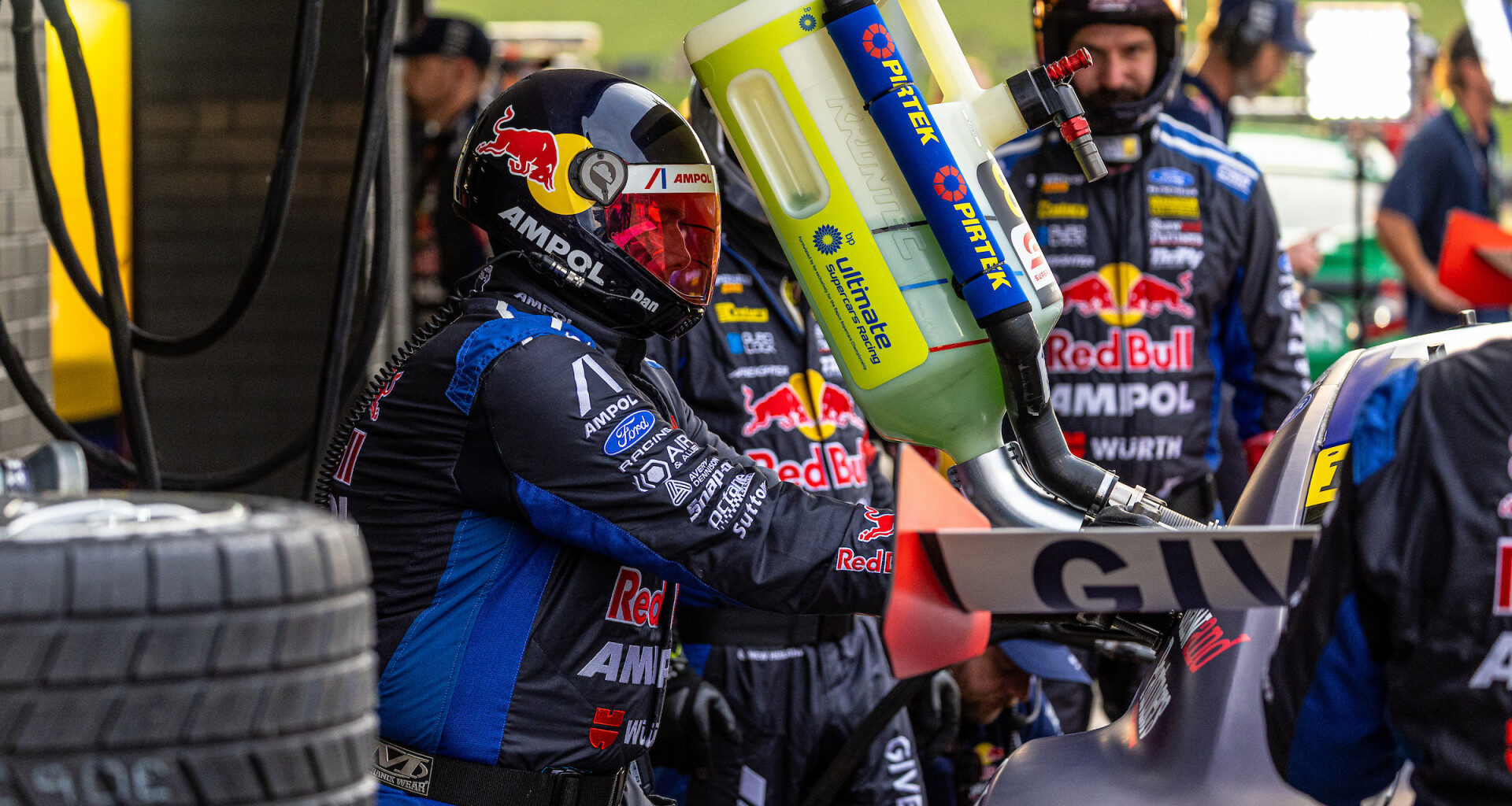
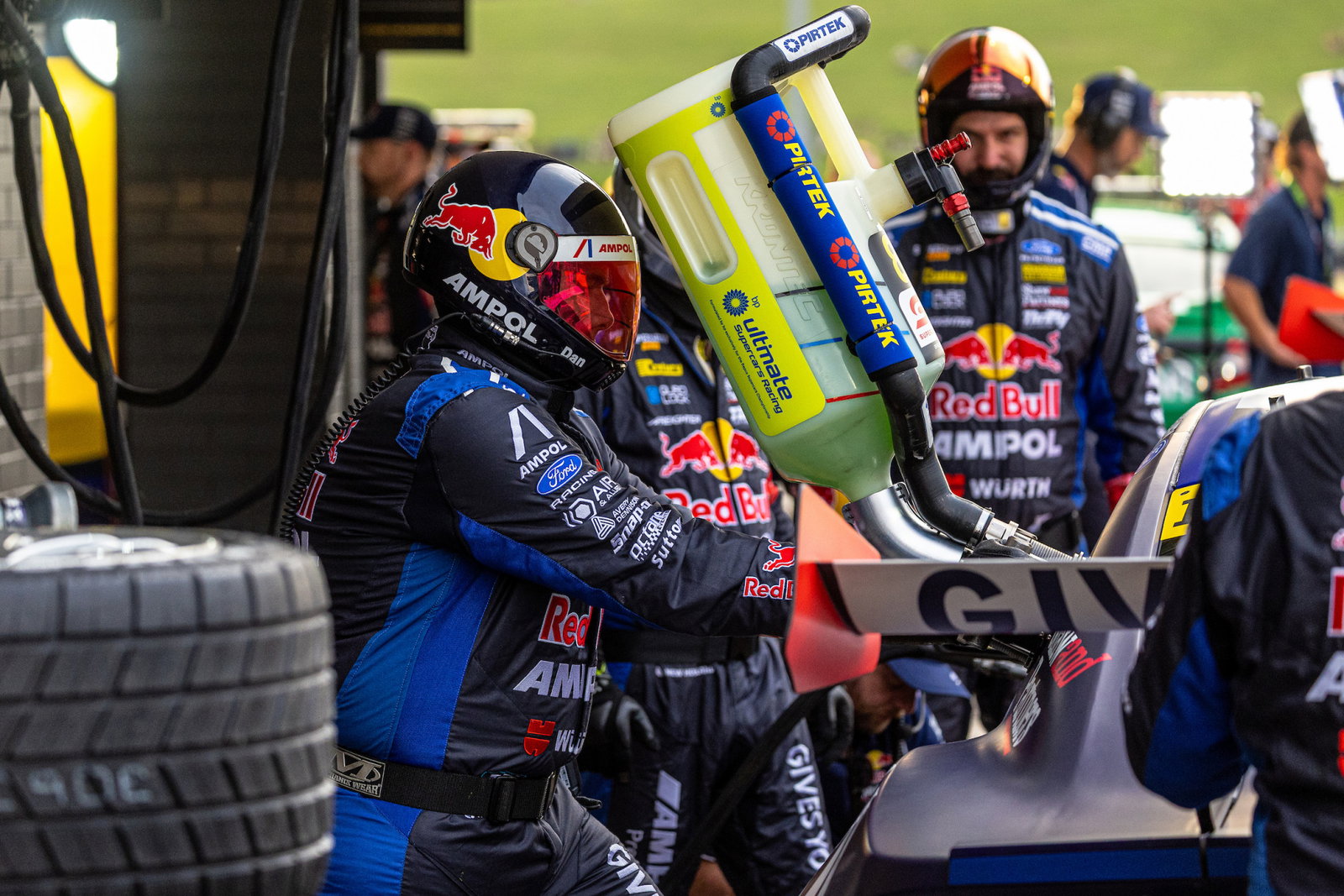
 Fuel is a hot topic in Supercars. Image: InSyde Media
Fuel economy and fuel saving have been big talking points this season.
Supercars has carefully studied economy differences between marques, making mapping tweaks to help improve the Chevrolet ahead of Townsville and Perth.
The tight nature of the current field has meanwhile put great emphasis on minimising pit stop time in order to gain or hold track position.
That results in teams under-filling cars during stops and forcing their drivers to save fuel while on track.
Cam Waters, whose Tickford team severely under-filled his car in Townsville due to a miscalculation, slammed fuel-saving as a “shit way to go racing”.
“Everybody is saving fuel these days,” Erebus Motorsport boss Barry Ryan explained at Wanneroo on Thursday.
“Drivers have to be really smart, engineers have got to be really smart. No one is racing flatout in the races any more.
“Some drivers are really good at saving fuel and some aren’t. Some take bigger risks with how much fuel they drop in at a pit stop, so it’s time in pit lane as well.”
The fuel debate has led to a push to reintroduce the minimum fuel drop rule, mandating an amount that must be put into each car during races.
That rule was introduced early in the Car of the Future era to ensure parity between marques, before being removed during the Gen3 era to return freedom to teams.
Supercars combined that with a move away from the fuel towers to churns for sprint races last season.
Although affirming belief the pushrod Chevrolet remains at a disadvantage on economy, Ryan is adamant a return of a fuel drop is the wrong road.
“I’m not real big on fake racing stuff and that’s fake racing,” he said.
“Like CPS (compulsory pit stops) at Bathurst. It shouldn’t be that. It should be 161 laps, get there as fast as you can.
“Same with every other race. The race should start and you just do what you can do. One stop, two stops, whatever you can do to win the race.”
Brad Jones, whose team runs a trio of Toyota Supras, is among those with an opposing view, pushing back on the suggestion fuel drops are “fake racing”.
“For me, using these churns has taken a lot of strategy out of the races because everyone, well almost everyone, has to put the maximum amount of fuel in each time,” he said.
“There’s always things we could look at and learn and change and try. I think there’s some work to be done there for sure.”
Jones echoed paddock belief that the new Toyota is currently in the middle of the pecking order when it comes to economy.
“At the moment it looks like the Ford is the most fuel efficient car and then the Toyota in the middle and then the Camaro, but I don’t think there’s much between them all,” he said.
Supercars is known to be against reintroducing the fuel drop, which would require officials to carefully monitor the fuel going into each car at every stop.