
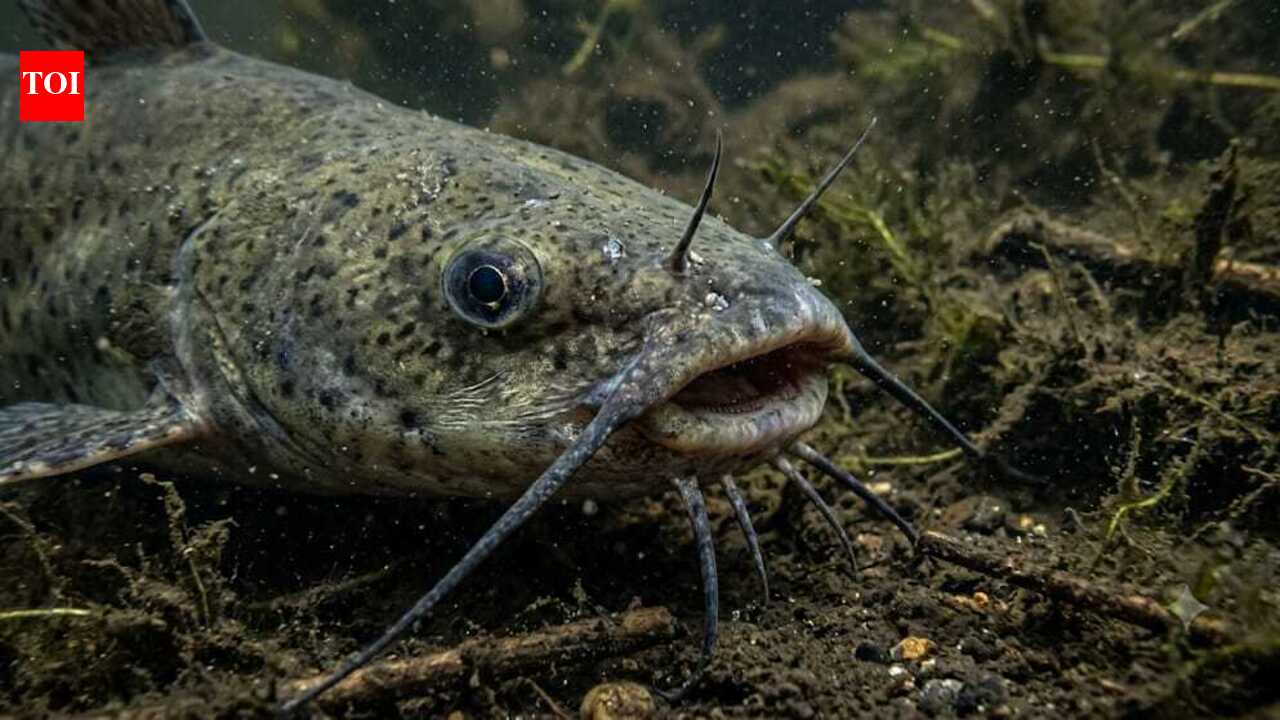
 Cancer is generally thought of as a disease that develops within an individual and cannot spread from one animal to another. Yet a handful of extraordinary exceptions exist, where the cancer cells themselves become the infectious agent, passing directly between hosts like a parasite. Scientists have now identified another member of this exceptionally rare group. Researchers studying brown bullhead catfish in a lake shared by the United States and Canada have confirmed the first naturally occurring transmissible cancer ever discovered in a fish and the first known in a freshwater ecosystem. The finding not only solves a mystery that puzzled biologists for more than a decade but also raises new questions about how cancers evolve, spread and persist in wild animal populations.
When an unusually high number of catfish with melanoma first appeared in 2012
The discovery began in Lake Memphremagog, which straddles Vermont, USA, and Quebec, Canada. Beginning in 2012, anglers and biologists started noticing brown bullhead catfish (Ameiurus nebulosus) with raised black skin lesions. Earlier investigations confirmed that these lesions were malignant melanomas, with studies between 2014 and 2017 finding tumours in 23-37% of sampled fish, far higher than the incidence reported in brown bullheads elsewhere in North America. Because the species is widely used as an indicator of water quality, researchers initially suspected that pollution or another environmental contaminant had triggered the outbreak.
Genome sequencing revealed the tumours belonged to the same cancer, not the same fish
The breakthrough comes from the Nature paper ‘Brown Bullhead Catfish Melanoma Represents a Novel Transmissible Cancer’ by Emily E. Curd, Samuel F. M. Hart, James Lubkowitz, Kirsten M. Tracy, Lucas Milazzo, Matthew Bodnar, Tom Jones, Mark J. Henderson, Peter Emerson, Julie A. Dragon and colleagues from the University of Vermont, the University of Washington, the Vermont Fish and Wildlife Department and collaborating institutions. To determine whether pollution, pathogens or something entirely different was responsible, the team performed whole-genome sequencing on tumour tissue and matched healthy tissue from affected fish, alongside healthy individuals.Instead of finding independent cancers arising in different fish, the researchers discovered that the tumour cells from separate animals were more closely related to one another than to the fish carrying them. Hundreds of thousands of genetic variants were shared across tumour samples but absent from the hosts’ healthy tissues, a pattern that would be virtually impossible if each melanoma had developed independently.The evidence showed that the melanoma represents a single clonal lineage of cancer cells spreading directly between fish rather than separate cancers forming in each individual.
Only the fourth naturally occurring transmissible cancer ever identified
The researchers conclude that this melanoma is only the fourth known type of naturally occurring transmissible cancer in animals.Before this discovery, such cancers had been documented only in dogs, Tasmanian devils and several species of bivalve molluscs. The brown bullhead melanoma is also the first transmissible cancer identified in any fish and the first recorded in a freshwater ecosystem. The team also investigated whether a virus or bacterium might instead be causing the tumours. However, genomic screening found no microorganism consistently associated with the disease.
Scientists still do not know exactly how the cancer spreads
Although the cancer’s contagious nature is now strongly supported, its route of transmission remains unknown.The researchers propose several possibilities. Brown bullhead catfish gather in close contact during spawning, potentially allowing living tumour cells to pass between individuals. Another possibility is that cancer cells survive temporarily in the surrounding water or sediments before entering new hosts through the skin, mouth or gills.The study also notes that the disease has so far been observed primarily in larger, reproductively mature fish, suggesting that breeding behaviour may play a role in transmission, although further research is needed to confirm this hypothesis.
The discovery could reshape how scientists study cancer in wildlife
Beyond solving a long-standing ecological mystery, the discovery opens an entirely new area of cancer research. Because transmissible cancers are so rare, every new example offers scientists an opportunity to understand how malignant cells evade immune systems, survive outside their original host and establish themselves in new individuals. The authors also emphasise that identifying the first fish transmissible cancer raises an important question: are these cancers genuinely rare, or have scientists simply not been looking for them? The findings suggest that contagious cancers may be more widespread in nature than previously recognised. By revealing that melanoma can spread directly between wild freshwater fish, Emily E. Curd, Samuel F. M. Hart, Julie A. Dragon and their colleagues have uncovered one of the most unusual forms of cancer yet documented, one that behaves less like a conventional tumour and more like an infectious parasite.