
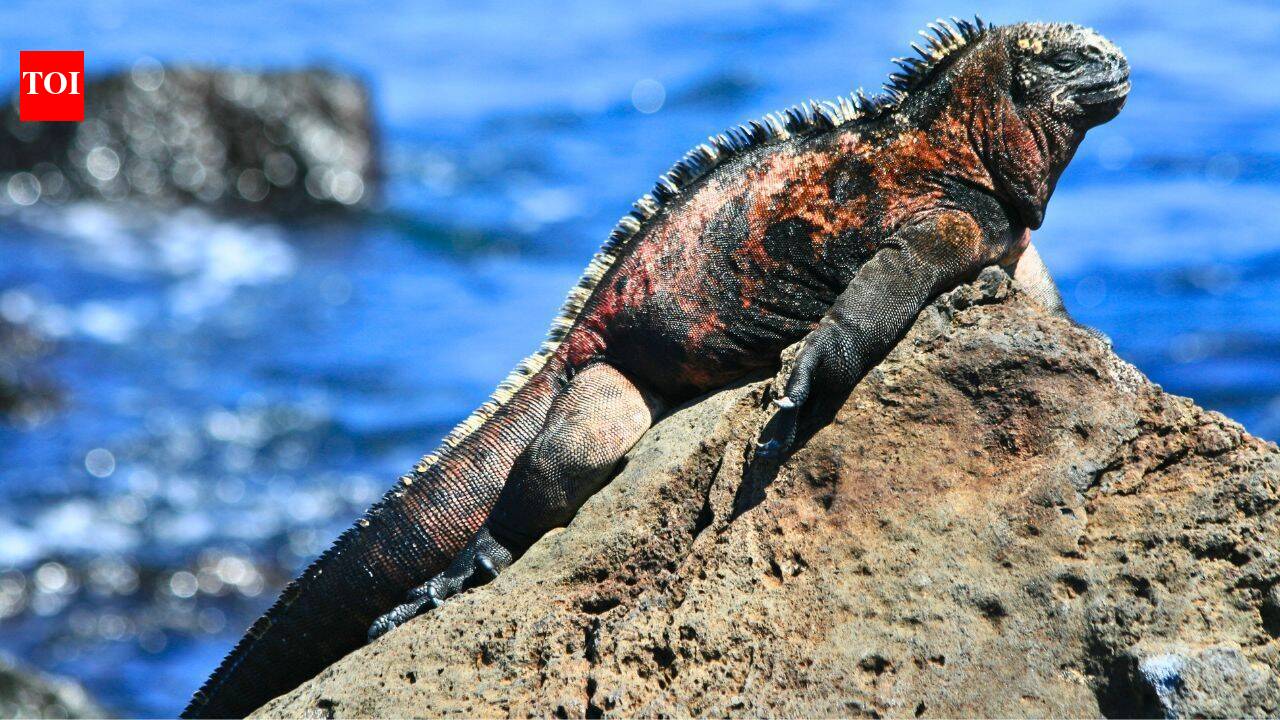
 PC: By RAF-YYC from Calgary, Canada Most reptiles never venture beyond the shore. The marine iguana built its life around the sea. Found only on Ecuador’s Galápagos Islands, it is the only lizard known to forage in the ocean. Every day it goes beneath the surface to graze on algae before climbing back onto black volcanic rocks to warm itself in the sun. It has a rough skin, spiny back and salt-covered face. As reported by National Geographic, Charles Darwin famously described it as a ‘hideous-looking’ and ‘most disgusting, clumsy lizard’. From sneezing away excess salt to shrinking its own body during periods of famine, the marine iguana has developed a collection of adaptations found nowhere else in the reptile world.
Marine iguana facts: How it swims, sneezes salt and stays warm
The marine iguana (Amblyrhynchus cristatus) lives nowhere except the Galápagos Islands. Scientists believe its ancestors reached the islands from South America millions of years ago after drifting across the ocean. Over generations, land iguanas evolved unlike any other reptile alive today.Marine iguanas now inhabit almost every island in the archipelago. Their size, colour and appearance vary from island to island. This species is listed as vulnerable on the IUCN Red List.
1. The only lizard that forages at sea
Unlike other reptiles, it survives almost entirely on marine algae. It dives beneath the waves and scrapes algae from submerged rocks using a short, blunt snout and razor-sharp teeth. The flattened tail provides the power, allowing it to swim with movements similar to those of a crocodile.Despite their fierce appearance, marine iguanas are mainly herbivores. Fish and other animals are not part of their diet.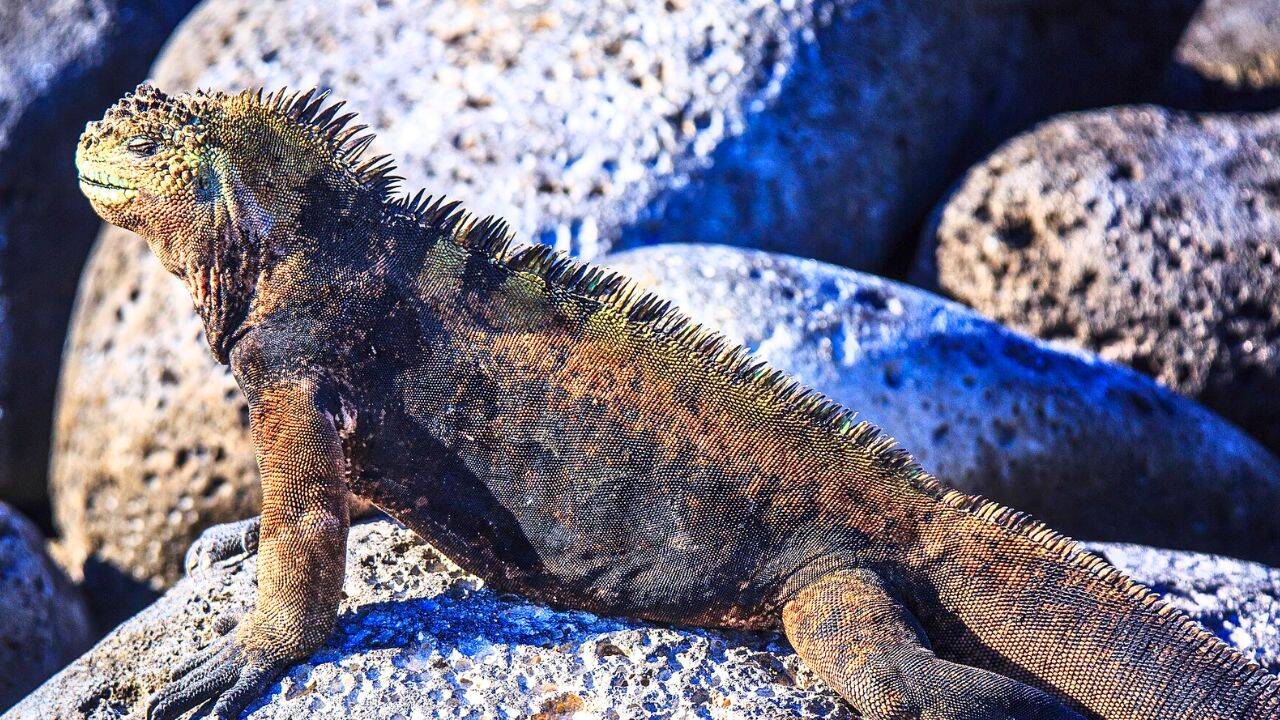
PC: By Murray Foubister
2. Night-time huddles help conserve body heat
Marine iguanas mainly spend their night to conserve heat by grouping across the rocks. They are not social animals, yet these groupings help reduce heat loss when temperatures fall. And in the morning, they spread across to take warmth from the sun through their dark scales. They usually return to the sea only after absorbing enough warmth.
3. Sneezing removes excess salt from the body
Marine iguanas spend much of their time feeding on algae beneath the surface, but every dive comes with a challenge. Along with their food, they swallow large amounts of seawater. To cope with the excess salt, their glands near the nose filter it from the bloodstream before the iguanas force it out through powerful sneezes. Over time, white salt crystals often build up around the snout.
4. Built to swim through strong ocean currents
PC: AI Generated
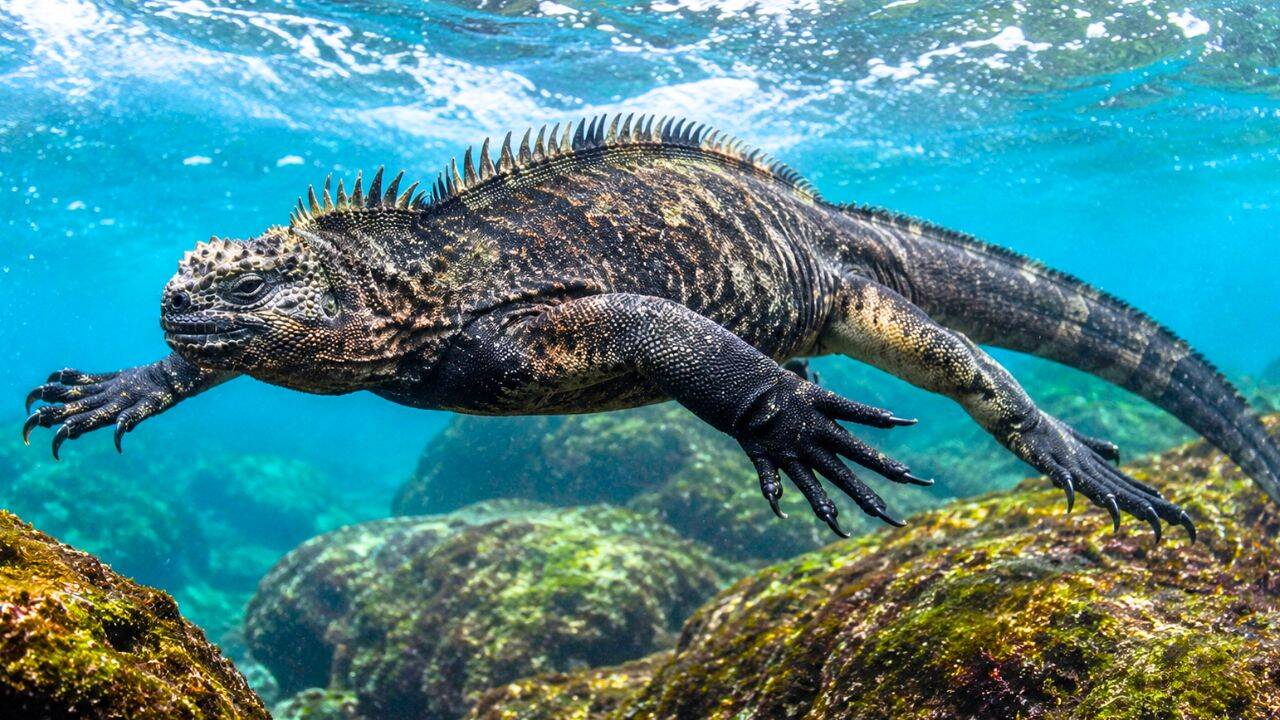
Their muscular and flattened tail generates surprising speed while long curved claws grip slippery rocks whenever the waves crash overhead. Larger iguanas often swim farther offshore, where algae is more abundant. Smaller ones stay closer to the shoreline and feed in calmer places.
5. Breeding season brings dramatic colour changes
Male iguanas develop striking colours that vary across the islands. On Española and Floreana, they turn vivid green and red. Males on Santa Cruz become red and black. And those on Fernandina turn dull green and brick-red. Young iguanas remain mostly black with a lighter stripe. Breeding season also brings conflict as dominant males defend groups of females and fight fiercely to drive away rivals.
6. Body size shrinks during El Niño food shortages
During El Niño events, the cold nutrient-rich waters surrounding the Galápagos disappear. Sea temperatures rise from about 18°C to nearly 30°C. The green algae that sustain marine iguanas almost disappear.The 1982-83 El Niño was very devastating. Some colonies lost 67% of their population. According to the Marine Science Institute, Adult marine iguanas can shorten their length by 20% during prolonged food shortages. Their metabolic rate also falls sharply, allowing them to survive on less energy. As ocean conditions improve and algae return, the iguanas recover their original size.