
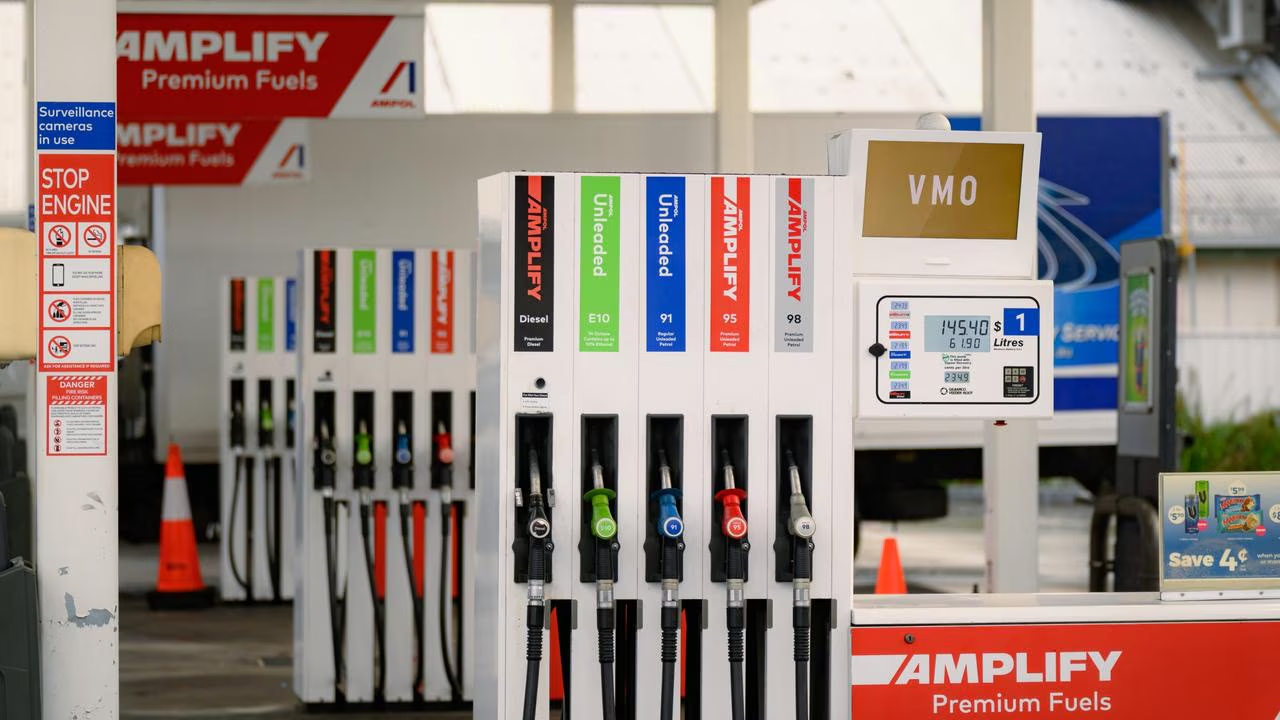
Australian drivers are set to face a steep price jump at the bowser as the 16c a litre fuel excise cut comes to an end at midnight on Sunday.
The cost-of-living relief measure was helping Australians cope with financial pressures amid the Middle East war, leaving many bracing for the end of the multibillion-dollar fuel tax discount on the weekend.
The cut initially subsidised 32 cents off each litre of petrol, before it was dropped to 16c in July.
While the change will take effect at midnight on Sunday, the price impacts can take about a week to hit consumers.
During such transitions, the Australian Competition and Consumer Commission (ACCC) monitors retail fuel prices to ensure providers do not gouge consumers.
Treasurer Jim Chalmers has reiterated people should not expect the fuel excise should continue beyond the weekend after multiple extensions of the cost relief.
Resources Minister Madeleine King had earlier said the government “won’t rule out” the possibility of continuing the fuel tax cuts on Tuesday.
One day later, Mr Chalmers said the government had “made it really clear on a couple of occasions that fuel excise relief (would) taper off on Monday”.
“As I’ve made clear and as the Prime Minister and others have made clear, it was never the government’s intention for that to be permanent,” Mr Chalmers said during a press conference on Friday.
“One of the reasons why we extended it at half the rate is because we have always intended for that to taper off.”
The Treasurer said he planned to “taper” the discount at the start of July to smooth out the transition.
The cost-of-living measure was implemented after the Middle East conflict erupted in late February, placing sustained pressures on the supply chain of fuel across the glob.
Prior to the conflict, Australians were forking out 52.6 cents of tax for every litre of fuel pumped.
A 60 per cent discount was subsequently introduced in April as the US-Iran war flared up and the Strait of Hormuz intermittently closed.
Initial fuel excise cuts decreased the rate to 20.6 cents per litre for everyday Australians.
Since then, the Reserve Bank of Australia cited rising fuel prices as a factor driving headline inflation, estimating the excise cut would reduce it by 0.5 percentage points.
Australians were driving less, considering electric vehicles changes and struggling as the fuel price index jumped from 94.35 in February to 125.29 in March, increasing by a dramatic 32.8 per cent.
Petrol consumption consequently reduced by seven per cent in April and 10 per cent in May when compared to sales in previous year.
As of 26 July, the average petrol retail price sat at 182.3 cents per litre, an amount which is likely to increase as the change filters down the supply chain.