
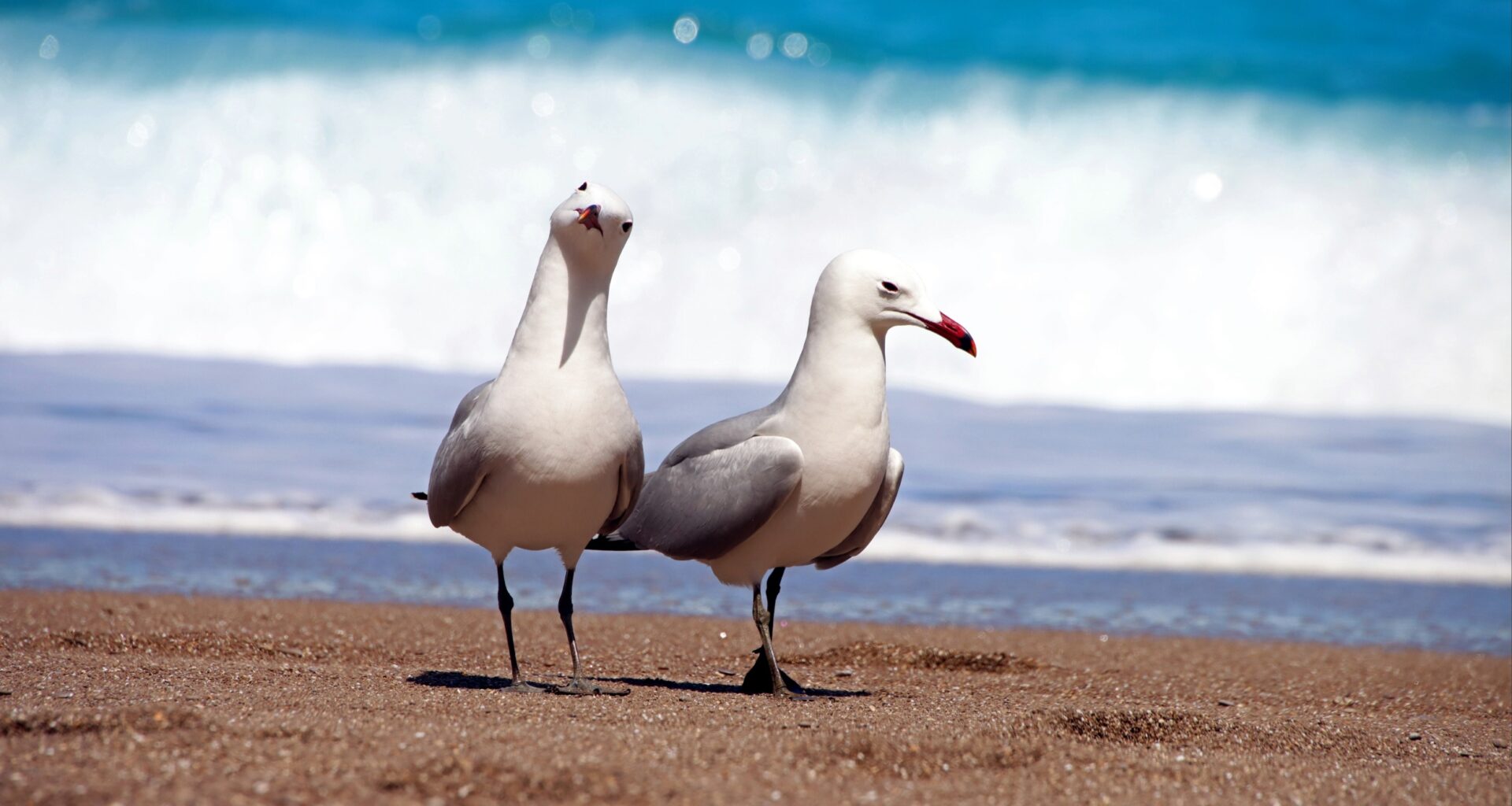
Rats show up on a tropical island as stowaways, and the birds that used to nest there start disappearing. The reasonable assumption is that marine life nearby would suffer too, since fewer birds means less fertilizer washing into the sea.
That guess turns out to be only half true.

A team led by Laura-Li Jeannot, a Ph.D. researcher at Lancaster University, studied coral reefs in the Chagos Archipelago, a remote chain of islands in the Indian Ocean.
They compared reefs beside rat-free islands with reefs beside rat-infested ones. The tiny animals living on the reef floor changed in different ways, depending on whether the nearby island was rat-free or rat-infested.
Rats reshape coral reefs, not just seabirds
Islands without rats can carry seabird colonies far larger than islands where rats have taken hold. The study found seabird density was 760 times higher on rat-free islands.
Rats reduce seabird numbers by eating eggs, chicks, and sometimes adult birds.
Seabirds feed far out at sea, then fly back to nest. Their droppings, called guano, wash off the islands and fertilize the reef below. Cut the birds out, and that fertilizer stops arriving.
Jeannot’s team wanted to know what a fertilizer-starved reef does to the small, easy-to-miss animals living at its base, known collectively as cryptofauna. Nobody expected the whole group to react the same way, and it didn’t.
“Contrary to our expectations, the low-nutrient conditions that rats create do not negatively affect all reef organisms,” said Jeannot. “Nutrient-loss impacts are not uniform. There are winners and losers.”
Seabirds help determine which reef animals thrive
On reefs beside rat-free islands, tiny bottom-dwelling fish such as gobies and triplefins had more than five times the biomass of the small invertebrates sharing the same space.
The team’s data show cryptobenthic fish biomass roughly doubling on these nutrient-rich reefs, with productivity among the larger fish-eating predators that feed on them rising about tenfold.
The advantage seems to trace back to how fast these tiny fish grow and reproduce.
That pace demands a steady supply of nutrients, something a seabird-fertilized reef can provide and a rat-emptied one cannot.
Removing rats could restore coral reefs
Reefs near rat-infested islands told a different story. Cryptobenthic fish and small invertebrates, such as coral crabs, porcelain crabs, and snapping shrimp, ended up with nearly equal biomass.
Jeannot says the fish’s own success works against them once nutrients run short. Fast-growing fish populations expand into space that invertebrates would otherwise use and outcompete them for food along the way.
“Beyond chasing invertebrates away from their homes, they also outcompete them for food,” said Jeannot. “Our results show that cryptobenthic fish, when more abundant, likely drive invertebrates to seek alternate, less preferred resources.”
Take that fish advantage away, and the invertebrates catch up. Their lower metabolic needs mean they can persist on a nutrient-poor reef where fast-growing fish struggle to survive.
Predators respond to prey shifts
The change did not stop at the reef floor. Cryptobenthic fish are estimated to make up as much as 60% of all the biomass eaten on a coral reef, so a shift in which animals dominate ripples upward.
Mixed carnivorous fish relied more heavily on cryptobenthic fish for food near seabird-rich islands, and fish-eating predators thrived alongside them. Fish that eat invertebrates instead fared modestly worse in the same places.
The team’s data point to about 18% lower biomass and 12% lower productivity there, a pattern the researchers describe as moderate rather than overwhelming.
Simon Brandl, an assistant professor at the University of Texas and a co-investigator on the study, says the fish make a better meal.
“Cryptobenthic fish are a nutrient-dense, protein-packed, highly digestible resource for predators. On the other hand, much of invertebrates’ mass is represented by a tough outer shell,” said Brandl.
“In nutrient-rich environments, fish are also far more abundant than invertebrates, meaning predators likely spend less time foraging. As a result, they represent a more energetically efficient prey source near seabird islands for predators looking for a quick snack.”
Invasive rats reshape coral reefs
The work compares existing reefs rather than running a controlled experiment. The differences track with whether rats were present, without proving on their own that rats caused every change.
The seabird-to-reef nutrient link has been documented in related work from the same research group for years.
Cryptofauna occupy one of the earliest levels of the reef’s food chain, feeding almost everything above them. As a result, shifts in their numbers affect their predators too.
Protecting the seabirds still nesting on rat-free islands, the researchers say, is one direct way to protect the small animals and food webs that depend on them below the waterline.
The full study was published in the journal Ecology.
—–
Like what you read? Subscribe to our newsletter for engaging articles, exclusive content, and the latest updates.
Check us out on EarthSnap, a free app brought to you by Eric Ralls and Earth.com.
—–